Ada Lovelace Day: The women in science who inspire us – Part 2

Ada Lovelace Day aims to raise the profile of women in science, technology, engineering and maths by encouraging people around the world to talk about the women whose work they admire. We asked staff from across Nature Research who has inspired them.

This is the second of two blogs we’re posting today to mark this milestone (the first part is here). You can read more about Ada Lovelace’s legacy here.

Mariette DiChristina, Director, Editorial and Publishing, Nature Research Magazines, and Editor in Chief of Scientific American
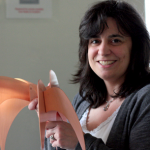
Mariette

Journalists aren’t supposed to be partial. But I have to say I’m inspired by Elizabeth Blackburn of the University of California, San Francisco. For starters, in 2009 she shared Nobel Prize for Medicine or Physiology with Carol Greider and Jack Szostak for pioneering the understanding of telomeres and telomerase, which affect so many aspects of human health.

Dr. Blackburn tells wonderful stories about growing up with a love of science, and how her Nobel Prize-winning research began in studies of an organism that lives in the scum of ponds (“it’s very cute,” she says).

She’s supported women in science throughout her career. As a woman with more than a touch of imposter syndrome myself, I’ve been grateful to experience that encouragement first-hand.

Back in our Manhattan offices, one of the conference rooms is named Blackburn after her. I always smile when I enter it, happy to be reminded of one of the amazing women of science.

Francesca Cesari, Chief Biological Sciences Editor, Nature

Fran

Rita Levi Montalcini has been a great influence in my decision to become a scientist – as a student, before even deciding to study biology, I read her book “Elogio dell’imperfezione” (in English “In praise of imperfection”) over and over.

Forced out of university in 1938 by fascist race laws due to her Jewish background, she endured great hardship, but persevered in her scientific endeavours. She worked from her home ‘laboratory’ in Turin and then Florence, carrying out research on neurodevelopment.

In 1986, she was jointly-awarded the Nobel Prize in Physiology or Medicine with fellow biochemist Stanley Cohen for their discovery of nerve growth factor. At the time of her death in 2012, aged 103, she was the oldest living Nobel Laureate. She has been a great inspiration for many women in science.

Andrea Taroni, Chief Editor, Nature Physics

Andrea

Chien-Shiung Wu was a Chinese-American nuclear scientist who performed one of the most spectacular physics experiments of the past century. In 1956, she showed that the weak nuclear interaction – the force that is responsible for radioactive decay – does not obey parity symmetry. In other words, the laws of nature are not completely symmetrical.

Wu’s experiment confirmed a theoretical prediction made by Tsung-Dao Lee and Chen-Ning Yang, and caused a sensation at the time – the laws of nature had widely been assumed to be symmetric. Lee and Yang were awarded the Nobel Prize the very next year, in 1957. Even at the time, the fact that Wu did not receive a share of the prize was widely viewed as a gross injustice. Nevertheless, what I find truly inspiring about her is her insight into the inner workings of nature.

Helen Pearson, Chief Features Editor, Nature

Helen

Margaret Llewelyn Davies was an early campaigner for women’s rights and a social scientist of her time. Her deeply moving book, called Maternity Letters from Working Women, revealed the shocking conditions in which working women gave birth just over one hundred years ago.

Her work laid the groundwork for the maternity leave and benefits that women receive today. I came across it when I was researching my own book, The Life Project, published earlier this year. I’m indebted to her, and many other campaigning women, for creating a society in which I can combine children, born healthily and safely, with a job in science and writing – even if we still have a very long way to go to find full equality between men and women in our lives and careers.

David Barnstone, Press Officer, US, Nature Research

David

Alexandra Horowitz and Lisa Guernsey and are two outstanding women in the sciences. They are both social scientists who have progressed our understanding of the minds of two different species: dogs and children.

Horowitz studies canine cognition at Barnard College, one of the world’s oldest women’s colleges and affiliated with Columbia University. It was founded in 1889 because of Columbia’s refusal to admit women at the time.

Guernsey is deputy director of the Education Policy program and director of the Learning Technologies project at the New America Foundation, where she translates the latest research into policies to give all children the opportunity to lead happy and productive lives in an ever-changing world.

I admire both Horowitz’s and Guernsey’s ability to make research accessible and compelling to the general public, which inspired me to pursue science communication.

Smriti Mallapaty, Science Writer and Associate Editor, Partnership and Custom Media

Smriti

Before Elinor Ostrom challenged the idea, shared natural resources were seen as ‘tragedies’, and would always lead to their destruction. In a persuasive essay published in Science in 1968, American ecologist Garret Hardin argued that “freedom in a commons brings ruin to all”. The only way to save these limited resources from destruction was through privatisation or government regulation.

Ostrom offered an alternative account, in which communities did a better job than governments, companies or private individuals in sustainably managing shared resources. She proved this over several decades of fieldwork, studying farmer-managed irrigation systems and community forestry in Nepal, as well as fishers, pastoralists and foresters throughout the world.

In 2009, she became the first woman to win the Nobel Prize in Economic Sciences. The award recognised her achievements, but also drew attention to the success of decentralised forest governance in Nepal. It also inspired many stories on agriculture, land tenure and community forests in Nepal, especially for science and environment journalists like myself. Ostrom died of pancreatic cancer in 2012.

Ada Lovelace Day: The women in science who inspire us – Part 1

Ada Lovelace Day aims to raise the profile of women in science, technology, engineering and maths by encouraging people around the world to talk about the women whose work they admire. We asked staff from across Nature Research who has inspired them.

 This is the first of two blogs we’re posting today to mark this milestone.  You can read more about Ada Lovelace’s legacy here.

Abigail Klopper, Senior Editor, Nature Physics

Abigail

Ewa Paluch is the sort of scientist I would have liked to have been. Her work on cell shape changes has led to a deeper understanding of how intracellular mechanics impacts cell migration and division.

But more than the work she does, I admire the way that she does it. Her lab is a healthy blend of biologists, chemists, physicists and computer scientists — and what she lacks in house she happily seeks through collaboration.

Ewa actually trained as a physicist, so she understands that physiology can’t be decoupled from physics. But her immersive approach means that she’s also sensitive to the questions that her fellow biologists want answered — something that tends to get lost in translation in interdisciplinary research. She subscribes to a new school of biophysics that capitalises on quantitative techniques and theory, and blurs the boundary between disciplines.

Sir Philip Campbell, Editor in Chief, Nature

Phil

 For several years, we at Nature Research have run annual awards for outstanding scientific mentoring – two prizes per year, for lifetime achievement and for mid-career achievement. The nominations have been inspiring – there are people out there who are not only exceptional researchers but also exceptional sources of nurturing and inspiration for subsequent generations.

To celebrate Ada Lovelace Day, I want to highlight the past winners who are women. They inspire me but, above all, they have evidently provided great critically-minded guidance and inspiration to their graduate students and postdocs, who have themselves gone on to do fine things inside science and beyond.

Happily, this year’s competition has provided yet further female sources of inspiration, with some exceptional female nominees. Unfortunately, I cannot reveal the winners until the announcement in late November.

So congratulations – again! – to previous winners: Cliona O’Farrelly, Michela Matteoli, Barbara Demeneix and Rachel Webster.

Erika Pastrana, Team Leader, Nature Communications

Erika

Cori Bargmann is an outstanding scientist and an inspirational leader. She has made seminal contributions through her work in the genetic and neural mechanisms that control behavior in the nematode Caenorhabditis elegans. Bargmann and her colleagues have identified genes that affect animals’ responses to specific odors and discovered the circuits responsible for their chemosensory behavior.

Bargmann has received many awards and honors for her work, and more recently, has been one of the key leaders of the advisory committee for the NIH’s BRAIN Initiative. Here she has shown a unique capacity to bring scientist together, to develop a vision and to lead. Last month it was announced that Bargmann had been appointed the incoming president of science at the Chan Zuckerberg Initiative (CZI).

I have met Cori several times, and seen her in discussions that set the framework of the BRAIN Initiative. I believe she is an inspiration for women – and for all scientists around the world.

Liesbet Lieben — Senior Editor, Nature Reviews Disease Primers

Liesbet Lieben_picture

When being asked to write about inspirational female scientists, Jennifer Doudna and Emmanuelle Charpentier immediately come to mind.

By combining their strengths in microbiology and structural biology, they both have had an instrumental role in the discovery of the CRISPR-Cas9 system — a tool that can be used to change genetic material (DNA) with extreme precision and speed.

I’ve seen first-hand how the CRISPR-Cas9 system has transformed the way we do scientific experiments in the lab, and I can’t wait to see how it will revolutionise medicine.

Although there are still hurdles to overcome, this gene-editing tool shows great promise to cure diseases caused by mutations in DNA, such as cystic fibrosis. 

Elisa De Ranieri – Head of Editorial Services, Nature branded journals

Elisa

Dame Athene Donald springs to mind whenever someone mentions women in science. Throughout my studies she has inspired me and many others by being a champion of equality and diversity, in an area (physics) that is traditionally male-dominated.

Athene’s research bridges physics, biology and medicine. She and her eclectic team apply a range of concepts and techniques of soft matter physics to understand biological materials. Her career achievements stand out both for her scientific contributions as well as for her involvement in gender issues.

She is a Fellow of the Royal Society and was awarded the L’Oreal UNESCO for Women in Science award for Europe in 2009. Athene was also the Director of the University of Cambridge’s Women in Science, Engineering and Technology Initiative, and the University’s Gender Equality Champion, as well as a member of the European Research Council’s Working Group on Gender Balance.

Jill Adie, Science Communication Product Manager, Researcher Services

Jill

When I finally read the dog-eared copy of Dorothy Crowfoot Hodgkin’s biography a friend gave to me – foolishly not until after my PhD – I found myself in awe of her vibrant intellect, drive and resilience.

Her work laid the foundations for my own research. Dorothy studied the structure of biological molecules using a technique called X-ray crystallography, which was in its infancy at that time. She was incredibly passionate about what she did, and is credited with discovering the structures of penicillin, vitamin B12 and insulin. This led to a Nobel Prize in Chemistry in 1964.

Her aptitude and track record in determining 3D structures meant that during her career Dorothy worked alongside and mentored eminent scientists – she had a stellar academic career, but it was hard won. Even with the advent of World War Two, the demands of a busy family life, and the inherent difficulties of working in male-dominated academia, Dorothy continued to work on the subject she loved, and she remained scientifically active into her old age.

Part 2 of this series will be published today (11 Oct) at 17:00 BST / 12:00 EDT.