Three HIV insights from sombre global meeting

virologyPosted on behalf of Erika Check Hayden. 

The run-up to the 20th International AIDS Meeting, scheduled to wrap up on 25 July in Melbourne, Australia, was overshadowed by news that a three-year-old child once thought to be cured of HIV still harbours the virus — and by the horrific crash of Malaysian Airlines flight 17, which claimed the lives of six conference delegates.

Here Nature rounds up three major cure stories that unfolded at the conference.

1. HIV establishes secure hiding places from the immune system extremely early after infection — a huge obstacle to developing a cure for HIV infection, scientists say. Researchers reported in Nature on 20 July that monkeys treated starting three days after infection with simian immunodeficiency virus (SIV) appeared to be free of virus after two years. But after treatment was stopped, the virus escaped from its hiding places, or “reservoirs”, and the infections resurged in the monkeys.

2. Still, finding a way to eliminate such reservoirs seems the only way to a cure, and scientists reported a degree of progress in this direction on 22 July. A team from Aarhus University in Denmark used a cancer drug called romidepsin to re-activate dormant HIV  in six infected patients. HIV then surged to detectable levels in five of the patients. The next step in this ‘kick and kill’ strategy is to find a way to eliminate the resurgent virus and the cells that produce it — perhaps by using a therapeutic vaccine to boost the patients’ immune systems.

3. Other researchers are testing gene therapy to cure HIV — for instance, by modifying immune cells so that they become resistant to the virus. A team at the University of New South Wales in Australia is examining whether inducing lab-grown cells to make proteins that target HIV can block infection. Another Australian group infused HIV-infected cells with molecules that prevented cells from becoming activated by drugs such as romidepsin. This raises the possibility of a strategy that reverses the kick-and-kill approach: it would prevent resting cells from leaving their dormant state. Neither strategy is yet being tested in patients, but against this week’s suite of dispiriting news, they offer a reminder that the HIV cure field is far from exhausting all options.

Google maps methane leaks

Posted on behalf of Mark Zastrow.

Google’s fleet of city-mapping cars are now working to measure urban natural gas leaks.

The technology giant’s collaboration with the Environmental Defense Fund (EDF), announced on 16 July, equips Google’s Street View cars with sensors to detect methane leaking from ageing city pipes, through city streets and into the atmosphere. The sensors were developed by researchers at Colorado State University in Fort Collins.

The project has released online methane maps for Boston, Massachusetts; Staten Island in New York; and Indianapolis, Indiana. The team found thousands of leaks in Boston and Staten Island at a rate of roughly one per every mile (1.6 kilometres) of road driven, whereas Indianapolis’s roads are leaking only once every 200 miles (322 kilometres) — a sign of newer infrastructure.

These leaks are too small to be a health or explosion risk, but they are also a growing climate concern; methane is 86 times more powerful as a greenhouse gas than carbon dioxide, over a 20-year period, according to the Intergovernmental Panel on Climate Change. Massachusetts passed legislation in June that requires utilities to speed up their pipe replacement, and California is considering following suit.

“We think [this technique] will offer a new way for utilities and regulators to evaluate their ongoing leak detection and repair programs,” says Mark Brownstein, the leader of the EDF’s natural gas efforts. The group says that utilities could reduce their emissions 2–3 times faster by prioritizing those larger leaks.

But just how utilities might actually use the data in practice remains to be seen, says Susan Fleck, vice-president of pipeline safety for National Grid, a London-based private utility that is also collaborating on the mapping project. “You know, I just have to be really up front about this. This is a pilot programme, right? So it’s kind of hard to say exactly how this is going to work out,” she told reporters.

Nathan Phillips, an ecologist at Boston University in Massachusetts, is sceptical that the data will help utility operators identify specific leaks. Phillips’ team pioneered car-borne urban methane mapping in Boston and has a separate project funded by the EDF, but is not involved with the Google effort. He points out that utilities already know from their own records where the ageing and leak-prone cast iron pipes are. “It doesn’t take a lot of guesswork to say, ‘There’s a 120 year old pipe running under this street, it’s probably a leaky street.’”

What excites him are the project’s plans to go nationwide and the opportunity to compare data across cities. Already, he says he is struck by how few leaks Indianapolis has compared to Boston and Staten Island, a sign of its newer infrastructure. He wonders if publicly owned gas networks (such as that of Indianapolis) will prove less leaky than those owned by private companies that need to balance expansion and market share with maintenance of existing infrastructure; it’s the type of question ‘Big Data’ could answer.

“That’s the beauty of what Google and EDF are getting into,” he says. “This is just a kind of teaser.”

Study finds organic produce is more nutritious

13640_lores

Blueberries are rich in ‘nutritionally desirable’ antioxidants. {credit} Amanda Mills/CDC{/credit}

Organic produce certainly costs more than conventionally grown food, but is it better for you?

Evidence so far has suggested that there are no health benefits from eating organic food instead of conventionally grown produce. Now a review of the scientific literature concludes that organic consumers may be getting their money’s worth; it claims that organic food is more nutritious than conventionally grown fodder.

Researchers led by Carlo Leifert, who studies ecological agriculture at Newcastle University, UK, found that organic food contains significantly higher levels of “nutritionally desirable” antioxidants compared to conventional crops. For example, phenolic acids, flavanones and flavonols were 19%, 69% and 50% higher, respectively, in organic produce than in its conventional counterparts, says the study, which was published today in the British Journal of Nutrition.

The researchers also found that organic produce contains lower amounts of pesticide and lower concentrations of cadmium, a metal that can build up in the body through repeated exposure and become toxic. “There are significant composition differences between organic and conventional crops for a range of nutritionally relevant compounds,” they write.

The study finds that eating organic food could boost a person’s antioxidant intake by up to 40% — the equivalent of two portions of fruits or vegetables a day. This could provide “meaningful” benefits to human nutrition, the authors write, because many antioxidants have been linked to a lower risk of chronic diseases, including certain cancers. Still, Leifert told Nature that his team has “no evidence of what the potential health impact may be”.

Leifert says that the study is an improvement on earlier analyses because it includes a larger data set — 343 peer-reviewed studies — making its results more robust.

A 2009 review on behalf of the UK Food Standards Agency (FSA) in London looked at total of 67 studies on the nutritional content and health effects of organic and conventional produce. This study found no clear nutritional benefits of organic produce over conventionally grown food. Likewise, a review of 237 studies published the Annals of Internal Medicine in 2012 also found no significant differences.

Alan Dangour, a food and nutrition scientist at the London School of Hygiene and Tropical Medicine and lead author of the FSA review, told Nature that the latest study suffers from significant problems with its methods and analysis. It shows “no important differences in nutrient content between organically and conventionally produced food”, he says, adding that the paper includes many studies of varying quality, which affects the reliability of its results.

Leifert says that Dangour was “too selective” in the quality of research he chose to include in the FSA study and consequently omitted important information. He says that his team conducted an additional analysis on a more selective group of studies but found that their results and conclusions still largely confirmed nutritional differences between organic and conventional produce.

Other researchers also criticized the paper. Richard Mithen, a food and health researcher at the Institute of Food Research in Norwich, UK, said in a statement that there is no evidence that the small differences that the researchers found in the levels of antioxidants would have any consequences for public health. And Tom Sanders, a nutritional scientist at King’s College London, says that nothing in the study changes his view that there are no meaningful nutritional differences between conventional produce and organic crops.

Attempt to retrieve NASA probe runs out of gas

Posted on behalf of Mark Zastrow.

An ambitious citizen-science effort to revive and redirect a decades-old NASA spacecraft has hit a snag. The International Sun-Earth Explorer-3 (ISEE-3) probe, now roughly 5 million kilometres from Earth, appears to be out of the nitrogen gas that it needs to pressurize its propulsion system’s rocket thrusters.

NASA launched the ISEE-3 satellite in 1978. {credit}NASA{/credit}

This means that the volunteer ISEE-3 Reboot Project will not be able to manoeuvre the 35-year-old craft and place it in a holding orbit at the L1 point between the Earth and the Sun, where the two bodies’ gravitational pulls cancel out. Instead, ISEE-3 will fly past the Moon on 10 August and reenter an orbit around the Sun. However, the team is still in communication with the probe and intends to collect scientific and engineering data as long as it holds out — perhaps for years to come.

The group, led by former NASA employee and journalist Keith Cowing and entrepreneur and engineer Dennis Wingo, hoped to use ISEE-3 to monitor space weather or even fly by a comet. A crowdfunding campaign raised nearly US$160,000 for the effort, which allowed the group to purchase control of the satellite from NASA — the first time that the agency has contracted out a defunct spacecraft. The team successfully reestablished contact with ISEE-3 in May and fired its thrusters to adjust its spin rate last week. They were attempting a series of fuel burns to alter its course early Wednesday morning (GMT) when its rockets hiccupped and ran out of nitrogen.

The ISEE-3 Reboot Project has pushed back against notions that the reboot mission is over, saying Thursday on Twitter that “ISEE-3 is going to be useful for YEARS” even in its uncontrolled orbit.

Robert Farquhar, ISEE-3’s NASA flight director when it launched in 1978, was more downbeat on the craft’s scientific prospects. “I don’t believe that,” he says. “It’s going be too far from the earth. It’s not going to be that useful.”

But Cowing says the team is in the process of forming an ad hoc network of radio dishes that can maintain contact with the satellite even in deep space. He also says that the fact that the craft and 9 of its 13 instruments are still working after 35 years in space is valuable engineering data in itself. Michael Combi, a space physicist at the University of Michigan agrees and says that it can stand as a comparison to the Voyager probes, which launched one year before ISEE-3.

In the meantime, the loss of nitrogen in ISEE-3’s thrusters has left the team puzzled. “I’ve never heard of a spacecraft losing all of its pressurant like that,” says Farquhar, who has advised the citizen-science group. One early suspicion is that the nitrogen may have dissolved into the hydrazine fuel it was intended to pressurize. Farquhar, who put the ISEE-3 reboot’s odds of success at 50-50 back in March, still says Cowing and Wingo’s team has done “a tremendous job.”

The citizen-science mission was intended to be a homecoming of sorts for ISEE-3. Originally launched to study the magnetic interactions between the Earth and the Sun, the probe was diverted through the tail of Comet Giacobini-Zinner in 1985, making ISEE-3 the first spacecraft to explore a comet. NASA intentionally put it on a meandering course to fly by Earth this year, nearly 20 years later, allowing for the possibility of retrieval.

NASA launches carbon-monitoring satellite

oco20140702-640

{credit}NASA/JPL-Caltech{/credit}

NASA has launched its first probe dedicated to mapping the distribution of carbon dioxide in the atmosphere, the agency announced today. The US$465-million Orbiting Carbon Observatory-2 lifted off just before 3 AM local time (11 AM British Summer Time) from Vandenberg Air Force Base in California, after a 1-day delay caused by technical issues with the launchpad.

That is a relief for the US space agency, which tried — and failed — to launch a nearly identical CO2-monitoring probe, the original Orbiting Carbon Observatory (OCO), in 2009. The crash, blamed on a faulty launch vehicle, devastated researchers who had spent years preparing to analyse what would have been some of the first space-borne measurements of atmospheric CO2. “The complete loss of the original OCO mission was heartbreak,” NASA’s OCO-2 project manager, Ralph Basilio, said at a 12 June briefing.

But all hope was not lost: in the wake of the OCO’s failure, the Japan Aerospace Exploration Agency agreed to share the data from its CO2-tracking satellite — GOSAT, launched in January 2009 — with the OCO science team. That helped NASA to test the algorithms that it will use to process and interpret data from OCO-2. “The partnership that we have had with the Japanese has been exceptional,” says Paul Wennberg, an atmospheric scientist at the California Institute of Technology in Pasadena. Wennberg has contributed to developing a network of ground-monitoring stations that have validated GOSAT’s data and will do the same for OCO-2.

If everything goes according to plan, data from the US probe will help researchers track large natural sources and sinks of CO2, such as oceans and forests, and perhaps some manmade sources, such as sprawling urban areas or even large power plants.

From its orbit 705 kilometres above Earth’s surface, OCO-2 will peer down into the atmosphere with a spectrometer, monitoring the level of CO2 in the atmosphere by detecting sunlight reflected by molecules of the greenhouse gas. Each measurement covers a column of air from the satellite to Earth’s surface, with a footprint of roughly 3 square kilometres — much smaller than GOSAT’s 85-square-kilometre footprint.  And the satellite will also spy on plants’ carbon uptake by measuring the weak fluorescence that is produced by chlorophyll during photosynthesis.


NSF bill with dire implications for social sciences moves forward

Posted on behalf of Jessica Morrison.

A key US House of Representatives committee approved legislation on 28 May that recommends steep cuts to US National Science Foundation (NSF) social-science funding and controversial changes to the agency’s grant-making process.

The bill, authored by House Science, Space, and Technology Committee chairman Lamar Smith (Republican, Texas), seeks to reduce funding for NSF’s social, behavioural and economic sciences division by 22% in fiscal year 2014, to US$200 million. For fiscal year 2015, the bill recommends just $150 million.

It would also alter how the agency awards its grants, requiring the NSF to certify that the research that it funds is in the “national interest”.

Those provisions and others that would place new restrictions on NSF’s grant-making have spurred protests from the broader scientific community and concern from the National Science Board, which oversees the NSF. In an unusual 24 April statement, the board said it was concerned that “Congress intends to impose constraints that would compromise NSF’s ability to fulfill its statutory purpose”.

As an ‘authorization bill’, the legislation would not set the NSF’s budget. But it is intended to steer the agency’s priorities and recommend non-binding funding levels for its programmes. In an unusual twist, the authorization bill recommends less for the NSF in 2015 — $7.28 billion — than the $7.4 billion contained in a 2015 funding measure that the House is expected to approve this week.

“I’ve never seen anything like this,” says Michael Lubell, director of public affairs for the American Physical Society in Washington DC. Authorization bills typically offer grand proposals, he notes, while spending bills are considerably more conservative.

The authorization measure’s future prospects are uncertain. It is not clear whether the full House of Representatives will vote on the measure before Congress adjourns for the year. And the Senate committee that oversees the NSF has not introduced an authorization bill of its own. And any proposal from the Democratic-controlled Senate is likely to be quite different from the bill now moving through the Republican-controlled House.

“There’s a big question mark about whether there are enough votes [for the bill] to make it out of the House,” says Wendy Naus, executive director of the Consortium of Social Science Associations in Washington DC. “It doesn’t stand a chance in the Senate.”

Climate change is present danger, US warns

Climate change is not a distant threat but has “moved firmly into the present”, according to a US government report released today.

Rising greenhouse gas emissions have made US summers longer and winters shorter, increased the risk of some extreme weather events and raised sea levels, finds the 1,300-page analysis, compiled by 300 scientists. It is the United States’ third national assessment of climate change impacts, following similar reports in 2000 and 2009.

“This national climate assessment is the loudest and clearest alarm bell to date signalling the need to take urgent action to combat the threats to Americans from climate change,” says John Holdren, President Barack Obama’s science advisor and director of the White House Office of Science and Technology Policy.

Overall, the average US temperature has increased by 0.7-1.0 degrees Celsius since 1895, with the pace of warming quickening after 1970. The mercury is poised to rise another 1.1-2.2 degrees Celsius within the next few decades. And by the end of the century, it could reach sizzling temperatures 2.8-5.6 degrees Celsius hotter than today’s conditions, unless the world commits to major reductions in greenhouse gas emissions.

Such changes are already affecting how Americans live and work, warns the report, which examines climate change impacts at the regional and state levels. In the Pacific Northwest, spring is starting earlier, changing the timing of snowmelt and in turn reducing water supplies in summer. In Alaska, receding sea ice is exposing large swathes of the state’s coast to erosion, prompting some coastal villages to plan costly relocations. And the Northeast has seen a 70% increase in the amount of rain falling as heavy downpours, increasing the region’s risk of flooding.


US Senate approves France Córdova to lead NSF

Posted on behalf of Jessica Morrison.

cordova-state-218x300

{credit}Mark Simons/Purdue University{/credit}

The US National Science Foundation (NSF) has a new leader. The US Senate voted today to confirm astrophysicist France Córdova to lead the agency, roughly a year after former director Subra Suresh resigned mid-term.

Córdova was most recently the chairwoman of the Smithsonian Institution’s board of regents, which oversees the sprawling Washington DC-based museum complex, and a member of the National Science Board, the panel that oversees NSF. She has also served as president of Purdue University in West Lafayette, Indiana, and as chancellor of the University of California, Riverside. During the 1990s, Córdova was chief scientist at NASA, working with then-administrator Daniel Goldin on his “faster, better, cheaper” plan for Earth and space research.

Her confirmation as the NSF’s fourteenth director comes at a time of tight budgets that have frustrated researchers. On 4 March, for example, US President Barack Obama released a budget request for fiscal year 2015 that seeks a meager 1% funding increase for the science agency, compared to the current funding level. The NSF is also under increased pressure to demonstrate the value of its research, and its social-science research division has come under attack from conservative politicians in the House of Representatives.

In an interview today with Nature, Córdova said that better communicating the importance of the basic research that the NSF supports is one of her priorities as she takes the agency’s top job. “We have to better explain why we do what we do,” she said.

For more information, see our expanded news coverage in the 20 March edition of Nature.

Lawmakers aim to restrict US agency’s social-science programmes

Posted on behalf of Jessica Morrison. 

Conservative politicians in the US House of Representatives are renewing their push to limit the National Science Foundation’s (NSF) support for social-science research. The agency’s social, behavioural, and economic (SBE) sciences directorate would see its recommended funding cut by 42%, under a proposal introduced on 10 March by Representative Lamar Smith (Republican, Texas), the chairman of the House Science, Space, and Technology Committee.

The legislation, which would reauthorize NSF for fiscal years 2014‒15, also seeks major changes to the peer-review process by which the agency awards its grants. Smith’s plan would require the NSF to provide written justification that every grant it awards — in all fields — is in the “national interest”. That is defined broadly as research that satisfies at least one of six goals: economic competitiveness, health and welfare, scientific literacy, partnerships between academia and industry, promotion of scientific progress and national defence.

Details of Smith’s plan first surfaced about a year ago, sparking fierce criticism from social scientists and the broader US research community that seems sure to renew with the release of the new bill. Smith and his supporters argue that in a time of limited budgets, focusing on research areas that produce the clearest benefits is wise. But critics worry that the “national interest” requirement will hobble NSF’s time-tested peer review process.

“We don’t build rockets. We don’t usually have patentable goods,” says Rick Wilson, a political scientist at Rice University in Houston, Texas, and a former NSF programme director. “For a lot of these folks, it may just be that they really don’t believe that what we do has scientific merit.”

The bill recommends a budget of $7.17 billion for NSF in 2014, the current fiscal year — equal to what the agency actually received in the budget deal enacted in January — and $7.29 billion for 2015. In an unusual move, the proposal also lays out a detailed plan for distributing that cash to NSF’s seven research directorates. For example, it seeks to cap SBE funding at $150 million per year in 2014 and 2015, well below the directorate’s actual 2014 budget of $257 million.

“I don’t understand the antagonism toward the social, behavioral, and economic sciences,” says Michael Lubell, director of public affairs for the American Physical Society in Washington DC.

Lubell also finds fault with provisos that would restrict principal investigators to no more than five years of funding for a particular project, and allow researchers to include just five citations in grant proposals.

The full text of the bill can be found here. It will receive a public airing on 13 March, when a House subcommittee plans to discuss and vote on the measure.

US Navy’s Arctic strategy forecasts ice-free shipping routes

navy_arctic

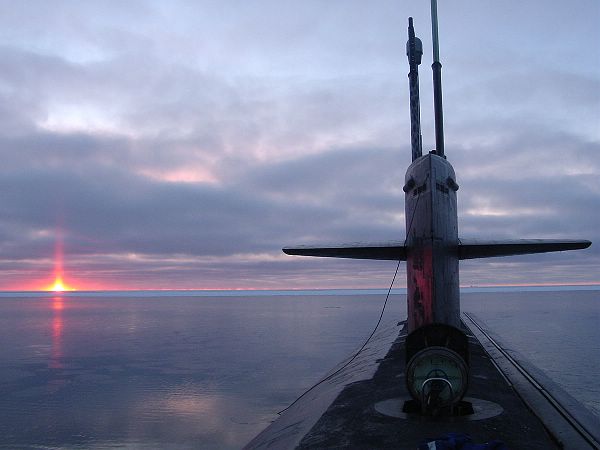
The USS Honolulu, a US Navy submarine, surfaces in open Arctic water during a 2011 cruise. {credit}US Navy{/credit}

By 2030, the Arctic’s Northern Sea Route could be ice free and navigable for at least nine weeks each year, with a 10-week ‘shoulder season’, according to projections released today in the US Navy’s Arctic strategy. The Northwest Passage could be open for five weeks, with a six-week shoulder season; and the Bering Strait could be ice free for a whopping 27 weeks a year, with up to 10 weeks of shoulder season.

New shipping lanes are just one potential consequence of the ongoing loss of the Arctic’s blanket of snow and ice, which has accelerated in recent years. The Navy also projects that the region’s waterways will see rising activity from fishing, tourism and oil and gas exploration. But in its updated Arctic strategy, the service dismisses any suggestion that newfound access to Arctic resources will create a new Wild West.

Arctic sea lanes such as the Northern Sea Route and Northwest Passage “are not going to replace the Suez or Panama canals any time soon as primary shipping routes,” says Rear Admiral Bill McQuilkin, director of the US Navy’s strategy and policy division. Even in ice-free waters, ships may be hampered by drifting ice or incomplete nautical charts, creating an unacceptable level of risk for many industries.

Still, the region is likely to grow in strategic importance. The Navy’s report notes that the Arctic is home to an estimated 22% of the world’s undiscovered hydrocarbon reserves. With that in mind, the service says that it plans to improve its ability to operate in the Far North, though its new plan avoids specific discussion of the equipment and infrastructure that will require. “It’s not a rush to the Arctic,” McQuilkin says. “We’re making sure we’re pacing ourselves here — and we’re ready to go up there when required.”