Promising sequencing contender Oxford Nanopore and market leader Illumina sever financial ties

Two closely watched genetic sequencing technology firms who had been unhappily affiliated have now divorced. UK-based Oxford Nanopore announced on 15 November that it has raised £56.4 million — mostly by selling the 13.5% of its shares that had been owned by San Diego-based Illumina since 2009.

Illumina had purchased the shares for $18 million in pursuit of an alliance that would give it a foothold in nanopore sequencing technology, in which different genetic bases are identified by changes in electric conductance caused when they are fed through a nanoscale pore. The technology is seen as highly promising because it offers the potential for very rapid sequencing at low cost. But after Oxford announced in 2012 that it was commercializing a version of its technology that is slightly different from the one in which Illumina invested, the two companies severed commercial ties and Illumina licensed a competing nanopore technology.

Oxford also said that it will begin allowing scientists to register to test its MinION portable genetic sequencer on 25th November in a “substantial but initially controlled programme designed to give life science researchers access to nanopore sequencing technology at no risk and for a refundable deposit of $1,000.”

The impetus for Oxford’s divestiture of Illumina shares isn’t yet clear. As computational biologist Mick Watson of the University of Edinburgh writes on his blog, Illumina may have figured that it would never make much money from the investment, as Oxford is now staking out a competitive position. “The simple answer may be that Illumina had nowhere to go with this,” Watson writes. “Therefore this is probably the logical conclusion — sell the shares and compete, try and beat [Oxford Nanopore] at their own game.”

So far, financial analysts give Illumina the edge in this game: “We continue to believe that [Illumina] has the dominant platform for the foreseeable future,” wrote Goldman Sachs analyst Isaac Ro in a research note on 15 November.

Scientists who have tested MinION so far have agreed, though they been impressed with the technology. Geneticist Yaniv Erlich of the Cambridge, Mass. Whitehead Institute for Biomedical Research wrote earlier this month that “MinION (and presumably its GridION scale-up) is far from being a threat to Illumina.”

Follow Erika on Twitter @Erika_Check.
Crowdsourcing science site Marblar revamps patents-to-products contest

A website that gave out more than US$50,000 in cash prizes to visitors who suggested uses for patented research discoveries is changing tack, after a score of prizewinning ideas got nowhere.

Marblar, which launched a year ago in an effort to find uses for the vast pools of unused intellectual property produced by research organizations, is now partnering with electronics giant Samsung, based in Seoul, and giving the firm exclusive rights to commercialize any crowdsourced suggestions.

The new agreement has changed incentives: website visitors will get 10% of the royalty payments if Samsung makes a product out of their idea. Marblar is also adding around $500 million worth of patented work from NASA, the University of Pennsylvania in Philadelphia and South Korea’s Electronics and Telecommunications Research Institute. One of the new patents involves the famous ‘flying robots’ from Vijay Kumar’s laboratory at the University of Pennsylvania — apparently still looking for an application.

Marblar’s founders — all young doctoral students — had hoped last October that their crowdsourcing site would solve an important problem: much interesting science that emerges from university labs lies fallow even when patented, because it’s hard to come up with useful commercial applications. So acute is the problem of patented but useless research that, increasingly, universities are simply selling their patents off to companies sometimes called ‘patent trolls’ — which stockpile intellectual property but rarely get inventions to market (see ‘Universities struggle to make patents pay’).

But though the website paid out more than $50,000 in prize money over 30 technology competitions — showing that their users are not short on invention — not a single idea has come close to commercialization. The problem, says co-founder Dan Perez, at the University of Oxford, UK, was that “we gave the universities back the ideas — but they couldn’t do much with them”. That was “demoralizing” for the site’s users, he says: “A lot of universities weren’t even reading the ideas for their own technology.”

The answer? Come at it from the side of the big corporate firms, who work from the view of product needs, rather than browsing lists of university patents, reckons Perez. Hence the link with Samsung, and Perez is hoping that other firms will come on board in future. Users will be able to mix and match different patents to suggest possible products. Will Marblar’s community — some 14,000 have signed up — be worried at Samsung’s entry into what started as a crowdsourcing effort for the good of science? Not a bit of it, says Perez — site visitors are keen to see their suggestions realized in products. (There’s also a strong sense that the site might serve as a recruitment opportunity, with those making the most useful suggestions essentially advertizing their entrepreneurial instincts to Samsung, or any other firm browsing the patents.)

Perez himself, a garrulous American, has essentially switched his PhD studies from biochemistry to technology transfer. He still thinks that Marblar, and its users, can do a better job of unlocking the value of research patents than technology-transfer offices have. “There is no reason for universities and government research labs to be sitting on piles of unused [public] innovation, or worse, selling that innovation to trolls. It’s time they opened up and allow new applications and products to be formed from their [intellectual property],” he says.

Researcher posts protected Science Curiosity papers on blog

Posted on behalf of Eliot Barford.

An American scientist and noted blogger has posted copies of newly published papers about NASA’s Curiosity expedition on his personal website, potentially breaking copyright laws.

Michael Eisen, a biologist at the University of California, Berkeley, reproduced the papers — originally published behind a paywall in the journal Science — on his blog yesterday, claiming he was motivated by public interest in the Curiosity project, which is funded by US taxpayers.

Eisen argues that the papers may not be under copyright as most of their authors work for NASA, and are therefore US government employees, who are whose work is not bound by copyright laws. He writes that “in the interests of helping NASA and Science magazine comply with US law, I am making copies of these papers freely available here”.

US law states that work prepared by “an officer or employee of the United States government” is not subject to US copyright, and can be reproduced and distributed. However, whether this restricts Science’s right to enforce a paywall on its published content is not apparent.

Eisen has previously campaigned in support of open access to scientific findings. He co-founded the Public Library of Science (PLoS), a non-profit open-access publisher of peer-reviewed scientific journals.

Science does not retain copyright of work it publishes, which remains with authors. Authors are permitted to distribute copies of final versions of articles after they are published by the journal, which also makes all peer-reviewed research content freely available a year after publication.

The papers in question describe findings by Curiosity in Mars’s Gale Crater, including a small proportion of water in a soil sample. For more on the articles, see Nature’s news summary.

Management row threatens to blow Sahara solar dream

Plans to supply Europe with electricity generated in North Africa suffered another blow this week when the DESERTEC Foundation, set up in 2009 to promote the idea, pulled out of the industrial consortium which is trying to advance the €400-billion (US$514-billion) project.

The split, agreed upon during an extraordinary DESERTEC board meeting on 27 June, is the climax of growing tensions between the founders of the project and the Dii consortium — including Deutsche Bank and German energy utilities Eon and RWE — over management and strategy issues. Solar power capacities are expanding throughout North Africa and the Middle East — but Dii has recently scaled back ambitions, hinting to political and technical problems with transmitting massive amounts of electricity from North Africa to Europe.

The DESERTEC foundation — sole owner of the project’s brand name — has been increasingly unhappy with how internal discussions over the future of the project leaked to the press.

“It was always clear to us that our idea of producing electricity from the deserts (…) was never an easy task and will always face extreme challenges,” Thiemo Gropp, director of the DESERTEC Foundation, said in a statement.

“However, after many months filled with a lot of discussions we had to conclude that the DESERTEC Foundation needs to preserve its independence. [Our exit] is the result of many irresolvable disputes between the two entities in the area of future strategies, obligations and their communication.”

Gropp said the dispute has “negatively affected” DESERTEC’s reputation but he did not rule out future cooperation between the two organizations.

Analysts have repeatedly criticized the project as too big and expensive. Pulling the plug on its loss-making solar business, German engineering giant Siemens, based in Munich, quit Dii last year. Technology supplier Bosch, based in Stuttgart, also pulled out last year.

Canadian accelerator produces a city’s-worth of medical isotopes overnight

{credit}ACSI{/credit}

The looming problem of a global medical isotope shortage is one step closer to a solution. A Canadian team has developed an upgrade that allows hospital cyclotrons to make a much-needed diagnostic tracer, and has proven it can pump out enough overnight to fulfil a city’s needs the next day.

Most of today’s medical-imaging procedures, such as those used to trace cancer or monitor heart function, employ a radioactive element called technetium-99m (99mTc). But this isotope is hard to produce and has a half-life of just 6 hours, making it impossible to store long-term. Global supplies come mostly from two nuclear reactor facilities: one in Canada, and one in the Netherlands. Both are reaching the ends of their useful lives, and isotope production is scheduled to stop in 2016 and 2015, respectively.

The demand for 99mTc will eventually dry up as a more advanced form of scanning, called Positron Emission Tomography (PET), takes over. This uses different isotopes that can already be manufactured by advanced hospital cyclotrons, but it is more expensive and today used for only a small fraction of scans. In the meantime, governments and researchers are keen to create an alternate supply chain for 99mTc , perhaps using the same cyclotrons that will be needed for PET scans.

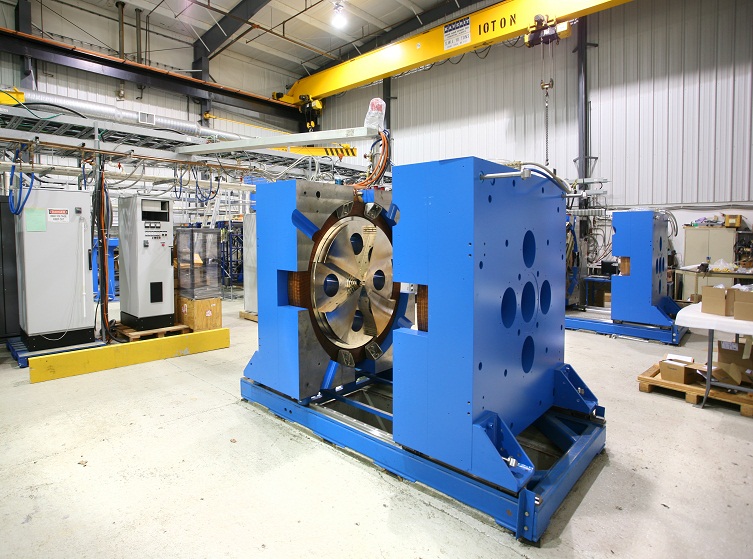
In February 2012, a team based at the TRIUMF particle accelerator near Vancouver demonstrated that they could retrofit hospital cyclotrons, such as the one pictured, to do the job. “It’s basically an after-factory add-on,” says Tim Meyer, spokesperson for TRIUMF. Now they have done further work on the needed metal target, making it strong enough to not melt under the heat of the beam, but porous enough to dissolve rapidly in solution so the 99mTc  can be extracted for use. On 9 June they announced that tests at the BC Cancer Agency in Vancouver show they can make 10 Curies-worth of the isotope overnight: enough to treat at least 250 patients and satisfy the needs of a city like Vancouver.

TRIUMF says the upgrade kit and cost of the targets will be price-competitive with the current supply of 99mTc . They hope to get regulatory approval within a year or two; clinical trials have already been done in Edmonton.

Others are also working on the medical isotope problem. There is a similar project for a cyclotron upgrade kit based at the University of Alberta; the Prairie Isotope Production Enterprise is pursuing using electron accelerators that could do the job; Europe is working on a replacement research reactor; and there is an effort to build a new, centralized facility in Wisconsin that could produce enough 99mTc  for half of the United States. “If it works, it’ll be pretty cool,” says Meyer of the US effort. “We think we’ll be to market faster.”

Commercial access to suborbital space still on the horizon

A004_C001_0429LF

{credit}Virgin Galactic{/credit}

BROOMFIELD, COLORADO — In a packed hotel ballroom within sight of the Rocky Mountains, entrepreneurs and researchers gathered on 3 June to discuss their sky-high dreams for commercial spaceflight. One day soon, they say, private spaceships will zip aloft on a daily or even hourly basis, for a brief taste of zero gravity in suborbital space. Tourists will line up for rides, and scientists will hop on board to do planetary science, materials research and even human physiology studies.

The only problem? Commercial suborbital flights remain ever so slightly in the future. And that leaves researchers twiddling their thumbs as they wait for their rides to be ready.

“It takes a while in the space business,” says Alan Stern, an associate vice-president at the Southwest Research Institute in Boulder, Colorado, and a driving force behind the fourth annual Next-Generation Suborbital Researchers Conference.

At the first such conference in 2010, the head of XCOR Aerospace predicted that “by the end of 2011 or beginning of 2012 you’re going to see spaceports struggling to deal with a flight rate that’s completely unprecedented”. Today there are eight US spaceports licensed by the Federal Aviation Administration, but very little action.

So what’s taking so long? Mostly funding problems. NASA has provided much of the seed money to get commercial spaceflight going, because the agency sees it as a way to access space more cheaply and competitively in the future. But in a Skype talk at the conference, deputy administrator Lori Garver ticked off some of the ways that NASA has fallen shy of its own goals. Three years ago she promised meeting attendees US$15 million annually; congressional belt-tightening reduced that to about $10 million.

NASA also combines its fledgling suborbital research programme with payloads flown on balloons, sounding rockets and airplane flights — which mean extra competition for limited dollars. This ‘flight opportunities programme‘ has picked seven vendors for commercial suborbital flights, including UP Aerospace, which is planning a 21 June launch of an unmanned rocket. “We’re doing what we said we would do, for the most part,” Garver said. “We all wish things were coming around even faster.”

Commercial suborbital flights seem to be always on the verge of breaking through to reality. XCOR itself hopes to conduct the first flight test of its manned spaceplane, the Lynx, by the end of this year. Stern’s institute has bought seats on future Lynx flights for him and two other scientists to conduct experiments.

In April, the company Virgin Galactic did conduct the first rocket-powered test of its manned SpaceShipTwo craft, breaking the sound barrier above the Mojave spaceport in California (pictured). And one month earlier, Masten Space Systems also tested an unmanned vertical-landing rocket called Xombie.

But another dash of cold water looms on the horizon, says Andrew Nelson of XCOR. Last month, the US State Department proposed adding “man-rated sub-orbital, orbital, lunar, interplanetary or habitat” spacecraft to the country’s Munitions List, which includes sensitive technologies such as military equipment and nuclear weapons. If the proposal is adopted, Nelson says, “it wouldn’t mean XCOR can’t export its spacecraft — it just makes it a heck of a lot harder”. That could stifle a burgeoning industry before it even gets off the ground, he says.

Plus keep suborbital scientists warming the benches for that much longer. “There’s a little bit of impatience, which I think is natural,” Stern says. “But I’m very optimistic. The world is about to change very rapidly as these vehicles come online.”

Quantum computer passes speed test

The world’s only commercially-available quantum computer has faced much controversy about whether it is actually faster or better than a conventional computer. A new independent speed test helps to answer that question.

In short: the D-Wave quantum computer is thousands of times faster than other commercial computers at the very specific problem it was designed to solve. The computer is  about average on other types of problems, and, importantly, it is still not clear whether the speed advantage will scale up as the computer gets bigger. That would be necessary to fulfil one of the big promises of quantum computing: making otherwise-intractable problems solvable.

Catherine McGeoch, a computer-science professor and algorithm-speed tester at Amherst College in Massachusetts, was asked by D-Wave, a quantum-computer company based near Vancouver, Canada, to put the company’s latest quantum computer through its paces. This was not an easy thing to do. The D-Wave device operates differently from other computers, not just because it uses quantum bits that exploit fuzzy quantum behaviour to speed up calculations, but also because it doesn’t use logic gates to perform operations. Instead it does something called ‘annealing’, where an answer is arrived at by looking for the lowest energy state of the bits in the computer chip. “It’s like comparing apples and oranges, or apples and fish,” says McGeoch.

The D-Wave Two computer, which has 512 quantum bits, is designed to tackle classification-type problems that are useful in machine learning and image recognition. Essentially it is good at determining the best ways to sort things into different categories, such as X-ray scans that contain an image of a bomb and ones that don’t.

McGeoch compared a 439-qubit version of D-Wave to a commercial product from IBM designed to solve the same sorts of problems. The IBM product is designed to deliver a confident answer to a given problem after 30 minutes. McGeoch found that D-Wave did just as well at finding the right answers, but in a half-second run time. That’s 3,600 times faster. “It was really amazing,” she says.

On other sorts of problems, the D-Wave computer was slowed down by having to ‘translate’ the question for their quantum chip, using a conventional front-end computer. In these cases it was about the same speed as conventional computers; overall McGeoch gave it an “above average” grade.

This doesn’t necessarily mean that D-Wave is the fastest approach even for the problems it is designed to tackle. Another test, performed by a different group, previously showed that a quantum annealer like D-Wave could be beaten in speed tests by a non-quantum, conventional annealer (see this previous blog post). “That didn’t surprise me. They’re comparing two highly specialized solvers in ideal laboratory conditions,” says McGeoch.

It is unclear whether D-Wave’s speed advantages will stick as the computer gets more qubits: it’s possible that it will keep producing correct answers to larger and larger problems in half a second, while conventional computers take longer and longer to crack them. “Right now it’s hard to say. I have a bunch of data sitting around for me to try and answer that this summer,” says McGeoch.

McGeoch will present her peer-reviewed paper at the International Conference on Computing Machinery in Ischia, Italy, on 15 May.

Political thaw raises hopes for refrigerant regulations

HFCgraph.personal.2

{credit}Data: UN Risoe Centre{/credit}

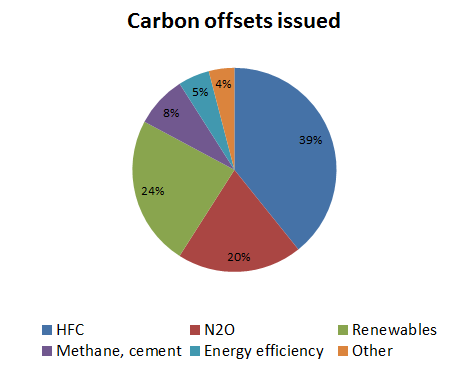
This week China budged. Depending on one’s perspective, it wasn’t much of a concession. The country agreed, in essence, to do what it and everybody else had already agreed to do back in 2007: accelerate the phasing out of a common class of ozone-eating refrigerants that double as powerful greenhouse gases. But rather than haggling over prices each step of the way, China made it simple and cut a single deal — worth up to US$385 million — to eliminate hydrochlorofluorocarbons (HCFCs) between now and 2030.

Reached under the auspices of the 1987 Montreal Protocol on Substances that Deplete the Ozone Layer, the agreement would lock in extra protection for stratospheric ozone as well as greenhouse-gas reductions equivalent to 8 billion tonnes of carbon dioxide. That is more than double the annual carbon emissions of the European Union. But more importantly, observers hope that it might mark a new beginning in the long-running bureaucratic battle over how to manage the chemicals that replace HCFCs: hydrofluorocarbons (HFCs), which are ozone friendly but remain potent trappers of heat. In particular, environmental advocates — and a solid majority of countries — hope that China will finally get behind a proposal to shift management of HFCs from the United Nations climate convention, where they now reside, to the Montreal Protocol.

“It’s really too early to tell, but this could be a signal they are going to take a better position with regard to phasing out HFCs,” says Mark Roberts, senior legal counsel for the Environmental Investigation Agency based in Stow, Massachusetts. Roberts notes that China also agreed to manage ongoing HCFC production as well as associated by-products “in accordance with best practices to minimize associated climate impacts”.

The timing is uncanny. In recent years a small cohort of companies in China and a handful of other countries have collected billions of dollars to destroy HFC-23 — a by-product of certain HCFC production that is 14,800 times more potent than carbon dioxide as a greenhouse gas — in exchange for dubious credits under the Clean Development Mechanism, which allows wealthy countries to offset their emissions in developing countries. In just four days, at midnight on 30 April, the European Union will turn off the spigot. Many feared that the companies would respond with the cheapest solution: vent into the atmosphere. China now seems to be suggesting that won’t happen.

Continue reading

Further proof for controversial quantum computer

Is the world’s only commercial quantum computer really a quantum device, or a just regular computer in disguise? Controversy has long swirled around the computer produced by D-Wave, a company based near Vancouver, Canada. Now a paper published on the arXiv preprint server takes a step forward in showing that it really does operate on a quantum level.

D-Wave’s computer is a special type of quantum device: its quantum bits (or qubits) seek out a low-energy state that represents the answer to a given problem. Unlike a universal computer, this kind of computer, called an annealer, cannot answer any question thrown at it. Instead, it can only answer ‘discrete optimization’ problems. This is a type of problem where a set of criteria are all fighting to be simultaneously met, and there is one best solution that meets the most of them — one example being the simulation of protein folding, in which the system seeks a state of minimal free energy. The hope is that a quantum annealer should be able to solve these problems much more quickly than a classical one.

The company’s current top-line computer has 512 qubits. In some ways, this is miles ahead of work in universal quantum computers, where academics struggle to get just a handful of qubits to operate usefully. But even D-Wave admits that it doesn’t know exactly how its computer works, and critics have complained that it might not be quantum at all. Instead, it could be using classical physics to crunch calculations.

In 2011, a group led by scientists working with D-Wave published a paper in Nature with evidence that their 8-qubit system was working on a quantum level: it responded to temperature changes as expected for a quantum device. Now, a group of independent scientists follows that up by showing that the 128-qubit version of the D-Wave computer (or at least the 108 functioning qubits in the specific computer that they analysed) also seems to be behaving quantumly.

Simulations of quantum versus classical annealers show that a classical one has a fairly uniform probability of solving a problem correctly; a quantum device should instead have a low probability of success at solving hard problems, and a high probability of success solving easy ones. This is what they see with the D-Wave computer.

Scott Aaronson, a theoretical computer scientist at the Massachusetts Institute of Technology in Cambridge who has historically been sceptical of D-Wave’s claims, says that he is fairly convinced by the data, but that there are plenty of important questions remaining — including whether the current or future versions of the D-Wave computer will actually be any faster than classical machines.

The new paper, Aaronson notes, shows that a quantum annealer is actually expected to be slower than a classical one in many circumstances. “It may be that they really have built a quantum annealing device, which is academically very interesting, but that it provides no [speed] advantage. That may be the case,” says Aaronson.

The paper’s authors include several researchers from the University of Southern California in Los Angeles, which has a deal to use and experiment with the D-Wave computer recently purchased by aerospace company Lockheed Martin. The co-author contacted by this reporter declined to comment on the work until it appears in a peer-reviewed publication. As of March, that group now has a 512-qubit version of the D-Wave to play with, which could start to show a speed advantage over classical annealers.

James Cameron makes deep donation to oceanographers

A visualization of the Mariana Trench with an exaggerated vertical scale. credit: National Oceanic and Atmospheric Administration

A visualization of the Mariana Trench with an exaggerated vertical scale.
{credit}NOAA{/credit}

After setting a record for the deepest single-person dive, filmmaker James Cameron stored his submersible in his garage and moved onto other projects — namely sequels to his hit 2009 movie Avatar. Now he’s pulling the craft, the DEEPSEA CHALLENGER (DSC), out of storage. On the anniversary of Cameron’s trip to the bottom of the Mariana Trench, the Woods Hole Oceanographic Institution in Massachusetts announced that it is forming a partnership with Cameron and that he is donating his submersible and associated technology to the research centre.

The submersible, which reached a depth of 10,900 metres, is the only one capable of ferrying a human to the lower third of the ocean’s full range. The next deepest-diving submersible, China’s Jiaolong, just passed the 7,000-metre mark during dives last year.

“The DSC’s unique capabilities are highly valued,” says engineer Andy Bowen, director of the National Deep Submergence Facility at Woods Hole. “Having spent some time looking at the submersible, it’s impossible to come away unimpressed by the quality of the engineering and technical achievement embodied in the submersible itself and the various subsystems.”

Researchers at Woods Hole plan to start using some components of the DSC almost immediately. Chris German, a marine geochemist, hopes to use the camera systems from the submersible during dives with a remote-controlled vehicle this summer into the Cayman Trough. Although the vehicle, called Nereus, has its own cameras and lighting systems, the ones from the DSC are thought to be superior.

Scientists seeking to conduct dives with the DSC itself will need to raise the necessary funds to support a field programme, says Bowen. And the vehicle has not yet passed the kinds of certification tests typically required of research submersibles. “One of the early steps we’ll be undertaking is to look at what needs to be done to bring it into compliance with certification,” he says. But Bowen did not hesitate when asked whether he would take the DSC on a trip more than 10 kilometres down. “It’s an extremely well-designed submersible and there’s been a tremendous attention to safety.”

This will be a big year for deep-diving activities at Woods Hole. The centre is finishing up a US$40-million rebuild of the Alvin submersible, a three-person craft capable of diving to 4,500 metres. Alvin has been the workhorse of US oceanography for the past 5 decades, but it has been out of commission since 2010. The refurbished submersible will undergo field trials in late spring, says Bowen.