US justice system ‘overreach’ blamed in suicide of Internet-freedom activist

This weekend, the Internet world mourned one of its heroes: Aaron Swartz, 26, a prodigy, programmer and well-known Internet activist, who hanged himself in his New York apartment on Friday. Swartz was to face an imminent trial for having downloaded some 4 million articles from JSTOR, a not-for-profit scholarly archive hosted by the Massachusetts Institute of Technology (MIT). He faced extraordinarily severe charges — see here and here — carrying a possible penalty of 35 years in prison, and more than US$1 million in fines. Swartz is reported to have suffered from serious depression, but some — including his immediate family — have explicitly alleged that the pending charges contributed to his suicide. (Btw; serious depression is more common than one might think; see ‘Global survey reveals impact of disability‘ though few commit suicide.)

Online commentators have expressed indignation at the disproportion between the charges and Swartz’s alleged act. Lawrence Lessig, a law researcher at Harvard University in Cambridge, Massachusetts, has posted a must-read analysis here. Alex Stamos, an expert witness for the defence in the case, also argues that the charges were over the top. Other analyses worth reading include those from Glenn Greenwald and from The Economist.

In a statement, Swartz’s family said: “Aaron’s death is not simply a personal tragedy. It is the product of a criminal justice system rife with intimidation and prosecutorial overreach. Decisions made by officials in the Massachusetts U.S. Attorney’s office and at MIT contributed to his death. The US Attorney’s office pursued an exceptionally harsh array of charges, carrying potentially over 30 years in prison, to punish an alleged crime that had no victims.”

Rafael Reif, the president of MIT, in a statement yesterday said:  “I want to express very clearly that I and all of us at MIT are extremely saddened by the death of this promising young man who touched the lives of so many. It pains me to think that MIT played any role in a series of events that have ended in tragedy.“ He also announced that he had asked Hal Abelson, a leading computer scientist, to assess MIT’s response in the case. JSTOR also released a statement, which mentioned its widely appreciated decision not to pursue charges in the case after Swartz returned the files he had taken.

Meanwhile, a campaign has also started on Twitter calling for researchers to post their papers openly online in reaction and commemoration — at hashtag #pdftribute.

In passing, Swartz was a past invitee to Science Foo Camp, an annual invitation-only informal gathering of hundreds of leading scientists, technologists and other leading creative lights, organized by Nature in collaboration with Google and O’Reilly Media — see here and here. See Swartz’s own account of part of the 2007 meet here.

What were the top papers of 2012 on social media?

One of the promises of altmetrics — an approach to measuring attention on research papers that relies on alternative measures to citations, such as downloads, social media mentions and collections in online libraries — is that it could provide an almost real-time view of the papers provoking most excitement. Citations, by contrast, are inevitably slow to gather pace.

So as Nature was starting to think about its review of 2012 (at the end of November — we start early!) we also asked altmetrics experts to pick out the most noted papers of the year. The results show some of the promise — and also the teething problems — of the new kids on the block.

The wizards at Altmetric.com picked out for us the top research articles mentioned directly online. (The company is a product of Digital Science, a sister company to Nature Publishing Group, which publishes Nature.com.) The technology tracks public, direct mentions of a research paper online by picking up DOI references, so it’s important to emphasize that we could not see articles that may have made a huge media splash, but that people did not link to directly — nor the many non-public Facebook links. Also, we knew that articles published earlier in the year would have had time to pick up more mentions — but decided to accept that bias. And here are the top ten, as of 27 November:

  1. The biological impacts of the Fukushima nuclear accident on the pale grass blue butterfly (2,142 people tweeting; 9 on blogs; 3 reddit posts; 131 Facebook posts and 9 G+ direct DOI links).
  2. Association of coffee drinking with total and cause-specific mortality (1,620; 4; 11; 40; 18)
  3. Rape-related pregnancy: estimates and descriptive characteristics from a national sample of women (a 1996 paper) (1,594; 6; 1; 90; 2)
  4. Food for thought. What you eat depends on your sex and eating companions (a 2009 paper) (1,606; 0; 0; 0; 0)
  5. Bright minds and dark attitudes: lower cognitive ability predicts greater prejudice through right-wing ideology and low intergroup contact
    (1,411; 11; 4; 38; 25)
  6. Unilateral dermatoheliosis (1,124; 6; 1; 102; 57)
  7. Higher social class predicts increased unethical behavior (1,218; 3; 9; 7; 12)
  8. Science faculty’s subtle gender biases favor male students (1,029; 8; 21; 89; 32)
  9. Measuring the evolution of contemporary western popular music (908; 2; 5; 98; 23)
  10. Classic Nintendo games are (NP-)hard (904; 9; 4; 10; 62).
Immediately apparent is that the papers that dominated were catchy, and most, if not all, made international news media. Update: Altmetric have now posted an up-to-date listing of the top 10 articles, with more details on the online conversations around each paper (for example, 67% of the tweeters on the Fukushima paper came from Japan).

Continue reading

North Korea reaches space

{credit}KCNA{/credit}

This morning, North Korea announced that it had successfully launched an Unha-3 rocket carrying a small satellite into orbit. Claims of success are nothing new for the regime, but this time, NORAD (the US-Canadian defence radar network) confirmed that the nation had succeeded in placing a small object into orbit.

The launch is the fourth attempt since 1998 by the North Koreans to place a satellite into orbit. The latest tracking data show it in roughly the right place, along with two other small objects. An amateur astronomer in Australia seems to have caught the first faint image of the satellite streaking across the sky.

The United States is describing the act as “highly provocative“, and Japan has called for an emergency session of the UN Security Council. And this may not be the end of North Korean trouble-making — South Korean intelligence indicates that their neighbours may be preparing another nuclear test for early 2013.


Seafaring robot braves sharks to scoop world record

“He weathered gale force storms, fended off sharks, spent more than 365 days at sea, skirted around the Great Barrier Reef, and finally battled and surfed the East Australian Current to reach his final destination in Hervey Bay near Bundaberg, Queensland, Australia.”

It sounds impressive by any devoted ocean researcher’s standards, but this scientific adventurer is a wave-powered robot dubbed Papa Mau. And these are the trials that the bot has had to endure on its way to scooping the world record for the longest distance travelled by an autonomous vehicle, says the Liquid Robotics, the US company that developed him.

The bot has set a new world record — with no past robotic voyagers coming close, says a spokesperson for the company. The next closest record appears to be that of an underwater glider RU27, also named Scarlet Knight, which clocked up almost 7,400 kilometres traversing the Atlantic Ocean in 2009.

Papa Mau, one of the company’s ‘Wave Gliders’ (pictured, above), navigated 9,000 nautical miles (16,668 kilometres) from San Francisco, California, to Australia. Named after Mau Piailug, a master navigator from Micronesia, the robot is one of four launched into the high seas by Liquid Robotics. Benjamin, a second Pacific-crossing bot, is due to reach Australia early next year; the two others are destined for Japan.

But being able to go the distance is not Papa Mau’s prime aim. The surfboard-like bot — split in two parts —  is a meticulous ocean scientist, according to its makers.

Continue reading

Bosch quits Desertec

The world’s most ambitious renewable energy project suffered another blow yesterday when the Germany technology supplier Bosch announced it was pulling out of the DESERTEC solar project. Stuttgart-based Bosch, the world’s biggest supplier of car parts, said it will quit the Desertec Industrial Initiative (Dii) by the end of the year.

“The economic conditions [do] not allow a continuation of its membership,” Reuters quotes a Bosch spokeswoman as saying.

The decision comes just two weeks after Siemens had announced its exit from the consortium. Siemens, based in Munich, Germany, said last month it will pull out from the loss-making solar business altogether

The DESERTEC initiative was launched in 2009 with the goal of building a network of solar plants across North Africa. Backers of the project hope that by mid-century DESERTEC will supply the region and large parts of Europe with more than 125 gigawatts of electricity.

But the €400 billion project has been criticised for being too risky and expensive. Last week,  Spain delayed signing an agreement that would have allowed Dii to move ahead with building a first €600 million 150-megawatt solar plant in Morocco.

Dii’s chief executive Paul van Son said previously that the exit of single partners does not jeopardize the project. Dii’s shareholders do still include, among others, the German reinsurance company Munich Re, German power utilities E.ON and RWE, Deutsche Bank and the Italian-based UniCredit group. Meanwhile, the Chinese power company State Grid Corp (SGCC) is considering joining the project.

Missile defence needs networking


{credit}MDA{/credit}

A report out this morning from the US National Academy of Sciences calls on the nation’s Missile Defense Agency to take a new tack on the age-old problem of stopping ballistic missiles before they fall on the homeland.

The report authors say it is time to abandon airborne lasers and super-fast interceptors that can catch a missile in its vulnerable boost phase (when it is attached to its rocket). Instead, the programme needs to network existing technologies together so that they can actually hit something travelling through the air.

The report backs up a 2003 study by the American Physical Society that essentially ruled out boost-phase technologies. In fact, the United States has been backing away from boost-phase-intercept technology, and it essentially ended its two main programmes in 2010. Continue reading

Radio astronomer Bernard Lovell dies

{credit}The University of Manchester{/credit}

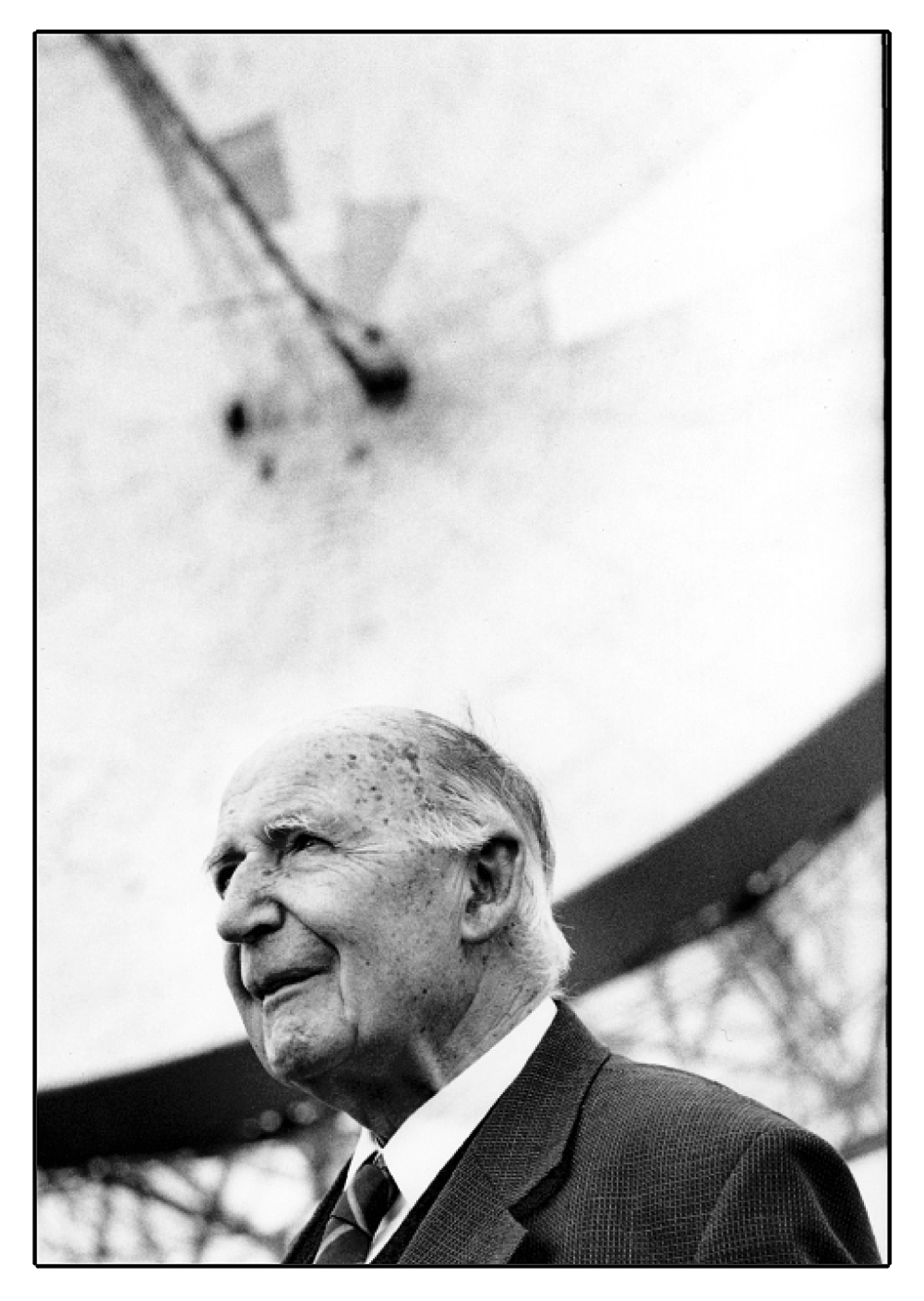
British physicist and radio astronomer Bernard Lovell, who founded the Jodrell Bank Observatory of the University of Manchester, UK, died on 6 August aged 98.

Lovell directed the observatory from 1945 to 1980, and in 1957 oversaw the construction of its iconic telescope — then the world’s largest fully steerable radio telescope — which opened in time to track the launch of the first artificial satellite, Sputnik 1. He also worked on radar and cosmic rays, and was knighted in 1961 for his contributions to radio astronomy.

In the short story “The Moon Match” (from Summer Days: Writers on Cricket), Lovell writes how cricket punctuated his memories of Russia’s Luna 2, the first satellite to reach the surface of the Moon.  Just after Saturday lunchtime on 12 September 1959, he had set off for a cricket match when — according to the story — a child signalled that he stop his car: “You must come back, you’re urgently wanted on the phone.”

It was a reporter asking what Jodrell Bank was doing about the launch that Moscow had just announced. “I am going to play cricket,” Lovell replied — and he did. At the tea break, he arranged to check back at the observatory that evening. He unlocked his office to find a message from Moscow on the telex machine, the paper “streaming out on the floor”, giving him all the details to track Luna 2 ‘s Moon impact the next day.

More details about Lovell’s life and career in the Jodrell Bank Centre for Astrophysics announcement of his death.

Father of GPS accused of conflict of interest

Any battle over use of the electromagnetic spectrum is likely to provoke intense interest among physical scientists. Now a senior engineer at Stanford University in California is set to trigger discussion after being rapped by the NASA inspector-general for advising one company that its wireless networking plans might interfere with global positioning system (GPS) devices when he had a financial interest in a GPS service provider.

In a report posted on its website this morning, NASA’s inspector-general says that engineering professor Bradford Parkinson (pictured) “improperly participated in a matter that had a direct and predictable effect” on the financial interest of Trimble — a GPS service provider based in Sunnyvale, California, in which Parkinson held stock — when as a member of a NASA advisory committee he wrote to the Federal Communications Commission to advise that an expansion of wireless service by the telecom company LightSquared, based in Reston, Virginia, might affect GPS devices.

Parkinson has been dubbed “the father of GPS” for his work developing the technology while working for the US Air Force in 1973. The inspector-general found that he had properly disclosed his ties to Trimble in a disclosure statement to NASA and also concluded that his motive in opposing LightSquared’s expansion was not financial but came from a genuine desire to protect a resource that he had helped to create. Parkinson was not immediately available for comment. A statement from Jim Kirkland, vice-president of Trimble, notes that Parkinson was acting “in what he believed to be in the best interest of the continued viability of GPS, upon which hundreds of millions of people rely every day.”

LightSquared, which went into voluntary bankruptcy proceedings in May to keep operating as it sorted out regulatory difficulties, said it was committed to a fair and open process, and to working towards broadband service for all North Americans without compromising GPS performance. As part of the report, NASA’s inspector-general recommended that agency lawyers tighten up oversight of advisory committees, whose members include many senior space scientists.

Updated August 3rd to add comments received from Trimble.

Personal-genetics company seeks regulatory approval

Personal-genetics company 23andMe announced Monday that it was seeking approval from the US Food and Drug Administration (FDA) for an initial batch of seven health-related tests, with scores more to follow.

23andMe, based in Mountain View, California, markets genetics testing straight to consumers. For about US$300, customers can mail in a saliva sample and then see an overview of their genetic variants online, along with information about how their variants have been implicated in health and disease.

Ashley Gould, vice-president of corporate development at 23andMe, told Nature that oversight by the FDA would increase confidence in genetic testing.

In the past, 23andMe has maintained that regulation was not necessary, arguing that the genetic analysis provides information, not a medical service. Gould told Nature that the company is now pursuing approval for tests covering subjects such as disease risk and drug response.  The FDA will not be considering tests for non-medical information such as ancestry, or traits such as eye or hair colour.

Gould also says that 23andMe will provide more customers information about more genetic variants as data arise in the scientific literature. “We are hopeful that the existing regulatory framework is flexible enough to accommodate the dynamic nature of genetic science while protecting individual access,” she says.

Increasing popularity of direct-to-consumer testing has raised concerns that findings are not robust or straightforward, and that individuals would have trouble interpreting results. The tests — which are offered by companies including 23andMe; Navigenics, based in San Francisco, California; and Pathway Genomics, based in San Diego, California — scan genomes for known genetic variants.

A report released earlier this month by two scientific societies in Europe found that direct-to-consumer genetic testing has “little clinical value” and explicitly discouraged testing for ‘nutrigenomics’ and for individuals who already have symptoms or known increased risk of disease. It also said that the quality of genetic testing had to include not just consistent laboratory performance but also the interpretation of results and appropriate counseling about disease risk.

Last year, the Genomics Law Report detailed how several personal genetics companies had responded after receiving letters from the FDA that their services might need to be regulated as clinical tests. For example, some companies decided not to tell customers about certain genetic variants related to drug response or serious, untreatable diseases.

In contrast, 23andMe has increased its emphasis on disease. It recently filed a patent for its discovery of a genetic marker in Parkinson’s disease and also acquired community patient website CureTogether, a social-media platform that allows patients to describe their experiences with disease and treatments. Now it appears to be the first of the direct-to-consumer companies to seek FDA approval for direct-to-consumer genetics tests.

23andMe should have a response from the FDA before the end of September.

Additional reporting by Ewen Callaway.

Upsides and downsides of openness — the view from TEDGlobal

Posted on behalf of Philip Campbell.

Let’s start with the bad news. With every technological development that helps to make the world a better place, criminals and terrorists are out there to apply it to their own ends. Hence the use of satellite communications and a high-tech operations centre that allowed the Mumbai terrorists in 2008 to track and maximize their massacre of 172 men, women and children; hence the encrypted national communications infrastructure constructed by Mexican drugs barons; hence the threat of synthetic viruses…

This bad news was the subject of a TED talk at the TEDGlobal meeting in Edinburgh, UK, earlier this week. Yet even this pessimistic vision from global-security futurist Marc Goodman led to a positively open conclusion: get the details out there, he said, and let the crowds source solutions. “We need participatory security,” he said. “Public safety is too important to be left to the professionals.”

Goodman pointed to the growing capacity of three-dimensional printing, an open technology that other TED speakers celebrated for its capacity to empower people. Positive examples included arducopter, a multirotor drone; the Otto musical interface; a sign-language glove; and a Geiger counter developed by Tokyo Hackerspace after the Fukushima nuclear crisis.

The designs of such printable hardware are open source, said Massimo Banzi, originator of the Arduino microcontroller for interactive projects. “Our hardware is open — we publish all design files and circuits online to help others learn. Our hardware, as well as the documents, come with a Creative Commons license. It is a mash-up of open-source techs that allows people to use them easily.”

But Goodman pointed to the downside: guns and rocket launchers can be printed too, as can harmful molecules. Continue reading