Switzerland to provide grants while European funding is on hold

The Swiss government is stepping in to support individual researchers currently excluded from receiving grants from the European Union.

Hundreds of Switzerland-based scientists who had applied, or intended to apply, for European Research Council (ERC) grants have been badly hit by the fallout of a referendum last month which obliges the Swiss government to restrict immigration into the country. In response, the European Union suspended talks with Switzerland over its association with the EU’s €80 billion Horizon 2020 research programme, of which the ERC is a part.

To help frustrated ERC applicants who had planned to work in Switzerland, on 10 March the Swiss National Science Foundation (SNSF) announced that it will step in with a temporary grant scheme of its own.

Applicants who intended to apply for an ERC Starting Grant can submit their unchanged proposal to the SNSF between 15 March and 25 March, the SNSF says. Scientists who intended to apply for ERC Consolidator grants have until 20 May to file their proposal with the SNSF. Substitute grants will be comparable in size to those provided by the ERC.

Calls for SNSF grants are open to all scientists who work in Switzerland or who are currently negotiating positions at Swiss research institutions. The transitional scheme will remain in place until a new political agreement is reached over Switzerland’s participation in EU-funded research.

ESA’s Swarm mission launches successfully

You are currently viewing a placeholder content from YouTube. To access the actual content, click the button below. Please note that doing so will share data with third-party providers.

More Information

A Russian rocket at 12.06 GMT today has successfully launched into orbit a trio of European satellites – Swarm – designed to survey the planet’s magnetic field.

The €220 million European Space Agency (ESA) mission will measure temporal and spatial variations in Earth’s magnetic field in unprecedented detail. (See: ‘Mission to map Earth’s magnetic field readies for take-off‘.)

The mission lifted off from Russia’s Plesetsk Cosmodrome, 800 kilometres north of Moscow. At an altitude of 490 kilometres the launch rocket released the three identical satellites that were mounted on top of its upper stage.

The flight-control team at the European Space Operation Centre in Darmstadt, Germany, appeared jubilant and relieved when ground stations in the Arctic received and transmitted signals from all three satellites. “All three satellites in their target orbits,” wrote Thomas Reiter, ESA’s director of human spaceflight and operations, in a Tweet.

The mission’s nominal lifetime is just over four years, but scientists hope that it will last longer, and that it will be able to cover a full 11-year solar cycle.

WMO: 2013 among the ten warmest years on record

The year 2013 is on course to becoming the seventh-warmest year since climate records began in 1850. The average surface temperature during January to September has been 0.48 °C above the 1961–1990 average, according to the World Meteorological Organization’s provisional State of the Climate report, released today.

The first nine months of 2013 were slightly warmer than the same period in both 2011 and 2012, according to the WMO. If no major outliers occur in what remains of the year, the global surface temperature in 2013 will have been close to the average during 2001–2010, the warmest decade on record.

In the Northern Hemisphere, weather patterns were influenced this year by a negative phase of the so-called Arctic Oscillation, a pressure system which tends to bring cold air to lower latitudes. This has caused the relatively cool spring temperatures in Europe and some parts of North America and Asia, says the WMO. Australia, on the other hand, experienced the hottest summer on record.

Despite the slow-down in the rise of the average global temperature in recent years, nothing suggests that global warming might not continue, the WMO warns. The atmospheric concentration of heat-trapping greenhouse gases, which in 2012 reached a record high carbon dioxide equivalent of 476 parts per million, is expected to reach a new record high in 2013 and will likely climb further in the forthcoming years, says the report.

The global sea level, which currently rises by around 3 millimetres per year, has also reached a new record high.

In late May and early June, extreme rainfall in central Europe led to major floods along the Danube and Elbe Rivers. Owing to unusually early and heavy monsoon rains, bad flooding also occurred near the India-Nepal border. This year’s monsoon season was relatively friendly to large parts of Africa including the Sahel zone. However, Angola and Namibia suffered their worst droughts in 30 years.

In terms of numbers of storms, the 2013 hurricane and typhoon season was so far only slightly above the 1981–2010 average. Whether climate change has added to the severity of storms, notably to the unprecedented destructiveness of Typhoon Haiyan in the Philippines, is still up for debate.

United Nations embraces science’s best minds

Just another talking club or a genuine attempt to give science more weight in policy matters of global importance? Time will tell whether the United Nations’ newly created scientific advisory board, whose members were announced last week, will indeed influence the business of international policy-making in practice.

{credit}UN{/credit}

The board, set up by the UN Secretary-General Ban Ki-moon, is to provide leaders with science-based advice on pressing environmental, developmental and socio-ethical issues. Its members are to identify knowledge gaps relevant to sustainable development and research needs that could be addressed by national or international efforts. In the UN’s own words, it “is the first such body… to influence and shape action by the international community to advance sustainable development and eradicate poverty”. Its creation follows a 2012 recommendation by the UN Secretary-General’s High-level Panel on Global Sustainability calling for a “major global scientific initiative to strengthen the interface between policy and science”.

The 26 members selected for the board include scientists from all continents, including five Africans scholars and three scholars from the Middle East, who will serve for two years, with the possibility of renewal for one further two-year term.

Eminent board members include Nobel laureates Ada Yonat from Israel, winner of the 2009 Nobel Prize for Chemistry, and Egypt-born chemist Ahmed Zewail who in 1999 became the first Arab scientist to win a Nobel prize in science. Indian economist Rajendra Pachauri, head of the Intergovernmental Panel on Climate Change, which was awarded a share of the 2007 Nobel Peace Prize, is also on board.

US science is represented by Susan Avery, director of the Woods Hole Oceanographic Institution in Massachusetts, and Shankar Sastry, dean of engineering at the University of California at Berkeley. Microbiologist Jörg Hacker, president of the Leopoldina, Germany’s national academy of science, is also on the board, as is the head of the Russian Academy of Sciences, physicist Vladimir Fortov. For China, Ke Gong, president of Nankai University in Tianjin, has been selected. British scientists are absent from the board.

The group plans to come together for its first working session in the beginning of 2014.

Iceman may have living Alpine relatives

A reconstruction of Ötzi the Iceman.

A reconstruction of Ötzi the Iceman.{credit}South Tyrol Museum of Archaeology/A. Ochsenreire{/credit}

Ötzi the Iceman, the 5,300-year-old mummified body discovered in 1991 in the Austrian Alps, may have numerous distant relatives living in the region today.

The discovery was made following the genetic analysis of DNA samples taken from Ötzi and 3,713 male blood donors in Tyrol,  Austria, where Ötzi was found.

Forensic scientists at Innsbruck Medical University found that 19 as yet unidentified blood donors share with the Iceman a rare mutation of the male Y chromosome, which tends to be passed intact through hundreds of generations. Descendants of Ötzi, whose genome was published in February, may also live in South Tyrol in Italy and in the Engadine region in Switzerland, the scientists suspect. Their findings hint at a common ancestor who may have settled in the Alps during the late Stone Age, about 10,000 years ago.

Analysis of DNA taken from the iceman’s bone cells had previously revealed that Ötzi had brown eyes and type O blood. Moreover, he seems to have been intolerant to lactose and possibly had Lyme disease.

But scientists had so far assumed that his closest present-day male relatives may live on the Mediterranean islands of Sardinia and Corsica, where the Y chromosome mutation he possesses are most commonly found.

The findings by the Innsbruck Medical University are part of the TirolStudie, a study into the historic and genetic origin of the Tyrolean population (resulting publications are listed here).

The Neolithic Iceman, complete with clothes and possessions, is exhibited at the South Tyrol Museum of Archaeology in Bolzano.

Russia pins hopes on new space-agency chief

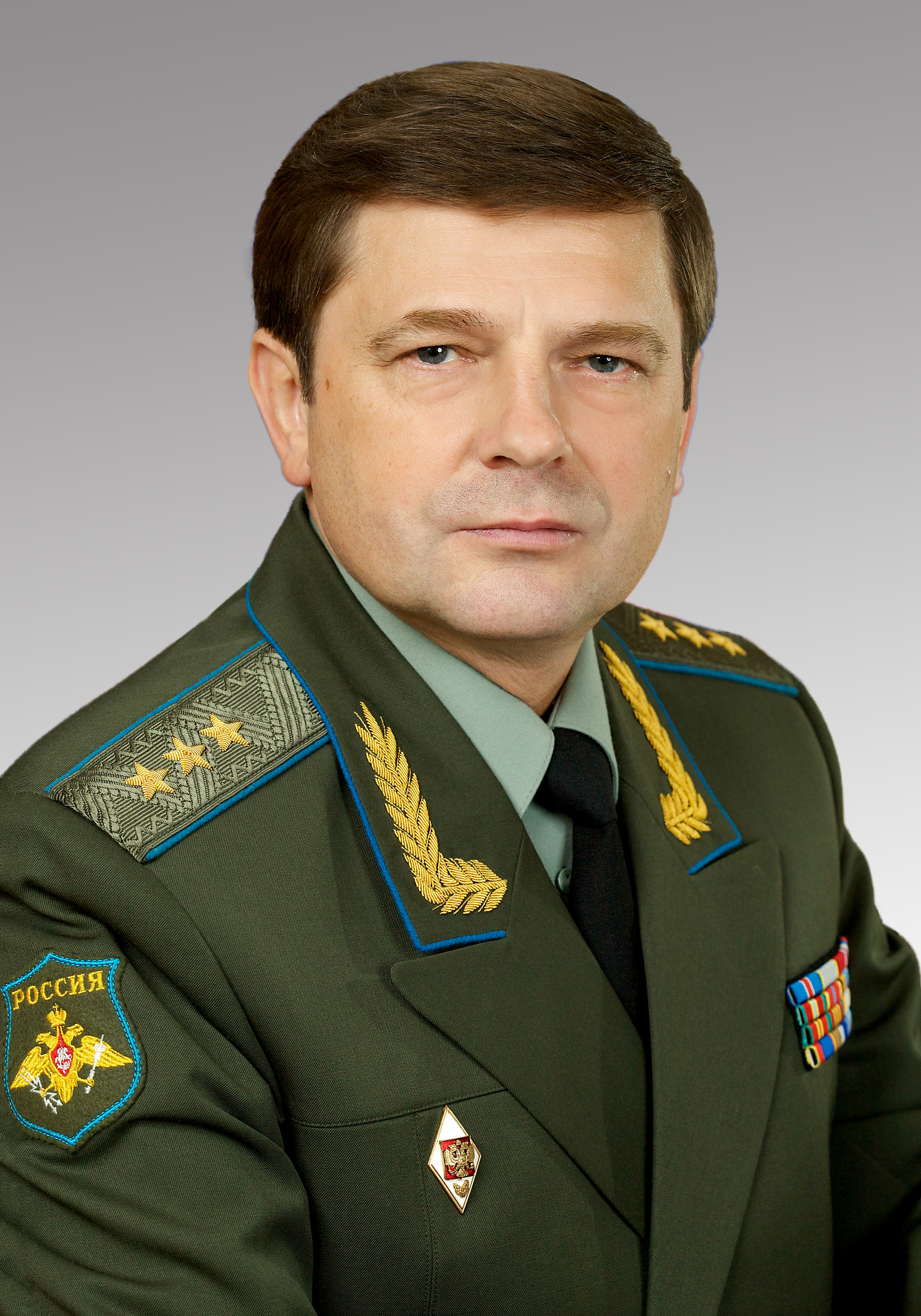
The Russian prime minister Dmitry Medvedev yesterday appointed Oleg Ostapenko as new director of the country’s crisis-ridden space agency, Roscosmos.

Colonel-General Oleg Ostapenka, the new head of the Russian Space Agency

Colonel-general Oleg Ostapenko, the new head of the Russian Space Agency{credit}Ministry of Defence of the Russian Federation{/credit}

Ostapenko, formerly a deputy defence minister in the Russian government, succeeds Vladimir Popovkin, who has been at the helm of Roscosmos since 2011.

“Now you will have time to engage in a different dimension,” Medvedev told Ostapenko at a meeting on 10 October. Congratulating him on his new job, Medvedev expressed hope that “a number of problems in the activities of the Russian federal space agency” will be overcome with the arrival of a new director.

Russia’s space programme has suffered a series of spectacular setbacks in recent years.

In July, a Proton-M carrier rocket crashed seconds after launch from the Baikonur Cosmodrome in Kazakhstan, destroying three navigation satellites.

Another Proton-M rocket carrying satellites for Russia’s space-based positioning system Glonass had failed to launch in December 2010.

And in 2011, a planned mission to the Martian moon Phobos got stuck in Earth’s orbit.

Medvedev publicly reprimanded Popovkin in August for the shortcomings in his agency’s performance. But his replacement might foreshadow more far-reaching reforms of the Russian space sector, say analysts. According to reports, the government intends to set up a new corporation that would be in charge of Russia’s entire rocket and space industry. Roscosmos would remain in charge only of policy.

For Russia, maintaining its position as a leading space nation is a scientific and economic priority and a matter of national pride. In an effort to remain on top of the game, Vladimir Putin announced in spring plans to invest US$ 52 billion in the nation’s space programme by 2020.

Management row threatens to blow Sahara solar dream

Plans to supply Europe with electricity generated in North Africa suffered another blow this week when the DESERTEC Foundation, set up in 2009 to promote the idea, pulled out of the industrial consortium which is trying to advance the €400-billion (US$514-billion) project.

The split, agreed upon during an extraordinary DESERTEC board meeting on 27 June, is the climax of growing tensions between the founders of the project and the Dii consortium — including Deutsche Bank and German energy utilities Eon and RWE — over management and strategy issues. Solar power capacities are expanding throughout North Africa and the Middle East — but Dii has recently scaled back ambitions, hinting to political and technical problems with transmitting massive amounts of electricity from North Africa to Europe.

The DESERTEC foundation — sole owner of the project’s brand name — has been increasingly unhappy with how internal discussions over the future of the project leaked to the press.

“It was always clear to us that our idea of producing electricity from the deserts (…) was never an easy task and will always face extreme challenges,” Thiemo Gropp, director of the DESERTEC Foundation, said in a statement.

“However, after many months filled with a lot of discussions we had to conclude that the DESERTEC Foundation needs to preserve its independence. [Our exit] is the result of many irresolvable disputes between the two entities in the area of future strategies, obligations and their communication.”

Gropp said the dispute has “negatively affected” DESERTEC’s reputation but he did not rule out future cooperation between the two organizations.

Analysts have repeatedly criticized the project as too big and expensive. Pulling the plug on its loss-making solar business, German engineering giant Siemens, based in Munich, quit Dii last year. Technology supplier Bosch, based in Stuttgart, also pulled out last year.

Russian Academy gets temporary reprieve

The Russian Academy of Sciences (RAS), threatened with liquidation, has been granted a temporary reprieve. The Duma — the Russian Parliament — agreed today to postpone until October its final vote on a bill that some feel will mark the end of the academy, founded in 1724 by Peter the Great.

The Russian Academy of Science is to be axed

The Russian Academy of Sciences is to be axed.{credit}Quirin Schiermeier{/credit}

The Russian government, at a meeting last week, launched a bill proposing fundamental changes to the academy. According to the bill, dated 28 June, the academy is to merge with two minor societies — the Russian Academy of Medical Sciences and the Russian Academy of Agricultural Sciences. The responsibility for the more than 400 research institutes now under the academy’s auspices would be transferred to a new government-run agency.

“It was a shocking surprise, says Vladimir Fortov, a physicist who in May was elected as the new president of the RAS.  “I’ve learned of the existence of that bill only on the eve of the government meeting on Thursday.”

The government had reportedly hoped to push the law through the Duma by the end of this week. Fortov says that he spent the last couple of days running from pillar to post trying to persuade Duma members to refrain from voting that early.  Eventually, the academy leadership and the science ministry agreed to have further discussions before the Duma votes on the bill after the summer break.

There have been long-running concerns over the dwindling scientific performance of many of the academy’s institutes. Critics say that the academy has been excessively reluctant to adopt the changes — including the introduction of a merit-based funding system based on peer review, and closure of severely under-performing institutes — that the Russian government has repeatedly urged it to make.

Fortov has previously said that he will introduce regular performance reviews and a number of other measures to make the academy more efficient. He is to remain at the helm of the new united academy, but his reform ideas might be rendered obsolete, as the envisaged new body — stripped of its management role — would bear little resemblance to the former RAS.

Russian scientists are split over the plans. Many admit that the RAS is in dire need of reform. But most are also deeply disturbed and outraged by the government’s attempt to make sweeping changes to country’s research landscape without consulting scientists.

A small group of foreign scientists working in Russia has voiced concerns that the loss of the RAS,  without adequate replacement, will be a “devastating blow to Russian science”.


Russian meteor blast was the largest ever recorded by CTBTO

https://youtu.be/duD0b1UMAnA

The blast on 15 February over the Urals Mountains of a fireball that had entered the Earth’s atmosphere over the Kazakh-Russian border was the largest explosion ever recorded by the Comprehensive Nuclear-Test-Ban Treaty Organization (CTBTO), according to the first detailed analysis of the event. The result is consistent with rougher, early estimates first reported by Nature (see ‘Russian meteor largest in a century’).

Twenty infrasound monitoring stations around the world registered the explosion, scientists report in a paper accepted for publication in Geophysical Research Letters (abstract here). A meteor explosion on 8 October 2009 over Indonesia had been recorded by 17 stations.

Some 460 kilotonnes of trinitrotoluene (TNT) equivalent — almost ten times the energy of the 2009 Indonesia event — were released when the 9,000-tonne object exploded over the Urals city of Chelyabinsk, injuring more than 1,000 people. It was the most energetic confirmed airburst since the explosion in 1908 of the Tunguska meteor over Siberia, which is estimated to have packed between 3 and 5 megatonnes of TNT equivalent. Fireball events in the order of 500 kilotonnes of explosive energy occur, on average, every 75 years.

The team reports that infrasound signals of the Chelyabinsk explosion circled twice around the globe and were recorded until almost 3 days after the event. The data on infrasound propagation can be used for calibrating the performance of the international monitoring network designed to detect violations of the nuclear-test-ban treaty that came into force last year.


Iron man elected new Max Planck president

Martin Stratmann, a director at the Max Planck Institute for Iron Research in Düsseldorf, Germany, will take the chair next year of that country’s largest non-university basic-research organization.

Martin Stratmann will become the head of the  Max-Planck-Gesellschaft in June 2014.

Martin Stratmann will become the head of the Max Planck Society in June 2014. {credit}MPS/Axel Griesch{/credit}

The Max Planck Society (MPS), which runs 80 research institutes in Germany and 13 centres and partner institutes abroad, elected Stratmann as new president at its annual assembly this week in Potsdam. The 59-year-old chemist and materials researcher will take office in June next year, succeeding developmental biologist Peter Gruss, who has been at the helm of the society since 2002.

Stratmann, has been involved with the MPS for more than 30 years. Since 2000, he has been in charge of the department for Interface Chemistry and Surface Engineering at the Institute for Iron Research, a public–private partnership between the MPS and the German Steel Institute. From 2006 to 2008, he was chairman of the MPS’s section for Chemistry, Physics and Technology. Since 2008, the expert in corrosion has been a vice-president of the society.

The Max Planck Society’s annual budget of around €2.0 billion (US$2.6 billion) is jointly financed by the federal government and Germany’s 16 state governments. Since its post-war foundation in 1948, the MPS has produced 17 Nobel prizewinners.