NIH announces database for genetic test information

The National Institutes of Health (NIH) has unveiled its Genetic Testing Registry, a  database of  information on genetic tests that will be voluntarily submitted by test producers.

According to the NIH, there are now genetic tests available for some 2,500 diseases, including those tests that can be directly purchased by consumers. Most tests do not require the approval of the Food and Drug Administration (FDA).

The registry, launched on 29 February, is meant to provide patients and health-care providers with a centralized repository for details on the myriad of disease-specific tests that are now available. The agency, which has been planning the registry for years, said it will be a resource for “all who are struggling to make sense of the complex world of genetic testing”.

Because the registry just launched, its contents are limited to entries that have been carried over from genetest.org, an NIH resource of medical-genetics information for health-care providers and researchers. The NIH is now asking for genetic-testing companies to submit to the registry on a voluntary basis.

The registry can be queried by the name of a genetic test, the name of the test’s provider or, more generally, by a condition (for example, cardiomyopathy or hearing loss) or gene. It also links to National Library of Medicine descriptions and data.

The Council for Responsible Genetics (CRG), a Boston-area consumer-advocacy group, commends the NIH for creating the database, which offers consumers previously inaccessible information. However, the group is concerned by the lack of oversight to ensure that the data are accurate. Continue reading

Biosecurity group to review new avian flu data

The National Institutes of Health (NIH) wants a biosecurity review board to reconsider the fate of two unpublished studies of the H5N1 avian flu virus in light of new data and clarifications.

Anthony Fauci, director the NIH’s National Institute of Allergy and Infectious Diseases (NIAID) made the announcement in an early-morning panel discussion of the H5N1 papers at the American Society for Microbiology Biodefense and Emerging Diseases Research Meeting in Washington DC. The studies show that lab-altered versions of the H5N1 virus can be passed between ferrets — a lab model of human flu infection — through aerosol transmission (sneezes and coughs).

The National Science Advisory Board for Biosecurity (NSABB) recommended in  December that the two studies be published only if essential experimental details are removed. On 17 February, a meeting of experts convened by the World Health Organization (WHO) came to a different conclusion: that the papers should be published in full (see Avian flu controversy comes to roost at WHO).

Investigators on the two detained manuscripts presented new data to the WHO meeting attendees and provided substantial clarification of the original data, especially the data from Ron Fouchier and his colleagues at the Erasmus Medical Center in Rotterdam, the Netherlands, said Fauci. The WHO panel recommended that the investigators revise their manuscripts with the new data and clarifications.

Although the NIH continues to support the NSABB’s original recommendation to publish redacted versions of the original studies, they also “support revision of the manuscripts to include new data and elicit clarifications of old data”, said Fauci. The agency also would like the NSABB to reconvene to examine the revised manuscripts.

Continue reading

New risk assessment for Boston biocontainment lab

A US National Institutes of Health (NIH) advisory panel has released a new risk assessment for a controversial high-security biocontainment lab located near Boston’s bustling downtown core. The draft supplementary risk assessment for the Boston University National Emerging Infectious Diseases Laboratories (NEIDL) was released on 24 February and is the next step towards satisfying legal requirements for a more thorough review of the National Biocontainment Laboratory’s safety.

The NIH established the NEIDL to support research on vaccines, therapeutics and diagnostics for emerging biological agents that could pose a serious public threat. The 18,000 square-metre, seven-story building with biosafety-level (BSL)-3 and BSL-4 containment areas was completed in 2011,  but it has so far been used only for administrative and training purposes. Lawsuits from Boston-area residents and public-interest groups have prevented use of the NEIDL’s high-containment lab facilities. The suits were driven in part by public concern over the safety of the lab, which would house research on Ebola, plague and other high-risk pathogens. As part of the legal consideration of the facility, Massachusetts courts requested more thorough reviews of its risks.

Today’s release finds that “the risk to the general public is extremely low, or beyond reasonably foreseeable, with the exception of secondary infections involving 1918 H1N1 influenza and SARS”. A large outbreak (100 or more infections) of 1918 H1N1 was predicted to occur in a range of once every 1,400–10 million years, and SARS, once every 2,500–440,000 years.

“The greatest risk is to individuals conducting research in the building,” notes the NIH in a summary of the risk assessment.

The National Research Council (NRC), part of the National Academies, reviewed the report in December and found it to be a “substantial improvement over past documents”. In 2007, at the request of the state of Massachusetts, the NRC reviewed the NIH’s earlier risk assessment of the facility and delivered a scathing critique, calling it “not sound and credible”.

The NRC’s review of the new document still raises concerns that “failure of protective equipment and failure to follow procedures on the part of personnel are underestimated in the analyses”. Nonetheless, the committee wrote that there “is no reason to fault the document”.

Boston University, which runs the lab, was reassured that the NRC approved of the new report’s methodology, but otherwise responded mildly to today’s announcement:

“We are pleased that this stage of the Draft Supplementary Risk Assessment is completed. The National Institutes of Health and the Blue Ribbon Panel have worked diligently to develop a thorough and comprehensive analysis,” said Boston University spokeswoman Ellen Berlin.

Last December, the state granted the university and medical centre permission to begin BSL-2 work, which would include low- and moderate-risk microorganisms such as Bacillus subtilis and Salmonellae.

The NIH will host a public meeting in Boston on 19 April to solicit comments on the new risk assessment.

Image credit: Boston University


Updated: Virginia moves towards personhood for embryos

Update 4:15 pm ET: The Virginia personhood bill was shelved by the state’s full Senate hours after it was approved by the legislative body’s Education and Health committee. A 24–14 vote pushed the bill back to committee until 2013.

According to the Washington Examiner, Virginia Senate Majority Leader Tommy Norment urged his fellow Republicans to help put the bill on hold.     

“There were many more complexities and nuances and legal arguments and legal perspectives on that bill that I had ever imagined,” Norment told the Examiner.

A bill that would redefine the word ‘person’ to include human embryos from the moment of conception has moved forward in the Virginia state legislature.

Last week, the Virginia House passed bill HB1 by a clear majority (66 to 32). On the morning of 23 February, the bill was approved by the state’s Senate Committee on Education and Health, and will now be considered by the full Senate. If it passes, a version of the bill will advance to governor Bob McDonnell, who has not yet committed to signing the bill into law. Such a move would surely lead to a US Supreme Court challenge.

The goal of the personhood movement, championed by Colorado-based group Personhood USA, is to render abortion illegal and eventually elicit a repeal of the 1973 Supreme Court decision in Roe versus Wade, which protects a woman’s right to have an abortion.

Personhood efforts have sprung up in various states, including Colorado and Mississippi, where the public has voted against such measures (see Mississippi to vote on ‘personhood’) . However, the push for personhood continues in many states, including Oklahoma, where a bill is now under consideration by the state legislature.

The Virginia bill under consideration states:

…the term “unborn children” or “unborn child” shall include any unborn child or children or the offspring of human beings from the moment of conception until birth at every stage of biological development.

The bill notes that the law should not “be interpreted as affecting lawful assisted conception” and before reaching the Senate committee was amended to say that it should not “be interpreted as affecting lawful contraception.”

However, it remains unclear what forms of contraception and assisted conception would be lawful in the face of a successful HB1. Previous attempts at personhood amendments have raised concerns among legal experts that widely practiced in vitro fertilization techniques and some forms of birth control that prevent implantation of fertilized eggs could be considered illegal.

Virginia is also considering a law that would force women seeking an abortion to first undergo ultrasound imaging of the fetus, regardless of whether they view the resulting images.

Image of Virginia State Capitol courtesy Flickr User Will Weaver

FDA employees sue agency over email surveillance

Six former and current scientists at the US Food and Drug Administration (FDA) have sued the agency for secretly monitoring their personal e-mail, according to the Washington Post.

The suit, filed on 25 January 2012, claims the FDA monitored the computers of several employees in the Center for Devices and Radiological Health (CDRH). All are scientists or doctors who had  contacted members of Congress or the White House over concerns that the agency was approving devices such as cancer-detecting tools they believed to be dangerous and/or ineffectual for patients. The CDRH oversees the performance and safety of medical devices.

The suit asserts that the FDA (and the government as a whole) violated the scientists’ rights to due process and free speech and violated the public’s right to associate with whistleblowers.

According to a release by the law firm representing the group, the FDA targeted the employees with a “covert spying campaign” that lasted for two years after it learned they had written a letter to president-elect Barack Obama in early 2009.  The 7 January 2009 letter claims the “scientific review process for medical devices at the FDA has been corrupted and distorted by current FDA managers,” and describes a “hostile working environment” and “disregard for federal violations.”

The letter also specifically called out breast-cancer detection devices that were approved by the FDA even though there was no clinical evidence to support their efficacy. Research after approval showed that the devices did not improve screening and led to unnecessary breast biopsies.

The plaintiffs allege the agency used spyware to read the their personal e-mails and take screenshots while they used government computers. But whether such reconnaissance is illegal is not quite clear. According to the Washington Post, “the startup screen on FDA computers warns employees, ‘you have no reasonable expectation of privacy,’ including any communication accessed or sent from the machine.”

According to the law firm representing the plaintiffs, the monitoring continued even after the Health and Human Services Office of Inspector General “denied the FDA’s request to take any criminal and/or administrative action against the whistleblowers” and noted that the whistleblowers’ communications with Congress were protected under law.

According to the suit, the FDA did not renew the contract of one of the whistleblowers, who had previously received exemplary reviews, because of his disclosures about the safety and efficacy of a colon-cancer detecting device. Another positively-reviewed scientist may have been terminated at least in part over his e-mail correspondence with Congress about concerns over the safety and effectiveness of a mammography device.  Other whistleblowers were reprimanded and threatened with disciplinary action because of their electronic communications.

“To the degree to which an agency attempts to impede the ability of federal officials to petition Congress, that is illegal,” says Paul Thacker, chief of investigations at the electoral-reform advocacy group United Republic and former medical-corruption investigator for U.S. Senator Charles Grassley.

The suit may raise questions about the FDA’s commitment to sound science and openness, a cause that current director Margaret Hamburg has publicly championed.   Although the surveillance began before Hamburg took up the role in May 2009,  it continued well after she was appointed.

The efforts of employees in any agency to try to get members of Congress to focus on issues that they believe the agency is not properly addressing are “one of the more important sources of information for Congressional committees”, says Sidney Wolfe of the Health Research Group at Washington-based Public Citizen. “A number of Congressional hearings over the years in both the House and the Senate that have been held purely as a result of information that was provided by whistleblowers in agencies”.

The FDA has told Nature it does not comment on pending or ongoing litigation.

Credit: National Institutes of Health

‘Report card’ documents the Arctic’s new normal

walrus_family_affair-300.jpgThe Arctic has entered a new era. The region has shifted to conditions of warmer air and water, less ice cover on the sea and more vegetation growing on land, says an international team of scientists in this year’s Arctic Report Card from the US National Oceanic and Atmospheric Administration (NOAA).
Unlike less frequent studies, the annual report card allows scientists to “capture changes as we learn about them,” says Monica Medina, principal deputy undersecretary for Oceans and Atmosphere at NOAA. She adds that the reports provide a baseline of understanding from which “we can have a better sense of the trends and changing conditions.”

A big part of the change is the diminishing range of the sea ice covering the Arctic through the summer months. “This year’s end of summer ice extent was the second smallest in the 32-year satellite record,” says Don Perovich, a geophysicist with the US Army Corps of Engineers Cold Regions Research and Engineering Laboratory (CRREL).

A record low for sea ice was observed in 2007. The report’s authors say there are now enough observations since that year’s dramatic decline to show that longer periods of open Arctic waters are becoming the norm. The melting ice and rising carbon dioxide levels are also making the Arctic ocean less salty and more acidic, the report finds. But water chemistry is not the only thing changing.

“We’ve always expected physical changes in Arctic to come first but in previous report cards we’ve had mixed signals when it comes to the ecosystem or the biodiversity,” says Mike Gill of the Circumpolar Biodiversity Monitoring Programme of the Arctic Council Conservation of Arctic Flora and Fauna.

This year, however, “we are starting to detect a response from these ecosystems to those physical changes,” says Gill.

Continue reading

Lynn Margulis 1938 – 2011

Margulis,-Lynn-260

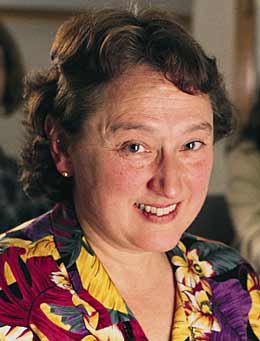
Biologist Lynn Margulis, best known for her work on the theory of endosymbiosis, died on 22 November at her home in Amherst, Massachusetts. She was 73.

Endosymbiosis is the process by which two unrelated organisms fuse into one. Early in her career, Margulis proposed that the eukaryotic cell evolved from an endosymbiotic combination of separate bacteria. Specifically, organelles such as mitochondria and chloroplasts, which have their own DNA, would have originally been free bacteria absorbed by another prokaryote. Although it was treated skeptically at first, the idea is now widely accepted as a crucial step in the evolution of eukaryotes.

“She believed in taking a theory and pushing it to the limits and her endosymbiosis work is a perfect example of that,” says Steve Goodwin dean of the College of Natural Sciences at University of Massachusetts Amherst where Margulis was a professor.

“I think she had a sense that there was a tendency among conventional scientists to stop a little too soon,” says Goodwin.

Continue reading

New neurons reduce drug-seeking behaviour

neurogenesis_needle-260.jpg

Some of the hard work of fighting addiction to heroin or cocaine is in learning not to use the drug. And if drug use inhibits the generation of new neurons that facilitate learning, the problem becomes a vicious circle. Now, research presented at this week’s annual meeting of the Society for Neuroscience in Washington DC shows that increasing the brain’s ability to generate new neurons decreases drug-seeking behaviours in rodents. The implication is that therapies that boost neurogenesis may one day help drug addicts on the long road to recovery.

In one study, a team from the University of Illinois Urbana-Champaign presented ongoing work tracking the effects of aerobic exercise on the ability of mice to disassociate the memory of a particular setting with cocaine.

Earlier this year, graduate student Martina Mustroph and her colleagues reported in the European Journal of Neuroscience that aerobic exercise, which is linked to neurogenesis, helped mice learn that a particular chamber of a cage was no longer associated with cocaine. The researchers first trained mice to associate an injection of cocaine with the textured floor of one chamber of a cage. Given a choice of chambers, the trained mice would then spend more time in the cocaine-associated one. Once cocaine was no longer given, mice who exercised after the drug training reduced their time in the textured chamber more quickly than did sedentary mice.

In a poster presentation this week, Mustroph and her colleagues described an experimental set up that will help them to better understand the mechanisms for this effect on learning and drug-use context. Former drug addicts can experience strong cravings for their former favourite poisons simply by revisiting places in which they once used drugs. The researchers’ work will allow them to tease out whether running helped the mice learn to not associate the environment with cocaine or if exercise interferes with long-term consolidation of the initial association.

Continue reading

Personhood amendment rejected in Mississippi

NoOn26.jpgVoters in the state of Mississippi have decided that a fertilized egg should not be given the legal rights and privileges of an infant or adult human.
With two-thirds of precincts reporting following today’s state-wide election, it seems that the vote is about 57% against Initiative 26 — a ballot measure that proposes to amend the state’s constitution to redefine ‘person’ as “every human being from the moment of fertilization, cloning, or the equivalent thereof”.

Such an amendment would have criminalized abortion in the state in most, if not all, circumstances. Some opponents of the initiative were also concerned about its implications for in vitro fertilization (IVF), some forms of birth control, and for human embryonic-stem-cell research (see Mississippi to vote on ‘personhood’ ).

“We’re proud that the people of Mississippi looked at the facts and made the decision that this is a dangerous and extreme government intrusion into people’s lives,” Stan Flint, a consultant for Mississippians for Healthy Families, based in Jackson, told Nature.

The 8 November election is the third time a personhood amendment has gone to the polls in the United States. In 2008 and 2010, similar initiatives were voted on in Colorado and neither passed. The amendments earned, respectively, 27% and 29% of the vote. Although Initiative 26 was unsuccessful, it looks to have earned a higher percentage of ‘yes’ votes than any similar measure. This could boost efforts to get personhood amendments on the ballot in several more states for elections in November 2012.

AIDS-free generation now possible, says Clinton

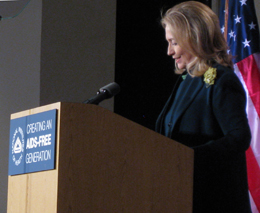
hillary1.jpgAn AIDS-free generation is possible if the world makes the most of proven preventive interventions, said US Secretary of State Hillary Clinton on 8 November at the National Institutes of Health (NIH) in Bethesda, Maryland.

Clinton announced that the US government will now commit an additional US$60 million to scale up combination prevention efforts in sub-Saharan Africa and “rigorously measure the impact.” The AIDS pandemic is most severe in sub-Saharan Africa, where 70% of AIDS-related deaths occur.

In 2010, the United States spent almost $7 billion in the fight against HIV/AIDS and associated diseases such as tuberculosis. The funding announced today will help researchers determine how well the combination prevention efforts work towards eliminating AIDS in different settings.

“Creating an AIDS-free generation has never been a policy priority for the United States government until today because this goal would have been unimaginable just a few years ago,” she said before an auditorium filled with members of the NIH community, HIV/AIDS advocates, domestic and foreign dignitaries and US government officials.

Building on the efforts of policy-makers and scientists in the United States, the world can “usher in an AIDS-free generation” by focusing on the combination of three proven strategies: ending mother-to-child transmission, expanding voluntary medical male circumcision, and scaling up treatment for people living with HIV/AIDS.

Mother-to-child transmission accounts for 1 in 7 new HIV infections. The transmission can be prevented with anti-retroviral therapies and safe birth and feeding practices. Last year, the President’s Emergency Plan for AIDS Relief (PEPFAR) helped prevent infection in some 114,000 babies, and PEPFAR and the United Nations Programme on HIV/AIDS (UNAIDS) have since launched a global plan to eliminate all new infections in children by 2015.

Continue reading