Now you see it… now you don’t

New research suggests that mammography, the low dose x-ray procedure that helps doctors diagnose small tumors in the breast, might frequently pick up tumors that will go away on their own. Scientists in Norway tracked two populations of over 100,000 women between the ages of 50 and 64. One group received mammograms every two years while those in the other group had a single mammogram at the end of the six-year study. The incidence of invasive breast cancer (the type of cancer that has spread beyond the milk ducts and into the surrounding tissue) was 22% higher in the frequent screening group. This finding led researchers to speculate that mammograms had detected cancers that would have regressed if the women had received no treatment. Otherwise they would expect the two groups, which had parallel risk factors, to have similar breast cancer incidence.

Without further research, it is unclear how often mammograms detect cancers that spontaneously regress. But if it happens as often as this study suggests, then doctors will have to spend more time thinking about how one can distinguish between a cancer that is likely to regress on its own and one that could progress and threaten a woman’s life. Should women endure surgeries, radiation and chemotherapy for cancers that could potentially disappear with no treatment at all?

If some 20% of cancers picked up in mammograms actually do regress within six years, it seems risky to assume they would disappear forever. Perhaps, in a decade or two, some of these tumors could return more aggressive than ever. Or if these cancers do vanish indefinitely, understanding what prevents them from mustering a full-fledged assault on the body might help scientists develop new treatment strategies.

Undoubtedly, this article raises a host of interesting research questions. But where does the scientist begin? I think we need longer term studies comparing groups of women receiving frequent and infrequent mammograms in order to determine if the incidence rates remain disparate beyond six years. What do you think should be on the agenda for future studies?

Ribbons.jpg

Photo by KaiChanVong

The broader problem with HPV

A study presented at this month’s conference of the European Research Organization on Genital Infection and Neoplasia provided evidence that a widely-marketed cervical cancer vaccine might also stave off genital warts in young men. Gardasil, which immunizes women against the cancer-causing human papillomavirus (HPV), is also 90% effective in shielding young men from developing genital lesions caused by the four HPV strains it targets, scientists reported. The study was funded by the vaccine’s maker, Merck.

Health agencies in Australia and other countries have already approved Gardasil use for both males and females, but the US government has only cleared the vaccine for use in females. Merck is now seeking US Food and Drug Administration (FDA) approval for Gardasil’s use in preventing genital lesions among males ages 9 to 26.

Thwarting genital warts is an obvious boon—and there are other compelling arguments for extending Gardasil’s use to young men. HPV plays a role in oral, neck and other types of cancers affecting males. Furthermore, vaccinating boys might potentially curb the spread of the virus to young women, thereby reducing the burden of cervical cancer—the fifth deadliest cancer among women worldwide. And isn’t it only fair to vaccinate men and women for a disease both are responsible for spreading?

The idea may sound appealing, but concerns remain about Gardasil’s value—even for girls. And some reports have suggested that the vaccine might, in very rare circumstances, trigger serious illness among certain people. Additionally, exactly how long the immunity conferred by the vaccine lasts is unknown. Experts point out that the average follow-up time for patients in Gardasil’s clinical trials was about 15 months. There is also the argument that the vaccine, which costs about $375, may not be cost-effective for all of its target age groups.

Given the unresolved questions about Gardasil use in women, I think we should think twice about broadening its application to men at this time. What do you think?

mensign.JPG

Photo by CarbonNYC

Dementia with that martini?

The UK might have an insidious epidemic on its hands, one that is nursed by beer, wine and spirits. Alcohol-related dementia may be an under-recognized health problem that will only worsen as alcohol gets cheaper and attitudes about drinking relax, warn London-based psychiatrists Susham Gupta and James Warner in an article published this month.

The average British person is currently drinking twice as much as he did in the 1960s. If the trend continues, the UK is on track to becoming one of the top alcohol guzzling nations in all of Europe, Gupta and Warner predict. And that’s saying a lot—the European Union is “the heaviest drinking region of the world,” according to a recent European Commission report.

Research suggests that excessive alcohol consumption correlates with tissue loss in the superior frontal cortex, the part of the brain involved in decision making. There is also evidence that alcoholism might lead to changes in expression of genes involved in neurodegenerative diseases such as Alzheimer’s, suggesting that alcohol abuse may be connected to some forms of dementia.

But such findings are often overshadowed by media reports trumpeting results most of us would rather hear; a study suggesting that moderate alcohol consumption may actually slow the onset of dementia among some older people, for example. When it comes to alcohol and dementia, the research results tend to follow a J-shaped curve, Gupta and Warner point out. Moderate consumption (up to one daily drink per day) correlates with reduced dementia risk, while increasing levels correspond to a climbing risk.

Since excessive drinking is particularly popular among younger generations, it may take decades to understand the public health impact of today’s drinking trends. Should governments try to preempt the problem? Gupta and Warner hint that governments might consider legislation similar to that used to fight tobacco-related health problems. What do you think of this idea—sensible or extreme?

alcohol-dementia.jpg

Photo by glennharper

A test for predicting menopause?

When will I hit menopause? How many more years will I be able to get pregnant? Many women ask themselves these questions, especially if they are planning to combine a family life with a professional career.

Scientists are trying to help women find answers. MaryFran Sowers and her colleagues from the University of Michigan in Ann Arbor are using a range of variables, including age and hormone levels, to predict the time window in which a woman is likely to hit menopause. The method they have developed has been published but is far from being packaged into a commercial test. Meanwhile, at least one European company is already selling a mail-order fertility kit: the PlanAhead Fertility Test, which according to the company can estimate the number of eggs remaining in the ovaries based on hormone concentrations.

This idea of precisely predicting menopause is appealing, but a one-size-fits-all test may not work for every woman, cautions Sowers. Factors such as obesity, diabetes and smoking might affect a woman’s fertility and the age she reaches menopause. Sowers is now beginning to study these special subpopulations.

There are clear benefits to knowing when menopause is coming. A woman who knows she is likely to soon lose the cardiovascular and bone benefits of reproductive hormones might be motivated to cut saturated fats and cholesterol from her diet, for example. But there may be instances in which knowing the future could lead to risky decisions. Suppose a woman takes a menopause predictor test and learns that she isn’t likely to reach menopause until age 55. She may delay childbearing until age 40, when her chances of developing gestational diabetes and placental problems are significantly higher. Research also shows that women over 40 are about 40% more likely than younger women to deliver early, and premature babies face a higher risk of developing chronic lung disease and other health problems. Will menopause tests lead to more high risk pregnancies?

For more of the latest news on fertility and reproduction, please see Nature Medicine’s November special on reproductive medicine.

Ultrasound.jpg

Photo by Morten Liebach

Putting the FDA on the spot

Prescription drugs occasionally have unintended and devastating outcomes—think Vioxx, the blockbuster painkiller that was pulled from the market when research suggested it might increase the risk of heart attacks and stroke .

Until now, patients have had legal recourse against pharmaceutical companies that they believe failed to provide adequate warnings on product labels: they can sue these companies in state courts. But a new case facing the Supreme Court threatens to scrap this privilege and broaden the legal shield protecting pharmaceutical companies. The Court is expected to hear Wyeth v. Levine on 3 November. The case concerns a woman who lost part of her arm to gangrene following an injection with the company’s anti-nausea drug Phenergan. She claims that Wyeth’s product labeling failed to adequately discourage patients from administering the drug through injection.

If the drug company prevails, consumers will be denied legal redress, the pharmaceutical industry will be off the hook, and the burden of ensuring proper product labeling will fall almost entirely on the Food and Drug Administration (FDA). With all due respect, isn’t this a lot to expect from the FDA, an agency known for being underfunded and backlogged with products awaiting approval? As editors of the New England Journal of Medicine have pointed out, FDA approval is typically based on short studies that fail to reveal long term health consequences. Furthermore, the agency relies heavily on the goodwill of drug companies to reveal potential safety problems, lacking the subpoena power required to make them tell all. If Wyeth rules in favor of the industry, will this not redirect lawsuits onto the FDA?

Drug companies know the most about their drugs—after all, they developed and tested them—so they should be responsible for informing patients of risks. What do you think?

supreme court.jpg

Photo by dbking

Biden on bird flu

The world is watching US SenatorJoe Biden today. The the new hopeful for vice president will speak tonight at the Democratic National Convention in Denver. Through his previous legislative proposals, though, he has already said volumes about what global health issues he views as important.

Last summer, Senator Biden introduced the Global Pathogen Surveillance Act of 2007 (S. 1687), which would expand overseas infectious disease laboratories run by the Centers for Disease Control and Prevention (CDC). Experts say the risk of an avian flu pandemic is as great as ever. But according to Biden, the US government is only “one-third” prepared for an outbreak.

A report submitted by Biden urging passage of the Global Pathogen Surveillance Act calls developing nations the “weak links in a comprehensive global surveillance and monitoring network” and cites research suggesting that about one-third of countries may not even have the tools required to diagnose avian flu in humans. It’s no surprise then that the proposed legislation would also provide assistance to developing nations that need better tools for recognizing and containing infectious disease outbreaks.

Forgive the pun, but in my opinion this legislation kills two birds with one stone. In addition to offering increased protection from natural pandemics, it would help prepare the global community for launching a coordinated response against a biowarfare attack; biological agents, manmade or natural, are likely to spread through human populations in similar ways. If passed, the act would cost each American family about $1—a small sum compared with the approximate per-family cost of $300 for the United States Global Leadership Against HIV/AIDS, Tuberculosis and Malaria Reauthorization Act of 2008 (also known as PEPFAR), recently signed by US President George W. Bush.

chicken.jpg

Photo by Just chaos

The best defense against biowarfare

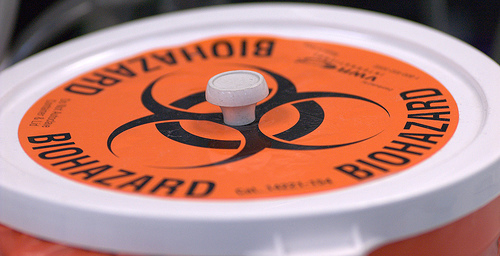
The recent suicide of vaccine researcher Bruce Ivins, the FBI’s prime suspect in the fatal anthrax mailings following the 9/11 attacks, has brought bioterrorism back to the forefront of the national consciousness. Many people are pondering out loud: Is the US prepared to respond to a bioweapons attack? Probably not, according to recent media reports. The government has invested some $50 billion in biowarfare research since 2001, which has gone into creating new labs, building up stockpiles of antibiotics and smallpox vaccines, and devising strategies for large-scale distribution of these medicines. Yet despite considerable progress, there is still work to be done; we still don’t have a suitable anthrax vaccine, for example.

Congressional investigators have expressed concern that the recent proliferation of biowarfare research facilities might actually increase US vulnerability because more people have access to dangerous materials, which generates more opportunities for accidents and abuse. There are currently some 14,000 people working at about 400 laboratories authorized to study certain ‘select agents’ — dangerous viruses, bacteria and toxins, some of which could be weaponized, The New York Times has reported.

But I think the more people conducting research in this area, the better. Chemical and biowarfare attacks are likely to happen regardless of how hard we try to thwart them. Much of the scientific information required to make bioweapons is freely available on the Internet; synthetic DNA can be mail-ordered with the click of a mouse. Our best defense against biowarfare is to cultivate a vibrant biomedical research community with agile response capabilities. We need biosensing systems that can rapidly detect dangerous particles in the environment, fast tests for identifying pathogens, along with new vaccines, antibiotics and antivirals.

Stockpiling medications is not sufficient; we need better techniques for designing and manufacturing the medicines, as it is impossible to anticipate every potential biowarfare scenario. (To get an idea of the number of potential agents we are dealing with, check out the select agents list compiled by the feds and you find everything from the familiar botulinum neurotoxin to the mysterious “Lumpy skin disease virus.”)

The best step the US government can take to prevent abuses and accidents is to cooperate with its international partners to create an effective oversight framework under which this type of research can flourish safely. This, unfortunately, has not yet happened.

biohazard.jpg

Image by canardo

United we disclose

The relationship between pharmaceutical makers and physicians has come under close scrutiny lately. In recent weeks Congressional leaders have accused Harvard physicians of failing to properly disclose large payments from drug companies; meanwhile, other reports have highlighted the industry ties of certain experts who helped write the American Society of Pediatrics’ new recommendations for managing childhood cholesterol.

One way to facilitate greater transparency in biomedical research is to adopt a universal policy for reporting conflicts of interest in the scientific literature, according to the Center for Science in the Public Interest, a nonprofit health advocacy group based in Washington, DC.

The group has released a model disclosure policy, which requires authors to tell editors about all potentially relevant financial relationships from the past three years. This means all types of employment, consulting gigs, patents and patent applications for products related to the research, travel grants, speaking fees, writing fees, membership to science advisory boards, stock ownership (including investments by immediate family members) in funding by firms that have anything at stake in the research, and perhaps even strong personal, intellectual or political convictions relating to the study. The authors would also submit formal conflict-of-interest statements to be published along with the paper, which editors would evaluate against the scientists’ private declarations.

Transparency always seems to be the best policy, but will everyone agree upon what constitutes a potentially relevant conflict of interest? Some people are exceptionally good at convincing themselves that they are immune to bias, and since the policy relies on an honor system it will be hard to keep track of those who defy it. The other question is whether a uniform policy is better than having each journal frame its own policy, one that is tailored to the particular set of issues affecting its field. For example, patent issues seem to be particularly germane to biotechnology but not so much to geoscience, and pharmaceutical consulting fees are intensely to relevant to medicine but much less so to the physical sciences. Would a universal policy even be practical?

conflict.interest.jpg

Photo by Mike Licht, NotionsCapital.com

Statins “R” US

The American Academy of Pediatrics has stirred up a controversy with its new recommendations for childhood cholesterol management. Appearing in this month’s edition of Pediatrics, the guidelines instruct doctors to begin cholesterol screening in children ages two to ten with risk factors such as obesity, diabetes and a family history of high cholesterol. For interventions, the authors recommend a healthy diet, nutritional counseling and physical activity – nothing surprising. But here’s the kicker: doctors should consider prescribing cholesterol-lowering statins for children as young as eight with high cholesterol.

This last recommendation has concerned people for a number of reasons. Although research shows that statins can lower cholesterol in adults and children, critics argue that no studies have lasted long enough to assess the long-term effects of taking the drugs so early in life. Furthermore, the article contains no conflict-of-interest disclosures from its seven authors, one of whom has worked as a consultant for Merck & Co., a company that makes statins, and another who has been involved in industry-backed clinical trials on cholesterol meds. Finally, there is concern that the recommendations will put pressure doctors to prescribe statins to kids with borderline high cholesterol – those who could otherwise control it with diet and exercise.

“This report has taken on a new urgency given the current epidemic of childhood obesity with the subsequent increasing risk of type 2 diabetes mellitus, hypertension and cardiovascular disease in older children and adults,” the authors assert. But is it possible that pushing statins for certain kids will actually worsen the obesity epidemic by shifting emphasis away from the more fundamental issues of diet and lifestyle?

tools.JPG

Photo by striatic via Flickr

An oath for lIfe scientists?

Life scientists sometimes work with dangerous pathogens and chemicals capable of causing grave damage to human health; they engineer novel organisms and conduct high-stakes clinical trials. These scientists are also under incredible pressure to produce results, publish papers and get ahead in their fields. One would hope that all researchers, especially those in the life sciences, adhere to the highest ethical standards. But a recent study by the US Department of Health and Human Services suggests this might not always be the case. The survey by the agency’s Office of Research Integrity found that 9% of US scientists believed they had observed possible research misconduct, such as fabricated research records and misleading grant applications.

To address this issue, the Institute of Medical Science at the University of Toronto has its students recite an oath before embarking upon their graduate studies. The oath is short and pithy; students pledge, among other things, to “pursue knowledge and create knowledge for the greater good, but never to the detriment of colleagues, supervisors, research subjects or the international community of scholars.” They swear never to allow “financial gain, competitiveness, or ambition” cloud their judgment in research and scholarly endeavors.

This strikes me as an excellent idea. Providing students with an opportunity to proclaim their good intent in front of peers is a great way to cultivate a responsible culture. I think all life science graduate programs should be doing this. What do you think?

oath.JPG

Photo by The Opus