
The recent suicide of vaccine researcher Bruce Ivins, the FBI’s prime suspect in the fatal anthrax mailings following the 9/11 attacks, has brought bioterrorism back to the forefront of the national consciousness. Many people are pondering out loud: Is the US prepared to respond to a bioweapons attack? Probably not, according to recent media reports. The government has invested some $50 billion in biowarfare research since 2001, which has gone into creating new labs, building up stockpiles of antibiotics and smallpox vaccines, and devising strategies for large-scale distribution of these medicines. Yet despite considerable progress, there is still work to be done; we still don’t have a suitable anthrax vaccine, for example.
Congressional investigators have expressed concern that the recent proliferation of biowarfare research facilities might actually increase US vulnerability because more people have access to dangerous materials, which generates more opportunities for accidents and abuse. There are currently some 14,000 people working at about 400 laboratories authorized to study certain ‘select agents’ — dangerous viruses, bacteria and toxins, some of which could be weaponized, The New York Times has reported.
But I think the more people conducting research in this area, the better. Chemical and biowarfare attacks are likely to happen regardless of how hard we try to thwart them. Much of the scientific information required to make bioweapons is freely available on the Internet; synthetic DNA can be mail-ordered with the click of a mouse. Our best defense against biowarfare is to cultivate a vibrant biomedical research community with agile response capabilities. We need biosensing systems that can rapidly detect dangerous particles in the environment, fast tests for identifying pathogens, along with new vaccines, antibiotics and antivirals.
Stockpiling medications is not sufficient; we need better techniques for designing and manufacturing the medicines, as it is impossible to anticipate every potential biowarfare scenario. (To get an idea of the number of potential agents we are dealing with, check out the select agents list compiled by the feds and you find everything from the familiar botulinum neurotoxin to the mysterious “Lumpy skin disease virus.”)
The best step the US government can take to prevent abuses and accidents is to cooperate with its international partners to create an effective oversight framework under which this type of research can flourish safely. This, unfortunately, has not yet happened.
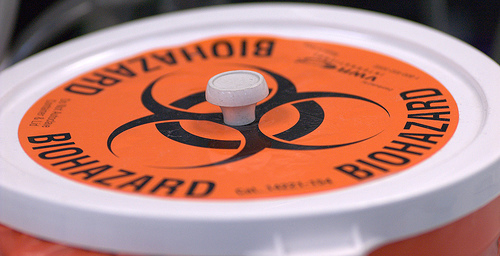
Image by canardo