Open-access genome project lands in UK

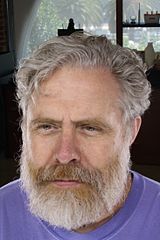
George Church

George Church{credit}Wikimedia Commons{/credit}

In 2008, a group of prominent scientists and entrepreneurs announced, after careful consideration, that they would make their genome sequences public, marking the launch of the Personal Genome Project (PGP). The “open source” genomics effort sought to make the genomes and medical histories of 100,000 people available for anyone to use. It was started by George Church, a genomicist at Harvard Medical School in Boston who was among the first 10 participants, or the “PGP-10.”

Now Church is taking his open-access genome model global. At a predictably packed press conference on 6 November, he announced the launch of a UK edition, and that a European franchise is on the way for 2014. A Canadian PGP started enrolling volunteers in December 2012.

The UK-PGP is aiming for another 100,000 participants. Stephan Beck, a genomicist at University College London leading the effort, says he is one of the 400 already on the waiting list. They plan to sequence 50 genomes in the first year.

In the five years since it started, the US edition has released 200 genomes and more limited genetic data on another 500, with a waiting list in the thousands. But Church expects growth to be exponential, once sequencing costs fall sufficiently.

In contrast to the United States, England has a publicly funded health care system in the National Health Service (NHS), with near-universal enrollment. This raises some interesting questions for the UK-PGP.

Like their American counterparts, UK participants will be asked to input their own medical histories to go along with their genome sequences. The questionnaire is exhaustive and it can take several hours to complete. But a patient’s NHS record — including the results of lab tests — would be even more helpful than patients’ self-reported information for scientists looking to correlate genetics and health. Beck says he hopes that NHS gives patients the option to upload their NHS records to PGP, but that is not yet possible.

Meanwhile, NHS England has its own genome sequencing effort, which is being led by a company called Genomics England with plans to sequence 100,000 genomes over the next 5 years. Beck says he has talked with officials there about collaborating. For instance, Genomics England could use a PGP data as a quality control, for a participant enrolled in both programmes. But Beck would like the relationship to extend even further. “We are very interested to work together with Genomics England to develop a procedure so those individuals willing to donate their genome can, so it becomes a PGP genome, and all associated data becomes open to everyone,” he says.

Genomics England, however, is eager to draw a distinction between it and PGP. “There are significant differences between PGP and our programme, notably that we are focusing on NHS patients with diagnosed diseases. We therefore have a different approach to privacy and data access and take this very seriously, because we have a duty of care to NHS patients,” executive chairman John Chisholm said in a press statement. A spokesman for Genomics England, Mark Palin, also questions whether patients would be able to release their NHS data through PGP. “I don’t know how it would work,” he says.

Nature has covered the US version of the PGP extensively (see: “Give me my genome”, “Nature readers flirt with personal genomics” , “Be prepared for the big genome leak”); and most recently, an op-ed in the magazine by Church advocated for more people to inspect their own genomes (see: “Improving genome understanding”).
Nobels 2013: Chemistry prize goes to computer modellers

nature nobel

{credit}ALAMY{/credit}

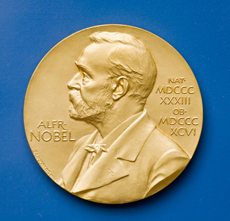
“This year’s prize is about taking the chemical experiment to cyberspace,” the Nobel Committee announced this morning, before giving this year’s chemistry prize to three scientists for their work on computer models of chemical interactions.

The winners are Martin Karplus, at the University of Strasbourg in France and Harvard University in Cambridge, Massachusetts; Michael Levitt of Stanford University in California and Arieh Warshel, at the University of Southern California in Los Angeles.

“Chemists used to create models of molecules using plastic balls and sticks. Today, the modelling is carried out in computers. In the 1970s, Martin Karplus, Michael Levitt and Arieh Warshel laid the foundation for the powerful programs that are used to understand and predict chemical processes,” the Nobel Committee said in a press release. The trio came up with methods that melded the simplicity of classical Newtonian physics with the exquisite detail of quantum physics, making it possible to model complex chemical reactions, such as how a drug interacts with a protein target. In that example, quantum calculations would reveal the detailed chemical interactions between the drug and the portion of protein to which it binds, while classical physics methods would deal with the rest of the protein.

My colleague Richard Van Noorden will have a full account up soon on Nature‘s news homepageUpdate: the story is now live, here.

Previous Chemistry Nobelists include: Brian Kobilka and Robert Lefkowitz in 2012, for their work on G-protein-coupled receptors (see ‘Cell signaling work nets chemistry Nobel’); Daniel Shechtman in 2011, for the discovery of quasi-crystals (see ‘Impossible crystals snag chemistry Nobel’); and Richard Heck, Ei-ichi Negishi and Akira Suzuki in 2010, for developing new chemical synthesis methods (see ‘Chemistry Nobel won by…chemists‘).

The headline to that last story underscores the fact that the chemistry prize has often been doled out to life sciences — four  out of the past seven, including this year. But this is not a recent trend. Between 1950 and 2000, life sciences topics have garnered 15 chemistry Nobels, by my count. Granted, many of these are for chemical insights into biomolecules such as proteins and RNA.

Update 11:59 a.m.

Our sister journal Nature Structural & Molecular Biology published a 2001 essay by Levitt titled “The birth of computation structural biology,” in which he describes some of the work that garnered this year’s chemistry prize. It’s a nice account, with a couple writerly touches. (“While Warshel and I were travelling around the world, our computer program, CFF, had wings of its own.”)

The essay’s title also underscores how important their work has been for biologists. The first applications of their methods were used to model proteins and other big biomolecules, and Levitt certainly saw his work opening doors for future life scientists. “Computers were made for biology,” he writes. “Biology would never have advanced as it did without the dramatic increase in computer power and availability. One day we would like to be able to simulate complicated biological processes, perhaps even going from the genomic sequence to a full simulation of the organism’s phenotype.”

But as the Nobel Committee points out in their account (PDF here), “the strength of the methods that Martin Karplus, Michael Levitt and Arieh Warshel have developed is that they are universal. They can be used to study all kinds of chemistry; from the molecules of life to industrial chemical processes. Scientists can optimize solar cells, catalysts in motor vehicles or even drugs, to take but a few examples.”

Update 12:51 p.m.

The work of Karplus, Levitt and Warshel has launched a supercomputing arms race to model protein structures in nanoseconds instead of hours or days, according to a 2008 Nature feature entitled ‘Power play‘. The story profiles Klaus Schulten, a protein modeller at the University of Illinois in Urbana–Champaign, whose computer program NAMD (Nanoscale Molecular Dynamics) was once the best tool for modelling the behaviour of individual atoms in protein. “But the German-born physicist got his wake-up call in 2006, when he saw a table of computing benchmarks in a report from that year’s supercomputing conference in Tampa, Florida. A new program called Desmond, he saw, could calculate each step of a standard molecular-dynamics simulation — the 23,558 atoms in a system involving the protein dihydrofolate reductase — in a little over a thousandth of a second. NAMD was ten times slower.”

Update 2:09 p.m.

In one of the papers cited by the Nobel Committee, ‘Computer simulation of protein folding‘, Levitt and Warshel describe one of the earliest efforts to use computers to predict the structure of a protein. Historically, scientists determined precise protein structures through X-ray crystallography — a sometimes tedious technique in which a crystalline form of a protein is bombarded with X-rays, and its structure inferred from the diffraction patterns. Levitt and Warshel’s method accurately simulated how a protein called bovine pancreatic trypsin inhibitor folds into its native shape. Protein structure prediction has since exploded as a research field, in part driven by a ‘contest’ called CASP (for Critical Assessment of Protein Structure prediction), in which researchers are challenged to design computer programs that can predict a series of protein structures that have been determined experimentally, but not yet published.

Update 2:22 p.m.

An emerging area of research, in which proteins are designed to perform a particular task such as eliciting an immune response against HIV or catalyzing a chemical reaction, also relies heavily on the work of Karplus, Levitt and Warshel. For more check out previous Nature coverage: ‘Proteins made to order‘ and ‘The shape of protein structures to come‘.

Personal-genetics firm denies pursuit of designer babies in patent filing

landingpage-screengrab-300x192

{credit}23andMe{/credit}

The consumer genetics firm 23andMe was last week awarded a US patent for a method to predict a baby’s traits on the basis of its parents’ DNA, the company announced.

23andMe, which is based in Mountain View, California, says that the patent relates to its Family Traits Inheritance Calculator, which “offers an engaging way for you and your partner to see what kind of traits your child might inherit from you” and has been available to customers since 2009.

Yet the patent (PDF here), which was filed more than 5 years ago, includes language that mentions other applications of the method, including for the screening of sperm and ova to be used for in vitro fertilization. The patent mentions the potential to screen would-be babies for traits such as eye colour, disease risk, height and gender.

The company says that it included such language when it filed the patent because it saw the potential for the tool to be used in fertility clinics. “But much has evolved in that time, including 23andMe’s strategic focus. The company never pursued the concepts discussed in the patent beyond our Family Traits Inheritance Calculator, nor do we have any plans to do so,” it says.

23andMe’s first patent, relating to a genetic variant associated with Parkinson’s disease, angered some customers, who objected to the company’s potentially making a profit from their genetic information (see ‘Personal-genetic company patent raises hackles’).

In commentary piece published today, Sigrid Sterckx, a bioethicist at Ghent University in Belgium, raises concerns about the 23andMe patent, and the processes that led to its approval: “[A]t no stage during the examination of the patent application did the patent office examiner question whether techniques for facilitating the ‘design’ of future human babies were appropriate subject matter for a patent,” she and her team write.

Updated 3/10/13 to include Sterckx’s commentary on the patent, which was under press embargo.

NIH approves first uses of HeLa genome

A US National Institutes of Health (NIH) committee approved the first uses of genomic data from the HeLa cell line on 16 September. The HeLa Genome Data Access Working Group includes representatives of the family of Henrietta Lacks, the African American woman whose fatal cervical tumour gave rise to the HeLa cell line in 1951.

The announcement follows several months of negotiations between Lacks family members and NIH leadership, including director Francis Collins. The talks resulted in an agreement in which researchers must seek permission to use HeLa genome data generated by independent teams at the University of Washington in Seattle and the European Molecular Biology Lab in Heidelberg, Germany (see ‘Deal done over HeLa cell line‘).

The working group received six requests; it recommended four for approval and sought further information on the other two. Intellectual-property rights figured prominently in the decisions. The working group asks researchers to disclose any plans to develop intellectual property or commercial products from the HeLa genome data. Scientists must also agree to use the data only for biomedical research (ancestry and population research are off limits). Scientists are also barred from contacting members of the Lacks family, though they can seek additional detail via the working group.

Publications that use the HeLa data must also include an acknowledgement: “Henrietta Lacks, and the HeLa cell line that was established from her tumor cells without her knowledge or consent in 1951, have made significant contributions to scientific progress and advances in human health. We are grateful to Henrietta Lacks, now deceased, and to her surviving family members for their contributions to biomedical research.”

David Lacks Jr., a grandson of Henrietta Lacks who is serving on the working group, told Nature last month that he was looking forward to finally having a say in how his grandmother’s cells are used by researchers. “The HeLa cell has done so much for the world. We’re hoping that the genome sequence will do equally as much for the world,” he said in the interview.

For more Nature News coverage of the HeLa deal:

NIH Director explains HeLa agreement
07 August 2013

HeLa publication brews bioethical storm
27 March 2013

Most popular cell line in science gets sequenced
15 March 2013

California stem-cell agency discloses grant-review conflict

Leroy Hood

Leroy Hood{credit}Wikimedia Commons{/credit}

Leroy Hood, head of a prominent research institute in Seattle, Washington, violated conflict-of-interest rules when he reviewed a friend’s grant, California’s stem-cell agency disclosed in a letter to the state legislature.

The 2 April letter was first reported by the California Stem Cell Report, an independent blog that covers the California Institute for Regenerative Medicine (CIRM), a US$3-billion agency established in 2004.

Hood, a DNA-sequencing pioneer who is president of the Institute for Systems Biology, reviewed a $24-million application to CIRM that included Irving Weissman, a stem-cell scientist at Stanford University in California. Hood and Weissman are good friends and own a ranch together in Montana — a fact that Hood did not disclose when he completed a conflict of interest disclosure.

It was Hood’s first stint reviewing a CIRM grant, and he was not aware of the agency’s conflict-of-interest rules, the letter said. The application (for a genomics data centre and three research projects) was unsuccessful, and Hood’s conflict-of-interest violation did not break any laws. Hood did not review the part of the application that directly involved his pal, and the National Medal of Science winner was not involved in the decision to reject the application. Another grant reviewer raised the potential conflict.

CIRM’s president, Alan Trounson, has been a guest at the ranch, and the stem-cell scientist was the one who recruited Hood to become a reviewer for the agency, CIRM told California Stem Cell Report.

A December 2012 US Institute of Medicine review of CIRM called for changes at the agency to address conflicts of interest on the agency’s board, among other issues (see ‘Scientific panel recommends changes to California’s stem cell institute’.

Somalia records its first wild polio case since 2007 — UPDATED

poliowhoA 32-month-old girl living near Mogadishu was recently paralysed by wild poliovirus, the World Health Organization (WHO) announced on 11 May. It is Somalia’s first case caused by wild poliovirus since March 2007.

Polio immunization campaigns have not occurred in some central and southern parts of the strife-torn nation since 2009. Beginning 14 May, the country plans to vaccinate 350,000 children living in the Banaadir region, where the infection occurred. A nationwide immunization campaign is “under discussion”, according to the WHO.

Genetic testing to determine the virus’s origin is underway and should be complete this week, according to a WHO representative.

Only Pakistan, Afghanistan and Nigeria have never interrupted wild poliovirus transmission, and until now those three countries were the only ones that had recorded wild poliovirus cases in 2013 — 26 versus 53 this time last year. Chad and Niger recorded wild polio infections in 2012.

Meanwhile, Pakistan’s rugged North Waziristan region recorded its first polio case since local Taliban leaders halted vaccinations there last year. The ban was a response to US drone strikes in the mountainous region (see ‘Taliban halts polio vaccination over drone strikes’). The infection was caused by a vaccine-derived strain of poliovirus. The vaccine can cause polio when its strains mutate into pathogenic forms, but this occurs only in extremely rare cases in populations where immunity is low.

Update 15 May 2013

Genetic now testing suggests that the polio virus in Somalia is linked to viruses circulating in Northern Nigeria, according to a WHO representative. For more on polio in Nigeria, see our recent feature Polio’s moving target.

Update  22 May 2013

A four month old girl in eastern Kenya was paralyzed by wild polio virus, the WHO announced today. Two close contacts have also tested positive for the virus (most children infected with polio virus do not develop paralysis, but shed infectious virus in their faeces). Kenya last recorded a polio case in July 2011. In a release, WHO said there is a very high risk that polio outbreak would spread to other countries in the Horn of Africa, because of low vaccine immunity and extensive population movement in the region.

Wellcome Trust taps infectious-disease researcher as new director

farrar240

Jeremy Farrar will be the new director of the Wellcome Trust starting in October. {credit}Princeton University{/credit}

Jeremy Farrar, a clinical infectious-disease researcher, has been appointed to lead the UK Wellcome Trust, one of the world’s largest biomedical research charities.

As director of the Oxford University Clinical Research Unit in Ho Chi Minh City, Vietnam, Farrar has been working on the front lines of emerging infectious-disease research, including the ongoing influenza H7N9 epidemic in China (see ‘Mapping the H7N9 avian flu outbreaks‘).

When he joins the London-based Wellcome Trust on 1 October, he will take the reins of an organization that has over the last decade stepped up its support for biomedical research in the developing world (including for Farrar’s institute).

“I think he’s a very good appointment from many points of view,” says Colin Blakemore, a neuroscientist at the University of Oxford, UK, and the former director of the UK Medical Research Council. Farrar brokered funding from multiple sources, and his centre’s work on influenza outbreaks — particularly the emergence of H5N1 — required delicate negotiations with countries such as China to obtain samples. “Jeremy’s very much a shrewd team player.”

Farrar’s background fits in well with Wellcome’s interest in the developing world, but Blakemore does not see the appointment necessarily as a sign that the charity will redouble such efforts.

“The only regret that I would express is that this means that his enormous, enormous contribution to clinical science, and particularly to clinical sciences of infectious disease, will presumably be lost,” he adds.

David Heymann, chairman of the advisory board for Public Health England, says that Farrar’s background could bode well for public health and efforts to translate basic research into medical treatments and interventions. “He may bring some new ways of working to the Trust, which would be more oriented toward public health and downstream research, applying tools we have today in addition to developing new tools.”

Ted Bianco, head of technology transfer at Wellcome, will continue to serve as acting director until Farrar’s arrival. The previous director, Mark Walport, left the charity in March to become the UK government’s chief science adviser.

Wellcome spent £701 million (US$1 billion) on research grants and other charitable activities last year, and its endowment stands at £14.5 billion.

For more on Farrar, read Nature’s Q&A with him, from 2009.

Crowdsourced coders take on immunology Big Data

{credit}Image via slworking2 under Creative Commons{/credit}

Mercenary computer coders are helping scientists cope with the deluge of data pouring out of research labs. A contest to write software to analyse immune-system genes garnered more than 100 entries, including many that vastly outperformed existing programs.

The US$6,000 contest was launched by researchers at Harvard Medical School and Harvard Business School, both in Boston, Massachusetts. TopCoder.com, a community of more than 400,000 coders who compete in programming competitions, hosted the contest. The results are described in a letter published today in Nature Biotechnology.

The challenge was to analyse the genes involved in the production of antibodies and immune-system sentinels called T-cell receptors. These genes are formed from dozens of modular DNA segments located throughout the genome, and they can be mixed and matched to yield trillions of unique proteins, each capable of recognizing a different pathogen or foreign molecule.

Computer programs used to determine the origin of the segments that make up antibody and T-cell receptor genes are typically slow. Some run only on centralized supercomputers. Scientists “should be able to do this on their own laptop with a publicly available algorithm,” says Eva Guinan, a radiation oncologist at Harvard Medical School who was involved in setting up the contest with Karim Lakhani of Harvard Business School, Ramy Arnaout and Kevin Boudreau, both at Harvard Medical School.

With the help of employees at TopCoder.com, Guinan’s team created a contest that expressed the problem in generic, non-biological terms, such as strings and sub-strings instead of gene sequences and gene segments. Their contest ran for two weeks and awarded weekly $500 prizes to top performers.

In total, 122 people submitted computer programs to characterize the genes involved in immune responses. Half of the entrants were professional computer programmers, yet none worked as computational biologists. Contestants spent an average of 22 hours on the problem, accumulating a total of nearly 2,700 hours of development time.

Many of the submissions — including an algorithm designed by the immunology lab that came up with the challenge — ran much faster than existing software, returning solutions in seconds instead of minutes or hours. Sixteen of the submissions were more accurate than the existing software. The codes for the best-performing programs are now available for free download.

Guinan believes her team’s approach can easily be applied to other Big Data challenges. She is helping other Harvard scientists to crowdsource bioinformatics problems, such as interpreting computed tomography scans and distinguishing mutations from sequencing errors in HIV genetic data, and hopes scientists elsewhere will look outside academia for computational expertise. In late January, NASA sponsored a challenge on TopCoder.com to design software to more efficiently deploy the solar panels on the International Space Station.

“Expressing the problem in a way that computer scientists could understand was a key element in the success of this work,” says Alex Bateman, a computational biologist at the European Bioinformatics Institute near Cambridge, UK.  “I think that this article should motivate many more groups to consider this kind of outsourcing.”

However, Manuel Corpas, a bioinformatician at the Genome Analysis Centre in Norwich, UK,  sees some limits to crowdsourcing ‘Big Data’ analysis, particularly for problems that involve patient data, which is subject to strict controls.

Wellcome Trust names acting director

Ted Bianco{credit}Wellcome Trust{/credit}

Britain’s biggest biomedical funder, the Wellcome Trust, appointed Ted Bianco as its acting director today. Bianco, the charity’s director of technology transfer, will take the helm on 14 March, when current director Mark Walport departs to take on the role of UK chief science adviser (see ‘Britain names next chief science adviser‘).

Bianco joined Wellcome Trust in 2000 and started its technology-transfer office two years later.  Before joining Wellcome, Bianco earned a PhD at the London School of Hygiene and Tropical Medicine and studied infectious diseases at the Walter and Eliza Hall Institute in Melbourne, Australia; at Imperial College London and at the University of Liverpool, UK.

The search for Walport’s permanent replacement is at an “advanced stage”, says Craig Brierley, a press officer at Wellcome. “They want to make sure they get the right person, rather than working toward an arbitrary deadline.”

In 2012, Wellcome spent £701 million (US$1.1 billion) on grants and charitable activities,  and its endowment is £14.5 billion.

Royal Institution considers sale of London headquarters

Courtesy Wikimedia Commons

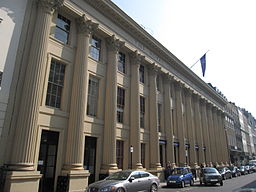
The wood-panelled theatre where Michael Faraday presented his annual Christmas lectures on chemistry, electricity and magnetism could be up for sale, along with the rest of the London headquarters of the esteemed Royal Institution (RI).

According to a report in The Times, the West London property on Albemarle Street will soon be listed by a real estate agency for upwards of £60 million (US$95 million).

The move follows years of financial turmoil and internal strife at the RI, which Nature reported on in 2010 (see ‘Revolution crushed at Royal Institution’): “A refurbishment of the RI’s central London headquarters costing £22 million (US$34 million) has caused a shortfall in funds, and, some say, leaves the institution in danger of closing.”

The two-century-old institution’s books have not apparently got much better. According to its 2011 financial report, it is £7.1 million in debt and received a £3-million loan and another £2 million in overdraft allowances from the bank HSBC. “The charity is reliant on overdraft and bank loan facilities, which are reviewed on an annual basis and will be reviewed again in March 2013,” the report says. That year, the RI reported £4.49 million in expenses against £4.38 million in income.

In a statement today, RI chairman Richard Sykes confirmed that the sale of the Albemarle Street building was being considered:

The RI and its advisers are exploring a range of options to ensure it can continue to pursue fully its charitable aims and deploy its resources optimally. It is clear that this is likely to involve a restructuring of the charity and, ideally, a substantial partnership. It may also involve the RI sub-letting or disposing of some or all of its Albemarle Street property.