UK team abandons effort to reach subglacial Antarctic lake

British Antarctic Survey researchers attempted to use high-pressure hot water to bore through three kilometres of ice to reach Lake Ellsworth.{credit}BAS{/credit}

It wasn’t a very merry Christmas for a team of UK scientists seeking to breach the three kilometres of ice that covers a subglacial Antarctic lake. On the evening of 24 December, Martin Siegert, a glaciologist at the University of Bristol, UK, ended his team’s quest to drill to Lake Ellsworth in western Antarctica.

The team was hoping to find signs of microbial life in Lake Ellsworth, and to better understand Antarctica’s climate history, by sampling the lake’s water and sediment beds. They had planned a three-day assault on Lake Ellsworth, using a high-powered drill that melted the ice with a jet of water heated close to boiling point (see ‘Hunt for life under Antarctic ice heats up‘ and the graphic from that story below).

Progress proceeded more slowly than expected, and Siegert called off the drilling when his team calculated that they would not have enough fuel to reach the lake’s surface, he explained in a video posted today to the expedition’s website.

Their plans involved drilling two boreholes — one to reach the lake surface, and a second parallel borehole to recirculate drilling water. The second borehole was to intersect the main borehole at a depth of 300 metres. But Siegert’s team spent more than 20 hours and burned too much fuel in a failed attempt to make that connection.

“This is of course, hugely frustrating for us, but we have learned a lot this year. By the end the equipment was working well, and much of it has now been fully field tested,” Siegert said. “Once back in the UK I will gather our consortium to seek ways in which our research efforts may continue. I remain confident that we will unlock the secrets of Lake Ellsworth in coming seasons.”


Chelation trial results come under fire

{credit}Wikimedia Commons{/credit}

A controversial clinical trial has revealed that chelation therapy slightly reduced the risk of heart attacks and other heart problems. The results of the trial were presented at the annual meeting of the American Heart Association in Los Angeles, California.

Leading researchers questioned the US$31 million study’s findings because, they say, many enrolled patients dropped out of the trial and factors besides the chelation treatment could explain why some patients appeared to benefit.

Moreover, critics contend that there is no scientific rationale behind chelation therapy — which involves repeated infusion of a salt solution intended to sop up metal ions — and ample evidence that the treatment is dangerous. The US National Institutes of Health, the sponsor, suspended the trial in 2008 over safety and other concerns, and it later cancelled another trial testing whether chelation benefited patients with autism (see Agency drops disputed chelation study).

“All of the prior information that we have about chelation therapy suggests that it doesn’t work,” says Kimball Atwood, an anaesthesiologist at Tufts University School of Medicine in Boston, Massachusetts and a vociferous critic of the Trial to Assess Chelation Therpay (TACT). “For both basic science reasons and for the reasons based on whatever clinical trials that have been done before this clinical trial, there was no reason to think that disodium EDTA [the chelating agent used in the trial] had a favourable effect on arthrosclerotic disease.”

Around 100,000 Americans receive chelation therapy for heart disease each year, paying thousands of dollars for the unproven treatment. Proponents say that the treatments reduce the build-up of calcium in atherosclerotic plaques or, alternatively, that they sop up heavy metals that create inflammation-causing free radicals. But Kimball says there is no data to back up either mechanism. Continue reading

Asian elephant says “hello” in Korean

You are currently viewing a placeholder content from YouTube. To access the actual content, click the button below. Please note that doing so will share data with third-party providers.

More Information

NOC (pronounced No-see), the beluga whale that was recently reported to have imitated human speech, has some stiff competition. An Asian elephant named Koshik can produce several recognizable Korean words, researchers report today in Current Biology — the same journal that described NOC’s dalliances with speech.

Whereas the whale’s utterances resembled a freestyle kazoo jam more than actual language, Koshik seems to be imitating genuine Korean words. When 16 native speakers listened to recordings of the captive elephant, many could make out the same words his trainer’s recognized: “annyong” (hello), “anja” (sit down), “aniya” (no), “nuo” (lie down), and “choah” (good). More than half of the volunteers recognized Koshik’s “annyong” greeting, while most confused “choah” for similar sounding words such as “boah” (look) and “moa” (collect).

On the basis of these findings, Angela Stoeger and W. Tecumseh Fitch, of the University of Vienna, and their team think that Koshik is better at matching vowels than consonants because he can accurately imitate the frequencies required to create different vowels. To do this, Koshik shortens and changes the shape of the long elephant vocal tract — which typically creates low-pitch sounds — by placing his trunk inside his mouth.

Stoeger’s team are not sure why Koshik started imitating human speech, which his trainers first noticed in 2004 around the time the elephant reached sexual maturity at the age of 14. Koshik lived without other elephants between 1995 and 2002, while being regularly exposed to spoken Korean. Deprived of kin during a period in which elephants forge relationships, Koshik may have begun imitating humans instead, Stoeger’s team speculate. “The social circumstances under which Koshik’s speech imitations developed suggest that one function of vocal learning might be to cement social bonds and, in unusual cases, social bonds across species,” they write.

Video courtesy of Stoeger et al., Current Biology

Gurdon and Yamanaka take Physiology or Medicine Nobel for cell reprogramming

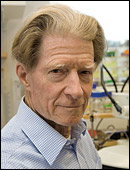
The Nobel Committee awarded this year’s prize in Physiology or Medicine to John Gurdon, of the University of Cambridge, UK, and Shinya Yamanka, of the University of Kyoto, Japan, for “for the discovery that mature cells can be reprogrammed to become pluripotent”, this morning in Stockholm.

Working with frog eggs, Gurdon showed that the nucleus from a mature cell could be transplanted into an egg cell with its nucleus removed and produce a living frog. The technique, called somatic cell nuclear transfer, is often called cloning and it was used to produce Dolly the sheep. His work revolutionized the understanding of developmental biology and cell fate, showing that a genome contains all the information needed to transform a cell into a whole organism.

Yamanaka, on the other hand, showed that whole mammalian adult cells could be reverted into an embryonic-like state by treating them with a cocktail of protein factors. These induced pluripotent stem cells (iPSCs) are similar to embryonic stem cells that give rise to every tissue in the body. He achieved the feat first in mouse cells, and later with human cells. It is hoped that iPSC cells, transformed into myriad cell types, will be useful for regenerative medicine and drug testing.

A group led by James Thomson, of the University of Wisconsin–Madison, was also among those to report the first human iPSCs in 2007.

According to Google Scholar, Yamanaka’s 2006 publication describing mouse iPSCs has been cited more than 6,000 times, and his report on human iPSCs has garnered nearly 4,000 5,000 citations.

UPDATE – full story here.

Images courtesy Gurdon Institute, University of Cambridge, and University of California, San Francisco.

Zoologists endorse electronic publication for new species

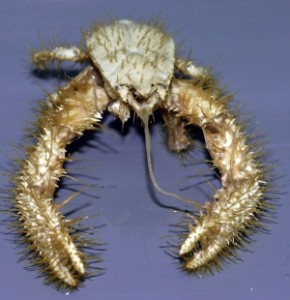
A new species of Yeti crab (Kiwa puravida) was described online in the journal PLoS-ONE. {credit}Andrew Thurber{/credit}

Zoologists looking for the ultimate tribute to Stephen Colbert, Bob Marley and other celebs can now name new species in electronic-only publications, the International Commission on Zoological Nomenclature (ICZN) announced on 4 September, in an editorial in the journal Zootaxa (published in print and online).

Previously, new animal species descriptions were required to be published in print to be considered bona fide.  The decision — by a vote of 23 in favour and 3 against, with one abstention — comes a year after the International Code of Botanical Nomenclature (ICBN) endorsed electronic publication for new kinds of plants (See ‘Botanists shred paperwork in taxonomy reforms‘).

“It’s a relief and a delight that it’s finally fixed,” says Mike Taylor, a vertebrate palaeontologist at the University of Bristol, UK, and a blogger who has long advocated for electronic taxonomy publication. “The very fact that we’re discussing this in 2012 seems sort of silly, when every journal worth mentioning is online and many significant journals are only online.”

The amendment allows for descriptions of new species in “widely accessible electronic copies with fixed content and layout” published after 2011.  New animal species will also need to be registered with ZooBank.org, ICZN’s official registry.

“There is no doubt that the changes in both ICBN and ICZN in 2012 have opened an exciting new era for taxonomy through electronic publication, which will greatly accelerate the description [and] publication of biodiversity and also reduce the cost of publication,” writes Zootaxa chief editor  Zhi-Qiang Zhang in an editorial accompanying the new rule. Continue reading

Another Alzheimer’s antibody drug fails large trials

Another Alzheimer’s drug bites the dust. Today, Eli Lilly and Company, based in Indianapolis, Indiana, announced that the biologic drug solanezumab did not meet its pre-specified endpoints to slow cognitive and functional decline in patients with Alzheimer’s disease who participated in two phase III clinical trials. However, a secondary analysis found some hints that the drug slowed cognitive decline in patients with milder forms of the neurodegenerative condition.

Bapineuzumab, a similar drug being developed by Johnson & Johnson, based in New Brunswick, New Jersey, and Pfizer, based in Groton, Connecticut, also failed two large-scale trials recently, and the companies announced plans to halt development (see ‘Alzheimer’s setback‘).

Both drugs are antibodies that target the amyloid-β peptide, which is thought to have a key role in Alzheimer’s disease. Researchers hope that the antibodies can  prevent the formation of the toxic clumps, or plaques, of amyloid-β, that may underlie neurodegeneration. Solanezumab is the first drug targeting amyloid-β to slow cognitive decline in a large trial, said Eric Siemers, medical director of Lilly’s Alzheimer’s team, during a press conference. Continue reading

Neanderthal sex debate highlights benefits of pre-publication — UPDATED

{credit}Wikimedia Commons{/credit}

An argument over sex that has been going on for more than a year is finally seeing the light of day. Today, scientists at the University of Cambridge, UK, and Harvard Medical School in Boston, Massachusetts, let the world in on a long-running discussion over whether or not humans and Neanderthals really interbred — and how you go about proving it.

I’ll get to the sex. But this debate underscores a topic I wrote about last month (see ‘Geneticists eye the potential of ArXiv‘) that noted that high-profile papers from population geneticists are beginning to appear on the preprint server, once the domain just of theoretical physicists. That story is relevant because a new paper, entitled ‘The date of interbreeding between Neandertals and modern humans’, was posted to ArXiv on Friday. Meanwhile, a second paper raising doubts about human-Neanderthal hanky-panky appears in the Proceedings of the National Academy of Sciences (PNAS) today.

Both papers were presented at conferences more than a year ago. Their publication today raises the question of whether this debate would have been more timely if it had occurred on preprint servers such as ArXiv.org and not at specialist conferences and behind the walls of peer review.

Continue reading

Leaked report implicates Danish neuroscientist in misconduct case

{credit}Image courtesy Danish Science Ministry EliteForsk{/credit}

A once high-flying Danish neuroscientist, Milena Penkowa (pictured), is suspected of “potentially intentional misconduct” involving 15 research papers, according to a leaked report from an international committee investigating her case.

A quick summary of this convoluted case: Penkowa, whose work involving brain-repair mechanisms and a protein called metallothionein was lauded by public and private funders in Denmark, was accused in 2010 of misrepresenting the number of animals she used in experiments and data from protein assays, as well as misspending grant money. In response, the Danish Committee on Scientific Dishonesty (DCSD) launched an investigation in November 2010 into two papers initially suspected of research misconduct. In February 2011, her former employer, the University of Copenhagen, tasked an outside, international committee with investigating the rest of her work. She left the university in late 2010. For a full rundown, see Nature’s previous coverage of the case (‘Fraud investigation rocks Danish University‘ and ‘Danish neuroscientist convicted of embezzling university funds‘).

The international committee’s report will be officially released on 8 August, but the Danish newspaper BT posted a leaked copy of the report this week. The University of Copenhagen declined to comment on the document, as did committee chair Hans Lassman, a multiple-sclerosis researcher at the Medical University of Vienna, Austria.

A leaked copy of the DCSD report obtained by another Danish newspaper, Weekendavisen, is said to have found Penkowa guilty of research misconduct involving a 2002 paper from the journal Experimental Neurology and a manuscript that was submitted to the Journal of Clinical Oncology in 2010 but never published. A university spokesperson declined to comment on that report until it is made public later this summer. Continue reading

Massachusetts stem-cell bank to close

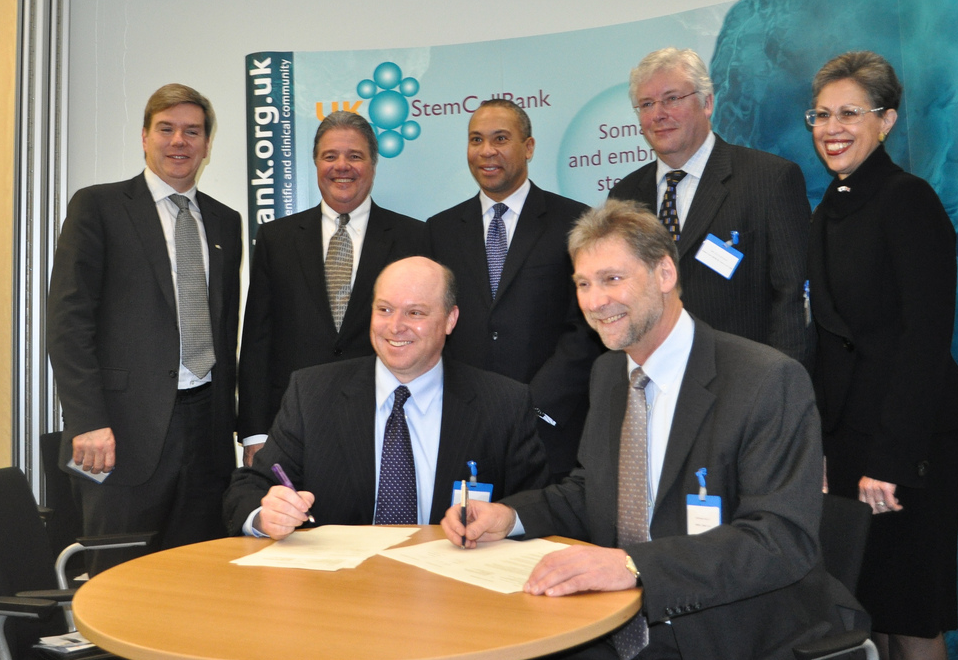
Massachusetts Governor Deval Patrick (centre rear), Glyn Stacey (right of Duval) and UMass stem-cell bank director Joseph Laning (seated left) at the bank's signing ceremony. {credit}Kim Haberlin/HED and the University of Massachusetts Medical School{/credit}

A Massachusetts stem-cell bank will close when it runs out of public funding this year.

The University of Massachusetts (UMass) Stem Cell Bank, at the university’s Shrewsbury campus, opened in 2008 with US$8.6 million in public funds in response to federal funding limitations on human embryonic stem-cell lines, says Angus McQuilken, vice-president of communications at the Massachusetts Life Sciences Center, a quasi-public agency based in Waltham that first funded the bank in 2007.

But the administration of US President Barack Obama lifted federal restrictions on funding embryonic stem-cell research in 2009 (see ‘NIH announces draft stem-cell guidelines‘), obviating the stem-cell bank’s main reason for existing, McQuilken says. The centre will continue to fund an online stem-cell registry that maintains information about the availability of different cell lines. The registry received US$1.7 million in public funds in 2007.

The bank lists 12 available human embryonic stem-cell lines, from researchers at Harvard University in Cambridge, Massachusetts, and Boston Children’s Hospital. These lines will be returned to the labs that derived them, McQuilken says. Continue reading

Updated: US Justice Department calls for return of tarbosaur fossil

A nearly complete tarbosaur fossil that sold for more than US$1 million was illegally smuggled out of Mongolia, claims a US Department of Justice (DOJ) civil complaint seeking the fossil’s return. The complaint was filed 18 June in a Manhattan federal court.

The sale of the Tyrannosaurus bataar fossil by Texas-based Heritage Auctions sparked widespread condemnation from palaeontologists, who questioned the company’s claim that the fossil was legally imported from China.

“Though these fossils could potentially be found in adjacent regions of the Gobi Desert of China, no specimens of this quality have been discovered there; and even if these fossils were originally found in China, their collection and export is still illegal,” said Philip Currie, president of the Bethesda, Maryland-based Society of Vertebrate Paleontology, in a 23 May statement on the case.

A Texas court issued a temporary restraining order on 19 May, requested by the Mongolian government, blocking sale or transfer of the fossil. Heritage went ahead with the auction on 20 May, which garnered nearly $1.1 million. Heritage has agreed not to complete the sale, pending conclusion of the Mongolian government’s case, and the fossil is being stored in New York (see a revised temporary restraining order updated after the sale here). Continue reading