Contamination created controversial ‘acid-induced’ stem cells

Stem cells that were claimed to be created simply by exposing ordinary cells to stress were probably derived from embryonic stem cells, according to the latest investigation into an ongoing scientific scandal. How that contamination occurred, however, remains an open question.

The investigation was instigated by RIKEN, the Japanese research institution where the original claims were made, and carried out by a committee composed of seven outsiders.

The committee analyzed DNA samples and laboratory records from two teams behind the original papers describing STAP (‘stimulus-triggered acquisition of pluripotency’) cells.  Those papers — published in Nature but later retracted  — were once heralded as describing a shortcut to producing stem cells: rather than expressing specific genes or carefully transplanting a nucleus from one cell to another, researchers could, it seemed, create stem cells by exposing them to stress, including bathing the cells in acid.

The latest investigation suggests that the STAP findings were merely the result of contamination by embryonic stem cells. Investigators found signs of three separate embryonic stem cell lines. They noted that it is difficult to imagine how contamination by three distinct lines could be accidental, but that they could also not be certain that it was intentional. 

“We cannot, therefore, conclude that there was research misconduct in this instance,” the committee wrote. It did, however, find evidence that lead investigator Haruko Obokata, formerly of the RIKEN Center for Developmental Biology in Kobe, had fabricated data for two figures in the original STAP publications.

The committee’s report, released on 26 December, is the latest in a series of damning revelations about the STAP cells originally described in two Nature papers in January 2014. The approach quickly came under scrutiny as other researchers failed to reproduce its results, and as suspicions grew that images in the original papers had been manipulated. In March, another RIKEN investigation found Obokata guilty of scientific misconduct; in July, the STAP papers were retracted  and in August another co-author, Yoshiki Sasai, took his own life. Earlier this month, Obokata resigned her position at RIKEN.


Australian gene-patent case dismissed

An Australian federal court has thrown out a lawsuit challenging a patent on the cancer-associated gene BRCA1. The decision, issued 5 September, is the latest setback for patient advocates who argue that the patent limits genetic-testing options for Australian cancer patients.

The patent, held by Myriad Genetics of Salt Lake City, Utah, is used to protect a genetic test for mutations in BRCA1 that may enhance the risk of cancer, particularly breast and ovarian cancer.

The Australian case is an echo of a previous legal challenge to patents on BRCA1 and BRCA2 in the United States. That case culminated last year in a unanimous, landmark Supreme Court decision that overturned decades of practice by the US Patent and Trademark Office, invalidating all patents on naturally occurring human genes. The implications of that decision for other US patents on natural products are still being worked out.

The Australian case began in 2010, and was brought by breast-cancer survivor Yvonne D’Arcy and a patient advocacy group, Cancer Voices Australia. But a federal judge dismissed the case on 15 February 2013, arguing that the patent’s reference to isolated DNA was enough to establish that it claimed a “manner of manufacture”, rendering the patent valid under Australian patent law. D’Arcy filed an appeal, which culminated in a second dismissal yesterday.

But that action may not spell the end of the patent challenge. In the wake of the decision, the non-governmental organization Cancer Council Australia called for legislative changes to prevent monopolies on diagnostic tests.

And D’Arcy may yet appeal today’s ruling.  “The judgment has significance for access to genetic testing, research and the development of treatments for diseases,” wrote Rebecca Gilsenan, principal lawyer at the firm Maurice Blackburn, which represented D’Arcy, in a statement. “We will look at appealing the decision once we have considered the judgment in detail.”

Journal retracts paper linking vaccine and narcolepsy

A paper that once promised to help unravel a medical mystery — why some children developed narcolepsy after receiving an influenza vaccine — has been retracted.

Narcolepsy is a disorder that causes extreme sleepiness, sometimes inducing uncontrollable ‘sleep attacks’ that can strike at any time of day. In 2010, a puzzling cluster of sudden-onset narcolepsy cases was reported in Europe among children vaccinated with GlaxoSmithKline’s Pandemrix flu vaccine against the H1N1 ‘swine flu’ that had caused a pandemic in 2009.

On 18 December 2013, researchers reported a possible connection between the vaccine and narcolepsy. In a paper published in Science Translational Medicine, they showed that people with narcolepsy produce immune cells called T cells that recognize hypocretin, a neurotransmitter that regulates wakefulness. People with narcolepsy tend to have low levels of hypocretin in neurons that control wakefulness, and the results supported the notion that autoimmune responses could be destroying the neurotransmitter.

The authors, led by immunologist Elizabeth Mellins and narcolepsy researcher Emmanuel Mignot of the Stanford School of Medicine in Palo Alto, California, went on to demonstrate that pieces of a flu protein often used in vaccines stimulated immune cells that recognize hypocretin. This suggested a mechanism by which the vaccine could contribute to narcolepsy in some people.

But on 31 July, the authors announced that they have been unable to repeat a key finding: that immune cells from people with narcolepsy respond to hypocretin more so than immune cells from people who do not have narcolepsy. “Because the validity of the conclusions reported in the study cannot be confirmed, we are retracting the article,” the team wrote.

The retraction is a setback for a field struggling to find an answer. “We continue to believe that the original scientific hypothesis remains a valid one that needs to be further explored,” said GlaxoSmithKline, a London-based pharmaceutical firm, in a statement. The company says that it is supporting research, including in its own labs, to explore the possible link between its vaccine and narcolepsy, and particularly to learn more about interactions between the vaccine and other risk factors in the people who developed the condition.

Those risk factors were a mystery even before the retraction. And although the paper suggested a possible link between flu vaccines and narcolepsy, it did not clarify why Pandemrix, in particular, would be problematic. The original study was also conducted in a relatively small number of people.

Given such small numbers, the retraction comes as little surprise, says immunologist Outi Vaarala of the Finland National Institute for Health and Welfare in Helsinki. Vaarala, who praises the authors for openly addressing the problems with their paper, also notes that the methods use to assay immune responses are difficult to reproduce, and says reviewers should demand that researchers repeat their experiments using multiple methods. “If you can show differences in T-cell reactivity between patients and controls when different read-outs are used,” she says, “the findings are likely to be reliable.”

Nimble amoebas battle for world supremacy

dicty race

{credit}H. Ledford{/credit}

“Whoosh!” bragged geneticist Michael Myre, spreading his fingers and pushing his hands away from his body. “That’s what they’ll do.”

‘Whoosh’ is not a word often applied to the slime mould Dictyostelium discoideum — affectionately called ‘Dicty’ by its devoted following of cell biologists and geneticists — but Myre, a researcher at Harvard Medical School in Boston, Massachusetts, was feeling confident. It was 16 May, the start of the great Dicty World Race, and Myre had faith that his entry would be the first to glide across the finish line of the 800-micrometre-long track.

The results, announced today, show that Myre was not far off in his prediction. His strains, which lack a Dicty gene that is similar to a human gene linked to a childhood neurological disorder called Batten disease, placed fourth in the race. The champion was a strain from the Netherlands, engineered to be more sensitive to a signaling molecule used in the race as a chemical attractant.

D. discoideum is called a ‘social amoeba’ because single cells swarm together to form multi-cellular structures. That behaviour also makes the cells ideal models of cell movement and migration. Biochemist Arjan Kortholt of the University of Groningen, a member of the team that submitted the fleet-pseudopodded winning strain, says that when Dicty hits its stride it moves like an ice skater, with a right-then-left gliding motion.

The Dicty World Race encouraged genetic and chemical doping — anything that would help researchers learn more about what makes the slime moulds swift and smart as they scurried through the maze-like race track and dashed towards high concentrations of a signaling molecule called cyclic-AMP.

The race also pitted Dicty against leukemia cells called HL60 cells. Those cells are typically faster than Dicty but have more difficulty negotiating complex mazes.

Bioengineer Daniel Irimia of the Massachusetts General Hospital in Boston hosted the race in his lab, and said he hoped the effort would call attention to the research while also introducing the community to tools they could use to standardize their cell migration assays. Kortholt says the race particularly captured the imagination of students, and he thinks may have attracted a few to his laboratory.

The winning team gets US$5000 and an opportunity to speak at the annual Dicty meeting in Germany this August. Kortholt says his team also plans to celebrate with drinks this week, and a barbeque, weather permitting.

Videos of all the contestants are available at the Dicty World Race site.

Vermont to require labelling of genetically modified foods

shumlin

Vermont Governor Peter Shumlin has signed a law mandating the labeling of genetically engineered foods. {credit}Community College of Vermont via Flickr{/credit}

Vermont is the first US state to mandate labels on foods produced using genetic engineering.

Under a law signed by Vermont governor Peter Shumlin on 8 May, labels must be in place on food sold in Vermont by July 2016.

“We have a right to know what’s in the food we buy,” said Shumlin during the signing, as attendees noshed on free Ben and Jerry’s ice cream. “I am proud that we’re leading the way in the United States to require labeling of genetically engineered food.”

A host of other states are contemplating similar legislation. But even as consumer activists celebrated Vermont’s label law, the Grocery Manufacturers Association, a food-industry group based in Washington DC, pledged to file a lawsuit in federal court with the intention of overturning the law. And last month, Congressman Mike Pompeo (Republican, Kansas) introduced the Safe and Accurate Food Labeling Act of 2014 in the US House of Representatives, a bill that allows requirements for labelling of genetically engineered food only when that food differs substantially in make-up from non-engineered counterparts. “The use of bioengineering does not, in itself, constitute a material difference,” the bill states.

US agency reverses stance on controversial diabetes drug

If ever there were a case study in the messy uncertainties of drug development, the diabetes drug Avandia (rosiglitazone) would be a prime candidate. On 25 November, US regulators removed safety restrictions that had been placed on the drug in 2010 following concerns about heart risks. After years of debate and deliberation, Avandia can be marketed and prescribed freely again, even though, by now, sales of the drug have plummeted as people with diabetes turn to other options.

In June, advisers to the US Food and Drug Administration (FDA) voted that warnings about cardiovascular safety should be revised in light of a re-evaluation of key clinical trial data, but the advisers differed in their opinions about what those changes should entail. (See our June blog post for more on the twists and turns leading up to that vote.)

Yesterday, the FDA announced its conclusion: results from a clinical trial known as RECORD failed to confirm the heart concerns highlighted in a 2007 analysis of earlier clinical trials.“Given these new results, our level of concern is considerably reduced,” said Janet Woodcock, director of the FDA’s Center for Drug Evaluation and Research in a statement. “Thus, we are requiring the removal of certain prescribing restrictions.” The FDA plans to make the drug available to most patients with type 2 diabetes and to remove restrictions on who can prescribe the drug.

The European Medicines Agency (EMA), which pulled Avandia from European pharmacies in 2010, said in a statement that Avandia’s maker, pharmaceutical giant GlaxoSmithKline, has not asked for a re-evaluation of the drug. “Should it be asked to do so, the EMA will assess the total evidence carefully and consider any appropriate action,” it said.

US regulators approve next-generation sequencer for clinical use

The US Food and Drug Administration (FDA) has issued its first approval of a next-generation sequencing platform to be used for clinical diagnosis, the agency announced on 19 November.

The approval — eagerly awaited by researchers and industry — includes three diagnostic kits to be used with the MiSeqDx sequencer made by San Diego, California-based Illumina. Two of the tests are used to pinpoint genetic mutations in cystic fibrosis patients.  For such patients, the identity of the mutations they carry in a gene called CFTR can sometimes determine which medication is likely to work best.

The third is a ‘universal’ kit intended to allow clinical labs to develop their own tests on the MiSeqDx sequencer.

In a commentary in the New England Journal of Medicine, National Institutes of Health chief Francis Collins and FDA commissioner Margaret Hamburg praised the approval as opening the door to improved cancer diagnoses and pharmacogenomics — a field in which drugs are selected based on a patient’s genetic profile. But they also highlighted the challenges still confronting personalized medicine, including unresolved questions regarding insurance reimbursement, standards development, and physician and patient education.

Cholesterol guidelines back away from high-dose statin regimens

Long-awaited revisions to cholesterol clinical guidelines have dialed back previous recommendations to use cholesterol-lowering drugs to force ‘bad’ cholesterol below predetermined targets.

The guidelines, issued 12 November by the American College of Cardiology and the American Heart Association, aim to reduce the risk of cardiovascular disease, and come with a range of familiar recommendations including regular exercise and a low-salt diet.

But cardiologists — and pharmaceutical companies — have been eager to see how the guidelines would address the use of blockbuster drugs called statins to hit cholesterol targets. Although it is generally recognized that lower is better when it comes to LDL (bad) cholesterol, doctors and researchers have disagreed over the measures taken to get there.  The push to meet LDL targets has led some doctors to prescribe high doses of statins, sometimes combining multiple cholesterol drugs. Although that may lower LDL levels, it also boosts the risk of side effects from the medications. And critics of the approach have argued that there is not enough evidence showing that higher doses of cholesterol-lowering drugs reduce the risk of heart attacks and cardiovascular disease.

The guidelines released yesterday share this concern, noting that an expert panel was unable to find sufficient support for boosting statin doses to hit the targets laid out in previous guidance. Although high-intensity statins are still recommended for some high-risk patients, others are advised to stop at moderate doses.

The long-delayed revision was first undertaken by the US National Heart Lung and Blood Institute in 2008, but in June this year the institute decided to hand the reins for clinical guidelines to external partners.

GM labeling initiative likely defeated in Washington state

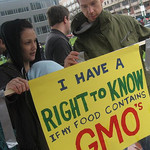
Photo by MillionsAgainstMonsanto via Flickr.

Photo by MillionsAgainstMonsanto via Flickr.

Preliminary tallies suggest Washington state voters have struck down a ballot initiative to require labeling of genetically modified (GM) foods.

The vote, held 5 November, was the latest skirmish in the ongoing controversy over GM food labeling. Many other states have similar measures in the works: the Center for Food Safety, a nonprofit consumer advocacy group based in Washington DC that supports labeling, lists over 20 proposed state initiatives — most wending their way through state legislatures — to either label or limit GM foods. California voters rejected a similar proposal last year.

Though the Washington state measure, called I-522, inspired some creative campaign commercials, early vote counts indicate a likely defeat, 45% in favor to 55% opposed. Those counts are incomplete, and the state will continue to accept and tally mailed-in votes postmarked by 5 November. The ‘Yes on 522’ campaign maintains that the results are too close to call; opponents of the initiative have deemed I-522 “soundly rejected“.


$500 million cancer pledge comes with a catch

The pressure is on for Oregon Health & Science University (OHSU). On 21 September, the Portland university received a surprise pledge of US$500 million for its cancer institute – potentially the biggest donation in OHSU history. But there is one condition: OHSU will only receive the cash if it raises another $500 million in two years.

The donors who set that challenge — tennis-shoe entrepreneur Phil Knight, co-founder of the company Nike, and his wife Penny — have long been kind to OHSU. In 2008 the university’s cancer institute was renamed the Knight Cancer Institute in honor of the couple’s $100 million contribution. Four years later, the Knights followed suit with $125 million for the OHSU cardiovascular center.

According to the Oregonian, the latest donation — announced during a gala for the cancer institute — came as a shock. Brian Druker, director of the institute, had come knocking just a few months earlier, asking for $1 billion. The $500 million challenge, it seems, was the Knights’ response.

Druker is no small player himself: his research led to the first targeted cancer therapy, a drug called Gleevec that revolutionized the treatment of a form of chronic leukemia. But as he and his colleagues canvas for donations, they’ll likely meet with steep competition as budget cuts send other universities – and especially medical schools and private research institutes – out to pound the pavement as well.