
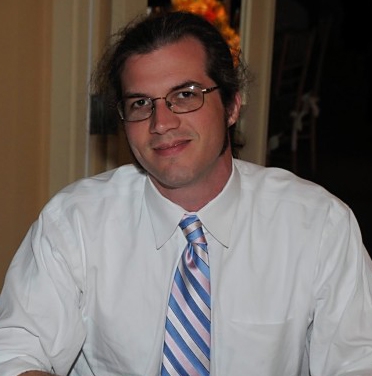
 Matt Shipman is a public information officer at North Carolina State University, where he writes about everything from forensic entomology to computer malware. He previously worked as a reporter and editor in the Washington, D.C. area for Inside EPA, Water Policy Report and Risk Policy Report, where he covered the nexus of science, politics and policy. He blogs about NC State research at The Abstract and over at SciLogs.com on his Communication Breakdown blog. You can follow him on Twitter where he is @ShipLives.
Many people, including me, will tell you that science outreach is important. This is nothing new. The public lectures of Humphry Davy and Michael Faraday are thought of as crucial elements in the popularization of science in the 19th century, and they are as likely to be remembered for those outreach efforts as they are for their scientific contributions (which were considerable). But here’s the thing – we can’t prove it.
Scientists pride themselves – and rightfully so – on using facts to answer questions, proving or disproving hypotheses in the pursuit of knowledge. So it is somewhat ironic that scientists have not done a very good job of collecting and analyzing evidence to support their outreach efforts.
For the purposes of this guest post, I’m defining “outreach efforts” in fairly sweeping terms: from online chats with classrooms of grade/ high-school students to public events, and from maintaining blogs to working with mainstream news media. And, to be clear, I think science outreach efforts are enormously valuable. But not everyone agrees with me.
I recently found myself at the ScienceOnline conference on the campus of North Carolina State University. Part of my time there was spent working with scientists Miriam Goldstein and Karen James to encourage an international collection of scientists to talk about the obstacles that make it difficult for researchers to engage in outreach. We compiled a lengthy list: lack of time, lack of funding, lack of support from peers or superiors, etc. The theme that emerged was that there are virtually no incentives of any kind for scientists to reach out to anyone outside the science community.
But the scientists also noted something else: the lack of clearly defined outcomes and benefits associated with science outreach.
In other words, scientists need funding agencies, academic department heads, grant reviewers and others in positions of authority to recognize the value of science outreach efforts. But scientists don’t have a body of data, quantitative analyses and peer-reviewed publications that can be used to define that value. There are a few isolated studies out there (e.g. linking news coverage to journal citations, or measuring the benefits of outreach at zoos), but not enough to support a robust argument in favor of science outreach.
The solution to this quandary is fairly clear. We need physical and life scientists who engage in outreach to partner with social scientists and do three things:
A) develop methodologies for collecting data and subjecting them to quantitative analysis
B) use those methods to conduct impact studies in conjunction with outreach projects
C) publish their findings.
The audience at ScienceOnline is self-selecting – the only scientists there are those willing to engage in outreach. As a result, I know dozens of researchers in the physical/life science fields who are engaged in outreach activities and are willing to collaborate. However, there are very few social science researchers in the ScienceOnline community – and most of the physical/life scientists I know have few (if any) connections in the social sciences. Perhaps that lack of interaction between social scientists and life/physical scientists is one reason there is such a dearth of data on outreach outcomes.
That needs to change.
One idea that has cropped up is the creation of a website that could help connect physical/life scientists and social scientists who are interested in collaborating. I think this idea is promising, and I look forward to seeing how it develops. (The idea stems from conversations between Karen James, of the Mount Desert Island Biological Lab, and Josh Rosenau, of the National Center for Science Education.)
But for such a site to work, it would need social scientists – e.g., education, psychology and science communication scholars – to be aware that it exists. I believe there are two ways to do this:
- First, this challenge can spread by word of mouth. Immediately following ScienceOnline I emailed all of the social scientists I know whose work may be germane to this issue. I appealed to their scholarly curiosity, but I also noted that working with scientists who are already engaged in outreach projects might have a funding advantage. For example, if the outreach project is already funded, then a grant proposal for funds to measure the outcomes of that project might be particularly attractive (I certainly hope that’s true.) At any rate, if everyone who is reading this blog post sends it to all of their social science acquaintances, we would be off to a good start.
- Second, this challenge could be embraced by funding sources. If government agencies or private funding concerns decide that it is worthwhile to fund efforts to improve our understanding of outreach outcomes, they can request proposals for related research efforts. And if you fund it, they will come.
Ultimately, we need to show that the time researchers spend engaging in outreach efforts is time well spent. If we can’t do that, then incentives encouraging outreach will never materialize – and most scientists will (understandably) avoid engaging with the public, in order to spend more time in the lab or in the field.
So spread the word. It’s time to make social scientists part of this conversation, in order to find out what works, what doesn’t, and what we can prove about the impact of science outreach.