
 Jiska van der Reest encountered a heady mix of meme-mastery and compelling honesty at the Naturejobs Career Expo. But there was a simple underlying message: scientific success is about effective communication.
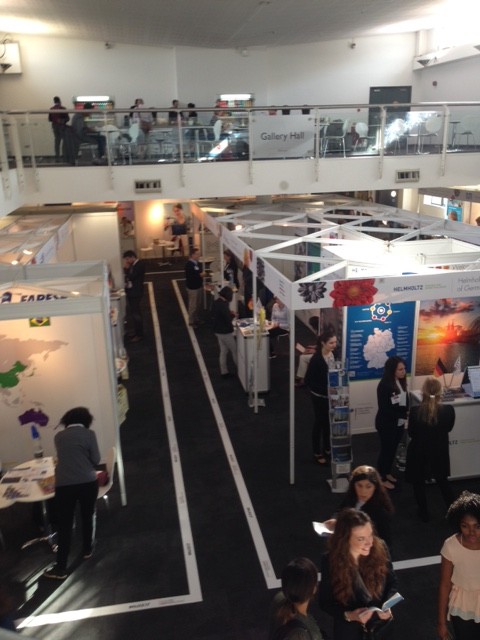
For me, the Naturejobs Career Expo in London was a happy mix of career development advice, networking, aspirational talks, and a bird’s-eye view of the various opportunities that exist for scientists in a variety of fields. With so much going on, I was surprised to walk away with what seems to be a very simple realisation: that the main skill that will make the difference between being a good scientist and having a successful scientific career is your ability to effectively communicate.
When chatting to Expo attendees about their favourite talks of the day, the power of engaging communication was illustrated clearly. Many praised Dr Seishi Shimizu, who gave a compellingly honest account of his versatile career journey. Darting across the stage like a theatrical figure narrating the play of his own life, he drew in his audience beyond what a regular scientific presentation would achieve. Similarly, senior lecturer and meme-master Dr John Tregoning animated his talks on becoming a PI and grant applications with strategic doses of sarcasm and puns. While I’m sure we can all appreciate the power of communication in such instances, we don’t give it quite the same attention in other aspects of our work as scientists. But what are grant proposals, papers, and conference presentations, if not communication tools? And if laboratory and research skills can be learned, should we not consider writing and presenting as scientific qualities that can be developed, rather than as talents that some have been endowed more generously in the lottery of life?
Elsa Couderc, Associate Editor at Nature Energy, stressed that in order to produce a great paper it is essential to wrap your research into a compelling story. While no amount of clarity and narrative is going to turn bad science better, a lack of either can certainly ruin your paper. I’m sure many of us have felt, frustratingly, that the reviewers or editors just didn’t get our submission. It is difficult to appraise our own writing critically and judge whether it effectively conveys our message, regardless of the quality of our data. Elsa provided a framework to take your audience by the hand and guide them through your work by being accurate, brief, clear, declarative, engaging, and focused. Use your paragraphs as the basic unit that groups closely related ideas and observations together. Order them, with transitions, to follow your argument rather than in chronological or experimental order. Finally, realise that subsets of your paper need to be written for different audiences: your title, abstract, and main paper need to have their language tailored to those that will read them. For more tips, you can view the livestream of her talk. Considering the amount of work and effort we pour into generating our data, ensuring that our message does not get lost in translation at the very last step seems to be a sound investment.
A similar message applies to an often underappreciated part of science communication: data visualisation. We may think that good data speaks for itself, but like good writing our figures benefit from multiple rounds of editing to achieve clear, concise, and compelling storytelling. Kelly Krause, Creative Director at Nature, gave us a crash course in visual design based on the underlying principle that scientific illustrations and design are tools to relay information. Figures and graphs encode the underlying data using combinations of visual properties such as shape, size, and orientation. The wrong cocktail of colour, saturation, and hue can result in misinterpretation of your results. It’s our responsibility as authors to use visuals in a way that ensures our readers will encode them appropriately to enable them to interpret the original data. Though rainbow scales and colourful heat maps may look aesthetically pleasing, their purpose is ultimately to visualise a numerical relationship. When sections of that scale consist of colours we cannot distinguish as well as others, this creates an incorrect perception of numerical difference. As her talk illustrated so clearly, learning about design is much more effective using graphical examples, so I can recommend critically reviewing your figures with help of Nature Methods’ Points of View columns to spot any unintentional inaccuracies. When we consider visual design as an integral part of our data communication strategy, it can be a powerful ally to strengthen our message.
The topic of communication kept popping up in other talks, too. Public engagement expert David Urry stressed its importance for public trust and political support of science, while senior lecturer Dr John Tregoning highlighted how speaking up and engaging in non-traditional ways can help build your profile, networks, and rally support for your career advancement. They also highlighted that there are few formal training opportunities in this area for young scientists, besides learning through failure. Though every rejected paper or grant proposal may present an excellent learning opportunity on how to do better, these are expensive lessons of which we cannot afford too many. Acknowledging effective communication as a key scientific skill may aid in the development of appropriate guidelines and training. This way, research communication becomes more about reception rather than projection. After all, as a fictional Marco Polo said in Invisible Cities: “It is not the voice that commands the story: it is the ear.”
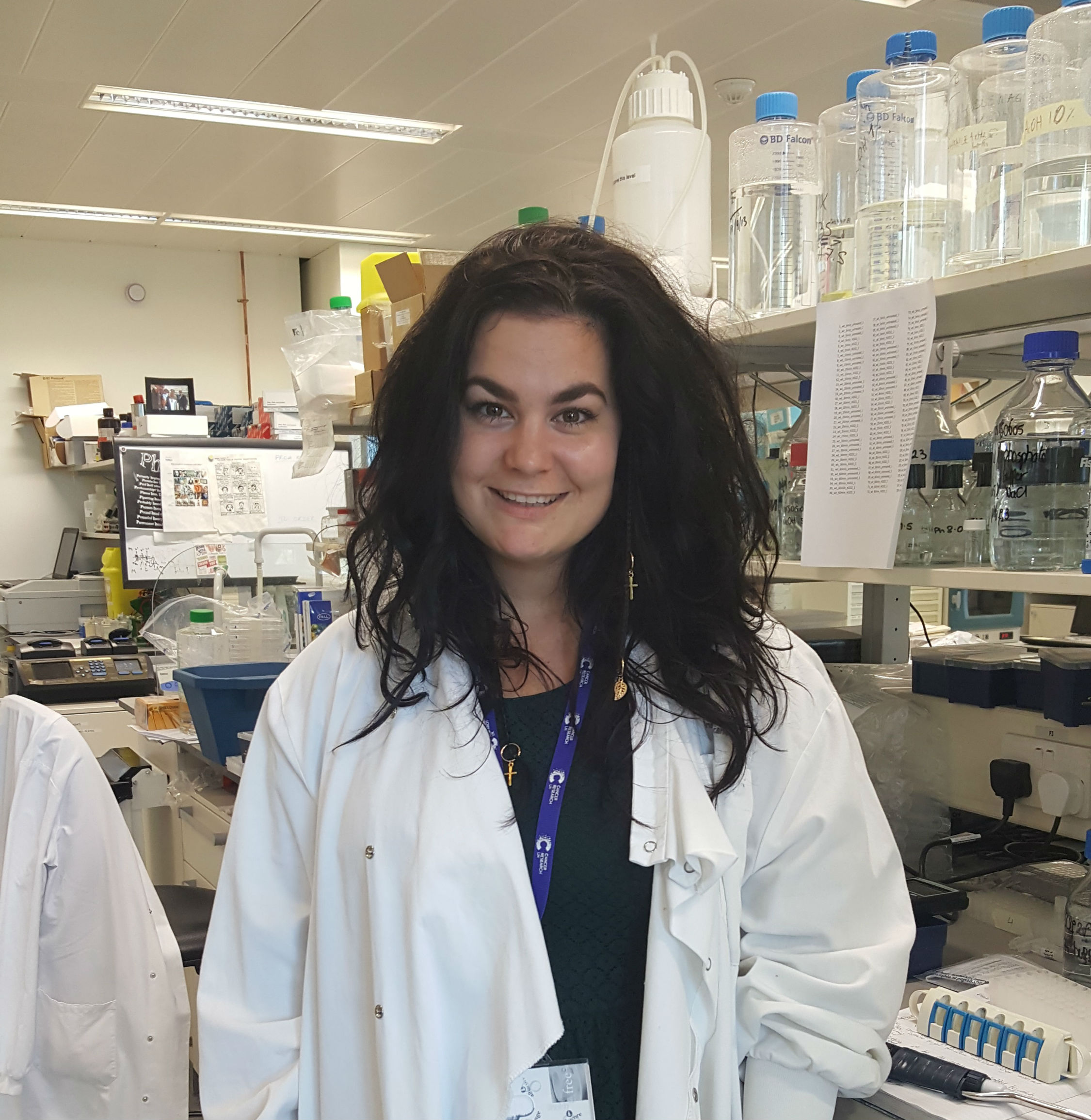 Jiska van der Reest is a PhD student at the Cancer Research UK Beatson Institute in Glasgow, researching Cancer Cell Metabolism. She loves being a scientist, but is also fascinated by academia as a working environment and the role of science in social innovation.