
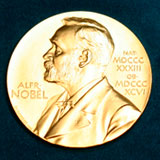
 Robert Edwards has won the 2010 Nobel Prize in Physiology or Medicine for his pioneering work in in vitro fertilization (IVF). Edwards began his work on in the 1950s, developing a procedure by which an egg could be removed from a women, fertilized and returned to the womb.
Edwards figured out when and how to retrieve eggs from the ovaries and fertilize them in a Petri dish. His work clarified the ways that eggs mature and how different hormones regulate the reproductive process. He also pinpointed the time in an egg’s lifecycle when it could accept sperm.
He then took his basic research into the clinic, where it generated a lively ethical debate. Criticism grew when the technique led to several failed pregnancies in the early 1970s, but Edwards and gynecologist Patrick Steptoe continued their work. On 25 July 1978, the first ‘test tube’ baby, Louise Brown, was born.
Since then, IVF has been developed into a safe technique that is 20-30% effective. Approximately 4 million individuals are estimated to have been born through IVF since 1978.
Edwards described the history of IVF in this Nature Medicine article in 2001. He also penned a Commentary for Nature that year, looking at the link between IVF and stem cell research.
And in 2008, Nature celebrated 30 years of IVF with a special package of articles.
credit: Nobelprize.org