How to look your best on paper: Part 2

Contributor Prital Patel

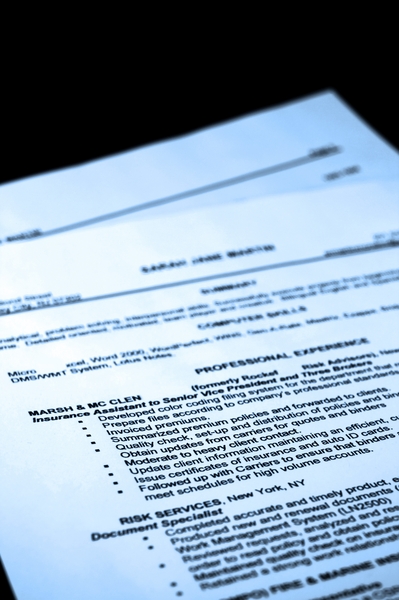
CelanoDuring the first half of the Naturejobs Career Expo conference talk, “How to look your best on paper”, Lauren Celano spoke about the skills that should be highlighted in your resume for various career paths. In the second half of the talk, Celano elaborated on the differences between CVs and resumes, how to chose the right one for your application and how to compile your experiences in the best way.

Curriculum Vitae versus Resume

A Curriculum Vitae (CV) documents your academic career including publications, awards, honors, affiliations, presentations and teaching experiences in reverse chronological order. They tend to be at least two pages in length. CVs are common in Europe, Asia, Africa and the Middle East for most job applications. In the United States and Canada, CVs are primarily used for academic and research positions or fellowship applications. For non-academic positions, a resume is generally preferred. Resumes are concise documents summarizing your qualifications, education and work experiences. They tend to be no more than two pages.

The key goal for each of these documents is to ensure that they are succinct. Don’t minimize any of your accomplishments; instead highlight the things you’ve done that are most relevant. Continue reading →

Your online CV: 6 tips to get it to the top of the pile

An online CV is now an everyday part of the job hunt, but there are some simple ways to make sure yours catches the eye of a potential new boss.


Who needs paper?

Who needs paper?{credit}iStockPhoto/Thinkstock{/credit}

We all know it’s a fiercely competitive job market out there. And when focusing on applying for jobs and fending off the competition for elusive openings, it’s easy forget about those employers who are out there searching for talented people like you.

At Naturejobs, we have scientific employers around the world searching for potential candidates and downloading their CVs . If you haven’t already uploaded your CV you really are missing out on a simple route to finding a perfect role and connecting with great science employers.

If you’re planning on uploading your CV to Naturejobs, use the following checklist to get your CV to the top of the list.

  • Stay current. Make sure your online profile is complete. Provide as much information about yourself as possible so a potential new boss knows exactly who you are and what makes you tick. Check your CV is up to date, and do that regularly, topping it up with any new information on, say, public speaking, awards or new publications. If you have been shortlisted by an employer, they will be alerted every time you update your CV.
  • Link it all up. The joy of online job hunting is you can include plenty of web links in your CV to other materials should anyone be interested, without spamming them if they are not.
  • Re-location re-location. The majority of the employers who are using our website are looking for people who might be willing to relocate. Have a good think about whether this applies to you, and if it might, tick that box!
  • Be specific. Remember that employers will be using the search tool to find the ideal candidate. Maximise your chances of getting to the top of the pile by selecting all the specialties that apply to you when filling out your profile, rather than using the ‘other’ box, as it’s unlikely employers will be searching for ‘other’ as a specialty.
  • Match up the keywords. Check the keywords you use in both your CV and your personal summary, as both of these are picked up when an employer searches. Check through the job advertisements and job descriptions of positions you are interested in, and make sure they match the words in your personal summary and CV.
  • Be visible. Make sure your CV is searchable by ticking the box on your profile page.  Of course, the option is there to make your CV invisible to employers in case you are worried about a current employer seeing your profile. Remember though – these days, it’s fairly customary to have an online employment profile, even if you are not actively seeking a new job. It’s the way many scientific collaborations now take place.

For more tips on writing a CV and cover letter, check out the Naturejobs career toolkit here.


Windback Wednesdays round-up: CVs and interviews

{credit}Naturejobs{/credit}

Our December #WindbackWednesdays series was packed full of advice on how to get your CV to the top of the pile, and how to master the ultimate interview technique. Here’s a round-up of the issues we covered, including everything you need to get your application noticed in 2013.

  • 38 tips on writing an academic CV: Many academic job vacancies have fairly basic application forms, so the main way you will get an interview is by having a very good academic CV.
  •  Which type of CV is best for you? There’s more than one approach to structuring your CV, enabling you to tailor the marketing of your skills and experiences to different employers.

Join us again over the next four weeks as we look at the delicate question of cash, and how to negotiate your salary.

If you missed out on the action last month, you probably aren’t following us yet on:

Twitter

Facebook

Linkedin

Google +

Nurture your science career with the new-look naturejobs.com

Over the past 12 years, we’ve worked hard to craft the Naturejobs website into an eminent career resource for scientists. In that time, with your help, we’ve become the largest dedicated jobs board for the scientific community worldwide. That’s why we’re excited to share the new naturejobs.com with you.

The re-launched site offers a fresh new look and improved functionality that lets you search, save and apply for jobs even more quickly and easily. Here’s how the new site can help you with your job search and career development:

  • Apply for jobs faster by uploading your CV and cover letter to your account
  • Find exactly the right job using the advanced search option, now delivered via filters on the left-hand side of your search results
  • Get jobs that match your search keywords sent to you by email using  our improved job alert sign-up process
  • Easily find useful science career news and features in our archive by filtering articles by date, discipline, career stage and more
  • See the very latest updates on science careers and jobs news via the Naturejobs Twitter feed, which has been integrated into the site

We’ll shortly be reinstating the career toolkit section with improved and expanded content, and there’s also a new section dedicated to employers.

This is just the first phase of the new naturejobs.com – watch out for further new features and improvements to the site over the coming weeks.

We hope you find the changes helpful. If you have any questions about the new site, please get in touch via our contact us page.