Most read on Naturejobs: March 2016

With one quarter of the year done already, we look back at your favourite posts from last month. We’ll get right to it.

Answering the most-feared interview question is high on everyone’s mind. Our guide to expressing your greatest weakness in a positive way is on the leader board as the most read piece on Naturejobs this month. Glad you liked it!

Chris Woolston talked us through the best make-up for a lab in group dynamics: a lab of their own in March. Your research group is important, and finding the right balance between different members of staff may just tip you into academic success. Continue reading

Women in physics: personal perspectives

Following the IOP’s “Taking Control of your Career as a Female Physicist” event, Dame Professor Athene Donald and Professor Val Gibson spoke with Helen Cammack about their careers within academia.

Guest contributor Helen Cammack

In my last blog post, I discussed career progression, publishing and gender equality with Professors Donald and Gibson. Here, we continue our conversation.


Did you relocate often as a postdoc?

AD: I moved around – I had a postdoc in the States, then returned to Cambridge. But at that stage I wasn’t really thinking about a career, so I wasn’t that bothered about what happened next. I didn’t intend to be an academic, so the pressure wasn’t on me. Nowadays everyone has to be calculating and publish in the right journals, and the pressure can detract from that freedom.

VG: When I was in my early career, I was just enjoying the moment, and I wasn’t thinking about my future career. The postdocs of today seem to more aware about career opportunities; they know that the majority of them won’t stay in academia; they’re looking around for what they would like to do and they’re picking up the skills they need for the future. It’s not just the academic side, it’s also the personal aspects – they’re concerned about getting on the housing ladder and potentially having families. At that stage those concerns never crossed my mind.

Continue reading

Women in physics: personal perspectives

Following the IOP’s “Taking Control of your Career as a Female Physicist” event, Dame Professor Athene Donald and Professor Val Gibson spoke with Helen Cammack about their careers within academia.

Guest contributor Helen Cammack

Since I entered the third year of my PhD, my future career has been increasingly on my mind. I’ve been to a few careers events with stands full of free USB pens and glossy brochures, but always came away disappointed, unable to see myself in the roles they had advertised. The IOP’s careers event was different; there, people shared my aspirations and were sympathetic to my concerns. The opening talk by Prof Athene Donald was inspirational, and there was a variety of guest speakers who had used their physics training to build successful careers. I came away from the day with a new buzz, excited about my career possibilities.

 DSCF8031-small Continue reading

Mobility: How to prepare for working in Sweden

Make sure you’re prepared in advance if moving to Sweden for research, says Barry O’Brien.

Barry-OBrien-Naturejobs-blogBarry O’Brien is a careers advisor working for PhD Career link, in Sweden. In this Q&A I find out what it takes to make a smooth transition into Swedish life and research.

Why did you move to Sweden? 

I met a beautiful Swedish girl who dragged me to Stockholm with promises of clean air and open spaces. She forgot to mention the high taxes and expensive beer!

How do you help scientists in Sweden?

PhD Career Link was created to supply fresh ideas for job seekers looking to move from academia to industry. I am helping career centres to deliver interesting courses, workshops and events around the concept of personal branding – first impressions matter! I use LinkedIn, Facebook, Meetup and traditional tools like the good old CV, to improve applicant’s chances of both being found by, and finding recruiters.

What support is there for researchers based in Sweden?

Career support whilst researching comes from the University Career Centres and Unions, but unfortunately not every University has the resources to assist them.

In Sweden a PhD is a paid position, so now there are regulation changes happening that will mean that someone doing a PhD is considered employed and should fall under the ‘state employment’ rules – this means that they are not the responsibility of the University. Many student groups organise their own career events, inviting alumni, coaches and industry speakers. Continue reading

Most read on Naturejobs: March 2015

The most popular reads on the Naturejobs blog and Nature Careers in March 2015.

naturejobs-readsIt’s that time of the month again for us to say a MASSIVE thank you to all our contributors, interviewees and of course, our readers! Without you, this blog wouldn’t exist.

To celebrate that it’s the end of the month, payday, Lent is almost over and the fact that we can almost crack open the Easter eggs (I confess I might have had a nibble at mine already), we’ve collated the top ten most popular reads on Naturejobs this month. This includes any podcasts, blog posts and Nature Careers articles.

1) The hidden job market by Barry O’Brien gives an insight into how to find those jobs that aren’t traditionally advertised. Unfortunately, this is for about 80% of all jobs that are going… so this piece is definitely worth a look!

2) The second part of the postdoc series: What is a postdoc? is a quick look at the basics of what a postdoc really is.

3) The postdoc series: Insights, careers, options is the opening post to our Postdoc series on the blog in March, and introduces you to some of the concepts that the series touches on.

4) The postdoc series: The plight of the postdoc looks at the challenges that postdocs face, aprticularly in the life sciences.

5) Do you ever wish you’d stayed in science? Some scientists do, some don’t. But now, there is the option to do science and science communication at the same time.

6) Jobs in the USA: Academic CVs and industrial resumes

7) An academic postdoc position might not be the right thing for you. You might want to get a sneak peak into the industrial science world, so maybe part 4 in our postdoc series, Postdocs in industry will be useful to you.

8) One of the most popular pieces on Nature Careers, especially on social media, is all about sexual harassment and assault that is ever-present, and much-hushed in academia. It’s worth reading Social behaviour: Indecent advances, to make yourself aware of the situation.

9) Viviane Callier and Nathan Vanderford’s piece, Wanted: Information, argues that more detailed information about scientists’ movement after they leave academia will help future researchers make more sense of the career options that lie ahead of them.

10) Postgraduate careers: The hunt for the elusive alumni by Paul Smaglik also argues about the need for information about university alumni. It’s obviously something on many-a-researcher’s mind.

Special thanks go to our Naturejobs and Nature Careers contributors in March 2015: Prital Patel, Lauren Celano, Gina Maffey and Barry O’Brien for the Naturejobs blog. Virginia Gewin, Julie Gould, Rachel Cernansky, Paul Smaglik, and Viviane Callier and Nathan Vanderford on Nature Careers

How to work with a scientific recruiter

Recruiters should be considered as business partners, not as mentors or advisors, says Tina Persson.

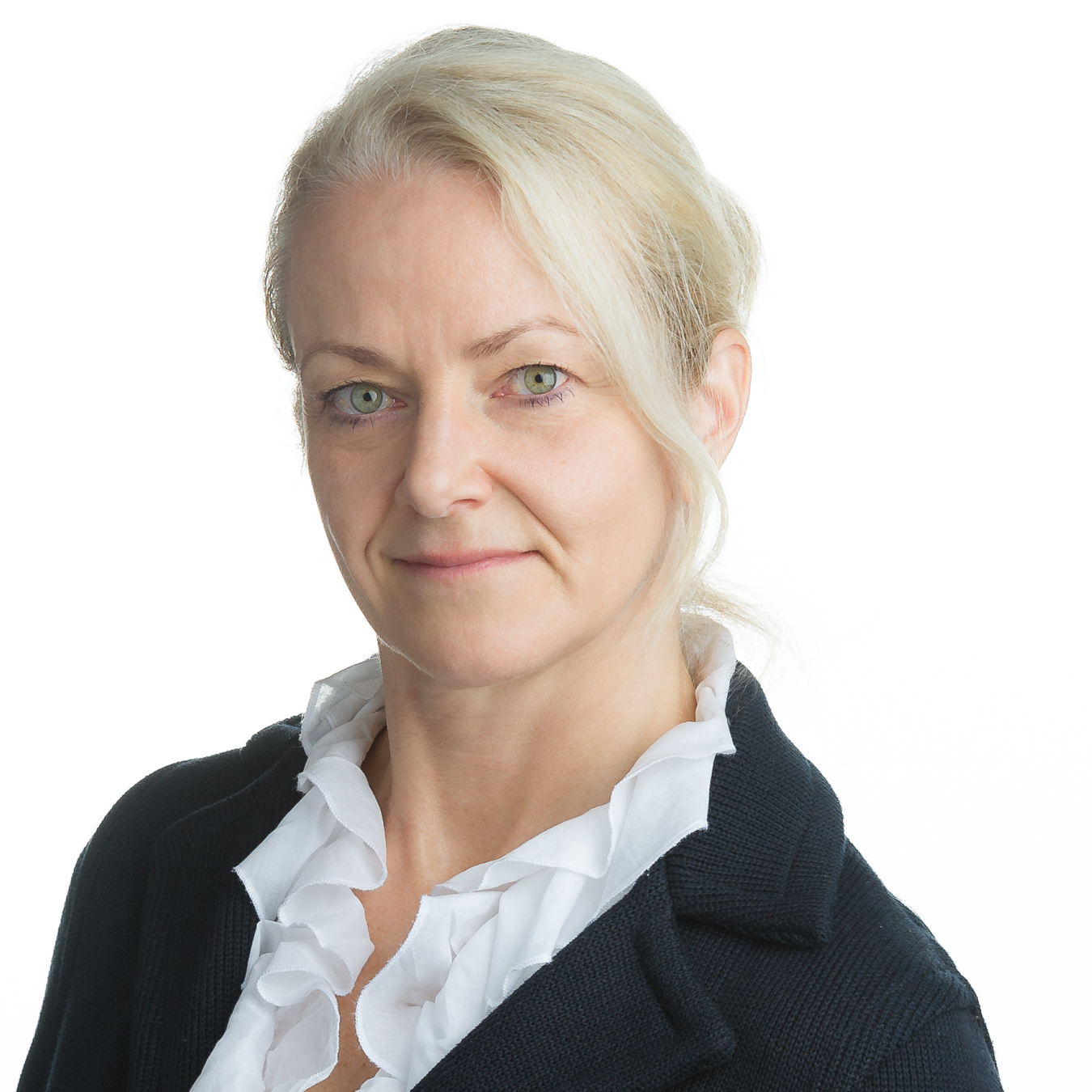
Tina-Persson-Naturejobs-blog

Tina Persson{credit}image credit: Andy Foster{/credit}

Tina Persson, based in Sweden, worked as recruiter and talent sourcer for 7 years, connecting scientists with industry employers, specifically in life sciences and IT sectors. Having experienced life as an academic (Professor at Lundt University until 2006), she is perfectly placed to understand what academics want, and how she can help them. In this interview I asked Tina if she could tell us a little more about what a recruiter is, how academics can work with one and how they can benefit from the relationships that form.

Tell us a little bit about your background as a recruiter.

I started my career as recruiter after leaving academia, where I had been an Assistant Professor in the faculty of chemistry, and the move was seen by many of my fellow academics as a failure. My first year as recruiter was a mental struggle, because of this feeling of failure, but I got through it with the thought that as an academic recruiter outside of academia, I could support more academics in their career development, compared to being a Professor.

As recruiter I quickly realised I was so much more than just a scientist! I could transform most of the soft and technical skills (analytical thinking, being self-driven, hard-working, ambitious, goal oriented, used to dead-lines, coordination experience, project management and trained in computer tools) that I had picked up in academia into useful skills. I did find that I was missing a few of important skills like team management, business-mind-set, sharing attitude, working with a blend of people with no academic background amongst others. But these were simple to learn on the job. Continue reading

Scientific blogging: Why it might just be good for your CV

Who needs paper?

Who needs paper?{credit}iStockPhoto/Thinkstock{/credit}

Blogging about your own research and science could help set you apart from others when applying for a job.

Contributor James Hadfield

The impact of social media on our lives is undeniable, most people have heard of Facebook, Twitter, Instagram and Blogging even if they do not actively participate. And although the impact of these media on science is still a matter of debate, their increasing use, i.e. blog commentary of journals, and non-traditional metrics (altmetrics) to assess scientific impact, does appear to be changing the way we work. Blogging about your science can be part of this non-traditional commentary and can also add something to differentiate your CV from the pile.

A scientific blog does not have to be anything more than a way for you to organise your thoughts. One of the most interesting examples (at least I think so) of how a blog can be used in a research group is by the Redfield lab. The group blogs about its projects and plans, as well as presenting experimental results and is a very open-access operation.

Like many other researchers, I started my blog (core-genomics.blogspot.co.uk) as a way to get more writing experience. I manage a genomics core facility lab at the Cancer Research UK Cambridge Institute and wanted to do more technical writing, a blog seemed an easy way in. I set myself the challenge of writing two or three posts a month and I hoped a few people would find it interesting. Three years on and my technical writing probably hasn’t improved as much as I’d hoped, but then again my Blog is not a technical one. I’ve managed to keep up the pace but have suffered from writers block and having too much else to do. However it has been incredibly rewarding to see large numbers of people reading what I have to say. And even more so are the comments I get on the blog, at meetings or conferences, although no-one’s bought me a beer because of my blog – yet! Continue reading

Most read on Naturejobs: January 2015

January is almost over and spring is almost upon us (or at least for some of us it might be…).

Whilst you’re waiting, why not catch up on the most popular reads of January 2015, as judged by you, our readers??

How to procrastinate effectively (if you cannot stop) is a great piece by Daisy Hessenberger. She has been spending a lot of time writing up her PhD thesis… but this also means she’s spent a lot of time procrastinating. In this article she explains how she used that time effectively, and how you might too!

How easy is it to get into science communication? Very, actually. All you need to do is try it.

Going from academia to industry is a big transition, and to make sure that you get off to a good start, having an industry-ready CV will help. Carol Spenceley, a careers advisor at Surrey University, shares her top tips for academics on preparing an industry CV in  Don’t panic! How to make your CV look its best.

From academia to industry with Paul-Peter Tak highlights his transition from pure academic research to a combination of clinical medicine and research.

We wanted to know what you, our readers, thought of the proposals that Theresa May put forward to the UK parliament towards the end of last year. Here’s some more info: Train ’em up and kick ’em out

We’re celebrating all transitional things this year: whether you’ve got a new postdoc position or a new job. If you’ve moved jobs down the corridor or are crossing an ocean for a new opportunity, we want to hear about it! We’re celebrating Scientists on the move!

Building a career in the biomedical sciences with Jim Smith is the full video of the London Naturejobs Career Expo keynote speech, where Prof Smith shares his career stories and advice with the audience.

Career paths: Beyond the Ivory Towers is this month’s podcast where I interview two people who share their job transition tips with you.

Happy Friday!

Don’t Panic! How to make your CV look its best

A treatment plan for academic researchers on how to create a fabulous CV.

Contributor Carol Spencely

In my roles in researcher support and development at the University of Surrey and Imperial College London, I have seen hundreds of CVs. I have met amazing researchers with brains the size of planets working on fabulous projects, but when it comes to preparing a CV, all brain activity seems to freeze and panic sets in. From working with researchers at the Naturejobs Careers Expo and from other institutions, this condition is not confined to Surrey and Imperial; so, here are my suggestions for a treatment plan:

1- “Don’t panic!” As per Douglas Adams’ words from The Hitchhiker’s Guide to the Galaxy.

2- Communicate clearly. There is no big secret; to produce an effective CV you need to communicate clearly and concisely (with evidence) about your skills, achievements, qualifications and experience. This means that your CV is not just about the details of your research project. Continue reading

CV skills with Sarah Blackford

Simon Hazelwood-Smith reports on Sarah Blackford’s Top Tips for a job winning CV at the 2014 Naturejobs Career Expo in London.

Contributor Simon Hazelwood-Smith

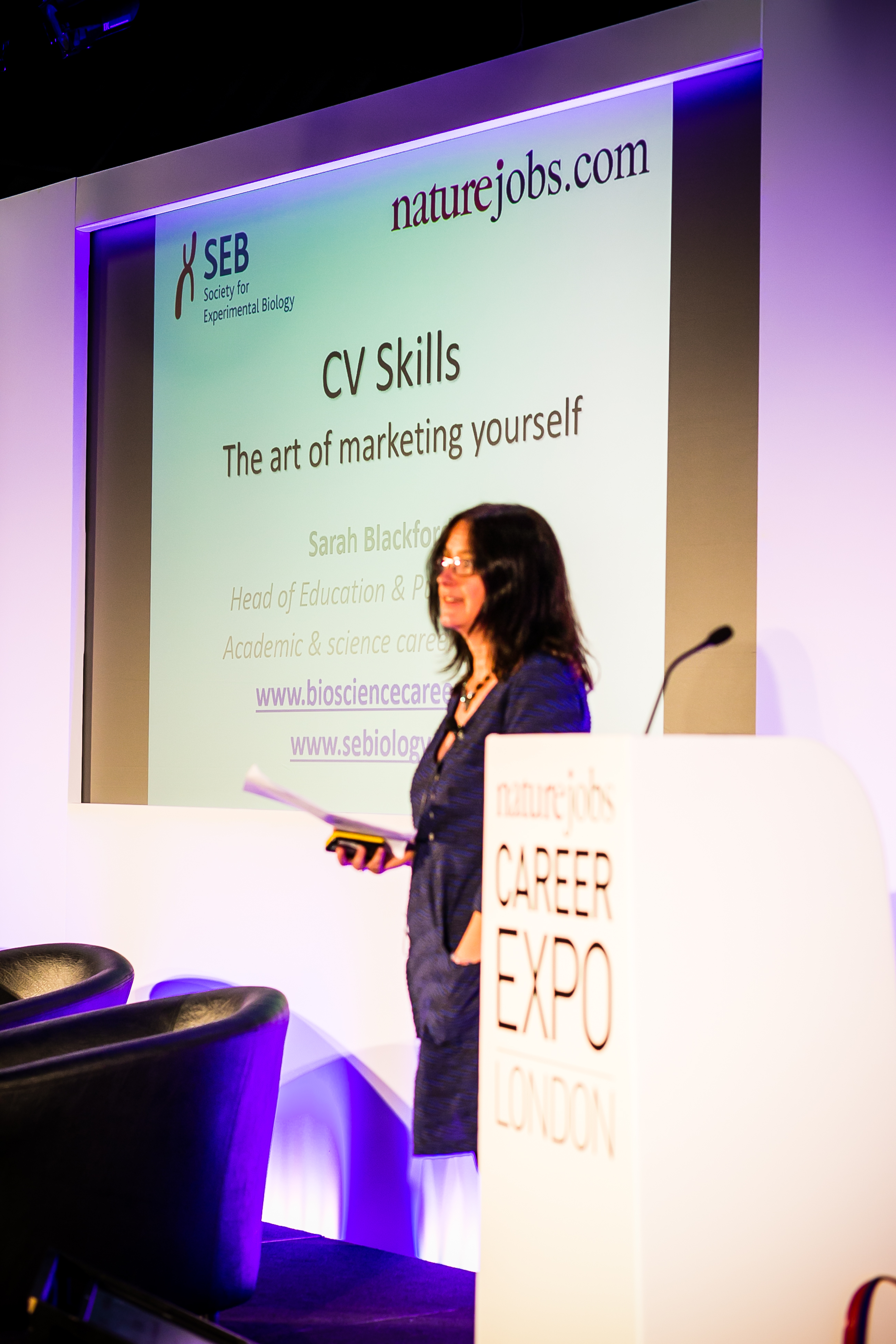
Sarah-blackford-CV-NaturejobsWhat is the purpose of a curriculum vitae, or CV? One obvious answer that it is a document that helps a job applicant to get through the initial candidate-selection process and into an interview. But how do you make sure that your CV gives you the highest chance of selection by an employer? And should you change your CV when applying for different types of science-related positions?

Answering these and other questions in the final talk of the day at Naturejobs Career Expo on 19 September in London, UK, was Sarah Blackford, a careers adviser at the Society for Experimental Biology in the UK. With 15 years of experience in scientific-careers advice, Blackford is an indubitable expert in the field. She says that you can employ some simple and straightforward tactics to improve your CV.

Almost all employers look for evidence in a CV of certain candidate attributes. Communication skills are essential for effective teamwork, and enthusiasm and a good attitude are important for showing that you would easily fit in to the organization where you are applying.

Applicants must be careful to target their CV to the job advert. An excellent way to do this is to go through job adverts and highlight the skills that the employer is seeking. But it is not enough to just state that you have the skills and attributes listed in the job description. Your CV should provide evidence that your skills match the position’s requirements. Continue reading