
If work/life balance is unachievable, people should focus on acknowledging that life is a journey, not a goal, says Melissa Greven.
Contributor Melissa Greven

{credit}iStockphoto/Thinkstock{/credit}
As a Ph.D. student who returned to science after a long absence (which included a brief career as an art historian and time as a stay at home mother, among other things), I take issue with this question.
It implies that scientists are somehow different than professionals in other disciplines, as though achieving this balance is more difficult for our lot. One may assume that scientists face unique demands, where bench work often lacks the regularity of a 9-5; however, scientists encompass a far greater population than just lab rats. It also might be said that scientists face the pressures of getting research done, be it discovering the next miracle drug or fossil fuel alternative, but how does this differ from a corporation preparing for the latest product launch? While an argument could be made about the necessity of the latest smartphone update, a non-bench/field scientist sitting behind a desk likely is not subject to additional public accountability than that faced by an employee of a tech company. The greater question is: can anyone achieve a work/life balance?
This whole idea of a work/life balance is a modern day artificial construct, a first-world problem. There exist several self-help books, web sites and apps promising tips on how to achieve this mythical equilibrium. But perhaps the best technique is to acknowledge that there is no balance—work is a part of life, and life is an ebb and flow. Modern technology, while designed to make our lives simpler, also has made our lives more complicated. In the mid-20th century, work was confined to the workplace—working late meant staying at the office a few extra hours. These days, the line between home and the office is fuzzy. Car repairs, a sick child, or a snow day no longer require taking a day off. This is both a blessing and a curse. Yet there is no sense in complaining about having to do off-hours work if one spends time catching up on Facebook during the work day.
I entered graduate school as an older student with two young children. People often ask me how I do it, how I manage everything. The truth is, I don’t—life is not meant to be managed. Instead, I choose to spend my time doing things that I enjoy—science, family time and running to name a few. This is not to say that I never feel overwhelmed or pulled in many different directions, that I always keep a cool head about me. But in these times I revisit the same mantra I repeat on a difficult run—run the mile you are in. Focusing on mile 26 in the first file of a marathon can be disheartening, and make one feel defeated before even beginning. My advice to fellow scientists on how to achieve that perfect work/life balance: acknowledge that life is a journey, not a goal. Choose how you fill it wisely.
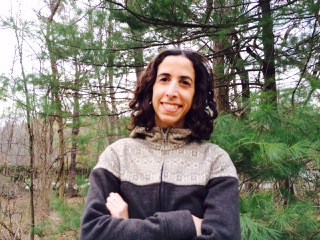
{credit}Image credit: Melissa Greven{/credit}
Melissa Greven is a winner of the 2015 Boston Naturejobs Career Ex[po journalism competition. Long ago as an optimistic youngster, Melissa intended to get an undergrad degree in chemistry, but instead, a boy persuaded her to study art history. She ended up marrying that boy and has two fantastic kids. Melissa later returned to school to pursue her science studies, and holds a B.S. in environmental science from UMass Amherst. She currently is a Ph.D. student in biomedical science at UMass Medical School where she studies the causal relationship between chromatin dynamics and replication timing. First one on the dance floor and the last one off, Melissa is happiest when running or with a beer in hand. Keep up with her attempts to communicate about science at sknowe.com.