
Stem cell plaintiff’s institute takes sides against him in court battle

The research institute that is home to the controversial adult stem cell researcher James Sherley was granted permission today to officially join those opposing Sherley’s courtroom-based attempt to quash US government funding for human embryonic stem cell research. The decision comes one week before key court arguments.

The Boston Biomedical Research Institute (BBRI) last week asked the US Court of Appeals for the District of Columbia Circuit if it could join as a signatory to a friend-of-the-court brief filed in October by the state of Wisconsin, the Coalition for the Advancement of Medical Research and The Genetics Policy Institute. Those groups argued that U.S. District Court judge Royce Lamberth was wrong on several legal points when he issued a preliminary injunction halting US-funded human embryonic stem cell research in August (the injunction has been temporarily stayed while the case is heard on its merits). Today, the Appeals Court allowed Sherley’s home institute sign on to that argument.

The BBRI, in requesting the permission, argued that patients would experience a “severe adverse impact” if government funding for the research was halted. It also said that its 25 prinicpal investigators and other scientific staff would be hobbled by the institute’s inability to draw National Institutes of Health funding for its programme in regenerative biology. Already, it said, it has been obliged to reject offers from a university and a foundation of human embryonic stem cells with mutations conferring muscular dystrohy, a disease in which the institute specializes.

Continue reading

Iranian nuclear scientist assassinated

One Iranian nuclear physicist has been killed, and another injured, in separate bomb attacks today in Tehran.

Majid Shahriari was killed, and his wife injured, on his way to work at the Shahid Beheshti University in Tehran when his attackers, riding motorcycles, placed a magnetic bomb on his car shortly before 8am local time. Another nuclear scientist, Fereydoun Abbasi-Davani, and his wife, survived an identical simultaneous attack.

Details of the mens’ backgrounds remain sketchy. But the motivation for the killings may be linked to Iran’s nuclear programme: experts are convinced that the country’s uranium enrichment facilities are intended give the country the capacity to build nuclear weapons. Mahmoud Ahmadinejad – who clung onto a second term as president, after the disputed June 2009 election – immediately laid blame with the West and Israel. “The western governments and the Zionist regime have a hand in the assassination of the two Iranian university professors,” he asserted at a press conference in Tehran hours after the attacks. “They will not be able to stop the Iranian nation’s activities by such acts,” he added.

Shahriari has published several papers on nuclear reactor physics and nuclear medicine applications in international peer reviewed journals, including Elsevier’s Annals of Nuclear Energy. Abbasi-Davani’s handful of publications on neutron physics seem mainly to be in Iranian journals. Abbasi-Davani, who sources say is a ministry of defence scientist and a longstanding member of Iran’s revolutionary guards, is a well known figure in Iran’s nuclear programme. He was named as being among “Persons involved in nuclear or ballistic missile activities” in the 2007 UN Security Council resolution 1747 which imposed sanctions on Iran over its refusal to stop enrichment of uranium. It is not yet clear whether Shahriari had any links to the programme or not.

Shahriari was, however, part of the Iranian delegation on the board of a ‘science for peace’ project, the non-nuclear SESAME (Synchrotronlight for Experimental Science and Applications in the Middle East) synchrotron facility, in Alaan, Jordan. He is the second participant of the SESAME council to be assassinated. Last January, Masoud Alimohammadi, a particle physicist at the University of Tehran, was killed by a bomb as he got into his car to go to work (see my article on this here).

The facility, which opened in 2008 and is the Middle East’s first synchrotron, is intended to promote peace through scientific cooperation in the region. SESAME board president Christopher Llewellyn-Smith says, however, that he has little recollection of Shahriari, and that records show he only attended one meeting, at the opening of the SESAME building.

Alimohammadi had opposed the regime’s crackdown on the protests that followed the 2009 presidential election, and his research on theoretical particle physics was far removed from nuclear matters, leading researchers to speculate that he had been assassinated by hardliners in the Ahmadinejad regime. By contrast, today’s attacks bears all the hallmarks of a hit by foreign powers, says one Iranian expatriate researcher.

Research trip to the Antarctic: A rough passage

Giant petrel 2_MP3.jpg

Science journalist Jane Qiu is travelling to the Palmer ecological research station on the Antarctic Peninsula, joining researchers investigating how climate change has affected the region in recent decades. Please check back for her dispatches from the bottom of the world.

We have sailed well into the Drake Passage, a thousand kilometers of open water between Cape Horn in Chile and northern Antarctic. Gigantic waves pound the hull and flood the lower deck. A few giant petrels and albatrosses circle around us, gliding effortlessly and elegantly in the southern wind.

The Drake’s notorious gales are formed because of the perennial high-pressure system over the South Pole. That massive air mass flows eastwards – because of the Earth’s rotation – and circulates and accelerates clockwise around the continent with no land mass standing in its way. The unimpeded gales also produce the strongest and fastest ocean current on the planet – the Antarctic Circumpolar Current (ACC).

At the western shore of the Antarctic Peninsula, the ACC climbs up and onto the continental slope, supplying the coastal biota with warmth and nutrients from the deep. For reasons scientists do not yet understand, the current seems to be getting warmer, which, compounded with atmospheric warming, is changing the balance of the region’s ecosystem from phytoplankton algae to apex predators, says Joseph Warren, an ecologist at Stony Brook University in New York and principle investigator of the research cruise.

To build a comprehensive picture of such changes across the Southern Ocean, Warren and his colleagues will attempt to use sonar to determine what lives in those waters and where. After dropping a few of us off at the Palmer station at the western Antarctic Peninsula, the researchers will attach a tailor-made sonar system to the ship, shoot sound waves down into the ocean as the ship sails around the peninsula, and “listen” to what is bounced back.

“Animals are made of different materials and so reflect sound differently,” says Warren. “The amount of time it takes for the reflection to reach back to the ship also tells us which layer of the water column they live.” By homing in on particular echo signatures, the researchers hope to be able to monitor a large part of the food chain in the region over a long period of time.

Continue reading

No letup for bluefin tuna

tuna.jpgFisheries regulators have elected to show little mercy to the Atlantic bluefin tuna (Thunnus thynnus), whose population is in danger of being wiped out by commercial fishing.

On 27 November at a meeting in Paris, members of the Madrid-based International Commission for the Conservation of Atlantic Tunas (ICCAT), which manages tuna fishing, voted for 2011 catch quotas in the Mediterranean to be set at 12,900 tonnes, just slightly lower than this year’s 13,500 tonnes (press release).

The result of the vote was condemned by environmental groups, who have become used to ICCAT’s failure to lower the take in bluefin tuna over the last 40 years, despite stricter catch quotas recommended by its own scientific committee. In that time, adult stocks have plunged by 72% in the eastern Atlantic and 82% in the western Atlantic.

“”https://www.pewtrusts.org/news_room_detail.aspx?id=62206 “>It is now clear that the entire management system of high seas fisheries is flawed and inadequate,” said Susan Lieberman, director of international policy for the Pew Environment Group. The US National Oceanic and Atmospheric Administration (NOAA) said it was “”https://www.noaanews.noaa.gov/stories2010/20101127_iccat.html">disappointed" with the new quota.

ICCAT has also failed to stem illegal fishing of bluefin tuna – as an 8-month investigative report, “Looting the Seas”, made clear in early November (see also Nature’s news article ‘Bluefin tuna regulators under pressure’). The report documented a decade of fraud and quota violations between 1998 and 2007, which ICCAT’s scientific committee estimates means the annual catch of bluefin in that period was 50,000-60,000 tonnes, about 40% higher than the reported catch.

November’s meeting had been watched with particular interest, because earlier in the year Monaco had put pressure on ICCAT by proposing a bypass route: it suggested classifying bluefin tuna as “endangered” under the Convention on International Trade in Endangered Species of Wild Fauna and Flora (CITES). That would have banned international trade in tuna; but economic interests won out – a single bluefin tuna can fetch US$100,000 in markets in Japan, the fish’s main consumers – and the proposal was rejected in March (See ‘Bad news for tuna is bad news for CITES’).

ICCAT’s deliberations are closed to news media, so there is no record of how its 48 member nations voted.

Image: tuna for sale at the Tsukiji fish market in Tokyo / by Stewart via Flickr under creative commons.

Dopamine-sensing duo offers new target for depression

220px-Prozac_pills.jpg

A new twist on depression therapy could involve breaking up a pair of brain receptors for dopamine, a neurotransmitter implicated in the debilitating condition.

Brain cells sense dopamine via 5 different molecular receptors, D1-D5, and different receptors can cause distinct molecular changes in brain cells when they are activated. These sentinels typically work alone, but recent research has found that combinations of dopamine receptors can pair up and produce signals different from those of individual receptors.

Now, Fang Liu’s team at the University of Toronto in Canada found that the D1-D2 duo was present at higher levels in the autopsied striata (brain regions involved in reward) of depressed patients, compared to those of healthy people.

Her team then created a peptide that breaks up the D1-D2 tandem and injected it into the brains of mice. They faired better on two tests commonly used to measure depressive symptoms in mice, compared to rodents that didn’t receive the peptide. The work is published online today in Nature Medicine.

It’s unclear how the D1-D2 pair could promote depression, but Liu says the tandem appears to influence another protein, BDNF, that is linked to the condition.

And given the huge need for new antidepressants – at least a third of patients don’t respond to any drugs – Liu thinks it’s worth pursuing drugs that block dopamine receptor pairs. Her team is working on improving their peptide, as well as looking for small molecules that break up the dopamine receptor and which wouldn’t need to be injected into the brain.

Image of Prozac capsules courtesy of Wikimeda Commons

US polar bears mark their territory

Posted on behalf of Hannah Hoag

More than two years after Alaskan polar bears were given a protection status of “threatened species” by the US Endangered Species Act, the Obama administration set aside on Wednesday 24 November 484,330 sq kilometres — twice the size of the UK — in Alaska as “critical habitat”.

polar-bear.jpg

Almost all of the area is offshore sea ice habitat — where polar bears spend most of their time hunting seals, breeding and travelling—in the Beaufort and Chukchi seas off Alaska’s northern coast. It also includes on-shore barrier islands and land used for making dens. About 4,800 polar bears ramble along Alaska’s ice and shores.

On the eve of the US Thanksgiving holiday, environmental groups celebrated the news — albeit cautiously — calling the designation a good start, but limited in its scope.

Continue reading

Europe bans bisphenol-A from baby bottles

The European Commission on Thursday agreed to ban the common chemical bisphenol-A (BPA) from baby bottles across the European Union (EU) by mid-2011.

The decision follows a ‘better safe than sorry’ approach taken by many countries, manufacturers and consumers in the past few years, as a steady stream of research (most of it in animals) suggests that exposure to BPA may affect development and poses cancer risks. At the same time, it’s not clear whether our everyday exposure merits restricting the chemical – though with young infants, few want to take any chances.

Continue reading

Research trip to the Antarctic: Boarding ship

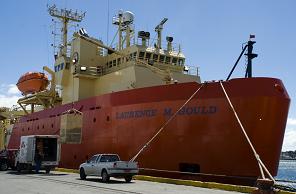
Gould edit.JPGScience journalist Jane Qiu is travelling to the Palmer ecological research station on the Antarctic Peninsula, joining researchers investigating how climate change has affected the region in recent decades. Please check back for her dispatches from the bottom of the world.

Welcome to Punta Arenas, a sprawling city with a population of over 150,000 in the heart of the Chilean Patagonia. Located at the southern tip of South America, Punta Arenas is an excellent gateway to the Antarctic.

It’s 24 November and the docks here are buzzing with anticipation, as scientists from all over the world frantically load ships for their annual research expeditions – often long and in unpredictably harsh conditions – to the Southern Ocean and Antarctic.

I’m on my way to the Palmer ecological research station in the Western Antarctic Peninsula (WAP) – part of the crooked sliver of land in the northwestern Antarctic that protrudes towards South America. Researchers at Palmer are particularly concerned with the ecological effects of climate change, as temperatures in this inhospitable, windswept region are rising faster than anywhere else in the world.

Continue reading

Obama orders review of Guatemala syphilis experiments

BESeal260.jpg

President Barack Obama today asked his bioethics commission to dig into the recent discovery that US government-funded scientists intentionally infected subjects with syphilis in a study in Guatemala in the 1940s.

“The research was clearly unethical,” Obama wrote in a memorandum to Amy Gutmann, the chair of the Presidential Commission for the Study of Bioethical Issues. “In light of this revelation, I want to be assured that current rules for research participants protect people from harm or unethical treatment, domestically as well as internationally.”

While the Guatemala experiment is six decades old, the shift of many pharamceutical companies’ clinical trials overseas in recent years has brought under scrutiny the protection of human subjects in clinical trials outside of developed nations.

Continue reading

Would cholera vaccines have helped in Haiti?

CholeraTrio.jpg

Three leading researchers today called for the United States to create a national stockpile of cholera vaccines that could be quickly deployed worldwide whenever an outbreak occured, In an opinion article published online by the New England Journal of Medicine the researchers (pictured from left to right) – Matthew Waldor, a cholera researcher at Harvard Medical School in Boston, Peter Hotez president of the Sabin Vaccine Institute in Washington DC, and John Clemens, head of the International Vaccine Institute in Seoul – argue that vaccination could have an enormous impact in controlling cholera outbreaks, such as the current one raging in Haiti, and also serve US foreign policy interests, through “vaccine diplomacy.”

The question of whether vaccine could have helped in Haiti – or help in future outbreaks – is controverial, however. It’s one issue that I’ve addressed in a long analysis on the Haiti outbreak published in this week’s issue of Nature. I’ve excerpted the relevant part in full below, which describes how those working in the field remain highly sceptical of the utility of cholera vaccine in an outbreak situation.

See below the fold for the full excerpt:

Continue reading