Vitamin D: A dosing down?

Posted on behalf of Tiffany O’Callaghan

vitamin D.jpg

A new report concludes that huge doses of the vitamin D are unwarranted and may even be harmful, and it suggests that most Americans and Canadians aren’t suffering from a deficiency in the “sunshine vitamin”. The Institute of Medicine (IOM) report analyzed findings from more than 1,000 studies of vitamin D and calcium intake.

In recent years, there have been a flurry of studies examining the potential benefits of vitamin D for everything from helping equip the immune system to fight infections to potentially inhibiting the growth of cancerous cells. Yet all this research has failed to indicate just how much vitamin D is needed to stave off deficiency. The last recommendations from the IOM released in 1997 suggested that, depending on age, 200 to 600 international units (IUs) of vitamin D was an “adequate intake” to maintain health.

Yet, as the Associated Press points out, as more studies have emerged suggesting protective benefits, some advocates have recommended that people consume amounts as high as 2,000 IUs per day, and many supplements are now sold in doses of 1,000 IUs.

Continue reading

Diplomatic cables detail DNA sleuthing

May I borrow your hanky?
clinton_congo20090810AP_600_1.jpg

The next time you’re at a swanky function at the US embassy, you might want to keep track of your wine glass. At least, if the latest tranche of leaked documents from the US government is any indication: diplomats and other officials have apparently received instruction to collect biometric data—including DNA samples—from major players in certain countries.

The instructions were contained in the thousands of diplomatic cables uncovered through WikiLeaks, a non-profit website devoted to embarrassing the US government publishing classified information on the web.

The Guardian first reported the DNA instructions, which were not issued world-wide. The instruction appeared in a diplomatic cable to US embassies in the sub-Saharan African countries of Burundi, Rwanda, and the Democratic Republic of the Congo. As part of intelligence gathering operations, embassy officials were asked to gather “email addresses, telephone and fax numbers, fingerprints, facial images, DNA, and iris scans” of prominent political, social and business figures inside the countries. Separate cables call for gathering of biometric information about key Palestinian officials and rebel leaders in Sudan.

Not all the data gathering is to come frome troubled regions, however. Another directive called for gathering “biometric information” as well as biographic information about the Directors General of the World Health Organisation and the International Atomic Energy Agency, the head of UNAIDS and the head of the Pan American Health Organisation, as well as numerous UN diplomats.

Of course “biometric information” could mean a lot of things, including a picture, but it nevertheless shows the US’s clear interest in gathering more data on the people they talk to. Certainly the Pentagon has been hard at work taking iris scans of Afghani and Iraqi nationals for security purposes. Wired’s blog Danger Room has a nice summary of the state of affairs which is worth reading.

One questions the cables don’t answer: Where is all this biometric information actually going?

Credit: US State Department

Former chemistry grad student found guilty of fraud

MethaneSM.pngA former graduate student has been found guilty of misconduct in a high profile case that rocked the chemistry community four years ago and resulted in the retraction of six papers.

Dalibor Sames, a chemist at Columbia University in New York, retracted the six papers between March and June, 2006, when he and his colleagues found they could not reproduce the results. The research focused on selectively breaking carbon-hydrogen bonds within molecules with the aim of modifying the molecules for industrial purposes, such as producing pharmaceuticals or fuels.

The Office of Research Integrity yesterday published a notice finding Bengu Sezen, a former graduate student in Sames’s lab, guilty of 21 counts of misconduct – specifically, falsifying, fabricating and plagiarizing data in three papers and in her doctoral dissertation.

The punishment: a five year ban on “any contracting or subcontracting with any agency of the United States Government” – that is, receiving US funding — and on “serving in any advisory capacity to the US Public Health Service (PHS)” – such as scientific peer review.

Sezen completed another doctorate in the lab of chromosome biologist Elmar Schiebel at the University of Heidelberg in Germany. According to a list of lab alumni posted on Schiebel’s website, she then moved on to become a group leader at Yeditepe University in Istanbul, Turkey.

Image: ball and stick model of methane (CH4) via Wikipedia

Hold the science, says anthropology society

27528_125365054145857_5740_n.jpg

Is anthropology a science? Don’t ask the American Anthropological Association (AAA), which recently voted to strike the word “science” from its long-term mission statement.

At the society’s annual meeting in New Orleans two weeks ago, the AAA’s executive board voted to change its long term goal statement from: “The purposes of the Association shall be to advance anthropology as the science that studies humankind in all its aspects” to: “The purposes of the Association shall be to advance public understanding of humankind in all its aspects.”

Three other mentions of science were removed from the three-paragraph statement, while teaching and promoting public understanding were emphasized.

The changes have drawn the condemnation of data-collecting anthropologists, including the Society for Anthropological Science, which is a subsection of the AAA.

At the Chronicle of Higher Education, Peter Wood, president of the National Association of Scholars and an anthropologist, says the change represents longstanding tension over whether human culture should be studied using a data-driven scientific approach, or with a more interpretative perspective that’s characterisic of humanities scholarship.

My own view of anthropology is that it is a hybrid discipline. Its main scholarly tradition is rooted in science, or at least the aspiration for science. If those roots wither or are cut off, anthropology will lose any real claim to serious intellectual attention and perhaps even its identity as a discipline.

At Psychology Today, Alice Dregger singles out “fluff-head cultural anthropological types who think science is just another way of knowing.”

Not all cultural anthropologists are fluff-heads, of course. You can usually tell the ones who are fluff-heads by their constant need to look like superheroes for oppressed peoples, and you can tell the non-fluff-heads by their attention to data. But the non-fluff-head cultural anthropologists are feeling utterly beleaguered in this environment that actively denigrates science and consistently promotes activism over data collection and scientific theorizing.

Damon Dozier, a spokesman for the AAA, tells Inside Higher Ed that the mission statement changes are not a fait accompli and that they represent changes in words, not values. “We have no interest in taking science out of the discipline,” he says. “It’s not as if the anthropology community is turning its back on science.”

The rare earth blues

At this week’s enormous materials science meeting in Boston, Massachusetts, there are scores of talks and posters dealing with the rare earth metals – the fifteen lanthanides, across the bottom of the periodic table, plus scandium and yttrium – which are used in everything from mobile phones to powerful magnets and lasers. But while scientists like those at the Materials Research Society (MRS) event are busily manipulating these atoms, the world has been fretting over their availability.

Fears over these slightly misnamed and actually quite abundant elements surged earlier this year when China moved to restrict its export quotas. China produces nearly all of the world’s supply of rare earth elements.

These concerns have not escaped the notice of the MRS, which has set up a group to look into what it calls ‘energy critical elements’. Alex King, director of the US Department of Energy’s Ames Laboratory in Iowa, a past president of the MRS and a member of that group, told the meeting that since 2001 the price of lanthanum oxide has increased 3,157% and the price of cerium oxide has seen a 4,493% increase.

These increases in price have led to the same countries that abandoned rare earth mining in the face of environmental and cost concerns to think again, says Yan Wang of the Institute of Rare Earth at Baotou in Mongolia.

“Due to the increasing demand for rare earths there are many companies trying to develop projects in other countries,” Wang told another session at the meeting.

She highlights plans for the Molycorp Minerals company, headquartered in Greenwood Village, Colorado, to restart production of rare earths later this year at its Mountain Pass facility in California, which was mothballed at the start of the century due to falling prices and environmental issues. Other companies are also hoping to capitalise on demand for rare earths, and the concern over China’s dominance. Wang also cites the Lynas Corporation of Sydney, Australia, which is exploiting what it calls the “the richest known deposit of rare earths in the world ” at Mount Weld in Australia and plans to start supplying customers by 2011.

More mining is just one possible method of mitigating the current shortage. Other options include increasing recycling and research into possible replacements for shortage elements, such as new high-power but rare-earth-free magnets.

Continue reading

US Senate enacts historic food safety legislation

The United States Senate today approved a historic food safety bill, responding to repeated oubreaks of food-borne illness and addressing perennial assessments from groups like the Institute of Medicine and the Government Accountability Office, which have called the US food safety system weak and fractured.

The bill, the Food Safety Modernization Act, was passed by the Senate on an 73-25 vote this morning.

“I asked Senator [Richard] Durbin (Democrat, Illinois) when he started working on this bill and he said back in the House 18 years ago,” Senator Tom Harkin (Democrat, Iowa) said in a speech on the Senate floor lauding its passage. “This is the first time in 70 years that we have actually had a major revision of our food safety laws.”

The bill gives the Food and Drug Administration (FDA), which oversees the safety of roughly 80% of US food, new powers to order food recalls, new access to records of food processing plants, and a new requirement to more frequently inspect food plants. It also compels the FDA to identify the most significant food-borne contaminants at least every two years, and, where they are called for, to issue science-based documents guiding the industry on how to fight these specific agents.

The agency, whose own science board several years ago sounded a pronounced alarm about its deteriorating scientific capacity, will be required to improve the way it collects, analyzes and reports data on food-borne illnesses, and to hone methods to rapidly and effectively track and trace fruits and vegetables. And each manufacturer will for the first time have to put in place a written plan describing their preventive controls to significantly minimize or prevent contamination hazards at their facility. The legislation also tightens requirements on food importers.

A companion bill was passed by the House of Representatives in July 2009, on the heels of an outbreak of illnesses from salmonella-tainted peanuts that caused President Barack Obama to worry aloud about the safety of his daughters’ peanut butter sandwiches. More recently, half a billion eggs produced at two Iowa farms were recalled this summer after salmonella sickened more than 1,800 people . That put the issue squarely back in the limelight on Capitol Hill.

Because the House and Senate bills are similar in overall thrust, but not identical in detail, proponents are hoping that the House will now pass the Senate’s version of the legislation, enabling it then to be sent to Obama for signing into law.

The FDA oversees the safety of most US food, including fresh fruits, vegetables, peanuts and eggs. Meat and poultry are regulated by the US Department of Agriculture.


Your top science questions answered?

Christmas has come early for geeks. The Royal Society, the UK’s national academy of science, has the answers to all your science related questions, from ‘Are we alone the in the universe?’ to ‘What is the value of biodiversity?’, in a collection of essays to see you entertained through the winter months.

Published today, the report carries 12 colourful essays by top UK scientists who have waxed lyrical on a key science question. The articles are based on discussion meetings held by the Royal Society throughout the year, and helpfully include links to audio recordings of the meetings.

Astronomers Martin Dominik at the University of St Andrews, Scotland, and John Zarnecki of the Open University give a brief overview of how the search for extra-terrestrial life is going, and set out some of the known unknowns. For example, how likely is it for life to emerge elsewhere in the universe once all the conditions, including biochemistry, are in place?

“Advanced extra-terrestrial life might be inconceivable to us in its complexity, just as human life is to amoebae,” they add. Nice point. I’ve never really thought about it from the point of view of an amoeba before.

Adrian Hill a geneticist at Oxford University and Brian Greenwood, professor of clinical tropical medicine at the London School of Hygiene and Tropical Medicine, write a brief history of vaccines and highlight some of the more recent developments including for the human papilloma virus (HPV). They discuss what further developments are needed to ensure people in the developing world have access to vaccinations, including developing vaccines that are stable at the higher temperatures.

The report is being launched as part of the Royal Society’s celebrations of its 350th anniversary. “In 1660, when the Royal Society was founded, science was in its infancy," says outgoing president of the Royal Society, Martin Rees, in a statement. "Our lives today differ from those of our ancestors largely because of the scientific advances made in the subsequent 350 years.”

“Science is an unending quest for understanding: as old questions are settled, new ones come into sharper focus,” he adds.

Positive review for California stem cell agency

cirm.logoSM.jpgThe first comprehensive external review of the California Institute for Regenerative Medicine (CIRM) has come to overwhelmingly positive conclusions about the state stem cell agency’s progress. But some in the biotech community continue to grumble that the agency, which began operations in 2006, is focusing too much on basic research rather than fulfilling its mandate of taking stem cell therapies from bench to bedside.

Continue reading

Institute of Medicine urges ramp-up of AIDS prevention in Africa

A report released today by the Institute of Medicine (IOM), part of the US National Academy of Sciences, says that cases of HIV/AIDS in sub-Saharan Africa will greatly outstrip the availability of treatment by 2020. It urges nations inside and outside of Africa to intensify prevention measures as the best long-term strategy for combating the disease.

aids-graph.jpg

“Because treatment will only reach a fraction of those who need it…preventing new infections should be the central tenet of any long term response to HIV/AIDS in Africa,” Thomas Quinn, a co-chair of the 12-member committee that wrote the report said on Monday at a press conference in Washington, DC. Quinn, who directs the Center for Global Health at Johns Hopkins University in Baltimore, Maryland, added that, by the committee’s conservative projections, the number of people living with AIDS in sub-Saharan Africa will reach an “astounding” 70 million by 2050, unless intervening forces come into play (see graph).

The report, Preparing for the Future of HIV/AIDS in Africa: A Shared Responsibility, recommends that both the United States and individual African nations develop ten-year strategic “roadmaps” for combating AIDS, and that these prioritize prevention. It also urges long-term capacity building to produce the institutions and health workforce in Africa equipped to tackle the epidemic.

Building capacity “is a big challenge” in the face of the brain drain from Africa, conceded David Serwadda, the other co-chair of the committee that wrote the report. Serwadda is an infectious disease epidemiologist at the Makere University School of Public Health in Kampala, Uganda. Still, he added, building African expertise is vital because “African countries need to take greater ownership of this epidemic and rely less on the global community.”

Continue reading

PCAST eyes a $10-billion boost for energy innovation

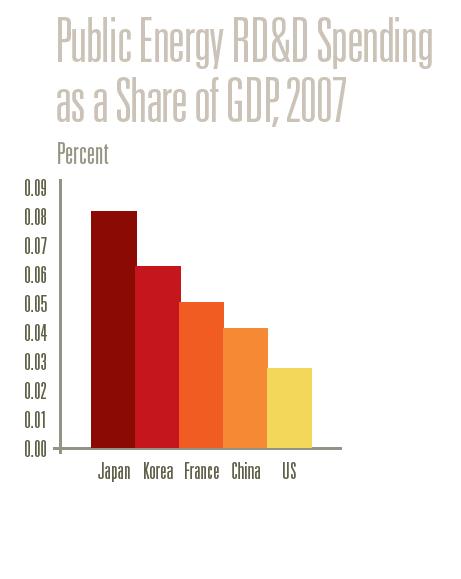
energy.per.cap.II.JPGThe administration of Barack Obama should work with Congress to identify an additional $10 billion in annual energy funding as part of a broader effort to “forge a more coordinated and robust federal energy policy,” according to a new report from the president’s Council of Advisors on Science and Technology.

The council recommended various detailed changes to the federal energy research programme while urging the government to adopt a strategic planning process, the core of which would be a “Quadrennial Energy Review.” Modelled on the Quadrennial Defense Review, the QER would represent an opportunity to assess a plethora policies and programmes (including existing energy incentives and subsidies, which should be cataloged in their own right) in order to develop a more cogent vision and implement a more systematic plan to advance clean energy research, development and deployment. PCAST recommended that the Energy Department do a trial run next year and then help the White House gear up for the first full quadrennial review in 2015.

In theory, assuming the administration in charge does a meaningful strategic assessment rather than a perfunctory review, all of this sounds good. Paralleling the quadrennial review, Congress could develop its own four-year authorization legislation for energy spending in order to help ensure that appropriations align with the government priorities. But the first challenge will be finding an extra $10 billion dollars in annual appropriations, which would bring the total to roughly $16 billion annually. In addition to an ongoing budget crunch, the newly elected Republican majority in the House of Representatives ran on a platform of reigning in government spending.

“We will have our work cut out for us in terms of identifying that level of resources,” says Bob Simon, staff director at the Senate Energy and Natural Resources Committee under Chairman Jeff Bingaman of New Mexico.

Continue reading