First nuclear material is out of Fukushima


{credit}Credit: TEPCO{/credit}

Investigations continue at the Fukushima Daiichi nuclear power plant in Japan, and earlier this week the Tokyo Electric Power Company (Tepco) released photos of the first nuclear material that they’ve actually managed to get out of one of the reactors.

As a quick recap, the unit 4 reactor was shut down when a magnitude 9 earthquake and 14m tsunami struck the Fukushima Daiichi plant on 11 March 2011. It was actually in the middle of refuelling when the emergency struck, and as a result, its old fuel was in a pool atop the reactor, along with a fresh batch. Since the accident, many people have worried that the fuel in unit 4 constitutes a serious safety risk, particularly if there’s another earthquake.

All summer long, Tepco’s been busy demolishing the top of the unit 4 reactor to try and get at the fuel (the reactor was damaged in a fire that may have started as a result of the meltdown at unit 3). In July, the successfully extracted a single fuel assembly, and this week, they unveiled photos of the assembly under inspection.

An assembly is basically a lot of long little straws filled with pellets of uranium fuel. This particular one is filled with fresh fuel, so it’s not particularly radioactive (which is why everyone is standing around it). This one also does not appeared to be damaged at all, which is pretty remarkable considering what it’s been through. There is a little corrosion on the rods, but that could be precipitated iron from the water used to cool the pool, according to Margaret Harding, a nuclear engineer based in Wilmington, North Carolina. There is some debris from the fires and explosions in the bottom of the pool as well.

The condition of the rod is a positive sign: it means that it may be possible to begin unloading the roughly 1,500 fuel assemblies from the unit 4 pool and move them to a common storage area that will be considerably safer than the current location. In fact, workers have already removed the heavy lid of the reactor’s pressure containment vessel to make way for the unloading operation.

D-Wave quantum computer solves protein folding problem

A quantum computer from the private company D-Wave, based in Burnaby, British Columbia, has solved the puzzle of how certain proteins fold.

The D-Wave One quantum computer (which bears more than a passing resemblance to the monolith) consists of 128 superconducting quantum bits or ‘qubits’. The computer works on the principle of quantum annealing. Essentially, it involves preparing some sub-group of the qubits into their lowest-possible energy state, or ‘ground state’, and then performing a series of operations to put it into a more complex ground state that can’t be easily solved using classical methods.

If it sounds complicated, it is; so much so that some scientists have questioned D-Wave’s claims in the past. More recently, however, the company has been able to prove that its computer is working as claimed.

The latest  finding from a group at Harvard University in Cambridge, Massachusetts, further backs up D-Wave’s claims of quantum-computing supremacy. The paper, by Alan Aspuru-Guzik and his colleagues, shows that the D-Wave One could predict the lowest-energy configurations of a folded protein. Proteins are very complex, and a quantum computer can, in theory, process all the possible configurations better than a classical one.

The model consisted of mathematical representations of amino acids in a lattice, connected by different interaction strengths. The D-Wave computer found the lowest configurations of amino acids and interactions, which corresponds to the most economical folding of the proteins. It worked, but not particularly well. According to the researchers, 10,000 measurements using an 81-qubit version of the experiment gave the correct answer just 13 times. This was owing, in part, to the limitations of the machine itself, and in part to thermal noise that disrupted the computation. It’s also worth pointing that conventional computers could already solve these particular protein folding problems.

I just got off the phone with Colin Williams, the director of business development at D-Wave, who I was speaking to about another story. We discussed the paper, and he admitted that the computer didn’t work perfectly for the protein problem. But the fact that it worked at all was significant, he says, and things will only get better from here: “As D-Wave goes forward we’re going to make the chips more capable,” he says.

Butterflies and balloons at Fukushima

Nuclear meltdowns make everything depressing, and this week, even butterflies and balloons have seen their normally cheery image marred by radioactivity.

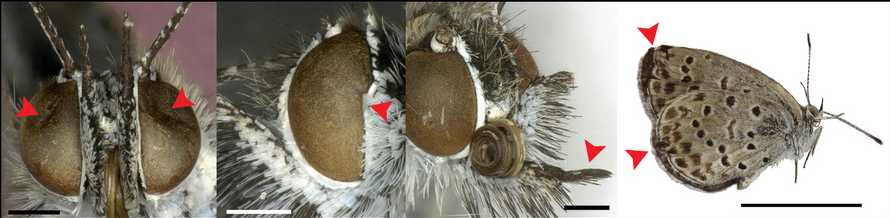
First butterflies. A paper in the open-access journal Scientific Reports shows mutations in butterfly populations around the Fukushima plant, which melted down in March of last year following a major earthquake and tsunami. The paper is impressively thorough: it examined 144 butterflies collected a month after the accident. Although their behaviour was normal, they did suffer from small morphological defects, such as dented eyes and slightly deformed wings (see above). A second examination of butterflies caught six months later showed about twice the rate of mutation.

The researchers also conducted a series of laboratory experiments in which they induced mutations in normal butterflies through radiation exposure. The total dose received by the lab butterflies was 55 millisieverts (mSv) and 125 mSv, and mutations similar to those in the wild samples could be seen in both populations.

The results are consistent with low-dose radiation exposure. As butterflies breed in the radioactive environment, mutations will accumulate in the population. Another study has shown that the number of butterflies around Fukushima has dropped since the accident, and this could be one reason.

It’s bad news for the environment, but should people be worried? Not really. As I reported in May, the vast majority of civilians and workers have received less than 10 mSv of radiation. Those estimates are backed up by a paper out today in the Journal of the American Medical Association showing that 3,286 residents surveyed received less than 1 mSv of internal exposure from caesium-137 six months after the accident (although they admit earlier exposure might be higher).

It is also worth mentioning that people are a lot bigger than butterflies; so even if they do receive higher doses, we wouldn’t expect the same response.

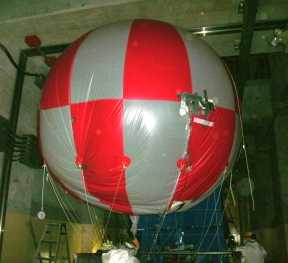
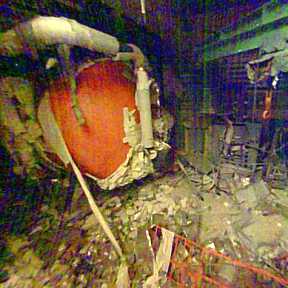
In separate, balloon-related meltdown news, workers have flown a balloon inside the unit 1 reactor in a clever bid to get a better look at it (right, top). By floating it up through an equipment hatch, the crew hoped to get a look at the top of the reactor and the spent fuel pool, which contained used nuclear fuel before the accident and has been the subject of much speculation since. Unfortunately, they couldn’t get all the way to the top because of debris blocking the way. But they did manage to get a look at the fourth floor, and it wasn’t pretty (right, bottom).

There is a very small silver lining to all of this. On the butterfly front, it’s positive that there are scientists carefully examining the ecological impact of Fukushima (this kind of data was absent for years following the Chernobyl accident of 1984). And the balloon shows that the workers at the plant are coming up with creative ideas to try and deal with the situation.

Images: top, Hiyama, A. et al. Scientific Reports 2, 570 (2012); bottom, TEPCO

BP creates global materials centre

Today, the oil-and-gas giant BP unveiled a US$100-million research centre aimed at developing advanced materials. It will be centred around the University of Manchester, UK, with smaller branches at Imperial College London, the University of Cambridge, UK, and the University of Illinois at Urbana-Champaign.

The new centre will create 25 academic posts along with 100 postgraduate research positions and 80 postdoctoral positions. It will look at research issues important to BP, such as developing metal alloys that can work in deep-water drilling and membranes for purification of oil, gas, water and biofuels (here’s a summary from the University of Manchester website (PDF)).

By coincidence, this week’s Nature has an article about another big centre at Manchester — a new graphene research institute that is being funded to the tune of £38 million ($59 million). It’s all part of the government’s broader agenda to use universities to help drive economic growth. It’s worth noting that BP–Manchester collaborations are nothing new: since at least 2010, BP has collaborated with the university.

As the BP announcement shows, corporations are interested too. As corporate research-and-development labs wither, many are turning to campuses to fill their research needs.

Image: BP p.l.c.

Higgs discovery papers unveiled

Yesterday on the popular preprint server arXiv.org, ATLAS and CMS, the two main physics experiments at the Large Hadron Collider, posted their scientific papers describing a new Higgs-like particle (ref: ATLAS, CMS).

The papers are lengthy and dense, 39 pages in the case of ATLAS and 59 pages for CMS. They describe, in painstaking detail, the decay of a new particle into a variety of known particles, including γ-rays and W and Z bosons. The upshot seems to be about the same as it was at the beginning of July: the signal is still there, and it’s even stronger than before. Both experiments now report significance well above five standard deviations, meaning that, assuming there was no particle, the chances of this being a statistical fluke stand at about one in half-a-billion.

Of course, there’s still much work to be done. It’s not enough to say it’s a Higgs-like being; theorists want to know exactly what kind of Higgs-like being it is. More is sure to come later in the year.

The papers have been submitted to Physics Letters B.

Image: ATLAS

Walport named as next UK chief scientific adviser

Mark Walport has been named as the United Kingdom’s next chief scientific adviser. Walport, a professor of medicine, has been director of the Wellcome Trust, the United Kingdom’s largest medical charity, since 2003. He will replace John Beddington, a population biologist who has been in the adviser post since 2008. Walport’s term begins in April 2013.

Image: Wellcome Trust

Crossing the nuclear landscape

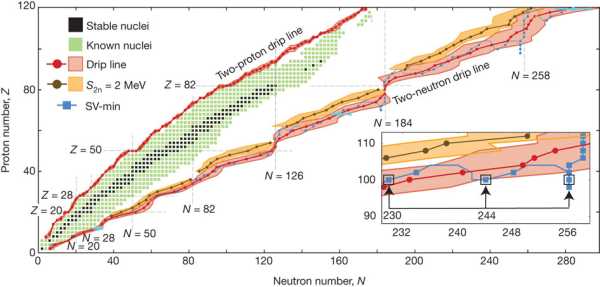
How many different nuclei are out there? If you just take the number of distinct elements, you get 114, as of last month. But then there are the isotopes—elements which have an extra neutron (or two, or three, or more). The number of isotopes discovered so far is somewhere in the neighbourhood of 3,000.

How many isotopes there are in all depends on how large an atom can get before it can’t take on any more neutrons, and that, as it turns out is a surprisingly difficult thing to calculate. A new paper in Nature this week takes a stab at the limit and finds that there are probably in the neighbourhood of 7,000 isotopes in total that can exist (most of them briefly).

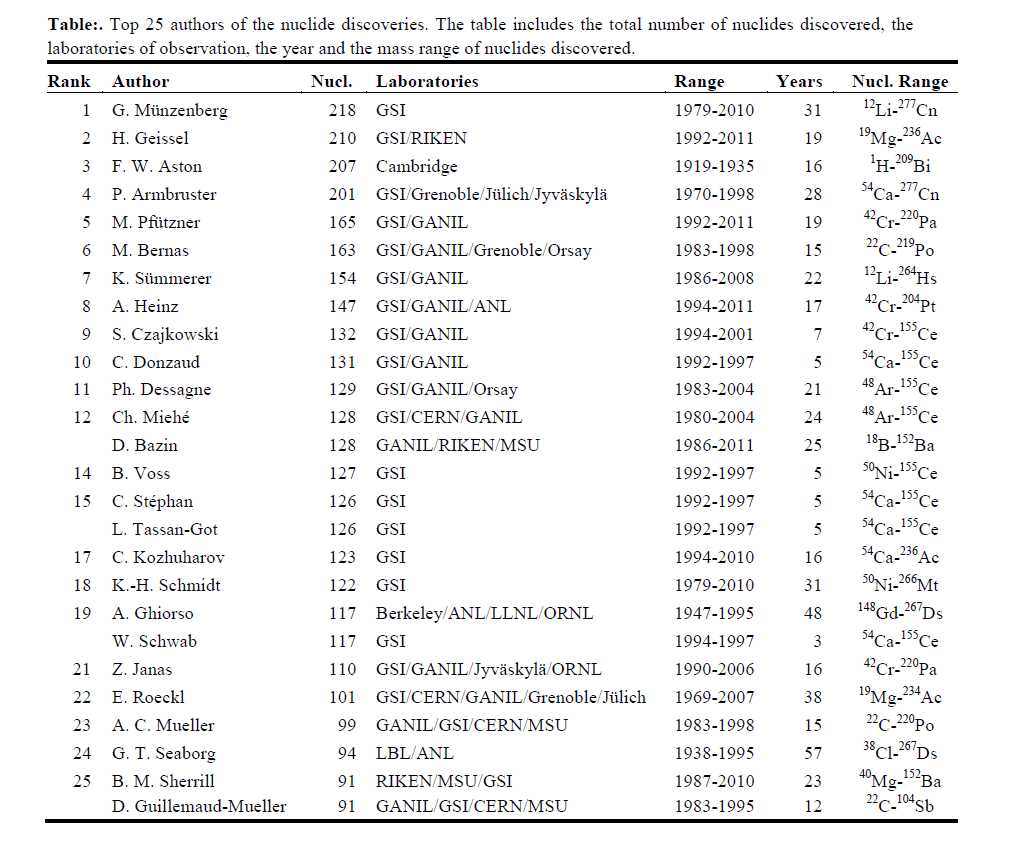
In related isotope news, Michael Thoennessen, a physicist at the National Superconducting Cyclotron Laboratory at Michigan State University in East Lansing, has released a new list of the top 25 isotope hunters in history (see below, click to make it bigger). Just as in his provisional list, released last year, two Germans and a Brit are at the top.

Given the space left in the nuclear landscape, there’s plenty of room for new scientists to edge their way into the top 25, but it may not be too likely to happen. Most of the 3,000 remaining isotopes are fleeting and very difficult to detect, and it seems likely that few of them will ever be seen.

That doesn’t mean that they don’t matter though. According to the authors of the Nature paper, the isotopes could still play brief but important roles in stellar processes and should be considered in theoretical calculations.

Credit: Stoitsov, M. et al.; M. Thoennessen, Discovery of Isotopes Project

World Health Organization weighs in on Fukushima

UPDATE: Our latest news story discusses the WHO report at length, along with a second study on the exposure levels of workers and other aspects of the accident by the United Nations Scientific Committee on the Effects of Atomic Radiation.


Today, the World Health Organization (WHO) released a preliminary estimate of the radiation dose received by the public as a result of last March’s meltdowns at the Fukushima Daiichi nuclear plant in Japan. Nature has seen a draft of the final report, and it is mostly good news — the doses are very low, and very few cancers would be expected as a result.

Most residents of Fukushima prefecture received between 1–10 millisieverts (mSv) in the first year after the accident, according to the estimate. Those in neighbouring prefectures received between 0.1–10 mSv, and the rest of Japan received between 0.1–1 mSv. These levels are well below the government’s maximum recommended dose of 20 mSv and will cause a minimal increase in cancer risk.

The obvious question is how minimal. According to David Brenner, a radiation biophysicist at Columbia University in New York, a dose of 5 mSv would be estimated to lead to one excess cancer per 5,000 people exposed. Given that roughly 2,000 of those 5,000 people are going to develop cancer anyway, this is a tiny increase in risk, and Brenner emphasizes that the uncertainties in his calculations are high.

There were two areas that were above the 10-mSv range. In the town of Namie and the village of Itate, to the north-west of the plant, residents received 10–50 mSv in the first year. This is because both towns were beneath a plume of fallout from the plant, but still outside the evacuation zone set up immediately after the accident. Residents in these areas remained until a few months later, when they voluntarily left at the government’s request. As a consequence, they received a higher dose of radiation.

Even the worse case scenario — a dose of 50 mSv — poses a fairly minimal risk. However, the models showed that infants living in Namie could have got a higher dose to their thyroid, of 100–200 mSv. That higher dose would be due mainly to radioactive iodine-131 blowing from the plant immediately after the accident. Brenner says a dose of 200 mSv to a female infant under a year old might mean a 1% risk of developing thyroid cancer over her lifetime (by comparison, the lifetime risk in the United States is 0.02%).

It’s important to remember that the WHO numbers are based on models, and real doses would vary quite a bit. A survey of 1,080 infants and children in the area has shown no thyroid doses above 50 mSv thus far. Similarly, radiation surveys of Fukushima residents show very low doses. All of these measurements are consistent with the WHO model.

We’re going to have a much more detailed story on the doses received by civilians and the workers at the plant later today.

Image: Nature (data from: WHO/METI)

Space X launches Falcon 9

This morning, the first commercial space launch to the International Space Station (ISS) lifted off from Cape Canaveral in Florida. It was launched by SpaceX, and will carry the company’s Dragon capsule, containing some 460 kilos of supplies, to the space station crew.

The Falcon 9 rocket runs on a mixture of liquid oxygen and kerosene. It is essentially a larger version of the company’s Falcon 1 rocket, which first reached orbit in 2008.

The launch is a huge success for SpaceX, which hopes to eventually play a major role in supporting the ISS. It is also a vindication for NASA, which has invested millions in commercial companies in recent years.

This is just the start of the mission, however. Over the next few days, the Dragon capsule will perform a number of maneuvering tests. It will then move near enough to the ISS to be snagged by the station’s robotic arm and guided in for docking. The supplies will be unloaded, and the capsule will be filled with a variety of cargo for transport back to earth, including several experiments that have languished on the station.

After 18 days at the space station, the capsule will undock and return to earth, splashing down in the Pacific Ocean. Only when the capsule is bobbing in the waves will the Dragon’s flight be considered a complete success.

 Image: NASA TV

Fukushima owner is nationalized

Fukushima

It was as inevitable as cherry blossoms blooming in springtime: sooner or later, Japan had to nationalize the Tokyo Electric Power Company (TEPCO), the owner of the ruined Fukushima Daiichi nuclear plant. Today the government announced a ¥1 trillion (US$12.5 billion) plan to bail out the country’s largest utility, and at least temporarily take control.

The need for the takeover stems directly from last March’s meltdowns. In the immediate aftermath of a massive earthquake and tsunami, TEPCO unexpectedly found itself struggling to contain three reactors on the site. The company could not stop the meltdowns and has spent months bringing the reactors under control. In the past year, it has made progress, creating a system to recycle radioactive cooling water from the core, but the long-term clean up will take decades (see the video below for more).

Continue reading