Call for submissions: Rescue your data

Scientific Data is inviting submissions that release data underlying influential research papers published three or more years ago, for potential inclusion in a special collection to be launched in 2018. In particular, we are encouraging submissions that describe important datasets that were not practical to share online with the original publication, due to technical constraints or a lack of appropriate data repositories at the time.

To be considered for publication among the first papers in this collection, manuscripts should be submitted to the editorial office by 1st December 2017. Continue reading

Author’s corner: Providing incentives and ensuring quality in citizen science

Guest post by Steffen Fritz, Linda See & Ian McCallum of the International Institute for Applied Systems Analysis, Laxenburg, Austria

author-corner-photos-june-2017

{credit}Steffen Fritz, Linda See & Ian McCallum{/credit}

Citizen science, the collection or analysis of research data by the general public, has existed in one form or another for centuries, with contributions ranging from plant and animal observations to weather phenonmena1. In the field of land cover and land use, however, its application is relatively new2. Previously this was a task left largely to governments, research institutes and global bodies. With the recent availability of high resolution satellite imagery, this has changed, opening up new possibilities for citizen participation3. In our recent article in Nature Research’s Scientific Data4, we have made available a global dataset of crowdsourced land cover and land use reference data, containing the results of our first four citizen-science campaigns. Continue reading

Expanding our generalist data repository options

Since our launch in 2014, we have published descriptions of datasets archived at more than 45 different repositories. This diversity is a key part of the Scientific Data philosophy; we aim to support as wide a range of data repositories as possible, within the constraints of our strong policies on data preservation and openness (learn more). So our authors find the right repository for their data, we maintain and regularly update a list of recommended open data repositories, which is also used more widely by the Nature Research journals and our publisher Springer Nature. Last year we also improved our support for institutional repositories. Continue reading

An open approach to Huntington’s disease research

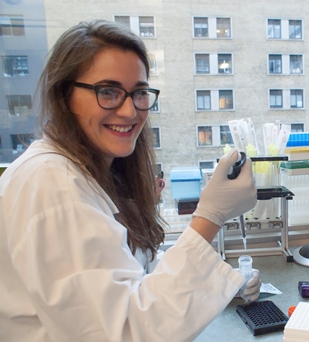
Guest post by Rachel Harding, postdoctoral fellow at the Structural Genomics Consortium, University of Toronto, Canada

Rachel Harding

{credit}Rachel Harding{/credit}

Huntington’s disease (HD) is a fatal neurodegenerative disorder caused by a mutation in the huntingtin gene1. The progressive break down of brain neuronal cells in HD patients leads to deteriorating mental and physical abilities over a 10-20 year period prior to death, the symptoms often described as having Parkinson’s disease, Alzheimer’s disease and amyotrophic lateral sclerosis (ALS) simultaneously2. At the start of the huntingtin gene there is a CAG trinucleotide repeat region that encodes a stretch of poly-glutamine residues in the amino-terminus of the encoded protein. This repeat tract is expanded in HD patients. The repeat length of this region correlates with the age of symptom onset3. Affecting approximately 1 in 10,000 of the population4, rare juvenile forms of the disease exist in patients with the longest CAG expansions, although adult-onset HD patients typically have between 40-50 CAG repeats with symptom onset beginning between the ages of 35-50. Continue reading

Data Matters: Interview with Ben Lehner

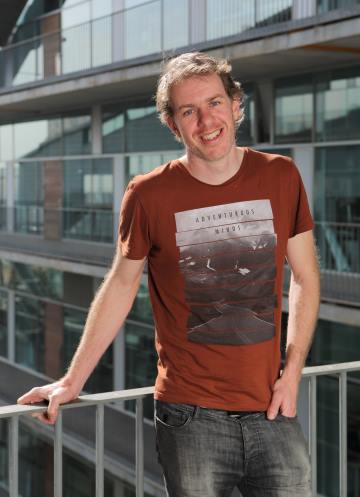
Ben Lehner

{credit}Ben Lehner{/credit}

Ben Lehner is a group leader at the EMBL/CRG Systems Biology Research Unit, in Barcelona, Spain.

Could you briefly introduce your own research?

My lab works on genetics, essentially. It’s a mixture of producing our own data, and using other people’s data. We’re a combined wet and dry lab, and we work with organisms and data from bacteria, through yeast, worms, all the way up to human clinical genetic data.

Broadly, how open do you think the human genomics community has been to sharing data?

I think there is a cultural history here that’s important. You can divide the human genomics community into two groups. Continue reading

Scientific Data to publish a wider range of research advancing data sharing and reuse

SD_Benefit_150Scientific Data is expanding the kinds of content it publishes, providing a richer forum for advances in open, reproducible science. Authors may now submit manuscripts under the following new formats:

The Analysis format can now be used to submit reports on new analyses or meta-analyses of existing data. Analyses should present particularly innovative examples of data reuse, and may be used to report compelling new findings and conclusions derived from published data. Analysis submissions are not required to use data previously published at Scientific Data, although submissions of this kind are encouraged. Analysis submissions should exemplify reproducible research by clearly describing all steps in the analysis, providing supporting source code, and explaining how and where others may access all underlying data.

The Article is a flexible format for presenting original reports on systems or techniques that clearly advance data sharing and reuse. This includes research on sharing, managing and processing scientific research data, as well as articles describing data repositories, standards and ontologies. Articles may also present sociological research on data sharing habits or perceptions, or the effectiveness of sharing policies. Continue reading

Call for submissions: Replication data

Call for Submissions

Special Article Collection
Replication data

Organizers:

Brian Nosek (Center for Open Science & University of Virginia)

Andy DeSoto (Association for Psychological Science)

Martin Schweinsberg (INSEAD)

Partnered with the Open Science Framework

Scientific Data is inviting submissions releasing and describing datasets generated in the process of attempting to replicate one or more previous experimental studies. Submissions may be from a wide range of research disciplines including, but not limited to, the domains of psychology, biology and Earth science. Submitted articles may be considered for inclusion in a special article collection. Continue reading

Call for submissions: Functional genomic screening data

Call for Submissions

Special Article Collection
High Throughput Functional Genomic Screening
Organizers: Dr. Kaylene Simpson (Peter Mac) and Dr. Jennifer Smith (Harvard Medical School)

Scientific Data is inviting submissions releasing and describing functional genomic high throughput screen datasets. Submissions may be from a range of screening strategies that relied on a variety of different functional genomic libraries, including siRNA, shRNA, CRISPR, as well as cDNA and ORF overexpression libraries. Submitted articles may be considered for inclusion in a special article collection to be launched in September 2016. Continue reading

Call for submissions: Zika virus related datasets

Call for Submissions

Zika virus related datasets
Organizers: Jane Messina, Moritz Kraemer and Simon Hay
(University of Oxford & University of Washington)

Scientific Data is inviting submissions releasing and describing datasets related to Zika virus and the associated outbreak of microcephalic cases in South America. Submissions may be considered for inclusion in a special article collection on this topic. Continue reading

Author’s Corner: Is fame fair?

Guest post by Amy Yu and César A. Hidalgo, MIT Media Lab, Cambridge, Massachusetts, USA

Is fame superficial? Or can it be a signal of accomplishment?

In a world where many media outlets seem dominated by characters of inexplicable fame (such as the Kardashians), asking ourselves if our social reward systems are misfiring is both a fair question and a relevant one. The relevance of this question stems from the fact that humans are social learners – we are a species whose success depends on the ability of individuals to learn from others. But choosing whom to learn from, in a world populated by more people than we can meet, is not easy. To facilitate those choices, humans have evolved cognitive biases that nudge us to learn from those who demonstrate skill, accomplishments, and also, fame or prestige[1]. Continue reading