
Our ‘Away from home’ interactive map features 48 bright Indian postdocs from around the world. Write to us at npgindia@nature.com to suggest names of postdocs from countries and disciplines we haven’t covered yet.
Raj Rajeshwar Malinda, a post-doctoral cell and developmental biologist at the National Institute for Basic Biology (NIBB), Okazaki, Japan has visited close to 40 countries and worked in some of them. A PhD from the University of Copenhagen, Denmark and a biotechnology masters from the University of Rajasthan, Jaipur, India, Raj draws from his rich experiences from around the world to suggest it’s best to blend in to appreciate different cultures.
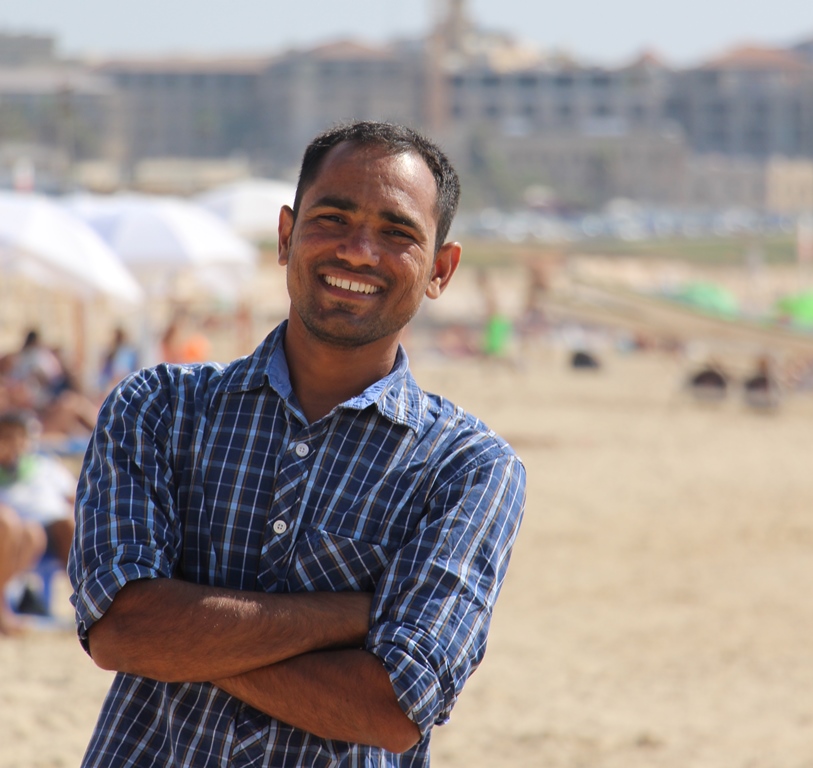
Raj Rajeshwar Malinda
Decoding the cellular language
Life on Earth began with a single cell and evolved into very complex organisms such as humans. The cell is the smallest functional unit of life – the “building block” that contains all necessary information for survival. Though cell biology studies got a boost in the late 17th century with the advent of the microscope, we still don’t have ample information on how life managed to survive on Earth. A lot more information is needed to decode the cellular language of life and this mystery led me into the world of cell biology.
I love getting even the tiniest bit of information on cells and their behavior. To understand complex cellular dynamics, I combined knowledge from my cell biology PhD with developmental biology for a joined up approach towards answering questions on how life survives during development.
My journey began from a small rural town in India called “Neem ka Thana” and got me to Okazaki, a small town in Japan via many metropolitan cities across the globe. While I was still a masters student of biotechnology at the University of Rajasthan in Jaipur, India, I got a chance to meet several Nobel Laureates at a conclave. This was one of the factors that motivated me to pursue a career in research, discovery and innovation.
During my PhD at the University of Copenhagen, I was mainly focused on cellular mechanisms regulating disassembly of primary cilia (a sensory organelle found on cell surface, important in embryonic development and homeostasis) using mammalian cultured cells as a model system. In my post-doctoral tenure at NIBB, Japan, I have been investigating the regulatory mechanisms responsible for collective cell behaviour during early development of vertebrates using Xenopus laevis as a model organism, with special focus on the mechanistic properties.
Japan: An incredible mix of tradition and advancement
Besides science, I am fascinated by the diversity of people – races, cultures, languages and religions – around the world. Moving to Japan was a big decision – from Denmark in the west to the east. However, this transition was pretty smooth for me, having assimilated experiences from my travel to more than 40 countries around the globe. Despite all that I have seen, Japan is very different, very unique, truly an incredible country blending tradition and scientific advancement beautifully. Discipline, attention to detail, dedication, politeness, hospitality, punctuality and respect for the past – these were the Japanese hallmarks that made me fall in love with the country instantly.
However, language was a big issue since people, especially in the countryside, hardly spoke other foreign languages. The language barrier could isolate you from the mainstream of Japanese culture. But foreigners usually find their way around this challenge. I especially love the Japanese festivals, with each prefecture celebrating different ones around the year.
Life becomes easier for foreigners when they embrace local culture and try blending in seamlessly. Indians do carry a lot of cultural baggage many times and often stick to Indian friends. I personally feel one could be true to one’s culture but should also try to appreciate local cultures. It’s also good to make friends outside the lab and outside one’s own community.
After all, a postdoc abroad is an intensive learning phase that teaches you many important survival skills.
Tip for PhD and postdoc aspirants
- PhD should be complemented by productive research papers — they help get good postdoc positions abroad.
- Don’t be shy to ask for help from your PhD mentor. They are experienced in the field and have good network in the community.
- Your research interest should always be key while choosing for a postdoc position because that’s what matters in the end. The lab matters too, since you have to spend a fair amount of time there doing research. Choosing a postdoc position abroad might be a turning point in your research career, so choose the lab and country wisely.
- External sources of funding or fellowships always add an extra advantage. So try to secure one, for example, the JSPS postdoc fellowship in Japan, EMBO or Marie Curie fellowship for Europe, INSPIRE Faculty scheme in India (it gives you a chance to learn in foreign lab for a couple of years) and other country-specific postdoc fellowships.
- Keep a good work-life balance, otherwise research could end up being stressful and depressing.
- Don’t lose the enthusiasm and focus while doing your research abroad — it’s easy get derailed in a different working and living culture. If the data isn’t favouring your hypothesis, troubleshoot and ask your mentor or lab members.
- Funding is a big issue among postdocs, so try to remain up to date with available resources and grants.
- Don’t try to think of a long running postdoc (i.e. another postdoc after your postdoc), your post-postdoc priorities should be clear — academia or industry. At any point during your postdoc, if your choices are starting to shift from academics to industry, go ahead with the idea without delay and ask for a recommendation from your present mentor.
- Try to network. In the end, these are the people you will see most often – through their research papers or in conferences and meetings.
- Try writing grant applications because the skill will be really helpful after your postdoc. It becomes hard to survive in the research field without knowing how to write grant applications. It will also improve your scientific writing, which I personally find very difficult.
- Push yourself a bit to acquire experiences beyond research. For example, participate in leadership seminars, try organising small institutional seminars or workshops, invite people from time to time to the lab and talk about your interests.
India: Unconditional love
India is a great country – diverse, culturally-rich, enthusiastic and warm – and that’s the reason every Indian misses the country in a foreign land. I miss my family and friends and the late summer-night conversations under an open sky over cups of tea. The sight and sound of kids screaming as they play in the muddy streets is something I deeply miss.
Being a foodie, I miss Indian street food from different parts of the country —the samosa and dahi-papdi from Rajasthan, pav-bhaji from Maharashtra, home-made lassi from Punjab, chaat from Delhi and masala-dosa from south India. Mangoes and rasgullas are always on my priority list, so wherever I get them I buy, even if at a premium.
[Raj Rajeshwar Malinda is also associated with the biomedical journal eLIFE and advises ASAPbio (Accelerating Science and Publication in Biology). He volunteers free career counselling and can be reached at therajsmile@gmail.com.]