
The ‘Away from home‘ blog series features promising young Indian postdocs working in foreign labs. They recount their experience of working in foreign lands, the triumphs and challenges, the cultural differences and what they miss about India. They also offer useful tips for other Indian postdocs headed abroad. You can join their online conversation using the #postdochat hashtag.
Our ‘Away from home’ interactive map now features 46 bright Indian postdocs from around the world. Write to us at npgindia@nature.com to suggest names of postdocs from countries and disciplines we haven’t covered yet.
Today we feature Vijay Soni, a postdoctoral fellow in the Department of Medicine, Weill Cornell Medical College, New York, USA. Vijay’s PhD work at the National Institute of Immunology, New Delhi in association with BITS-Pilani Hyderabad shaped his interest in one of the most challenging diseases of the world – tuberculosis. He talks of his love for the metabolism of living organisms and his other passion – science entrepreneurship – through which he wants to bridge the lab to market gap.
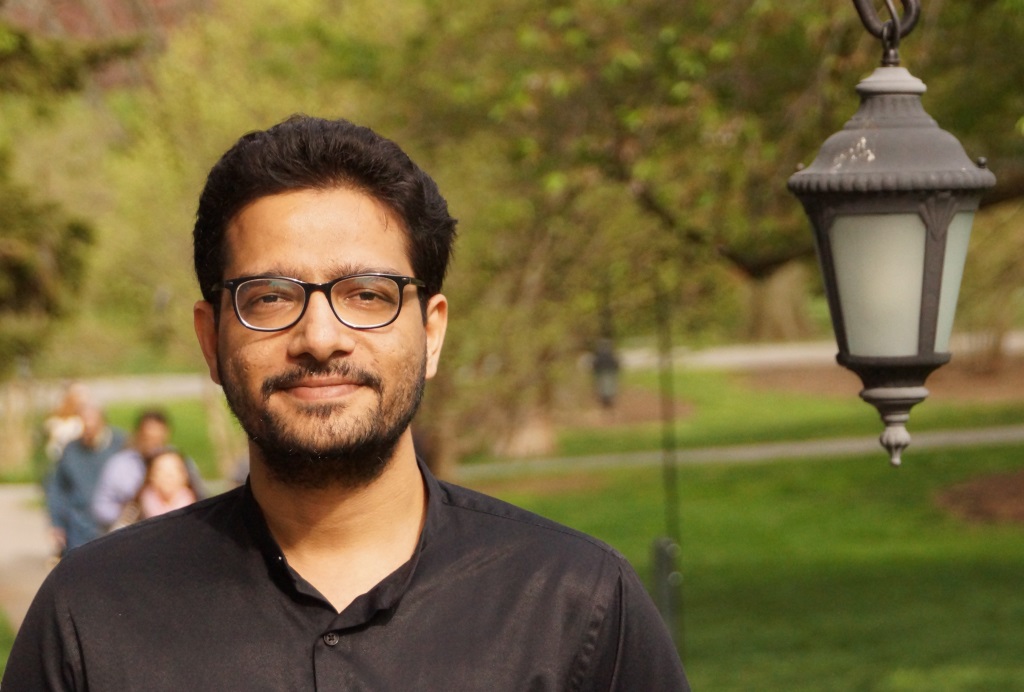
Vijay Soni
Of life sciences & microbes
Nature astonishes me, touches me deeply and always leaves many imprints on my mind. These imprints have shaped my scientific thoughts and get expressed in my research. In school, the curiosity around “life” and “existence” shaped my inclination for the ‘life sciences’. My little research started in high school where I dabbled in developing a formula for liquid manure. During an undergrad at the Indian Institute of Science, Bangalore, I started studying the effect of sodium fluoride on neural tube defects (NTDs) and developed a project with the Indian Space Research Organisation (ISRO) on mining and manufacturing on moon and its future applications. Later, for a masters summer project at the National Brain Research Centre, Manesar, I chose to work on high end molecular and cell biology, biochemistry and experimental designing.
I started getting interested in one of the most challenging diseases of the world – tuberculosis – at the PhD level after a research stint at the National Institute of Immunology, New Delhi, where I worked in a microbiology and molecular biology laboratory. This work translated into a PhD in association with BITS-Pilani Hyderabad. Under my supervisor’s mentorship, I worked on an important gene and metabolic pathway of the cell wall synthesis of the TB bacteria Mycobacterium tuberculosis. We elucidated the detailed crystal structure and biochemistry of the protein GlmU and also determined the need of the gene for bacterial survival at different stages of growth and during TB infection.
These findings led us to the develop a new therapeutic molecule – Oxazolidine 33 (Oxa33) which specifically targets the protein (GlmU) and is capable of killing the TB bug. The work was recognised by National Academy of Science India for the NASI-Young Scientist Platinum Jubilee Award in 2017; the Inspiring Science Award 2017 by TNQ-Cell Press; BioAsia Innovation award 2016 by Global BioBusiness Forum; and Global Health Award by the Bill and Melinda Gates Foundation.
Exploring the TB bug some more
By the end of PhD, I was quite enthralled by the metabolism of living organisms. I approached my current Principal Investigator (PI) at the Department of Medicine, Weill Cornell Medical College, New York, for a postdoc position. The reason I chose this lab, was its work on metabolomics and tuberculosis. This allowed me to learn new technology with familiar model organism.
I joined his lab in June 2016 as a postdoctoral researcher. Here, I work on host-pathogen interaction for tuberculosis and immunological aspects using a new approach called metabolomics (a mass spectrometry based molecule identification approach). I see metabolomics as a microscope with ultra-resolution which allows us to directly look into anything happening inside the cell.
The more I read about Mycobacterium tuberculosis (Mtb), the more excited I am to solve some other unanswered question around it. Currently, I study the role of metabolism in TB pathogenesis, sturdy molecular mechanisms of Mtb (both in active and latent infection) during various immunological insults and challenges from host, exploitation of host metabolic pathways for bacterial survival inside the host and the role of cell wall metabolic pathways to maintain the infection.
A multi-cultural work space
My current lab has around ten people from different parts of the world including India, China, Europe, and South Africa. All the lab members are extremely helpful and always there when I want to learn something new. My PI is also an incredible scientist and gives good inputs to the project. Another, good thing is Tri-I – a tri-institutional collaboration of Weill Cornell Medical College, Rockefeller University, and Memorial Sloan Kettering Cancer Center. Tri-I helps in collaborations, gives freedom to use facilities and conducts many useful and free courses, talks and trainings for science and entrepreneurship.
New York City is one of the most dynamic and lively places in USA. The city never sleeps. USA respects the talent and caliber. I like the professionalism, discipline in work and the real sense of freedom. After coming here, I realized why the USA is called the land of opportunities and freedom.
It was really challenging for me to settle down initially when I shifted to New York, mainly due to cultural differences and housing. Support and guidance from some of my friends (who already lived here) was very helpful. Cooking was a big challenge for me. It took me a while to learn cooking and managing stuff by myself.
Turning self doubt into entrepreneurship
Natural and cultural beauty makes this country amazing to live in. But New York is also one of the most expensive cities and people are self-centered. Crime and a certain level of racism are other dreadful things here. Though I personally never faced it in my lab or living area, I constantly fear for them. As it’s a huge and international metropolis, living here is difficult at times. With the postdoctoral salary, one cannot afford a house near one’s workplace. This really costs a good amount of time every day.
I miss my family and friends. Also, the vast variety of food and services (like the washer man, the local stores) which make our lives easier in India. I do miss my meditation centre and the acquaintances. I also miss my PhD guide and lab mates who are like another family to me.
Initially, it was hard for me to decide to continue here or go back home. Almost every day, I contemplated going back to India and start my dream venture. But science was my other dream. I discussed this multiple times with my family and friends. Their support helped me sail through that time and the regular inputs and cooperation led me to start Scipreneur, a venture for scientific entrepreneurs, alongside my postdoctoral studies.
Scipreneur is an initiative to bridge scientific research and the market/industry. I am making new efforts to globalise the platform to make scientific development easier and faster. This venture is a step towards translation of scientific facts and discoveries. Besides this, I am also helping two more American companies to bring their research into the market.
Quoting Swami Vivekananda, “The history of the world is the history of a few men who had faith in themselves.” I wish to be one of those few. I am quite determined to come back to India and serve my country. I want to contribute to the making of a scientifically and technologically independent India with the help of its talented youth. I want to take research to people.
Tips for postdocs
- Your creativity and scientific attitude matters a lot. Develop it during the course of your PhD by taking up new challenges regularly.
- Keep your knowledge up to date; read articles and reviews on daily basis and keep their notes. These notes will help you in writing your thesis, papers and also in searching your postdoc lab.
- Ask good questions. [“Good Scientists Solve Problems, but Great Scientists Know What’s Worth Solving” — Abhay Ashtekar.] Whatever question you solve, it is going to take almost the same time. So better focus on the important ones.
- Stay focused on what you want to do. If you are interested in the industry, it’s better to go for an industrial postdoc instead of an academic postdoc.
- In the final year of your PhD, try to attend conferences and symposia. Keep track of the scientists attending. If you like anybody’s work, email them in advance and ask for their time to attend your poster or talk.
- You can also write some international fellowships for postdocs such as Fulbright-Nehru Postdoctoral Research Fellowships, Wellcome DBT-Early Career Fellowships, Human Frontier Science Program, INSPIRE Faculty Scheme, Marie Curie postdoc fellowships, and many more offered by different countries.
- Don’t be disheartened if your PhD doesn’t go well. If you have good scientific knowledge and can propose really good quality project to the PI, you can get a good position.
- In your cover letter, don’t write much about the techniques you have learnt. Instead, focus on science and what you have done till date (especially in your PhD). Also, you should have decent knowledge of the past and present research of the lab and PI you want to join. Do not forget to mention the scientific reasons and your future scientific plans and projects that you want to pursue.