
Pharaohs may have had a playground for pyramid building
Amr El Beleidy, one of Nature Middle East‘s freelancers based in Egypt, explains in the House of Wisdom blog, new research on the necropolis of Dahshur in Egypt has shown that the area’s landscape has been directly altered by ancient Egyptians:
The Bent Pyramid in the Dahshur necropolis.{credit}MICHAEL HOEFNER/WIKIPEDIA{/credit}
In a paper published in Quaternary International, researchers analyzed fractals in the region to analyse the topography of the area to reach their conclusions. Fractals are complex patterns repeating with magnification. Previous studies have shown that a river drainage system, such as the Nile Delta where Dahshour is located, would naturally order itself into a fractal pattern as this would minimise energy expenditure in the whole basin. The drainage channels would then imprint a fractal pattern on the topography that could be later identified.
If the human activity in the area had only altered or advanced the natural processes, fractal patterns would still emerge. However if human activity had a direct influence then there would be a low correlation between the fractal patterns of a channel network and the observed landscape. The researchers used a digital elevation model derived from topographical maps to analyse the area. Areas around the edges of the necropolis showed a natural fractal pattern. However, the necropolis itself showed no fractals patterns which indicates direct human interaction.

The reason for the direct alternation of landscape remains speculative, there are some clues as to why it might have been undertaken, find out in Amr’s post.
Science Journalism
Earlier this week, Tinker Ready, our Nature Boston blogger talked to Phil Hilts, the former New York Times reporter who runs the Knight Science Journalism program at MIT. In addition to training writers from across the globe, the Knight Science Journalism program at MIT keeps an eye on what we all produce. The KS Journalism Tracker web site notes that, for the past six years, its writers have “commented on the effectiveness and balance of thousands of news stories.” Tinker talks to Phil about the Tracker website and its purpose:
What is the thinking behind the Tracker?

(Charlie Petit’s) original idea was just to do a little round up of a bunch of stories. What he noticed was — science writers, while they know each other and see each other at meetings, they don’t really see each other’s work very much.… He started getting into the idea that you could pick out a couple of good stories and identify them and do a little critique – and once in a while do a critique when something went wrong. (The posts) are all supposed to be relatively short. They’re starting to get a little too long and I’ve started complaining to (the writers.)…I like a mixed length and not too much analysis.
Hear more from Phil in Tinker’s post.
Why has the Yangtze River turned red?

China's Yangtze River has taken on a russet hue.{credit}CHINAFOTOPRESS VIA GETTY IMAGES{/credit}
Michele Catanzaro reveals in the News Blog, a stretch of China’s mighty Yangtze River, near the city of Chongqing, has turned an alarming shade of red:
The cause of the colouring is still unclear. “One possible cause of the colouration may be suspended sediments, following heavy rains upstream”, says Hans Paerl, a marine and environmental scientist at the University of North Carolina in Chapel Hill. “This is common in large river systems such as the Yangtze, and southern China has had large rainfall events this summer,” he says.Indeed, on 7 September the Chongqing Environmental Protection Agency noted on its website that a water-quality monitoring centre on the Yangtze had detected very high concentrations of silt in the river. The agency says that torrential rain in the upper Sichuan province caused huge amounts of silt to wash into the Yangtze. It also says that the water does not contain hazardous or noxious substances.
Continue to the post to find out more.
Climate perceptions in India
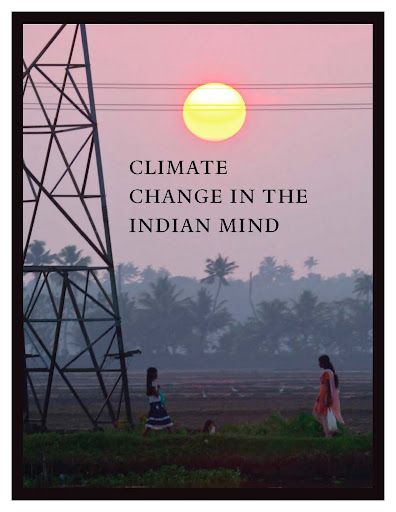
Subhra Priyadarshini asks in the Indigenus Blog, who do you trust most when it comes to news about climate change? Scientists, media, environment organisations, the government, religious leaders or your own family and friends?
YPCCC
Looks like Indians make a clear choice in the matter, and a very scientific one at that — 73% of the 4031 Indians surveyed in a Yale University project have reposed their trust on scientists. Thestudy called the ‘Yale project on climate change communication’ investigated the state of awareness of Indians, their beliefs, attitudes, policy support, and behaviors vis-a-vis climate change. It also studied public observations of changes in local weather and climate patterns and people’s sense of vulnerability to extreme weather events. The survey has an urban bias though, with three quarters of the respondents from cities and the rest from villages.
Coming back to the trust factor — followed by scientists, the survey found that news media (69%), environmental organizations (68%), family and friends (67%); governments and religious leaders (about 50%) were the ones chosen by people to believe climate change related information.
Learn more about this survey in her post.
Helpful books for scientists who want to communicate better
On the the 20th August, we held the thirteenth installment of the monthly Science Online NYC (SoNYC) discussion series, held in collaboration with the New York Academy of Sciences. The focus of the evening was the science PhD. Panel member Elizabeth Bass, a professor of journalism at SUNY Stony Brook, who runs their Center for Communicating Science, talked in detail about the ways scientists can improve their communication skills. Following on from her talk, Elizabeth has put together a useful list of resources for scientists who would like to communicate better.
- Am I Making Myself Clear? A Scientist’s Guide to Talking to the Public, by Cornelia Dean (Harvard University Press, 2009)
- Escape From The Ivory Tower: A Guide to Making Your Science Matter, by Nancy Baron (Island Press, 2010)
- Explaining Research: How to Reach Key Audiences to Advance Your Work, by Dennis Meredith (Oxford University Press, 2010)
More resources can be found in the post and let us know in the comment thread if you would like to add anything to this list; the aim is for this to become a useful resource.
Why is the Penis shaped like That?
SciLogs blogger Michael Blume explains in his latest post, one of the most daring scientists he admires is Jesse Bering:
From evolutionary studies of religious beliefs to the shape of the penis, there’s nothing human Bering is not curious about. And he doesn’t stop in idle speculations, but is always reviewing scientific literature, conducting experiments and writing about the findings. Evolution at its best!
His new book “Why is the Penis shaped like That?” contains some of his best columns on evolutionary mysteries ranging from the male penis, the female orgasm, the experiences of people considering suicide and the reproductive advantages of the religious. Although the book’s language is well-written and quite often hilariously funny, the content and thoughts expressed are showing deep curiosity and humane care. One gets the impression of talking to a good friend, joking and smiling while mixing questions of joy and real relevance.
Let Michael know your thoughts in his comment thread.
Bionic Beak
Thanks to modern technology, a seriously injured bald eagle now has a bionic beak, reveals GrrlScientist in her latest post. Grrl links out to a video report that explains more:
You are currently viewing a placeholder content from Default. To access the actual content, click the button below. Please note that doing so will share data with third-party providers.
Beauty and the Beak from Keith Bubach on Vimeo.
How Science Blogging Can Lead To A Science Writing Career
Scitable’s guest blogger this week is Bec Crew, she details how science blogging literally changed her life:
I’d started a blog with a friend a little while before that, to satisfy my need to write. We didn’t have any particular theme, we just wrote about what we were interested in, which for me was explaining the discovery and behaviour of dinosaurs and other animals. With only a little science education under my belt, I’d taken on a lot: every scientific paper brought on more theories and terms I had to teach myself, and I was certainly in no position to be particularly confident about what I was doing. Perhaps even more challenging was finding the motivation to keep it up. This can be the hardest thing about blogging when you first start out, especially when you feel like there’s no one reading your posts. There’s no real trick to this, you just persevere-it’s this commitment that refines your writing, and interests, and your ability to translate raw science into relatable text.
Follow the rest of Bec’s story here.
GMO
Finally, there hasn’t been any GMO themed comics on Stripped Science for a while, so this week Viktor Poór has treated us: