Away from home: Marrying bioinformatics & benchwork

Here’s a new story in our  ‘Away from home‘ blog series featuring promising young Indian postdocs working in foreign labs. The postdocs featured in the series recount their experience of working in foreign lands, the triumphs and challenges, the cultural differences and what they miss about India. They also offer useful tips for other Indian postdocs headed abroad. Join their online conversation using the #postdochat hashtag. 

Our ‘Away from home’ interactive map now features 42 bright Indian postdocs from around the world. Please feel free to suggest names of postdocs from countries and disciplines we haven’t covered yet.

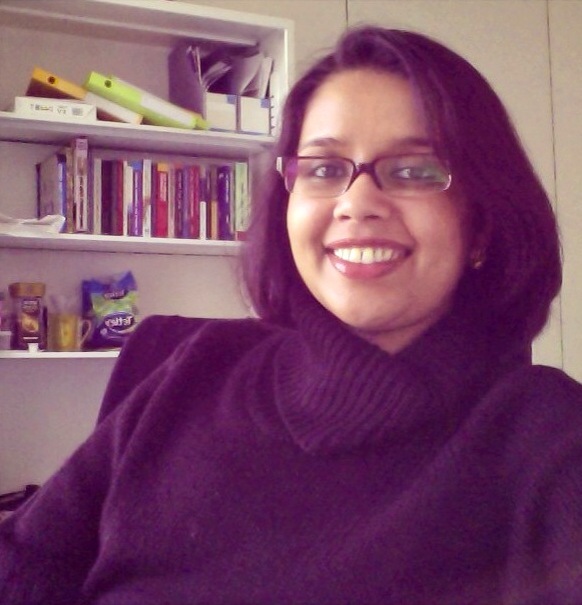
Today we feature Animesh Shukla, a biotechnologist from Meerut Institute of Engineering and Technology in Uttar Pradesh, India who went to Carnegie Mellon University and Indiana University of Bloomington in the USA for PhD. Animesh, who works as a scientist designing ELISA assay kits for Meso Scale Diagnostics now, says planning ahead of time for a postdoctoral career could open up several doors in the land of opportunities.
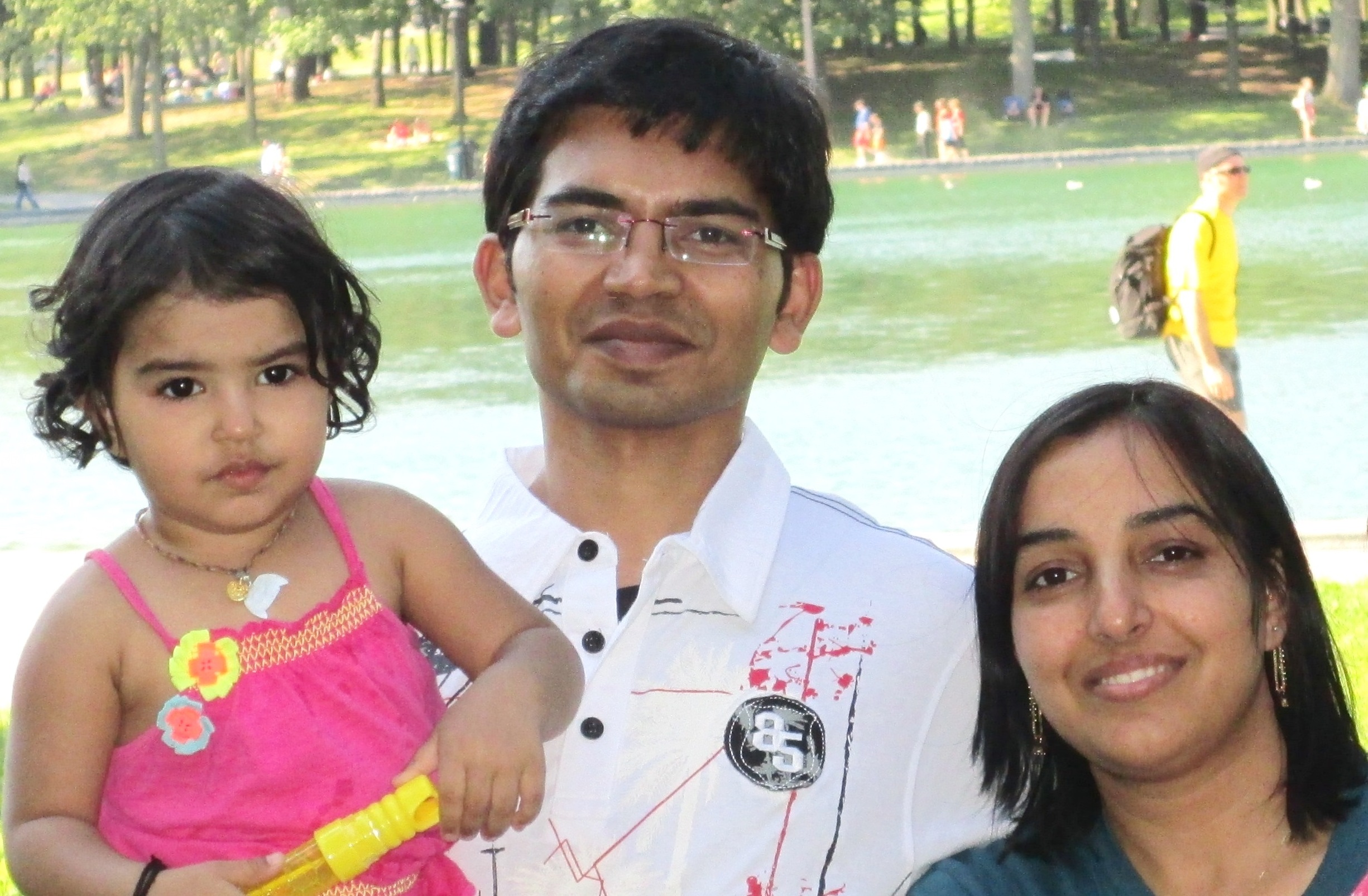
Animesh Shukla

Animesh Shukla

The biology dream

My school teacher Jessy Kuruvilla sparked my interest in biology. She used to explain the subject in such an interesting way that I still remember many things she taught us. I don’t remember much of any other subject. In high school I was interested in both biology and physics (specifically fluid dynamics). I never used to score really high marks in these subjects but had very good understanding of the basics.

I used to catch and collect live and dead insects or small animals and used to look at them. Some of my friends used to make fun of me (they still do) but that is what friends are for!

Doctor? Engineer? Biotechnologist?

I am from a small town called Nagda in India’s Madhya Pradesh state. The trend among students during my high school days was either a career in engineering or medicine. I wanted to pursue research but people who cared about me persuaded me to embrace engineering since it was a paying career. I was not interested in becoming a doctor, so I did not appear in any medical entrance exam. Soon I got introduced to a new subject — biotechnology — a perfect combination of biology and fluid dynamics. It was easy to convince everyone that it has a bright future since it was an engineering discipline — “I can get a job after B.Tech in biotechnology.”

I got selected for several engineering institutes. However, I joined Meerut Institute of Engineering and Technology (MIET) that introduced a Biotechnology B.Tech for the first time that year (2001). As far as I know, it was the first institute to offer an engineering degree in Biotechnology in North and Central India. I had little idea what was going to come next. I selected this discipline because it was a perfect middle ground between what I wanted to do and what everyone else wanted me to do.

When I was at MIET, bioinformatics was a hot subject. I got interested. Computer programming was not tough for me. At the campus interview, I got a job as a marketing executive at CADILA pharmaceuticals India. I have no idea what they saw in me. I was good in science but not a good marketing person. Anyway, the pay was decent.

Balancing it out

One of my good friends tried reasoning that this was not the job for me. He was leaving for a PhD to a US university and also encouraged me to apply to American universities. With time I realized the job was really not for me. I applied to a few good US universities and got a partial scholarship for the masters programme in Computational Biology at Carnegie Mellon University. My parents were very supportive and they took a loan to send their first born to the US.

My work involved computational programming and there was no bench work involved. I wanted to do both: programming and bench work. So one year later, I applied to the PhD programme in Dr. David Kehoe’s lab at Indiana University. Fortunately he agreed to have me as a graduate student. David encouraged me to have a project where I could do both bench work and computational programming. His guidance and support allowed me to have a very productive PhD followed by a good postdoc at NIH.

Recently, I began work as a scientist at Meso Scale Diagnostics, LLC (MSD), a world leader in ELISA assays. My job is to design and conduct experiments to develop a highly sensitive ELISA. I also manage a small group of research associates. I spend about half my time working on product documentation and writing Standard Operating Procedures (SOPs). Prior to this, I was a postdoctoral fellow at the National Cancer Institute at NIH. I worked on identifying and developing diagnostic markers and therapeutic targets for brain cancer.

Resources, cultural diversity a big plus in USA

The best thing about doing research in USA is the availability of resources. Can you imagine waiting for a reagent as simple as a DNA primer for approximately a month? I have worked in other developed countries such as France and Japan as a visiting fellow. The ease of getting reagents or an apparatus in USA is not even comparable to any other country. Most of the global biotech companies are located in the US and this makes it easy and efficient (and probably cheaper) to acquire resources here.

Cultural diversity is also a great asset here. MSD, a mid-sized biotech company with about 500 employees, has employees from more than 22 countries. Even at NIH, a significant number of postdoctoral fellows are foreign nationals.

In USA, everyone in the hierarchy is treated equally. The fate and future of projects are decided collectively. I have been fortunate to have advisers who let me perform experiments of my liking. To summarise, independence in doing what you want is a luxury as well as a responsibility — this you learn in the US.

I got tremendous support from Dr. Ravi Kant Pathak , the founder of Bharat Uday Mission, during my early days in the US. He is a man of Gandhian philosophy and a renowned scientist. He helped me overcome the culture shock that many Indians face here, especially the accent, semantics and slang that are initially hard to understand. However, having worked in France and Japan, the culture shock was significantly lesser in the US since it is a diverse country.

Plan ahead of time

I changed fields several times — from biotechnology to marketing to computational biology to molecular biology and then to cancer biology. I committed the mistake of not talking to people about their experiences in the field and not planning ahead of time. I hope no one makes that mistake. Before deciding anything talk to experts in that field, read blogs, forums and learn as much as you can ahead of time. On the other hand, I was able to tackle every change because of persistence and hard work. Even if you make mistakes, be persistent and perform as best as you can. You will be successful.

If you have a dream to do something, this is the place to be. Don’t come to US just for the sake of it. There are thousands of Indian postdocs in the US. Most are here because they are interested in science. And those people are doing great. However, I have also met few postdocs who came to the US just because they contacted a PI and got the opportunity. You can only succeed in your career, especially here in US, when you have the desire to do research. Postdoc is not a 9 to 5 job. US is not just what it seems to be in the movies. It is a land of opportunities for those who know how to grasp that opportunity. Be prepared to work hard, really hard and at the same time work smart.

Before coming to the US it is extremely important to know your institute well, and more specifically your lab and PI: the work culture, working hours, job responsibilities, publication authorship policy and work-life balance are some of the most important aspects you need to clarify before taking the plunge. I know some postdocs who worked extremely hard for several years, but did not get anything out of their postdoc work. They did everything right except for clarifying some of the above mentioned before joining the lab. Instances like this are rare, however, I would recommend you to cover your ground beforehand.

Another extremely important thing is that you need to know what you want to do next. Postdoc is not a job. It is a transition phase from your PhD to a real job. You need to know whether you want to join academia or industry. Select a lab and type of work for postdoc based on that. All research is not the same. There is basic research and there is translational research. I am sure you can figure out which leads to an industrial job and which to academia. Some labs perform just basic research, some just translational work. There are others that do both. That is why it is extremely important to know the lab and the type of work they do before committing to your postdoc. Ask your potential PI or research online where the former postdocs from that lab have landed.

US institutes and labs are more open to your taking up other activities or education in your spare time. I completed a certificate course in ‘Business of Life Sciences’ while doing my PhD and my PI was perfectly fine with that. My department even paid for my tuition. While doing the postdoc I was taking courses in ‘Technology Transfer’ and my PI paid for that from his grant. Overall, institutes and labs want you to excel in your career. You just have to be proactive and ask for the opportunity.

One extremely useful experience I got in US was while volunteering for a non-profit organization called the ‘Center for Advancing Innovation Inc.’ Volunteering not only gives you extra knowledge and experience but also helps network. There are thousands of postdocs in the US. To stand out in crowd you have to have some extra skills/experiences and you need to have a good professional network. Although Facebook and Twitter are great resources, networking does not end there. Use LinkedIn and Research Gate — they are extremely good for professional networking

India just a day away

I miss my family, everyone does. But the best way to console myself is that it takes about 24 hours by flight to reach India, which is less than what it takes to reach Bangalore from Delhi by train. I used to miss the food, not any more because gradually I learnt to cook well. Some people say that a good chemist or a biologist can be a good cook because they deal with precise measurements. I guess I have proven them correct. Jokes apart, most people learn to cook well here. Necessity is the mother of invention, and believe me the first few dishes you make are nothing short of inventions.  One thing I miss though is fresh food. My wife and I work, so we cook over the weekend and eat it throughout the week. Many people cook daily. It depends on your energy level and time at hand.

One comforting thing that might be of consolation to your parents is that Indian stores in US have virtually everything you need.

Till last year my wife wanted to go back to India. But when we visited India in December 2014 she felt it might be more and more difficult to get settled in India. We have acclimatized to the American way of life and might not be very comfortable in India. India has changed significantly in the past 5-6 years. Most people who come to the US stay here and there is a very good reason for that. Additionally, once you have kids it becomes more difficult to go back to India.

However, depending upon the situation and opportunities things may change. My suggestion to people who want to go back to India after their postdoc is: plan ahead. First, it takes time to find a job. Second, consider what your family wants and whether it is feasible or not.
Away from home: One journey, three destinations

We are back with another interesting entry in our  ‘Away from home‘ blog series featuring promising young Indian postdocs working in foreign labs. The postdocs featured in the series recount their experience of working in foreign lands, the triumphs and challenges, the cultural differences and what they miss about India. They also offer useful tips for other Indian postdocs headed abroad. Join their online conversation using the #postdochat hashtag. 

Our ‘Away from home’ interactive map now features 41 bright Indian postdocs from around the world. Please feel free to suggest names of postdocs from countries and disciplines we haven’t covered yet.

Today we have our very first entry from France — Siddanagouda S Biradar — who works as a postdoctoral scientist at Institut National de la Recherche Agronomique. A PhD. from the State Key Laboratory of Crop Stress Biology in Arid Areas, Yangling, China, Biradar narrates his research journey in plant genetics through his enriching experiences in India, China and France.

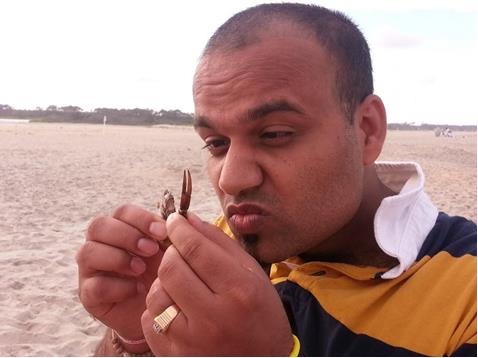
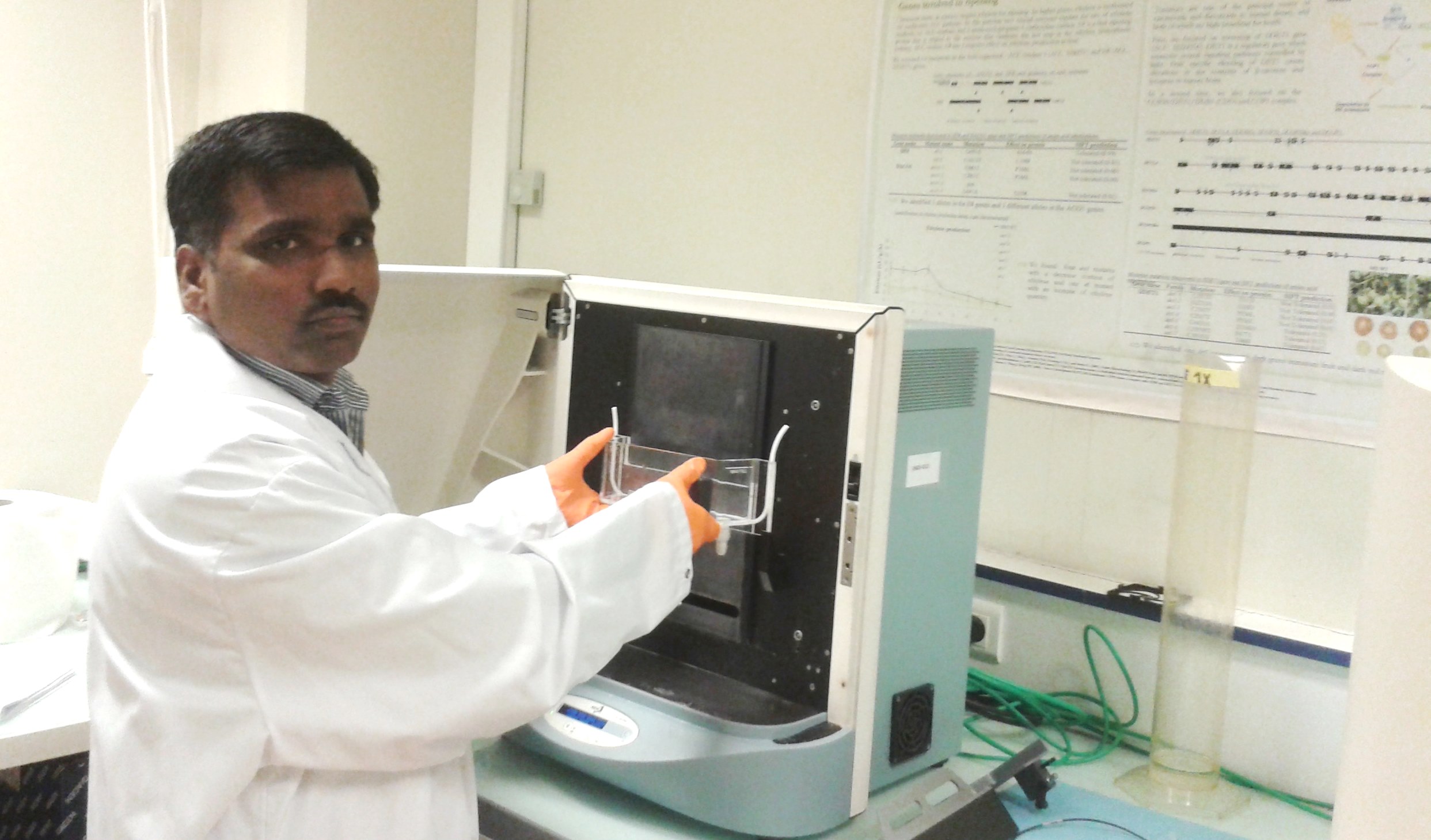
S S Biradar at INRA, FRance

S S Biradar at INRA, France

Of whys and hows

I entered the science field by chance and not by choice. I was born and brought up in a small village called Padekanur in Karnataka, India. Because of our poor economic background, my parents struggled very hard to give quality education to all of their three children.

Since childhood, I was curious about everything – ‘Why’ and ‘How’ were my favourite questions. I joined M. Sc (plant biotechnology) at Institute of Agri-Biotechnology (IABT) in Dharwad, Karnataka where I learnt most of the basic molecular biology techniques.

For my PhD (molecular biology) I chose the State Key Laboratory of Crop Stress Biology in Arid Areas, NWSUAF, Yangling, one of the top agriculture universities of China. I worked on genome-wide analysis of WRKY transcription factors in wheat and barley. I was also actively involved in some other projects at the lab such as miRNA identification and validation in barley and wheat, SSR marker development and characterization for wheat and Crofton weed, BAC library construction and physical mapping of wheat 7DL chromosome. Our lab was a part of the International Wheat Genome Sequencing Consortium (IWGSC).

Currently, I am working as a post-doctoral scientist (CEFIPRA funded project) at Institut National de la Recherche Agronomique (INRA), France which is one of the most reputed organizations for plants genetics and genomics research in Europe. It provides the basis for development of key molecular biology skills and to learn modern techniques with well-equipped labs, excellent guidance by senior researchers and complete freedom to explore new ideas. More importantly, we have a favourable research environment. My research focus is on improving shelf life in Cucurbits, making plants gynoecious which helps in hybrid seed production.

Namaste – Nĭ hăo – Bonjour

It was a smooth transition to France since I was in China for 4 years for PhD. Though weather was similar, there were a lot of cultural differences. France has large number of high profile international level universities/institutes and it is one of the best places for young researchers to start their career – the work culture is highly competitive. Unlike Indians and Chinese, the French enjoy their weekends to the fullest. Hard work, time management, discipline and work-life balance are things to be learnt from such an environment.

Don’t remain under-exposed

For Indian graduates looking for post-doc positions in France, my suggestion is try, try and try until you get a good opportunity. I know it is very hard to find a postdoc position abroad, especially for graduates from small universities in India like me, because of lack of exposure to modern techniques, lack of publications in high-profile journals and lack of guidance which makes us less competitive at international level.

Try to find a good lab which suits your research area, contact the professor, and tell him/her about your scientific skills. Don’t forget that past is always a stepping stone, not a milestone. So try and try again to get into a good lab. The postdoc experience definitely decides your future. No matter how many labs, scientists, research groups you try, get some postdoc experience. Always do your best. What you plant now, you will harvest later. In the end, it’s only the hard work, not chance or choice, that decide your destiny.

India calling

I miss many things about India. As I am herbivorous, food is a big problem. It’s hard to find pure vegetarian restaurants outside India. Of course, I miss my family and Indian friends.

Even though science has no boundaries, I want to come back and work in India soon. I want to utilize my experience, exposure and knowledge to improve the lives of the farming community in India. Unfortunately, there is not much value for young researchers like us in the Indian job market (specifically in plant biotechnology) because of which many graduates hesitate to come back and work in India. Let’s hope that India will create good working environment for plant biotechnology researchers in the near future.

Away from home: Asking the right questions

The ‘Away from home‘ blogging series features Indian postdocs working in foreign labs recounting their experience of working there, the triumphs and challenges, the cultural differences and what they miss about India. They also offer useful tips for their Indian postdocs headed abroad. You can join in the online conversation using the #postdochat hashtag. 

Our ‘Away from home’ interactive map now features 40 bright Indian postdocs from around the world. Please feel free to suggest names of postdocs from countries and disciplines we haven’t covered yet.

Today’s post narrates the story of Amitabh Sharma, who recently got selected for an Assistant Professor position at the Channing division of Network medicine, Harvard Medical School, Boston, USA. A PhD from the Institute of Genomics and Integrative Biology, New Delhi, Amitabh tells us about his fascinating journey from a small town in central India to a faculty position at Harvard Medical School.

Dream high

Amitabh Sharma with Prof. Albert-László Barabási in 2009.

Amitabh Sharma (left) with Albert-László Barabási in 2009.

My journey began in a small town called Shahdol in northeast Madhya Pradesh, India. Throughout my childhood, my mother remained a live example of the ‘Chase your Dream’ philosophy. She was a single female parent with three children and worked full-time as a lecturer. Regardless of her demanding life, she dreamt of having her own home and overcame many hurdles to finally own one. Her focus and determination taught me that no matter how difficult the path is, courage and perseverance always see you through. My mom encouraged me to leave our hometown and go to a city school.

For masters, I went to the Indira Gandhi institute of Development and Research (IGIDR), Mumbai. It was my first time in a big city but I overcame all the anxiety related to it soon. With naïve thoughts that my research would discover new drugs to cure deadly diseases like diabetes, I got into my first job at Zydus Cadila Research Center, in Ahemdabad, India. I worked on screening new drugs for Type 2 Diabetes. During those days, I read James Watson’s ‘The Double Helix’ on one of science’s greatest mystery (DNA double helix model). The book inspired me and further strengthened my belief that pursuing one’s dreams is what life is all about. The book taught me that success in life hinges on one key point: “finding hard work you love doing”. This motivated me to pursue my Ph.D. with a dream that some day my science would contribute to a major discovery in biomedicine.

Ask big questions

During my Ph.D at the Institute of Genomics and Integrative Biology, New Delhi, I was convinced that translation of genomic knowledge is going to be the focus of science in the coming years. I worked on developing bioinformatic tools to dissect the complex diseases like Type 2 diabetes. Being in a genomics lab, my focus was always on the big picture of how disease associated variations cause perturbation at the molecular level. The wiring diagram of the genes and their products are surely influenced in disease state and such network-based thinking was established by the construction of “human disease network” by Prof. Albert-László Barabási’s lab in 2007.

After my Ph.D., I decided to join postdoctoral research at the Lund University Diabetes Center (LUDC), Sweden, the largest diabetes research center in Northern Europe that has contributed to many genetic discoveries on Type 2 diabetes. At LUDC, I tried to explore the relationship between protein interaction networks and human complex disease.

The post-human genome-sequencing era had brought new hope of personalised medicine. But at the same time, it brought us new challenges. I was sure that the answer for solving the mystery of complex disease lies in targeting networks. The perspective needed to be shifted from gene-centric studies to a network-centric approach. This thought brought me to the Center for Complex Network Research at the Department of Physics in Northeastern University, a mecca of studying networks. The center focuses on how networks impact our understanding of complex systems. I admire the postdocs’ nights where I need to explain genetics and molecular biology to statistical physicists. During my postdoctoral research at the Barabasi lab, I learnt that disease biology is complex and the network medicine approach can help us unwind the complexity of diseases. My research focuses on the big picture of translating discoveries of network biology to therapies for complex diseases.

In a recent interview, James Watson said researchers should be encouraged to ask what the big five puzzles in their field of research are and go after one of them. “Do something as important as you can, aim for something which, if you win, people will get excited about.” I am really excited about my transition from an associate scientist to a faculty member. I think research is all about your own passion, about what you are doing, and you should always be open to options and be willing to change directions.

Being Indian

I really miss the colorful and collective culture of incredible India. I surely miss that part of living together in an extended family and enjoying the festivals of Diwali and Holi. The best part of Indian culture is it teaches you. Bollywood is not just an entertainment, it is a way of life. Evenings in my hometown, when the hush descends, farmers and workers drift homeward on a river of bicycles — one of the things I miss. Flying kites, an Independence Day tradition, is so memorable. During my Ph.D. days in Delhi, I gorged on the variety of street food in Kamla Nagar and near the Red Fort.

Never give up

Never ever give up. Postdoc stress has its own pain and pleasure, it impacts your mindset. You might wake up early in the morning anxious about not having high impact publications. But it has its own moments of learning and getting prepared for the big responsibilities.

In my opinion, the most important thing in your academic career is to keep publishing. The clock ticks faster in the postdoc research field, so keep thinking two steps ahead. You are not going to find the missing pieces of the puzzle at the first shot. Success in your postdoc is about learning the rules of the game and coming over the publication pressure. Science is technology-driven now with lots of big data around us. We should think about doing  good science by asking the right questions. As Vivekananda said: “This is the first lesson to learn: be determined not to curse anything outside, not to lay the blame upon anyone outside, but stand up, learn and determined to achieve your goals”.

Away from home: Blending remote sensing with social sciences

The ‘Away from home‘ blogging series features Indian postdocs working in foreign labs recounting their experience of working there, the triumphs and challenges, the cultural differences and what they miss about India. They also offer useful tips for their Indian postdocs headed abroad. You can join in the online conversation using the #postdochat hashtag.

KRC

Koel Roychowdhury

This week we have a young scientist from the United Nations University (UNU) in Tokyo, Japan at the end of her postdoc tenure. Koel Roychowdhury, an alumnus of the University of Calcutta, uses remote sensing technology to look at environmental and agricultural sustainability. Koel says the fascinating opportunity of doing science for social good is what keeps her going.

Science for social good

After completing my M.Sc in Geography from the University of Calcutta and working as a part-time lecturer in a reputed college in Kolkata, I chose to travel away from home aspiring for higher education. I was awarded the DFID Commonwealth Scholarship which tool me to the University of Leicester, UK for an M.Sc in GIS and Human Geography. I was fascinated to find the immense scope of combining social studies and remote sensing. I continued my research during a PhD from Australia with the Australian Leadership Award Scholarship.

Now I am in Japan as a JSPS postdoctoral fellow. The fellowship is officially with the University of Tokyo, but I am based in the Institute of Advanced Studies for Sustainability at the United Nations University. This has been an amazing opportunity for me. I was working with sustainability groups looking mainly at policies and international peace and security. Simultaneously, I could also apply satellite images to a variety of projects looking at sustainability.

I have been part of the University Network for Climate and Ecosystems Change Adaptation Research (UN-CECAR) projects and was fortunate to be associated with eminent professors in the areas of both remote sensing and sustainability. During my Ph.D days in Australia under Prof. Simon Jones, I got the opportunity to meet Dr. Navalgund, the then director of Indian Space Research Organization (ISRO). For my postdoc at UNU, I am working with Dr. Srikantha Herath and Prof. Kazuhiko Takeuchi, whose contribution to the field of sustainability science are globally recognised.

Global outlook

Being a part of the UN has been a great advantage for my postdoc. The most important part of being associated with an international organisation is that, it gives me a great opportunity to learn from people working directly with ‘sustainability’ and its applications. There are regular lectures and public discussions from ambassadors, policymakers and government personnel. These clue me into the on-the-ground scenarios of development in various countries.

Secondly, being part of the CECAR–Asia projects gave me the opportunity to travel to countries such as China and Sri Lanka. I could see how traditional agricultural communities sustain production and livelihoods in the remote Hani rice terraces in Kunming, China. I had the opportunity to visit the landslide sites of Sri Lanka and have a look at the different sustainable measures undertaken to mitigate landslides. All this gave me first hand experience of the practical aspects of sustainability measures and helped me explore the application of remote sensing in this area.

Japan: a new culture

Everyone moving to a foreign country faces a culture shock in some degree. This is very normal, for every country is different. I lived abroad a few years before moving to Japan. When I first reached Japan, what I faced was not a culture shock but a ‘culture awe’. This beautiful country and its people amazed me. Their hospitality, politeness, helpfulness, dedication, punctuality, cleanliness, discipline and unity as a nation were astonishing. It didn’t take me long to respect the country and its people. I fell in love with their culture and their cuisine.

During holidays, I travelled far and wide in Japan. I was spellbound in every season, be it the koyo in autumn, the sakuras in spring or the snow in winter. I did not know Japanese but I never felt uncomfortable dealing with people here. Perhaps being part of an international organisation made it easier for me. My day-to-day work-related conversation was in English. But outside the work place, I really enjoyed every bit of Japan. As they say “be a Roman when in Rome”, it is important to be open minded and accepting of the uniqueness of every culture. To me, Japan is one of the most beautiful countries with a lot of things to learn from.

What to do after a postdoc

There are a number of career options on completion of a postdoc. And being associated with the UN makes these options wider. After the postdoc, most people take up either the academic career and move on to other universities while others prefer the research career. Being part of the UN makes it easier to look for openings in the United Nations as well. However, I am more passionate about teaching and prefer the academic path as a career.

After all those stressful years of PhD, the postdoc definitely offers a relatively relaxed pace to carry on research. These are the years to invest in further research and publications. These years pave the way for a better future in academics or research or sometimes even in industries and as consultants. The years invested in postdoctoral research prepare the base and offer the time to choose the most suitable career option.

Regarding doing a postdoc in Japan, I would strongly encourage researchers to give it a go. If one can overcome the language barrier, it is a country worth living in and working. The opportunities are increasing for foreigners in Japan. Also, the quality of research is undoubtedly world class. Postdoc is a phase where we get to learn more about our passions, career choices as well as other people. So, I would definitely suggest postdoc aspirants to keep up the hard work and passion for research and also to enjoy life during these years before you start on with a more serious work life.

Koel Roychowdhury features in our ‘Away from home’ interactive map along with many other bright Indian postdocs from around the world. Please feel free to suggest names of postdocs from countries and disciplines we haven’t covered yet.

Away from home: Industry or academia?

The ‘Away from home‘ blogging series features Indian postdocs working in foreign labs recounting their experience of working there, the triumphs and challenges, the cultural differences and what they miss about India. They also offer useful tips for their Indian postdocs headed abroad. You can join in the online conversation using the #postdochat hashtag.

In our first entry from Italy, Arun Kumar, an alumnus of Bareilly College and a postdoc at Novartis Vaccines & Diagnostics, Siena tells us the good and bad of being a researcher in an industrial set-up. He also gives some very practical tips for researchers looking at postdoc positions in Italy.

Arun Kumar at the Novartis Vaccines & Diagnostics in Siena, Italy.

Arun Kumar at the Novartis Vaccines & Diagnostics in Siena, Italy.

Doctor, engineer, scientist?

In high school, I always wanted to become a doctor or engineer and didn’t know anything beyond these career options. My father always prodded me and my brothers to study science. However, I got inspired by my elder brother’s friend, who was doing an MS in biotechnology. Although he never advised me to choose this profession, I decided to follow him and be a scientist.

My attraction for immunology started during undergraduate days at Bareilly College, Bareilly. After completing an MSc in Microbiology,  I joined the Indian Institute of Technology, Delhi (IITD) and All India Institute of Medical Sciences (AIIMS) for a jointly-hosted PhD. These places are excellent for research in India but for me it turned out to be a bad decision. I resigned within  an year and took up a fellowship by the Centre for International mobility (CIMO) to broaden my international working experience.

A career in immunology

I joined a PhD programme in the laboratory of Prof. Klaus Hedman and Dr Rauli Franssila at the Haartman Institute in the University of Helsinki, Finland. I was exploring human T-cell immunity against newly discovered and previously known human DNA viruses e.g. Human Bocavirus (HBoV), Merkel cell polyomavirus (MCV), Trichodysplasia spinulosa-associated polyomavirus (TSV) and parvovirus B19. The clinical and pathogenic roles of these viruses are little known. However, they have been found in symptomatic patients, and some have been shown to cause severe infectious illness, or cancer.

During my doctoral studies, I successfully established comprehensive methods for the assessment of antiviral immunity against all these emerging human DNA viruses, and wrote papers in international peer-reviewed journals.

Before moving to Finland I didn’t know anything about the country. But now I feel it was a perfect decision. The working environment in Finland is quite flexible and the PhD curriculum very impressive. Like other European countries, a Finnish PhD is very qualitative because the student must produce at least 3-4 first author publications during his/her PhD. After graduating from a Finnish institution your acceptability increases globally as a scientist/postdoc.

Language, bureaucracy issues in Italy

I have been awarded the prestigious Marie-Curie Fellowship by the European Commission. I am working as a Marie-Curie researcher at Novartis Vaccines & Diagnostics (NVD), Siena, Italy. The division focuses on developing treatments and instruments for prevention of infectious diseases. NVD is a research-oriented company hosting top class scientists. The Siena center has a strong record of accomplishment in coordinating successful research and training projects. It facilitates rigorous scientific training, labs are equipped with modern equipment and HR support.

The Italian climate is very pleasant and perfect for running, my favourite outdoor activity.

Integration in Italy was not difficult because I am quite familiar with European culture. Before moving to Italy, I had visited the country several times and had many Indian friends here. So, I already knew about the Italian environment. Being an Indian it was pretty easy to acclimatize with Italian working habits, which are fairly similar. It is also very easy to get all Indian grocery items in Italy.

However, language is the big barrier, only a few people speak English. In daily life you have to face problems because of the language. I am also not very happy with the complex Italian bureaucracy. 

Personally, I don’t care about the prosperity of a country but I do care about quality scientific work. Leaving Finland and my lab after six years was sad since I had developed a lot of attachment.

Industry insights

Working in a company is very different from academia because sometimes you do not enjoy the freedom of expressing your ideas in the industry. Industries mostly focus on profitable projects.

Italy has a good network of the world-class universities and the scientific quality seems satisfactory. But the salaries are quite low. Therefore I recommend that postdocs come with their own grant or apply to European Commission-funded project positions (EC salaries are very high). Of course, you get enough salary to survive because living expenses are low.

Country roads

I miss my family and friends. The two places in this world I like most are: my home town Powayan, a small town in Uttar Pradesh, and Helsinki. The joy of roaming around with friends during evenings in India is unmatched. I plan to come back to India some day but still have no idea when that day will come. I will start looking for positions in my country 2-3 years later.

The work culture in India is not yet favorable for science and scientists. I believe that we have enough funding and infrastructure for science but political disinterest is destroying our scientific zeal.

Tips for postdocs

It’s always wise to start looking for postdoc/job positions at least one year before your thesis completion. According to my experience, following points should be kept in mind:

  1. Set your goals before starting your application for a position. You have to decide where you want to pursue your career, in academia or industry.
  2. In industry there are many advantages over academia e.g. better salary, no need to worry about funding or writing a grant application, more networking.
  3. Try to get your own funding. Marie-Curie Fellowships by EC, European Molecular Biology Organization (EMBO), Humboldt Research Fellowship and the Human Frontier Science Program (HFSP) are good grants. These fellowships in a researcher’s CV can open many doors in future.
  4. Communication skills are a great asset for a scientist. Start attending conferences in the last year of your PhD. This will allow you to network well in the scientific community.

Our ‘Away from home’ interactive map features Arun Kumar along with many other bright Indian postdocs from around the world. Please feel free to suggest names of postdocs from countries and disciplines we haven’t covered yet.

Away from home: Making graphene flakes in a kitchen blender

The ‘Away from home‘ blogging series features Indian postdocs working in foreign labs recounting their experience of working there, the triumphs and challenges, the cultural differences and what they miss about India. They also offer useful tips for their Indian postdocs headed abroad. You can join in the online conversation using the #postdochat hashtag.

Today’s blog is in the ‘breaking news’ category where Varrla Eswaraiah, a postdoctoral researcher at Trinity College Dublin, Ireland shares the excitement over his lab’s recent paper published in Nature Materials. Eswar, an alumnus of IIT Madras, tells us all about making graphene flakes in a kitchen blender and the possibility of replicating it on a mega scale. He tells us about his humble beginnings from a small village in Andhra Pradesh and how he struggled against odds to pursue his passion for science.

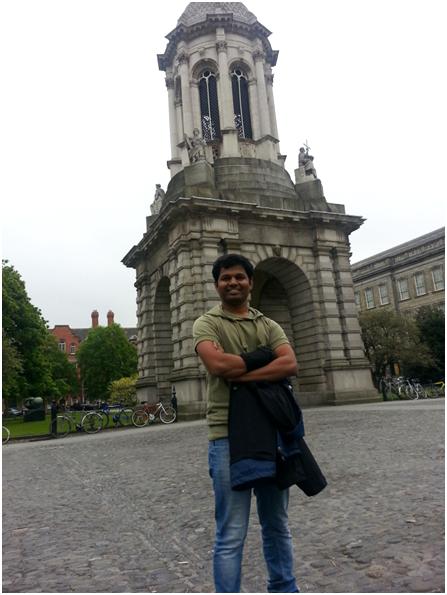
Varrla Eswaraiah at the Trinity College Dublin.

Varrla Eswaraiah at the Trinity College Dublin.

Whipping it up

Right now, we are excited about our new work at Prof. Jonathan N. Coleman’s lab in the School of Physics and CRANN at Trinity College Dublin, where I am a postdoc researcher. The reason for excitement is the result of some new experiments at our ‘Chemical Physics of Low dimensional nanostructures’ lab. The results, just published in Nature Materials are from a very simple experiment: we took graphite and put it in a kitchen blender with wash-up liquid, and turned it on. After sometime, we got graphene flakes. This works from a few milliliters of liquid to hundreds of liters and is technologically feasible to replicate on a large scale. The idea of taking graphene from the lab to industry is successfully achieved with our proof of concept. It will be useful in printed electronics and nanofillers for making super strong polymer composites and in many other applications that one can imagine.

Graphene is a wonder material with superior physical properties. It is basically few atoms (~1 nm) thick and is two dimensional with great electrical conductivity, superb strength (more than steel), transparency (98%) and exceptional thermal conductivity. The discovery of graphene with unusual electrical properties got the Nobel Prize in Physics for researchers at Manchester University in 2010. Now the world is working on commercialising this wonder material for real world applications.

Hunger pangs to craze for invention

For me, the fascination for science started alongside hunger pangs back in 1995 when I was a fifth grader. My parents were labourers, working every day from morning to evening. Since they did not get a chance to go to school, they wanted to give me good education with their savings. My primary school teacher recognised that I was good at mathematics and conveyed it to my parents. That was the first step, and my love towards science has never waned after that. However, my brother had to sacrifice his education due to lack of money.

When I got a 2nd rank in the common entrance test for a masters in physics at Sri Venkateswara University Tirupathi, I realised my potential in mathematics and physics. The professors at the university encouraged us towards research. Tirupathi is close to IIT Madras and we wrote all our competitive exams in physics there. We got an opportunity to visit the laboratories of the Indian Institute of Science, Bangalore and seniors would explain to us the science behind their research. That inspired me to take the GATE exam.

The environment at SV University was healthy and competitive — we discussed mathematical physics and solved problems to remember the concepts of physics. That got me into a PhD programme at IIT Madras.

Though I didn’t choose science, it chose me, and now I enjoy it. The best thing I like about science are experiments and inventions — I’m crazy about cracking it before anyone else can. My PhD was on carbon nanotubes and graphene nanomaterials under the supervision of Prof. S. Ramaprabhu, who introduced me to the world of carbon. I am grateful to him for inculcating discipline and time management in my research. He would start work at the lab at 8 am. One day, I was late and he told me, “If you want to grow in your career, you need to have self-discipline.”  I have never forgotten those words. The IIT Madras campus was awesome with the black buck deer roaming everywhere, Gurunath’s tea and the Electrical café.

PhD days were tough but I tackled moments of frustration with patience. If you don’t get frustrated at some point in your PhD, you will not realise the importance of the work. Research is ‘try and try, don’t cry’. I was actively working on carbon nanotubes and polymer nanocomposite for my PhD. Alongside, I was working with Prof. Krishnan Balasubramaniam on an IITM-US Air Force project for developing strain sensors. This is when I got an opportunity to visit the Northwestern University, Evanston campus and got an exposure to international research.

While writing my PhD thesis, I sent an email to Prof. Coleman for a postdoc position and got an interview call. I chose the Coleman lab because the group works on one-dimensional and two-dimensional materials and publishes in high impact journals.The ultimate aim of any researcher is to get recognised in his field and do useful science. I found that with this group. I  got a positive response and joined the lab as a postdoc.

Easy going Ireland

The best thing about Ireland is its easy going people. Dublin is one of the best places to live in and roam around.  I use the weekends to visit the beautiful counties with friends. Irish weather is great — you see winter, spring, summer and autumn in a single day!

When I landed in Dublin for the first time, it was raining and cold at 5 degrees celsius, way too chillier than Chennai, where temperatures are above 40 degrees celsius. There were big containers of Guinness beer everywhere just like petrol/diesel tanks in India! Since I am from a lower middle class family, I hesitate to drink and spend money over it. Here, everyone starts drinking from Friday evening till late on Sunday night! On the 5th day, my supervisor invited me to a send off party for a colleague at the bar in college. Everyone got beer and I got coke. One can’t drink too much coke but I counted everyone drinking more than 5 litres of beer! Later that night I called home and narrated the amazing story to my mom.

There are many similarities between India and Ireland — in fact our flags have the same three colours! There are Irish Telugu Associations and organisations here celebrating Ugadi, Diwali and almost all other Indian festivals with south Indian food and cultural programmes. So there is small India here!

Trinity college is a historical seat of learning and science with its Book of Kells library, which celebrated 350 years recently. My lab is a mind blowing mix of nationalities with lovely people from Ireland, Scotland, Australia, Germany, India, Pakistan, China, Romania and more. Prof. Coleman is an exceptional, world famous graphene research scientist.

Difficult accents, expensive living

The English accent in this country is a bit weird. Sometimes it is hard to understand.

Dublin is well developed but if one visits the countryside, there are very few people and most  houses are empty. People have either migrated to Dublin or left Ireland due to unemployment. Another worrying thing is the cost of living, it is very difficult to live here if one is not earning sufficient money. Much of the property is held by the banks, which borrowed money from other countries to build them. The buildings remained unsold for a long time and the country went into recession.

Postdoc tips

Indians do have a great opportunity here as postdocs in science and engineering fields. The good thing is if someone has the potential, it doesn’t matter where they are from. This country encourages them to grow further and help its national economy. My advice to Indian postdocs is to take decisions at the right time and look at labs that will help them grow in their research goals.

Village memories

I miss my home and family at Raithunagaram village in Nandyal, Andhra Pradesh. My family lives in the small, culturally-rich village with a population of 1500 and green rice fields all around. My parents came to this village from another far-off forest area called Nallamalla, where people don’t even have the basic amenities of life.

I know there’s stiff competition for a research job in India. But I am enthusiastic to start a science career in my homeland. India is a great nation with excellent human resources and intellectual property. All we need to do is create good work environments and be more productive.

I am very keen on propagating science education in rural India. Whenever I go home, I carry science gadgets, tool kits and do-it-yourself stuff for school kids in my village and explain to them the underlying science. They love it. I got a solar cooker model kit and a wind turbine model from science museums in London and Singapore for primary school students. They assembled these models and experienced first hand how these gadgets work. The important thing is: we need to teach kids when they are supposed to learn, not later.

Varrla Eswaraiah joins 36 other Indian postdocs already featured on this blog. Our ‘Away from home’ interactive map marks all these bright Indian postdocs from around the world. Please feel free to suggest names of postdocs from countries and disciplines we haven’t covered yet.

Away from home: Of ‘small’ things & big

The ‘Away from home‘ blogging series features Indian postdocs working in foreign labs recounting their experience of working there, the triumphs and challenges, the cultural differences and what they miss about India. They also offer useful tips for their Indian postdocs headed abroad. You can join in the online conversation using the #postdochat hashtag.

In this blog, Sivasankaran Harish, an alumnus of the College of Engineering, Guindy, Chennai and a postdoc researcher at Kyushu University in Japan tells us about making the most of the opportunities life throws at us. Harish’s other fascinating experiences at CERN on the Franco-Swiss border; Stanford University, USA and The University of Tokyo, Japan have taught him an important lesson: “Believe in your instincts, build on your strengths, but most importantly, focus on your weaknesses.”

Sivasankaran Harish with wife Sowmyaa at the Nagasaki Atomic Bomb Museum in Nagasaki, Japan.

Sivasankaran Harish with wife Sowmyaa at the Nagasaki Atomic Bomb Museum in Nagasaki, Japan.

Small is fascinating

I am particularly fascinated with ‘small’ things. I always liked looking at biological cells using an ‘optical microscope’. So medicine/microbiology should have been an obvious choice of study. However, I wanted to study mechanical engineering going by ‘my instincts’.

The fascination for ‘small’ (scientifically the relevant term now is ‘nano’) things remained but I did not know how to pursue it. Sometimes I thought it was just another childhood interest, just the way I wanted to play cricket like Sachin or Warne.

I studied engineering with limited interest for more than two years. During that time, a lecturer from my alma mater Dr. Albert Bensely asked me to work in his research work on cryogenic treatment of metals. I agreed without much of an interest on the topic. But it helped me work again at an advanced level of ‘microscopy’ to understand properties of materials. It was a difficult but I liked it more than my course work.

Starting to read relevant literature, I realized that small/nano was not just a medical term but had wide implications in the field of engineering. Being naturally inclined towards thermal sciences, the idea of exploring thermal properties at nanoscale was interesting. (I still wonder why Dr. Bensely asked me to work for him ignoring the many top ranking students in my department at that time. I would have ended up doing a normal job and would have had a huge bank balance now, if he didn’t ask me to join him!).

I completed an undergraduate in mechanical engineering at College of Engineering, Guindy, Chennai. Unlike most classmates, I was not interested in working in an IT firm. My interests were in higher studies but I failed to clear the qualifying GATE or CAT examinations. Eventually, I ended up working in a small control valve design firm in Chennai. The job was easy and I had plenty of time to think about further studies abroad. I was interested in going to Europe, especially to The Netherlands. The decision was not well received by my family members. However, I was fortunate to get full financial assistance for a masters degree programme from many reputed US universities and also from Eindhoven Institute of Technology, The Netherlands. I decided to accept the latter offer.

Enter mechanics and nanomaterials

I was predominantly working on topics related to fluid mechanics and heat transfer during my master’s programme. I happened to see summer internship openings at CERN and applied hesitatingly to the highly reputed institute. Surprisingly, I received an offer for internship in the electronics cooling division of CERN.

During my stay at CERN, I happened to learn a lot of serious heat transfer issues in micro and nano electronics and the need for advanced thermal management systems. The experience ignited my interest in nano materials and in harnessing the thermal properties of such materials for energy systems. This interest got me a scholarship to The University of Tokyo, Japan. I worked in Prof. Shigeo Maruyama’s research group for a doctoral degree on thermal properties of carbon nanotubes.

Also, during my stint as visiting researcher in Prof. Kenneth Goodson’s laboratory at Stanford University, USA , I worked on state-of-the-art techniques for measuring thermal properties of industrially important nanoscale materials. (Imagine measuring the thermal transport properties of an individual wire/tube which is 100 times smaller than a human hair.)

I joined Kyushu University as a postdoctoral researcher in 2013 with a fellowship from the Japan Society of Promotion of Science. Presently, I am working on developing advanced thermal energy storage materials with carbon nanostructured additives. I also work on measuring the thermal properties of thin films used in fuel cells in collaboration with the material science research team at International Institute of Carbon Neutral Energy Research.

Resources aplenty but language an issue

Top academic institutes in Japan are always equipped with plenty of resources for research activities. The standard of facilities in Japan is much higher than the facilities in USA. Considering the kind of facilities available in Japan, the amount of scientific work done is relatively low. Inability of the Japanese students to communicate in English is one of the major reasons for this. This is also an area where academic institutes of native English speaking countries outperform the rest.

Nevertheless, people in Japan are very polite and helpful. Though language remains a hindrance on many occasions, they are forever willing to help you. Moreover, I often see significant cultural similarities between India and Japan, which makes it easier to interact with people here. However, I must admit that among the countries in which I spent a significant amount of time, I would consider Switzerland the best for it’s lovely working atmosphere, very helpful colleagues and the country’s scenic beauty.

Bollywood connection?

Starting in Japan was not easy especially after graduating from Europe. The language was/is a major barrier. Sometimes, it is frustrating to communicate with people here since you do not know the language.

On the funny side, when I came here, people had difficulty understanding my English. To understand me better, they always asked ‘Sushmita Sen?’  whenever I was trying to strike up a conversation. I wondered why everyone in Japan was so curious about this Bollywood celebrity. I thought the former Miss Universe Sushmita Sen must have a special place in the hearts of the Japanese. It took me a while to finally understand that the word was sumima-sen (and I wrongly heard it as Sushmita Sen all the time), and it meant ‘excuse me’ in Japanese!

In general, if you eat vegetarian food, then Japan is not the right place. Besides, outside Tokyo it’s almost impossible to find a south Indian restaurant or the real taste of Indian food.

Commitment and hard work make the difference

The intellectual acumen of people is the same here as in India, or perhaps is better in our country compared to many others. It is essential that we use our postdoc experiences to understand and learn things we are not very good at and which make other countries shine. I would say the most important qualities to learn are commitment, sincerity, self-discipline and hard work. If you lack these four qualities, intellect will be fruitless.

Believe in your instincts, build on your strengths, but most importantly, focus on your weaknesses.

Academic profession still neglected in India

I miss my friends from back home. I also miss celebrating festivals, weddings, anniversaries, parties and religious functions with family members. I certainly miss the Diwali sweets, Christmas cakes and the Ramzan Biryani.

I would love to come back home and work. But my concern is the kind of facilities in India and the position of academics and teachers in our society. In Japan, being a professor in a good University is considered quite prestigious and is viewed at par with a chief technology officer position in a reputed company. I wonder if professors in India get the same respect as faculties in developed countries.

Sivasankaran Harish makes an impressive addition to our ‘Away from home’ interactive map  featuring bright young Indian postdocs from around the world. Please feel free to suggest names of postdocs from countries and disciplines we haven’t covered yet.

Away from home: Collaboration in a global organisation

The ‘Away from home‘ blogging series features Indian postdocs working in foreign labs recounting their experience of working there, the triumphs and challenges, the cultural differences and what they miss about India. They also offer useful tips for their Indian postdocs headed abroad. You can join in the online conversation using the #postdochat hashtag.

Today, we have environment scientist Ram Avtar, an alumnus of Jawaharlal Nehru University (JNU), New Delhi and a postdoc from the  Japan Agency for Marine-Earth Science and Technology (JAMSTEC). He tells us about his transition from a postdoc to a research associate with the United Nations University in Tokyo, an organisation with a global outlook and ample scope to forge meaningful collaborations — not just in one’s professional life but also in the personal life.

Ram Avtar

Ram Avtar

Why environmental science

As I was growing up, global warming was one of the most widely discussed environmental issues. There was apprehension and curiosity about it. This inspired me to take a keen interest in researching issues related to global environmental change. Since then, I have paid special attention to climate change mitigation. My keen interest in environmental science helped me excel during masters at the Jawaharlal Nehru University (JNU), New Delhi.

Later, I received the Japanese government’s prestigious Monbukagakusho Scholarship to pursue doctoral research at the University of Tokyo. My doctoral research monitored forest cover, deforestation and forest biomass in Cambodia to establish a cost-effective operational measurement, reporting and verification (MRV) system for effective implementation of REDD+ policies. My visits to Cambodia to collect data gave me a better understanding of ground realities and the role of local people whose livelihoods depend on forests and forest products. The research also provided information to the Cambodian government on implementing sustainable forest management policies to minimise deforestation.

After the Ph. D., I started working with the Japan Agency for Marine-Earth Science and Technology (JAMSTEC) as a post-doctoral fellow. During my post-doctoral research, I monitored the conversion of peat land forest to oil palm plantation and its impact on ecosystem services in Borneo. I learned a lot about sustainable agriculture and forestry and the real practical possibilities of trade-offs between palm-oil productions and sustainable land management.

Since October 2012, I have been working as a Research Associate with the United Nations University, Institute for the Advanced Study of Sustainability (UNU-IAS). I am learning how multi-disciplinary research can make a bridge between cross cutting issues through research, education and collaborative initiatives with the aim of solving current problems and anticipating future challenges. At UNU-IAS, I am actively involved in Climate and Ecosystems Change Adaptation Research (CECAR-Africa) and focusing on enhancing resilience to climate and ecosystem changes in semi-arid Africa.

Crossing the line

I studied in the civil engineering department of University of Tokyo (Todai) and my major was in the applications of remote sensing and GIS to solve global environmental problems. Tokyo is one of the most expensive cities in the world but I was lucky that Todai put me in the JASSO Soshigaya International house, which I could afford easily with my scholarship. At Soshigaya, I had a wonderful experience living with international students from all over the world and exchanging ideas and views on different issues. I also got an opportunity to learn more about the customs and cultures of different countries. Todai’s International Center helped me interact with a Japanese family and to know their culture closely.

After graduation from Todai, I have been working as a Research Associate at the United Nations University (UNU). UNU is also a wonderful place and has world class research facilities and an international environment. Now,  I am on the other side of academic life as a faculty member. I miss the fun and freedom of student life when all mistakes were excused. Now I need to be more careful and responsible.

Living in Japan

I was always influenced strongly by Indian culture and customs. India’s diversity and multiculturalism makes Indians acclimatize to any kind of environment and culture quickly. I learnt a lot from different cultures and tried to adapt to them during my stay at JASSO’s International House. The Japanese people also have strong cultural values. But unlike Indians, I feel that the sense of family bonding is sometimes missing in Japanese culture. I also miss the social life that I had back in India.

Career options

There are a number of career options in Japan after you complete a doctoral degree. You could opt to work in a private company as a consultant, an engineer, in the research & development section, as a researcher, scientist or in the academia. Japanese companies are quite open when it comes to accepting people from various academic backgrounds. For example, someone studying engineering can join a banking company. However, job hunting in Japan is a bit time taking — you have to apply for a job one year before your graduation.  If you are looking for an option in the research and academic field, you can apply for JSPS post-doctoral fellowship or you need to contact the professor of your area of interest directly.

Advice for future researchers

The period after doctoral research is relatively relaxed and you can start working on some individual research projects. You can apply to different funding agencies to get your own funding and start working on a topic of your choice. You can also hire researchers in your project.

If you are planning to come to Japan, don’t be afraid of the language or culture. It is a country where you will enjoy your work and personal life. You can also try to stay connected with different Indian communities here through the Indian Scientists Association in Japan (ISAJ), University of Tokyo Students Association (UTISA), Indian in Japan etc. You can enjoy different festivals/events/cultural programmes in Japan. These programme help one enhance collaborations, network, share experiences, organise events and stay connected with people in Japan. They also make for good memories when you leave and help you remain connected with researchers in Japan.

Find Ram Avtar in our ‘Away from home’ interactive map featuring Indian postdocs from around the world. Please feel free to suggest names of postdocs from countries and disciplines we haven’t covered yet.

Away from home: Hard work knows no boundaries

The ‘Away from home‘ blogging series features Indian postdocs working in foreign labs recounting their experience of working there, the triumphs and challenges, the cultural differences and what they miss about India. They also offer useful tips for their Indian postdocs headed abroad. You can join in the online conversation using the #postdochat hashtag.

This week we have Arnab De, an alumnus of the Presidency College, Kolkata and a postdoc from Columbia University, USA telling us his formula of success — some intelligence, lots of hard work, communicating with colleagues and a smiling face. Arnab, whose PhD dedication to cricket star Sachin Tendulkar made him the subject of another blog piece, says “its one world” and boundaries don’t make a country, people do.

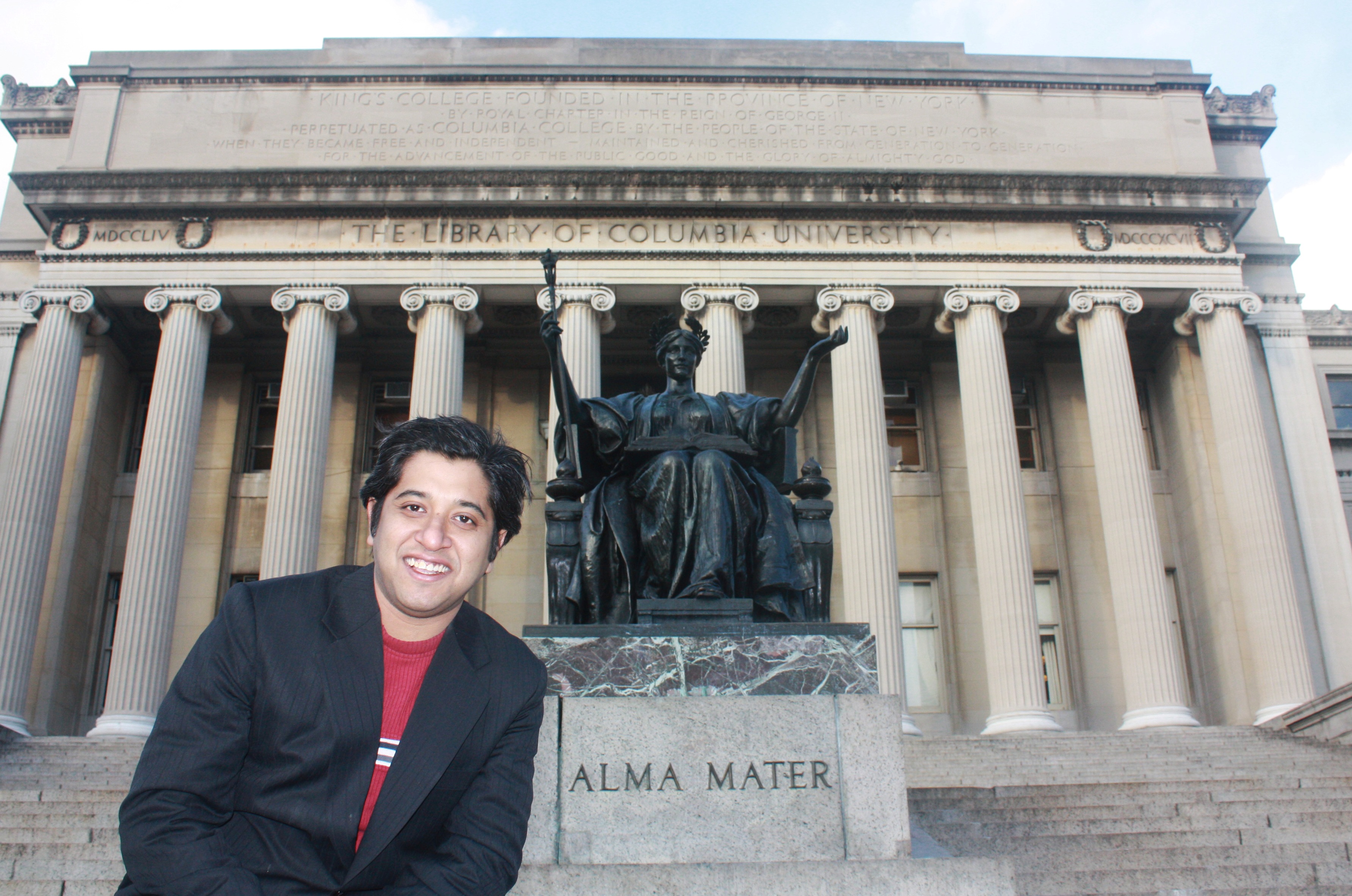
Arnab De in front of the famous Alma Mater statue at Columbia University.

Arnab De in front of the famous Alma Mater statue at Columbia University.

My father, my first guru

My father is a medical doctor practicing medicine. He was engaged in applied work in the hospital and always encouraged me to study basic sciences. I owe my initial interest in research to my dad. My brother chose to follow the medical profession like my father. My interest in the basic sciences grew enormously while studying at the Presidency College, Kolkata because of the active interest of the faculty in inculcating a curiosity for the unknown among students.

Choosing between Ivy leagues

I am very proud  of the education I received at Presidency College, Kolkata. For the PhD, I had offers from three ivy league universities — Brown, Dartmouth and Columbia. I chose Columbia for two reasons. It is in New York City, giving me an opportunity to collaborate with scientists and meet people from all around the world. It also has the world’s premium medical center (affiliated with New York Presbyterian Hospital), business school, law school and the famous Pulitzer School of Journalism. Besides, it has the highest number of Nobel laureates by university-affiliation. At Columbia, I was incredibly lucky to have the opportunity to work with the pioneering Indian-American immunologist, Prof. Sankar Ghosh. I have just defended my PhD thesis at Columbia University.

Exploring a new pathway

During my PhD, I was involved in two projects. Around the time I started my doctorate, it was appreciated that a single gene called A20 (a tumor-supressor) was mutated in a large number of cancers and other autoimmune diseases. While there were models that proposed how A20 might work, it was not known how this gene worked in animals. To understand this, I made a transgenic mouse, deliberately altering the genome, in order to precisely dissect the action of A20 in living animals. In the second project, I discovered a novel site of phosphorylation in an important immune—regulator and the corresponding kinase. One thing led to another, and early results strongly suggest that we might have uncovered a new biological pathway that is essential to respond to various infections and other diseases.

Imbibing scientific vision, leadership

Prof. Sankar Ghosh was previously at Yale before joining Columbia as the chairman of the department and ours is one of the most reputed immunobiology labs in the world. Besides being an eminent scientist, he is a visionary who broadened the horizons of the department by incorporating the field of immunobiology (our department previously focused on microbiology alone). Working at close quarters with him has given me an insight into his scientific vision and leadership, something I hope to be able to execute for the rest of my life. New York City is the melting pot of the world, and one can meet the world everyday at Times Square.

Living with Indophiles and snow

NYC is somewhat different, but even the smaller college towns present the exciting prospect of getting to know students from everywhere in the world. So you will find many Indians anywhere you go. One reason I personally did not find it as difficult to acclimatize to the new place was that I found a great partner (Rituparna Bose, who completed her PhD from Indiana University, Bloomington in geology, we are married now). I also did my MS in Chemistry at IU, Bloomington and my mentor, Prof. Richard DiMarchi, was a very understanding individual who knew a lot about India. That helped too.

Let me put it this way, home is where the heart is, always! So I miss India. But if I wanted to be in another country, I would want to be in the USA. I am originally from Kolkata, rather hot and humid. Hence, the snow here has proved to be a major challenge. The first flurries are pristine; the second snow shower might not bring as much joy.

Look at labs as well as institutions

USA is the land of hopes, dreams, opportunities and immigrants. Hence, I would encourage students seeking out the USA for post-doctoral opportunities. The clichéd advice is to be research-specific and look at labs, not institutions. I would look at both the ongoing research in the lab as well as the institution. Why? Just like in India, there are the good and ‘not-so-good’ institutions in the US. You can always switch labs if you are in a big research institution (if something goes wrong in the lab). This might not be possible in a smaller institution. Also when the funding looks bad, smaller institutions are likely to suffer more than the more famous counterparts. Just a fact of life!

India is changing, growing

My parents, my little brother, food and cricket — I miss them here. NYC has a lot of ‘desi’ restaurants, but none of them have ‘mishti doi’ or ‘luchi’ (two divine Kolkata-based delicacies). I miss playing quality cricket (and practicing in the terrace with my younger brother). I missed being in Mumbai when India won the cricket World Cup (2011). Sachin Tendulkar (the way he adapted to the challenges over his career) is my inspiration and I dedicated my PhD thesis to him. While some may criticize me for that, I am incredibly proud of that decision. India is changing/growing. I see that in my nephews and nieces and I welcome that change.

I am happy to work anywhere in the world which allows me to contribute to my fullest ability. If India presents me an opportunity, I will certainly be interested in giving it a close look.

The India story

People ask me about the differences between India and the USA, about what it takes to be successful in the USA. As I see it, the difference between India and USA is the availability of resources, and certainly not intellect. A decade or two ago, the discrepancy in resources was stark. As resources become more balanced, Indians will succeed in India too.

In my opinion, the recipe for success is exactly the same here and in India: some intelligence, lots of hard work, communicating with colleagues and a smiling face. Communication might be understandably somewhat easier in India because of language barriers. All things considered, it is not all that different whether in India or the USA. It’s really one world.  Indeed, the hopes and dreams of the immigrant have helped to shape the legacy of the USA in more ways that we can imagine.

Arnab De features here in our ‘Away from home’ interactive map along with many other Indian postdocs from around the world. Please feel free to suggest names of postdocs from countries and disciplines we haven’t covered yet.

Away from home: Why the postdoc phase is crucial

The ‘Away from home‘ blogging series features Indian postdocs working in foreign labs recounting their experience of working there, the triumphs and challenges, the cultural differences and what they miss about India. They also offer useful tips for their Indian postdocs headed abroad. You can join in the online conversation using the #postdochat hashtag.

In this post, microbiologist Devendra Dusane, a doctorate from the University of Pune and a postdoc at McGill University, Canada talks about the importance of the postdoc phase, which he says,  is crucial for shaping one’s  goals — both in life and in research. It is “overwhelming when my wife and daughter appreciate my published research papers and celebrate with me”, he says.

DD

Devendra Dusane with his family

The ABC of Microbiology

When I joined the master’s programme of the University of Pune in India, I started learning about antimicrobial agents and biofilms. I found that bacterial cells, which I earlier thought to be lonely, actually attached to surfaces, communicated, multiplied and formed detrimental biofilms that were resistant to most antibiotics. This phenomenon of bacterial cross-talk (quorum sensing) and antibiotic resistance triggered my interest to study new antimicrobials that could inhibit and disperse these biofilms.

The research was a part of a collaborative programme between the Bhabha Atomic Research Centre (BARC) and the University of Pune. I had to travel for a few months every year from Pune to the BARC unit at Kalpakkam, Tamil Nadu to seek guidance, use confocal microscopy and collect marine samples. It was fun. I had good colleagues at both places. I had the best supervisors during my Ph.D.

I was fortunate to be associated with great minds and places during my career. Before pursuing PhD, I had an opportunity to work in an industry for three years and then for a year with Prof. Anil Gupta at IIM Ahmedabad. Prof. Gupta is an authority in intellectual property rights, grass-root innovations and a Padmashree awardee. This was the time when I got the opportunity to interact with the former director general of CSIR Dr. Raghunath Mashelkar and former DBT adviser Dr. S. Natesh.

Career path

I am presently a postdoc at the Department of Chemical Engineering, McGill University, Canada. I am in one of the best labs at McGill doing research on anti-biofilm agents and quorum sensing inhibitors (to disrupt the bacterial cross-talk). My mentor is young and dynamic and always ready to help her students.

Career choices

In everybody’s life, there comes a time when you have to decide on the right career path. Life is all about correct choices; consequences follow. After comparing my well paid peers in the IT sector and those in research waiting endlessly for the government’s decision for a marginal rise in research fellowship/stipend, I thought if the decision to pursue research was right or not. However, I am happy about deciding to undertake research — it has not just been a great career choice but also an immensely satisfying one. It is especially overwhelming when my wife (who is also pursuing research) and daughter appreciate my published research and celebrate with me.

Advice for postdoc aspirants

No matter where you do your postdoc, selecting the right mentor is very necessary. I know it is difficult to gauge this before you meet and start working with your mentor but you have to look for a supervisor who is working in your area of interest and is established. One who understands his/her students’ research goals and treats you as a colleague.

I would advise new postdocs to be innovative in their research, get work published to set up a platform and move ahead in achieving future goals. One should also remember that postdoc is just a temporary phase — don’t get attracted to it and stay for a long time. Think about achieving career goals — academia or industry is always waiting for prepared minds.

Speaking about research in Canada, it is one of the best places to start your career as a postdoc. Winters are pretty cold but its fun to go skiing with friends and family.

Path to success

I would advise postdoc aspirants to pursue a postdoc career in India or abroad and gain expertise to set up their own lab (academia or industry). Also, doctoral or post-doctoral training is a crucial step not just for setting and achieving your career goals but also to understand life. During this time you know more about yourself, people around you, different places and how to adjust to different situations. So keep up the hard work and enjoy life.

Find Devendra Dusane in our ‘Away from home’ interactive map featuring Indian postdocs from around the world. Please feel free to suggest names of postdocs from countries and disciplines we haven’t covered yet.