Lindau Nobel Laureate Meeting – Monday’s Storify #lnlm12

The first full day of this year’s Lindau Nobel Laureate Meeting began on Monday with a morning of plenary sessions by seven of the Laureates.

To capture the live tweeting around these talks, as well as video and blog content, we have created a Storify below. Do check back as we’ll be updating it as more coverage is published, as well as creating additional Storifys for each day of the rest of the conference.

You can also find this Storify mirrored on the official Lindau Nobel Community site here. Continue reading

Lindau Community Site Launches #lnlm12

Each year, the Nobel Laureates in science are invited to spend a week on Lake Constance area in Germany, meeting a selection of young, international scientists. This year, from 1 to 6 July, over 25 Nobel Laureates and almost 600 young researchers from across the globe will gather on the island of Lindau to brainstorm ideas, discuss projects and build international connections.

This will be the 62nd Lindau Meeting and it will be dedicated to physics. Continue reading

Lindau Nobel Laureate Meeting 2011 – the multimedia grand finale

Lindu wrap

This year’s meeting of Nobel Laureates was dedicated to Physiology and Medicine, as 24 Nobel Laureates gathered on the picturesque island of Lindau, ready to respond to the eager questions from early career scientists. Set on Lake Constance, the meeting provided a rare chance for selected young scientists to meet with Nobel Laureates for a gathering of plenary discussions and informal conversations.

Throughout this year’s Lindau conference, there was detailed blogging coverage on Nature Network as we brought to you a full week of Lindau reporting, linking out to all of the blogs, talks, discussions and Storifys collating the tweets surrounding the conference. We also launched an updated social media site, aggregating all Lindau coverage, serving as the event’s interactive hub. The site includes the official Lindau blogs in English, German, Spanish and Chinese, as well as gathering all Twitter, Flickr and any external blogging activity, eliminating the tiresome task of searching for up-to-date coverage. So if you wish to share in the experience and even watch the videos from last year, make sure you add the site to your bookmarks!

Video coverage

Interviews with Nobel Prize winners can’t fail to be interesting and over the last few weeks we have been bringing to your attention a collection of Nature Videos capturing some of these discussions. These personal mentoring sessions are at the heart of the Lindau experience, where young scientific minds can question the already accomplished. Nature Video captured these sessions and have been releasing a new video each week, giving us a glimpse into these exclusive conversations. This week the very last video in the collection has been released:

Hungry for knowledge with Oliver Smithies

Oliver Smithies is a toolmaker. He shared the Nobel prize for discoveries that led to the development of knockout mice. Diego Bohórquez uses mouse models to understand how our gut regulates appetite. He has wanted to meet Smithies ever since he moved from his native Ecuador to Duke University in the United States. When the two meet in Lindau they have an instant rapport and soon they’re sharing ideas about their research projects and talking about what makes a successful scientific collaboration.

Make sure you tune into the full collection here.

Ask a Nobel Laureate

Sadly not everyone had the opportunity to attend this year’s meeting, so throughout the conference we gave anyone who had a burning question for a Nobel Laureate, the opportunity to ask away. Whether you wanted to know what it takes to win a Nobel Prize, or were just interested to see what drives these renowned scientists to success. You can now read all of the updated answers to the Q&A questions on the Community site, so do have a read.

Nature special

For further reading on this year’s meeting, make sure you check out the latest Nature Outlook that examines the areas of biomedical science that challenge and inspire these pre-eminent Nobel laureates.

cover.jpg

We hope that you have enjoyed this year’s coverage and we are already anticipating next year’s meeting. If you have any feedback please feel free to get in touch.

Nature Videos from this year’s Lindau meeting

One of the unique aspects of the Lindau Nobel Laureate Meetings is the opportunity for young scientists and Laureates to spend time in dialogue away from the press and attendees. These personal mentoring sessions are at the nucleus of the Lindau experience, where young scientific minds can question the already accomplished.

For the last three years, our Nature video team has made an assortment of short films from the Lindau Nobel Laureate Meetings. This year was no exception, as they were on hand to capture some of these rare conversations between Laureates and students focusing on research topics in Physiology and Medicine.

This year, five such interviews were recorded and the first was published this week, with another one released each week up to 13th October. To get a taster of what this year’s films contain, take a look at the short trailer, which introduces both the Laureates and the five young scientists involved in the films. The early researchers who are followed in these films are working on cancer, viruses, malaria and much more. See what advice the Laureates can offer these young scientists and what questions the Laureates have for them.

Film 1: The virus catchers – with Harald zur Hausen

Young researchers Jan Gralton and Sven-Eric Schelhorn are fascinated by the minute world of viruses. They have plenty of questions for Harald zur Hausen who won a Nobel Prize for proving that human papillomaviruses (HPV) can cause cervical cancer. All three are worried by public distrust of the HPV vaccine, which was made possible by zur Hausen’s work.

Film 2: Combating cancer with Edmond Fischer

Nobel Laureate Eddie Fischer was born in Shanghai in 1920. Since then, China has emerged as an economic superpower. Now it’s becoming a scientific heavyweight too. Tong Qing belongs to the newest generation of Chinese scientists. She decided to study cancer after a family friend became ill with breast cancer. In this film, she tells Fischer about life and research in China today.

Film 3:Bench or bedside? with Ferid Murad

Camelia-Lucia Cimpianu is trying to decide between a career as a researcher or a practising doctor. In this film, she seeks advice from Nobel Laureate Ferid Murad who faced the same dilemma as a medical student in the 1960s. Murad chose the bench, and he subsequently discovered that a gas called nitric oxide (NO) acts as a signalling molecule in the cardiovascular system. It turns out that NO plays a role in many diseases — and possibly in the head trauma cases that Camelia studies.

Film 4: A life in science with Elizabeth Blackburn

Elizabeth Blackburn grew up in Hobart on the Australian island of Tasmania. It was a long journey from there to a Nobel prize and the lab she runs at the University of California in San Francisco. Malaria researcher Clare Smith is also a Hobart girl, and she’s trying to decide whether to follow in Blackburn’s footsteps and move overseas after she finishes her PhD. Karina Zillner is from Germany. Like Clare, she’s in the final stages of a PhD. She’s developed a method for analysing sections of repetitive DNA. Karina hopes her technique might be used in Blackburn’s lab, where they study telomeres — repetitive sections of DNA that protect the ends of chromosomes.

Film 5: Hungry for knowledge with Oliver Smithies

Oliver Smithies is a toolmaker. He shared the Nobel prize for discoveries that led to the development of knockout mice. Diego Bohórquez uses mouse models to understand how our gut regulates appetite. He has wanted to meet Smithies ever since he moved from his native Ecuador to Duke University in the United States. When the two meet in Lindau they have an instant rapport and soon they’re sharing ideas about their research projects and talking about what makes a successful scientific collaboration.

To complement the video coverage, the official Lindau English blog did an exceptional job reporting on all the latest news, views and reflections from this unique meeting. Here on Of Schemes and Memes we also updated readers with the latest news and you can find our coverage here. Or why not read last year’s interview with the Nature Video team to find out more about how the laureates are paired up with researchers and the other preparations that are made for the films.

The 5 films will be published, one a week, from 15 September to 13 October. You can see them all here.

You can also view more Lindau videos, including videos from last year here.

Lindau Nobel Laureate Meeting 2011 – Final Coverage Roundup

Friday was the last day of the Lindau Meeting of Nobel Laureates. The week’s programme has been full of engaging plenary talks from Nobel Laureates, inspiring panel discussions and a plethora of advice for early career scientists.

The official Lindau English blog has been doing an exceptional job reporting on all the latest news, views and reflections on this unique meeting and here on Of Schemes and Memes we have also been regularly updating readers with the latest coverage.

However, we’d still like to bring to your attention a final set of blog posts and video content from the conference and do let us know if we have missed anything off:

Latest Blog posts

Brainbow_Dentate_Gyrus.jpg

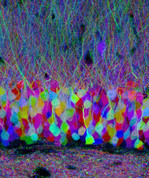
Roger Tsien: a rainbow of fluorescence

Blogger Lucas Brouwers reports on Roger Tsien’s plenary talk on Wednesday. The talk focused on his work designing fluorescent molecules:

When Tsien describes ‘his’ molecules, he does so with fondness. For Tsien, designing molecules is the molecular equivalent of sculpting. No two sculptors will ever create the same sculpture. Likewise, no two chemical engineers will design the same molecule.

You can also watch a video of Tsien’s talk in the post as well as a full length version here.

The countess and her cowboy hat

Blogger Lucas Brouwers reveals that every student and young researcher who attends the conference must buy Bettina Bernadotte, the daughter of count Lennart Bernadotte who funded the very first Lindau meeting in 1951, a present. The tradition has stuck and Lucas reveals the unusual gifts that this year attendees have brought:

Cajun spices from New Orleans

Cowboy hat from Texas

Book about the diverse nature of North Carolina

Old Bay spice from Maryland

Baltimore baseball

You can see a list of more gifts in the blog post.

A Storify summary of Thursday’s online conversations

A storyboard that captures the live tweets from Thursday’s plenary talks, as well as video and blogging content. Includes the tweets from the panel discussion on, “Being a (Responsible) Scientist.” Do check back as it will be updated as more coverage is published.

This Storify is also mirrored on Of Schemes and Memes.
Kelly Quesnelle.jpg

The Prize of Freedom

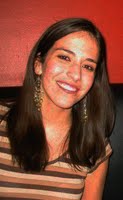
In this post Lindau attendee Kelly Quesnelle explains why she came to Lindau, her expectations of the meeting and what she has learnt:

I expected interactions with those who had “won” in science would rekindle desire to stay in the fight so that perhaps some day I, too, could win a prize. Much like any scientific venture, I came in expecting one thing and have been pleasantly delighted by a journey that has taken me in an entirely different direction.

The future of biomedicine in global health

Christine Ottery summarises the panel discussion that focused on the future of biomedicine. She highlights the main points from the meeting:

The future of medicine is contained in ‘The Four Ps’: Personalised, Predictive, Preventative, and Participatory.

You can hear Nobel Laureates Prof. Dr. Aaron Ciechanover’s thoughts in the post. This post is also mirrored on Scientific America’s Blog: Lindau Nobel Meeting—The future of biomedicine.

What to do with a problem like global health

What can be done about global health? Was the question on everyone’s minds following Peter Agre’s moving talk on malaria, ‘without borders,’ earlier in the week. Read Christine Ottery’s summary of the last panel discussion on the future of biomedicine:

The Economist’s science and technology editor Geoffrey Carr starts the concluding panel of the Lindau meeting by setting out the stark reality: “The greatest health needs are in the developing countries”.

The beauty of Beethoven and buckminsterfullerene

Blogger Lucas Brouwers discusses a statement made by Sir Harry Kroto during a tense press conference on Wednesday:

“Try to explain the culture and the depth of Shakespeare to someone who does not speak the English language. It’s extremely difficult. When a journalist asks me to describe my research in one sentence, I get irritated and ask: ‘how much of the language of science do you know?’”

Brouwers asks can one appreciate the deep beauty of science, without mastering calculus, quantum mechanics or molecular genetics? He belives you can, despite Kroto’s thoughts. What do you think? Have your say in this post.

This post is also mirrored on Scientific America’s Blog: Lindau Nobel Meeting—Shakespeare and Beethoven and buckminsterfullerene for the uninitiated.

A Storify summary of Friday’s online conversations

A Storify from the final day at this year’s Lindau Nobel Laureate Meeting which involved the customary boat trip to Isle of Mainau, where this year the Closing Panel Discussion focused on the issue of “Global Health.”

This Storify is also mirrored on Of Schemes and Memes.

Top 5 unforgettable Lindau meeting moments

Christine Ottery reveals her top 5 moments from the 61st Meeting of the Nobel Laureates at Lindau:

Christian De Duve went out on quite a limb talking about the future of humanity in his lecture. He received a standing ovation for handing the the baton onto the young generation to ‘do it better’ – ‘our generation messed up’, he said.

What were your top moments? Have your say in the comment thread.

More Video coverage

Watch videos of the latest talks and panel sessions from the conference:

Why did the acatech nominate Sven-Eric for Lindau?

Why does the DAAD nominate students for Lindau?

How are Pakistani students nominated for Lindau?

From Saarbrücken to Lindau – Sven-Eric’s Video Diary Part II

From Tel Aviv to Lindau – Shay’s Video Diary Part I

Aaron Ciechanover – Lindau Nobel Laureate Meeting 2011

Avram Hershko – Lindau Nobel Laureate Meeting 2011

Sir Martin J. Evans – Lindau Nobel Laureate Meeting 2011

Roger Y. Tsien – Lindau Nobel Laureate Meeting 201

Jean-Marie Pierre Lehn – Lindau Nobel Laureate Meeting 2011

From Bonn to Lindau – Anna’s Video Diary Part I

From San Diego to Lindau – Csilla’s Video Diary Part I

From Munich to Lindau – Anna’s Video Diary Part I

Lindau Nobel Laureate Meeting – Friday’s Storify #lnlm11

The final day of this year’s Lindau Nobel Laureate Meeting involved the customary boat trip to Isle of Mainau, where this year the Closing Panel Discussion focused on the issue of “Global Health.”

To capture the live tweeting around these sessions, as well as video and blog content, we have created a Storify storyboard. Do check back as we’ll be updating it as more coverage is published. You can find Monday’s Storify here, Tuesday’s here, Wednesday’s here and Thursday’s here.

You can also find this Storify mirrored on the official Lindau Nobel Community site and don’t forget to check out a summary of all the latest blogging coverage.

Lindau Nobel Laureate Meeting – Thursday’s Storify #lnlm11

The penultimate day of this year’s Lindau Nobel Laureate Meeting began with a morning of plenary sessions by four of the Laureates followed by a panel discussion on, “Being a (Responsible) Scientist.”

To capture the live tweeting around these talks, as well as video and blog content, we have created a Storify storyboard. Do check back as we’ll be updating it as more coverage is published. You can find Monday’s Storify here, Tuesday’s here and Wednesday’s here.

You can also find this Storify mirrored on the official Lindau Nobel Community site and don’t forget to check out a summary of all the latest blogging coverage.

Other Coverage

The future of medicine: we’re decades away from the huge advances

medical-droid-flickr-intro-thumb-640xauto-23039.jpg

John Timmer reports on the panel discussion that focused on the future of biomedicine. He highlights the main points from the meeting:

The panel discussed the promise of stem cells and personalized medicine, but felt that it would be decades before much of this promise will really come to the fore. But that doesn’t mean that big gains in health aren’t possible in the short-term—it’s just that they don’t involve progress in the field of medicine.

You can hear more of Nobel Laureates Prof. Dr. Aaron Ciechanover’s thoughts in the post.

Lindau Nobel Laureate Meeting – Wednesday’s Storify #lnlm11

We are currently over halfway through the Lindau Nobel Laureate Meeting and Wednesday commenced with a morning of plenary sessions by seven of the Laureates and an afternoon full of discussions including one where laureates had the opportunity to, Turn the Tables and quiz some of the students attending this year’s meeting (separate blog post to follow on this session).

To capture the live tweets around these happenings, as well as video and blogging content, we have created a Storify storyboard of the morning sessions. Do check back as we’ll be updating it as more coverage is published, as well as creating additional Storifys for each day of the rest of the conference. You can find Monday’s Storify here, Tuesday’s here.

You can also find this Storify mirrored on the official Lindau Nobel Community site and don’t forget to check out a summary of all the latest blogging coverage.

Lindau Nobel Laureate 2011 – Coverage Roundup Midweek

The eagerly awaited 61st meeting of Nobel laureates and junior scientists, on the beautiful island of Lindau, began on Sunday. Set on the picturesque Lake Constance, the conference provides the unique chance for selected young scientists to meet with Nobel Laureates for a week of plenary talks.

So far we have been providing regular coverage to the island updating you on the latest talks, videos and tweets surrounding the meeting. In order to keep everyone informed of the latest happenings, here is another summary post linking to the most recent blogging coverage.

Don’t forget to check out our previous blogging round up!

Blogging coverage so far

A Storify summary of Monday’s online conversations

A storyboard that captures the live tweets from Monday’s plenary talks, as well as video and blogging content. Includes the tweets from Prof. Dr. Elizabeth H. Blackburn and Prof. Dr. Oliver Smithies’s talks. Do check back as it will be updated as more coverage is published.

This Storify is also mirrored on Of Schemes and Memes.

Armen.JPG

Researcher portrait: Armen Kherlopian

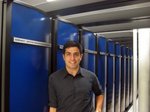
Lou Woodley picks the brain of research scientist Armen Kherlopian who is attending Lindau. You can find out more about Kherlopian’s work that focuses on the interface of high performance computing and biological applications, as well as his reasons for attending the conference, in this post.

Jean-Marie Lehn: an evolutionary chemist

A summary of Nobel Laureate Jean-Marie Lehn’s plenary talk, “From Supramolecular Chemistry Towards Adaptive Chemistry:”

Lehn made his point by asking a simple and intriguing question at the start of his lecture: how does matter become complex? How did elementary particles eventually gave rise to the thinking organisms that we are?

You can find out the answers in this post, as well as an opportunity to watch snippets from Lehn’s talk.
joke.jpg

Researcher portrait: Joke van Bemmel

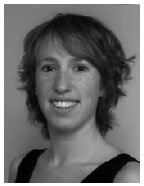
Christine Ottery interviews Lindau attendee Joke van Bemmel, a researcher from The Netherlands Cancer Institute in Amsterdam. In this post you can find out more about Joke’s research, her future plans and why she enjoys the Lindau meeting:

What I like is the every Laureate has a different view on giving a talk: Some people give really inspirational ones, you can sit back and its funny; or some people focus on the fact they also have a private life and a family it is reassuring to hear that even Nobel Laureates have a life; and some tell you about a field you know nothing about yet. It’s enjoyable.

This post is also mirrored on Scientific America’s Blog: Lindau Nobel Meeting—Joke van Bemmel, chromatin and epigenetics.

A Storify summary of Tuesday’s online conversations

A storyboard that captures the live tweets from Tuesday’s plenary talks, as well as video and blogging content. Includes the tweets from Prof. Dr. Peter Agre and Prof. Dr. Sir Harold Walter Kroto’s talks. Do check back as it will be updated as more coverage is published.

This Storify is also mirrored on Of Schemes and Memes.

Sir Harry Kroto: the Third Man

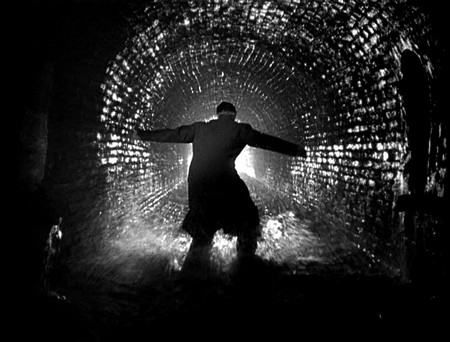
Blogger Lucas Brouwers reports on Sir Harry Kroto’s talk on Tuesday, that was unlike any other lecture at the Lindau Meetings so far. Brouwers explains that Kroto didn’t talk about the work he had done, or about his life as a scientist. Instead, he gave a dazzling presentation showing scores of images to his audience:
thirdman.jpg

You can also watch a video of Kroto’s talk in the post as well as a full length version here.

Young researchers give us real insights in their home, life and Lindau experiences

Beatrice Lugger introduces us to the team of young researchers, five women and two men, who plan to provide us with video coverage of their Lindau experiences. You can get a real insight into their home, life and Lindau experiences in this post.

Nobel Laureates and humanitarian advocates: Agre and Wiesel

Christine Ottery interviews Nobel Laureates Professor Torten Wiesel and Professor Peter Agre, discussing their interests in global health, human rights and scientific research:

Agre describes a conflict between wanting to apply science for the ‘well-being of society’ and actually doing research. He says: “I always found research fascinating but very demanding – there wasn’t a lot left over for science diplomacy or human rights.” And, one of the big questions of humanitarian work was: “Who pays your salary?”

You can find out how Agre and Wiesel’s opinions differ in this post.

Inspire. Educate. Connect

Markita Landry 1.jpg

University of Illinois doctoral student Markita Landry summarises her role at Lindau:

My role for the 2011 Nobel Laureate Meeting is to put together the week, the annual Lindau Meeting newspaper and a set of articles for the German and International press. I will conduct interviews and write articles on the very interesting scientific endeavors that are undertaken by Nobel Laureates and young researchers.

Stay tuned for more of her updates

A Storify summary of Wednesday’s online conversations

A storyboard that captures the live tweets from Wednesday’s plenary talks, as well as video and blogging content. Includes the tweets from Prof. Dr. Roger Y. Tsien and Prof. Dr. Sir Martin J. Evans’s talks. Do check back as it will be updated as more coverage is published.

This Storify is also mirrored on Of Schemes and Memes.

Don’t make me eat my words – I’m a scientist!

In this post Lou Woodley considers whether scientists are “anti-social”, particularly with respect to adopting online tools and social media:

We briefly explored whether any of the students had found social media or other tools helpful in their research, and while several of them were enthusiastic about the various mobile phone apps that enable them to keep up with the scientific literature on the move, none of them were really using social media sites for work.

On location with the Nature Video team

The Nature Video team are becoming regulars at the Lindau Nobel Laureates Meeting. Find out in this post how they prepare for the Lindau film shoots and how they aim to capture conversations between the Nobel Laureates and the young scientists.
Brainbow_Dentate_Gyrus.jpg

The latest Video coverage

Watch videos of the latest talks and panel sessions from the conference:

From Peshawa to Lindau – Maryam’s Video Diary Part I

From Saarbrücken to Lindau – Sven-Eric’s Video Diary Part I

From Bandung to Lindau – Erlia’s Video Diary Part I

Why did the Institut Teknologi Bandung nominate Erlia Narulita for Lindau

Why did the Weizmann Institute nominate Shay Stern for Lindau?

Panel Discussion Biomedicine: The Future – Lindau Nobel Laureate Meeting 2011

Sir Harold Kroto – Lindau Nobel Laureate Meeting 2011

Werner Arber – Lindau Nobel Laureate Meeting 2011

Ei-ichi Negishi – Lindau Nobel Laureate Meeting 2011

Peter Agre – Lindau Nobel Laureate Meeting 2011

Erwin Neher – Lindau Nobel Laureate Meeting 2011

Ada E. Yonath – Lindau Nobel Laureate Meeting 2011

Harald zur Hausen – Lindau 2011

Elizabeth H. Blackburn – Lindau 2011

Opening Ceremony of the 61st Lindau Nobel Laureate Meeting, 2011

Even more

Don’t forget we also have a German, Spanish and Chinese blog covering the event, so do check it out!

Finally if you want to get involved and are not at the conference, why not take this opportunity to ask a Nobel Laureate a question? Submit suggestions here.


Lindau Nobel Laureate Meeting – Tuesday’s Storify #lnlm11

The second day of this year’s Lindau Nobel Laureate Meeting began with a morning of plenary sessions by six of the Laureates and an afternoon of panel discussions. To capture the live tweeting around these talks, as well as video and blog content, we have created a Storify storyboard. Do check back as we’ll be updating it as more coverage is published, as well as creating additional Storifys for each day of the rest of the conference. You can find Monday’s Storify here.

You can also find this Storify mirrored on the official Lindau Nobel Community site.

Other Coverage

Journal Interview with Erwin Neher, Nobel Laureate for Medicine