
Made in Chile

newspaper-1173913-640x480Chile has this bad habit of being in the news solely for terrible reasons. Take September 2015: an 8.4 earthquake hits the country and is followed by around a thousand aftershocks. But among the pictures of fallen houses and coastal damages and the half-sad, half-numb resignation that proceeds them there was good news: the apparition of an innocuous and universal cancer drug, made in Chile. This is the promise of Andes Biotechnologies, a Chilean biotech company whose invention has just been cleared by the FDA for clinical trials in the US.

The FDA granted approval on September 13th for the start of US-based clinical trials on Andes Biotechnologies’ cancer drug. The product has been tested in animal models, specifically mice and monkeys, where the treatment has proven both universal and innocuous.

Sounds too good to be true? Too unlikely?

It’s actually even more so.

According to a 2014 study published by the Tufts Center for the Study of Drug Development, the average R&D cost of developing a new drug is $1.4 billion. Even if this figure might be overinflated, as stated by The Economist, the minimum amount is considered to be around half a billion. Not exactly what you can invest in a country where the total investment, both public and private, totals less than 70 billion.

And yet, Andes not only developed what could potentially be a hit in the battle against cancer: it even managed to run the whole development process in Chile and with only Chilean investors.

You read that correctly. With only 31 people in their team today, Andes Biotechnologies’ drug is the first biomedical development that has been invented, developed and financed in Chile, while also being cleared for clinical trials in the US. Even now, when these trials abroad are about to start, they will be spearheaded by chilenos.

The technology’s development started around the year 2000, when Dr. Luis Burzio, one of Andes’ main researchers, discovered a new family of RNAs while conducting research on spermatogenesis. These RNAs, of mitochondrial origin, sparked the researchers’ interest and after many tests proved to be a promising universal target for both cancer treatment and diagnosis. On 2009 Burzio was joined by Dr. Pablo Valenzuela, who in 2002 was awarded the Chilean National Award in Applied Sciences and Technologies and also happens to be the inventor of the world’s first recombinant vaccine (against hepatitis B virus), and by Arturo Yudelevich, co-founder of one of the biggest biomedical companies in Chile, to found Andes Biotechnologies.

Since its founding, the company has obtained 29 patents worldwide, and has become a standard for biotechnology innovation in the country. The company’s success in recent years has, in my opinion, played a major role in inspiring new developments, technologies and yes, new entrepreneurs as well. Innovation in biomedicine, and entrepreneurship in general at this point, tend to be presented as a club you are only granted access to if you had the good luck of being born or based in the US or Europe. As an aspiring biotech student seven years ago, I couldn’t name even one Chilean company that had made it there, in that faraway place where success happened.

Now that the glass ceiling has been broken there is no way back. Companies like Andes will help ensure that Chilean biotech is finally recognized as a force to be reckoned with. The new crop of entrepreneurs that my generation brings will gladly course through the path this development has cemented for us. Knowing now that something as difficult and unlikely to succeed can undergo preclinical development in our country, we have no excuse not to try.

Hopefully this will be the news you will hear now. Not about the earthquakes and the occasional wine review or football match, but around the new inventions and advances in biomedicine created within our borders. We cannot write a full newspaper yet, but we do have the first headline:

The rise of a universal drug against cancer seems to be closer each day – and it’s made in Chile.
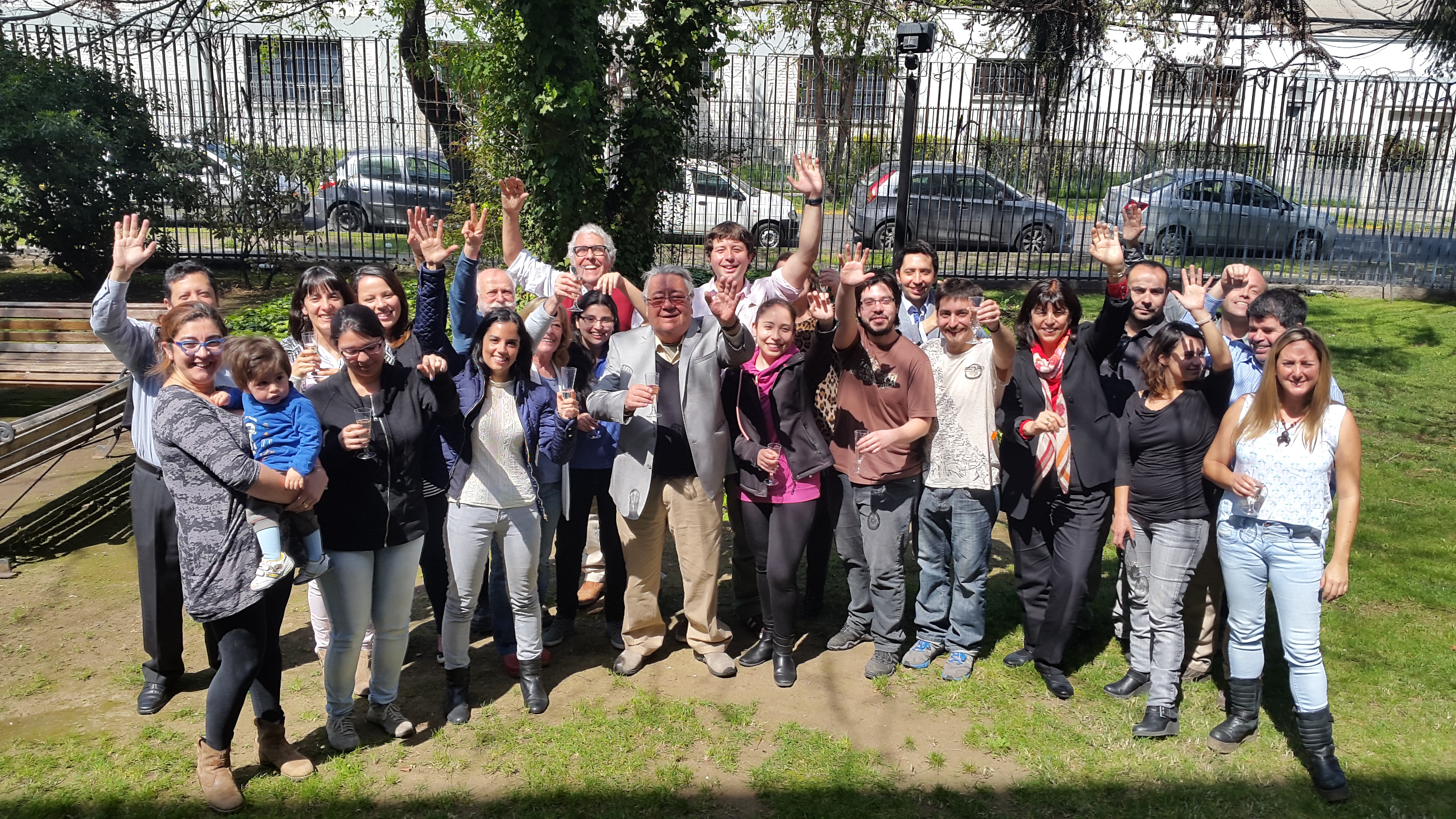
Andes_peeps

The team at Andes celebrates FDA clearance for clinical trials.

Emilia Diaz

Driving Lessons

nbt.3361-I1

Fly image provided by V. Gantz and E. Bier, UCSD.

Gene drives have spurred controversy of late. In the October issue of Nature Biotechnology, we hear the perspective of several researchers who have been developing gene drive technology, in some cases for decades. Their perspective has been seemingly missing from the extensive reporting that followed publication of a CRISPR-Cas9 mediated gene drive in Drosophila in April 2015, and much of the debate has focused on the potential hazards of the technology. We talked to them and to researchers raising alarm bells about the technology to explore just how likely the doomsday scenarios are.

The connection between CRISPR/Cas9 and gene drives—genetic elements that bias inheritance and upset the rules of Mendelian genetics—was brought into the spotlight in 2014, when George Church’s group at Harvard published a thought piece that laid out the basic design of a RNA-mediated gene drive. In that article, the authors suggested that the release of organisms carrying gene drives could imperil indigenous species in the wild. The group struggled to find a publisher for their article—too speculative, they were told, come back when you have data.

Less than a year later, researchers from University of California, San Diego, published a paper in Science describing the first CRISPR/Cas9 gene drive in flies and demonstrating its ability to spread a mutant gene through a lab strain population in two generations. That sparked the current controversy, and since then some of the same journals that turned down the Harvard paper have published commentaries and perspectives, sounding a warning on gene drives upsetting ecosystems.

But can gene drives do this? That was the question we posed to researchers who have been working in this field. For decades, the grail for many scientists working in this area is to develop systems that eradicate human disease vectors, such as Anopheles gambiae, a malaria vector. Before CRISPR-Cas9, researchers were developing transposons and homing endonucleases, so-called ‘selfish DNA,’ which propagate horizontally through genomes, though not particularly efficiently. And researchers feel the approach shows great promise. As Anthony James of the University of California, Irvine, puts it, “People working with mosquitoes feel that they have a legitimate application of the technology, as opposed to neat little tricks. There was a strong belief that good can be done in the public health arena if this technology was available.”

And it’s not as if these researchers have failed to consider possible ecosystem imbalances. James, for example, has trolled the mosquito genome for what he calls neutral areas, locations where secondary effects are unlikely. “You can sequence the gene from wild populations and find conserved domains,” he says, that way, “when you make the insertion, you don’t have a major impact on fitness.”

To be sure, there are university institutional review boards to oversee such experiments, though Kenneth Oye, from MIT’s Department of Political Science and Engineering Systems and a co-author on one of the perspectives questions whether they are up to the task.  “University review boards are heavily focused on protection of human subjects and pathogens and toxins,” he says. “[Gene drives] just don’t fit.”  This creates another hole that must be filled before gene drive research can advance. Oye wants a systematic review of “the way we are thinking about security and environmental risk associated with advanced biotechnologies.”

That would be effective only if those doing the review are qualified to do so. Todd Kuiken, a principal investigator on the Wilson Center’s Synthetic Biology Program, points out that some of the people making decisions on using gene drives “are not ecologists. In fact a lot of them aren’t even biologists. And so their understanding of the impact of release of one or a handful of organisms outside the lab, I’m not sure they are thinking about that clearly.”

But for those working with gene drives, disaster scenarios border on the fantastical, as they can point to numerous mechanisms that will likely limit spread of a gene drive allele in the wild. Andy Scharenberg, at the Seattle Children’s Research Institute and the University of Washington, Seattle, who has worked on retargeting endonucleases, points out that “organisms expressing a nuclease are likely to take some reproductive fitness hit, for example, and mutations accruing within the nuclease target site following repair of a nuclease-induced break will lead to the development of resistance to a gene drive.”

Clearly this is just the beginning of the discussion. The US National Academy of Sciences has convened a panel to discuss gene drive research in non-humans (while also looking separately at the issue of human germline gene editing). The gene drive panel took testimony in July and will meet again in October. Our feature drills down on some of the issues mentioned here. Click on the link below to download the full PDF, made freely available until release of October issue.

Gene_Drive_Overdrive

Laura DeFrancesco, Features Editor

The Power Game

Setting standards for synthetic biology

??????????

Power Button

Standards[1] are traditionally claimed to be one of the pillars of modern engineering and as such they are also vindicated as one of the core tenets of contemporary synthetic biology – which is basically looking at biological systems through the eyes of an engineer. Standardization of physical assembly of DNA-encoded genetic parts was one of the first issues that the early pioneers of synthetic biology at MIT pointed to as being critical for the development of the field. This is still today one of the principles of the iGEM student competition and its associated repository of biological parts. But soon after the issue was raised more than a decade ago, an avalanche of criticism followed, because regardless of how one standardizes physical composition, the result is not a predictable functional outcome, as biological activities delivered by given DNA segments are context-dependent in practically all cases. This raised the question: should we simply give up robust design of biological systems with new-to-nature properties?

A lot has happened since those days. There has been an increased effort to develop orthogonal devices and even complete systems that are intended to work in a fashion minimally dependent and even autonomous of the biological host. These involve not only a suite of genetic patches and expression systems based on phage polymerases, but also recoding and/or expansion of the genetic code. Also, physical assembly of DNA pieces is no longer an issue, due to the ease of chemical synthesis and the onset of many procedures for composing genetic constructs that do not use restriction enzymes.

More importantly, the debate on standards has moved beyond technicalities on DNA composition, now focusing on what else can and should be standardized. For example, how do we measure biological activities? And, along the way, the sector has added benchmarks for synbio practices, including risk assessment methods.

At the same time, the growing awareness that synbio can ultimately become a transformative technology has prompted a (mostly implicit) footrace for who will succeed in establishing the rules and standards that will shape the field of synbio for the future.

There is a general sentiment that the level of knowledge right now is not sufficient to address standards in biological design with the same rigour as electric or civil engineering does. There have indeed been partial advances in metrology and proposition of operating systems in living organisms, but most standards proposed thus far have not made it beyond very limited communities of users. There is still a considerable wander in the wilderness that the synbio community has to go through before reaching the promised land of full-fledged standardized biology!

In the meantime there is a remarkable (and worrisome) difference in the interest of the US and EU agencies on the issue at stake. The American National Institute of Standards and Technology (NIST), belonging to the United States Department of Commerce, has been very proactive in bringing together a great number of US synthetic biologists from academia and industry by means of specialized workshops and follow up networking.

Their agenda includes both getting things done through a solid research program and, of course, establishing early US leadership for whatever development may come later. In contrast, no EU level-related agency or stakeholder on standards has expressed thus far the slightest interest in becoming involved in the synbio standardization process. Every proposition to develop a European Institute of Biological Standards that could team up and compare with US initiatives has been ignored, ridiculed or turned down (with the stand-alone 4-year EC research project ST-FLOW being the only exception).

This means that when the field will be ripe to deliver, Europe will be reactionary, losing an opportunity to partner with our US peers. But do not blame only Brussels bureaucracy. The EU-based synbio community is both mesmerized by the awesome (and quick!) progress made in the US, and engrossed in the difficulties of scientific bottlenecks. By focusing only on scientific bottlenecks we may gain more knowledge, but will altogether lose any chance of being global players in the bioeconomy that will be brought about by synbio.

We Europeans pride ourselves on producing the best local gourmet food, the key ingredients needed for a chef’s inspiration. Yet we often disdain the multi-billion business of franchised, standardized food. Setting standards is not only a decision between quality and quantity, but it is also the basis of a successful bioeconomy and a flourishing society. Science needs freedom to operate, but as European society longs for a knowledge-based bioeconomy, we cannot ignore the risks of simply signing up for heteronomous standards developed by others!

Victor de Lorenzo and Markus Schmidt


[1] According to the International Standards Organisation (https://www.iso.org) ISO a standard “provides requirements, specifications, guidelines or characteristics that can be used consistently to ensure that materials, products, processes and services are fit for their purpose.“

International technology transfer

fish


An excellent workshop on the regulation of animal biotechnology occurred in Brasilia August 18-21. It was the second international workshop on the topic, and was attended by the best specialists in the area of regulatory framework in biotechnology. I was invited to deal with challenges and opportunities for harmonization in the animal biotech field.

The theme is extremely complex. So much so that specialists agreed that a third workshop will be needed shortly. The problem is that animal biotech is a newcomer in this business. Few products have been registered by the FDA, and some have been waiting for years, such as the GM salmon of Aqua Bounty.  When recombinant DNA technology started early in the seventies, the concern from scientists was over the possible use of virus as vectors in projects related to genetic engineering, which didn’t come to fruition until two decades later. A moratorium was established, until the US National Institutes of Health put forth guidelines, which were adopted globally.

Science and technology has moved fast since then, faster than we are capable of building regulations to oversee it. In fact, we are still discussing genetic engineering in many countries, with new technologies emerging – synthetic biology and gene editing, to name a few – for which a regulatory framework has not yet been built.

In my last post, I mentioned that paradigms were shifting to allow the expression of genes coding for monoclonal antibodies in the milk of mammals, and in plants. Since then Mapp Biopharmaceutical and LeafBio used a tobacco-plant strain found in Australia to create a cocktail that fuses three monoclonal antibodies, which was shown to be capable of protecting monkeys from Ebola virus when administered immediately after exposure. FDA approved the use of this experimental drug without data from clinical trials, considering the urgency of the Ebola crisis in Africa.

This decision is under severe criticism by those with other experimental vaccines under development. The issue is that there is no regulatory framework available for these nascent technologies. As biotechnology moves along new avenues, it will be harder to create and harmonize regulations. The regulatory framework to deal with biosimilar monoclonal  antibodies is not yet in place but the products will be to the market soon.

Another issue is how to define international harmonization. There are international guidelines that are not obligatory but facultative in nature, such as the Codex Alimentarius, and there are protocols, such as the Cartagena , Nagoya and Kuala Lumpur Protocols related to the Convention of Biological Diversity. Protocols may become legal instruments after being adopted by countries, but this takes time and does not satisfy the urgent need of “harmonization” demanded by nascent technologies and/or Ebola epidemics.

How to manage this complex issue? I’d suggest it be done on a case-by-case basis. Biotechnology is science but also a business. When one country wants to adopt a new technology from another, the law to be adopted is that of the first country by the second. The country transferring the technology will have its own legislation about the matter, and the two legislations must be harmonized. Or at least compatible, for if they are not, then the transfer won’t happen and both sides will lose.

The role of countries at the forefront of science and emerging technologies is to anticipate adopting new technologies and have the appropriate rules at the ready. This way laws can be harmonized and tweaked when opportunities for international technology transfer arise.

Luiz Antonio Barreto de Castro


Into Animals

dogsMan can also be a dog’s best friend.

That’s what entrepreneurs in the growing field of animal biotech are finding out.

Until now, many have considered pre-clinical trials conducted on animals as just a necessary stage required before products could be used in the clinic.

But if the products benefit animals why not market them to the veterinary market?

As it is often considerably quicker to get regulatory approval in the veterinary market than in the human market, more and more companies are discovering that there can be commercial opportunities available either by targeting  the veterinary market first, or by adapting human health products for animal uses.

Regenecure discovered during a pre-clinical trial on pet dogs and cats that the company’s regenerative bone membrane technology reduced healing time in severe bone fractures by more than 40 percent.  Veterinarians involved in the study reported that pet owners, who may have been reluctant to have their pets remain injured for lengthy periods of time, were more willing to proceed with the surgery on the basis of the accelerated recovery time.

Following these successful results the company decided to move ahead on two fronts: initiate a clinical trial in humans for using the technology as a bone stimulating aid for patients requiring dental implants, and begin to market the product to the veterinary market worldwide.

Recently founded Gour Medical  is a portfolio company working along similar lines. The company is actively in-licensing existing human biotechnology products that can be converted to the animal health markets. As founder Serge Goldner notes, the animal health industry is growing rapidly, with about 60 percent of products currently aimed at livestock and the rest at companion animals. Consulting firm Vetnosis reports that this global market represented a total of $22 billion in 2011 and is expected to grow by 6 percent each year in the near future.

Bernard Dichek

Out of Step

In our current issue of Nature Biotechnology, Randy Osborne presents an overview of some of the most notable drug approvals in 2012 in our annual feature, Fresh from the Biotech Pipeline. Although 2012 was a bumper year for drug approvals, the types of treatment approved suggest commercial developers are insufficiently incentivized to develop products addressing major health needs.

Much has been made in recent weeks of this list of 2012 US drug approvals, and indeed, the topline numbers provide several highs. The FDA registered 37 new drugs last year—the highest number since 1999. Fourteen of these drugs were biologics—the highest number of such drugs ever approved by FDA. And around two thirds of the inventions behind these drugs originated within a biotech company or an academic institution—the highest proportion from outside of big pharma for the past five years.

There were other firsts in the past year: the approval in Europe of UniQure’s Glybera (alipogene tiparvovec) for lipoprotein lipase deficiency—the first gene therapy to be approved in the West; the registration of Protalix/Pfizer’s Elelyso (taliglucerase alfa), the first FDA-approved recombinant therapeutic protein purified from plant cell culture; and several first-in-class mechanism drugs, such as Genentech/Roche’s Erivedge (vismodegib), Vertex’s Kalydeco (ivacaftor), Pfizer’s Xeljans (tofacitinib), NPS Pharmaceuticals’ Gattex (teduglutide), Janssen’s Sirturo (bedaquiline), Human Genome Sciences’ raxibacumab and Aegerion Pharmaceutical’s Juxtapid (lomitapide medylate).

Looking at all this, there is much to be proud of from an industry standpoint. More drugs made it to market last year than any year since 1997. More biotech companies successfully brought their first products to market (41% of approvals in 2012 compared with 37% in 2011). And more cancer drugs (11 out of 37 approvals in 2012) were approved than in the past three years, providing patients with more precious months of survival.

This is a strong indication of success for the industry, but there is another way of looking at these numbers: How many of the product approvals actually address the priorities of our healthcare systems?

A closer look at the approvals reveals an increasing proportion of approvals of orphan drugs (13 in 2012). Indeed, such products account for around one third approvals in each of the past 6 years. The list is: Kalydeco, Cometriq, Gattex, Juxtapid and Elelyso, as well as BTG’s Voraxaze (glucarpidase), Onyx’s Kyprolis (carfilizomib), Pfizer’s Bosulif (bosutinib monohydrate), Ivax’s Synribo (omacetaxine mepesuccinate), Ariad’s Iclusig (ponatinib), Exelixis’ Cometriq (cabozantinib) and Novartis’ Signifor (pasireotide diaspartate).

And the trend is not just to orphan, but to ultra-ophan (mere thousands of patients). In a wry aside, the Drug Baron notes that one drug, raxibacumab, has no patient population whatsoever (unless we have an anthrax outbreak)!

So how do these numbers relate to the major health needs? According to the US Department of Health and Human Services, chronic diseases account for 75% of total outlay of the US healthcare system. These disorders not only include cardiovascular disease, diabetes and obesity, but also increasingly diseases of aging, such as Alzheimer’s and Parkinson’s, as the demographics of populations across the world continue to change. Even a cursory scan of 2012 suggests a paucity of drugs to address these conditions.

There are many reasons why commercial developers are making slow progress in developing drugs to tackle the major chronic diseases. One is that the biology of these conditions is complex, involving numerous molecular pathways and redundancies, with genetic modifiers that remain poorly understood, not to mention numerous environmental, nutritional and lifestyle factors that contribute to disease risk and progression.

Regulatory and financial pressures also conspire to make drug development against complex disease an formidable challenge, at least to any company that does not possess deep pockets and resources. Human trials for complex diseases are becoming cripplingly expensive (in the region of hundred of millions of dollars for cardiovascular disease)—so much so they are now becoming the sole domain of all but a few multinational pharmaceutical companies.

As chronic conditions mean chronic use, regulatory agencies are increasingly placing greater emphasis on proof of safety as well as efficacy. And because there are already drugs on the market for many chronic conditions (albeit effective in only a portion of the entire patient population), the burden of proof required for approval of a new drug sets the bar higher than for many other conditions (especially orphan diseases) where there are no treatments.

With these factors shaping where commercial drug development – particularly innovative drug development – is heading, the concern is that there will continue to be more products for expensive oncology indications and more products for rare disease indications that have lower regulatory challenges. Of course, current incentives for driving development for orphan diseases remain an important priority; the question is whether there are sufficient incentives for treatments for major disease.

For these reasons, governments and regulators should be thinking about incentivizing drugmakers to focus on the extremely difficult indications that account for such a large proportion of the healthcare budget (which will grow in the coming decades). Some of the initiatives in US regulation, such as the new designation of ‘breakthrough therapy’ for accelerating the development and regulatory assessment of drugs for serious diseases that have the potential to offer substantial benefit over existing options, are certainly a step in the right direction. But are they enough?

Certainly, they will not change the landscape of approvals for several years to come. It should be recognized that drug development is a timely endeavor: counting the years back to the initial public disclosure of each approved product, the current crop took 10 years. For the next 10 years, then, it is difficult to see recent incentives playing a big part in changing the nature of future approvals. By that time, the burden on healthcare of chronic disease will look considerably worse than today.

So whichever way one looks at these numbers, it is difficult to see where tomorrow’s innovative treatments for chronic complex diseases are going to come from. The class of 2012 represents 37 small steps in our fight against major common diseases. To address the increasing burden of chronic disease, we need more giant leaps.