
The Google search engine offers a predictive function, where it will suggest things you might be looking for in advance of you completing your query. As these are at least partially based on what other people have been searching for, can they provide some insights into the way science is perceived on the interwebs? The Great Beyond investigates.
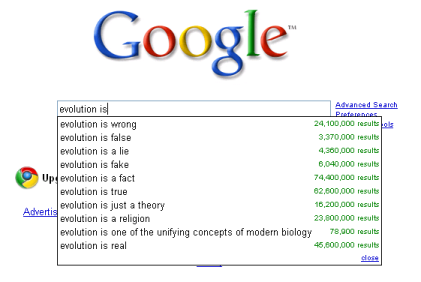
Initial results are not promising. There seems to be widespread skepticism of evolution for a start. This page is from the US version of Google:
‘Science’ doesn’t do much better, with “Science is a…” yielding “religion”, “lie” and “sacred cow” in the top ten suggestions (View image). Stem cells fare a little better, with “Stem cells are… good” being much higher up the suggestions list than “Stem cells are… wrong”.
Green issues are also controversial, with “Electric cars are…” yielding “for girls” and “a joke” alongside “the future” and “here”.
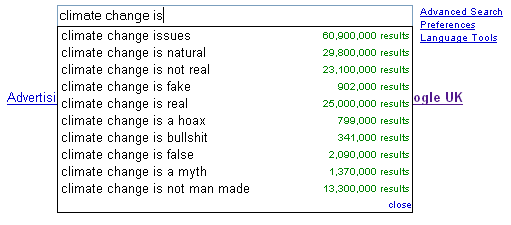
Searching for “Climate change is…” yields the slightly depressing “natural”, “not real”, and “fake” before you get to “real”. Things get worse from there.
But what do people who do trust science want to know about? The answer is, as Nature correspondent Emma Marris points out, almost poetic:
Scientific information about dogs
Scientific information about dreams
Scientific information about global warming
Scientific information about roller coasters
Scientific information about smoking
Hat tip: This blog post was inspired by this post from the UK political blogger Guido Fawkes.