
Part three of Emily Porter’s journey into science communication shows that the field is gaining momentum.
Contributor Emily Porter
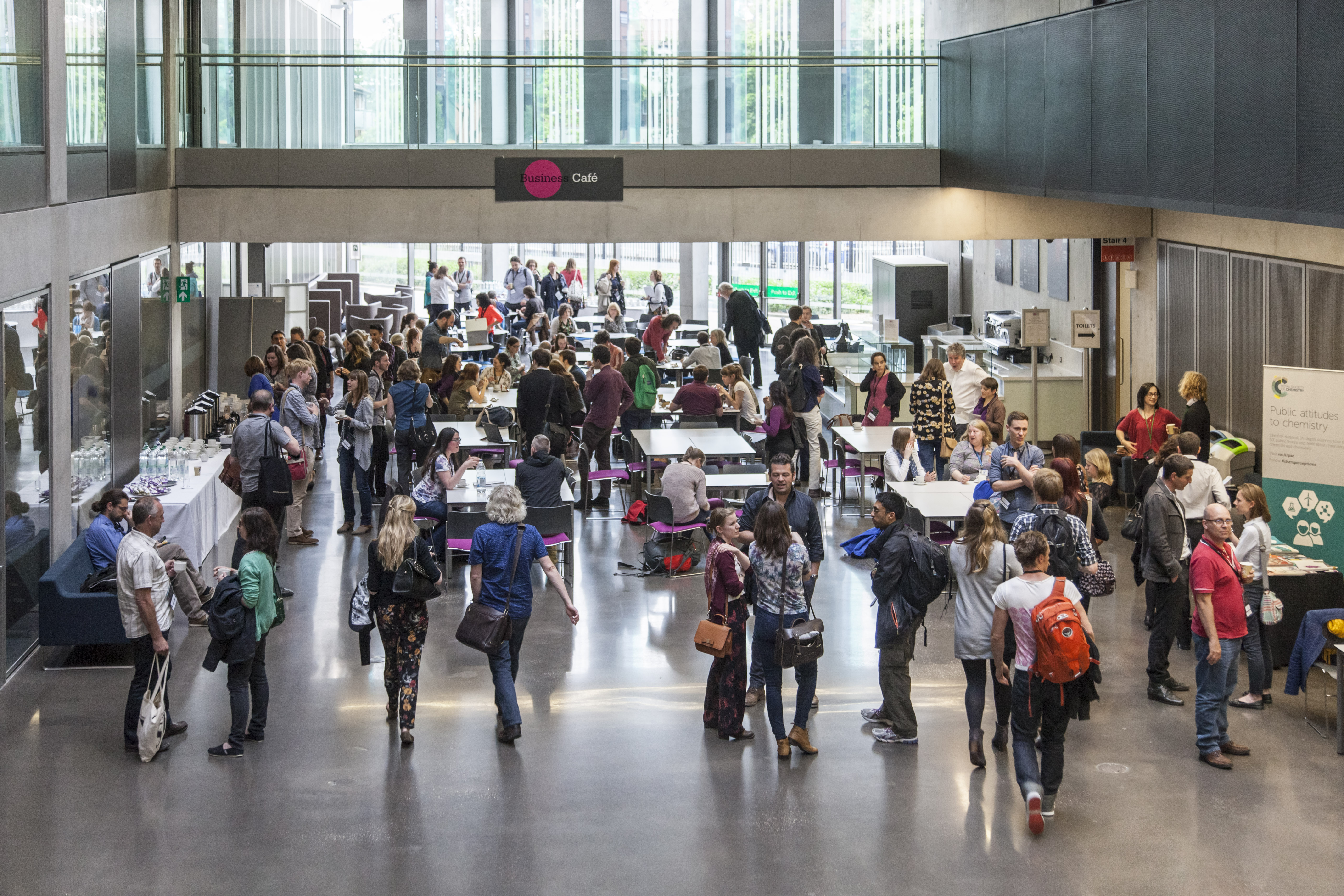
The British Science Association’s Science Communication conference is a great place to do some networking and meet like-minded people{credit}Image credit: British Science Association{/credit}
As part of the effort to be exposed to as much science communication as possible, I signed up to attend the British Science Association’s science communication conference in Manchester. All I can say is – WOW! It was initially slightly overwhelming to be thrown in at the deep end with so many people who had seemingly been doing ‘SciComm’ in one form or another for years. However, I quickly learnt that there was a hugely varied audience there, some with as little experience as me, with jobs ranging from university press or public engagement officers, radio broadcasters, scientists or entrepreneurs to name but a few.
A few common themes seemed to keep cropping up throughout the conference giving me plenty to think about, some more controversial than others. For example, there were arguments around whether we should create formal definitions of ‘science communication’ and ‘public engagement’. One thing that I found myself disagreeing with is the idea of introducing a formal qualification for science communication. Holding a relevant qualification on paper doesn’t always correspond to the necessary skills and ability required to do a job well in reality. Introducing a qualification would also require an organisation to head up the programme and act as a governing body, would this be the British Science Association or someone else? There are so many different ways in which you can do/contribute to science communication that I think many people are leaning towards other ways of recognising and rewarding achievements, rather than simply formalising the work.
Engage your audience. Jess Thom, better known as Touretteshero, was the first speaker of the event. The talk was funny and inspiring, and her tips for effective communication included using the laughter, open sharing, engaging the imagination and don’t always talk to the same people.
Face uncertainty. Scientists shouldn’t be afraid to fail or to express uncertainty. In fact, people should be recognised and rewarded for it as there is often intense pressure on scientists to succeed, produce results and solve problems. Maybe this fear is why, from May 2010 to June 2013, only two scientists have appeared on Question Time. This links up with the fact that we must be honest about what we do. Another attendee said that the questions she often gets asked by school pupils revolve around what she wears to work, whether she gets homework and so on.
Trust the ‘public’. Scientists need to trust the public more; it seems many scientists are pleasantly surprised by the response they get when they actually do interact with the public and admit they underestimated people’s opinions about science.
Support communication. How do we encourage and support people with regards to communicating their work? Should it be made compulsory for researchers? Someone stated that ‘every scientist should have a communication chaperone’. Whilst it is perhaps unfair to demand this, there are other ways in which scientists can be more indirectly involved. For example, this could involve writing a 200 word press release for the university website homepage as opposed to doing any face-to-face volunteering. It was felt that institutes should raise awareness earlier. When undergraduate and PhD students have the normal introductory workshops about how to use the library, how to reference etc, maybe a talk about public engagement opportunities should be included at this stage too. But it was not all serious debates. I also learnt that dry ice is a fail safe way to entertain school children (with the appropriate safety precautions, of course), as are bubbles.
Take home message. I left with the feeling that a new generation of young researchers are coming up through the system, and that maybe as the more ‘traditional’ professors move on, science communication will continue to gain momentum. For me personally, I vowed to try and dedicate more time to my very novice twitter account, inspired by the constant tweeting during the conference, and to think about how I can get more people in my office enthused about communicating their work.