Science communication: Keep it simple

Understanding your audience is one of the most important things in effective science communication.

Contributor Emily Porter
Bhagesh Sachania

{credit}Image credit: Bhagesh Sachania{/credit}

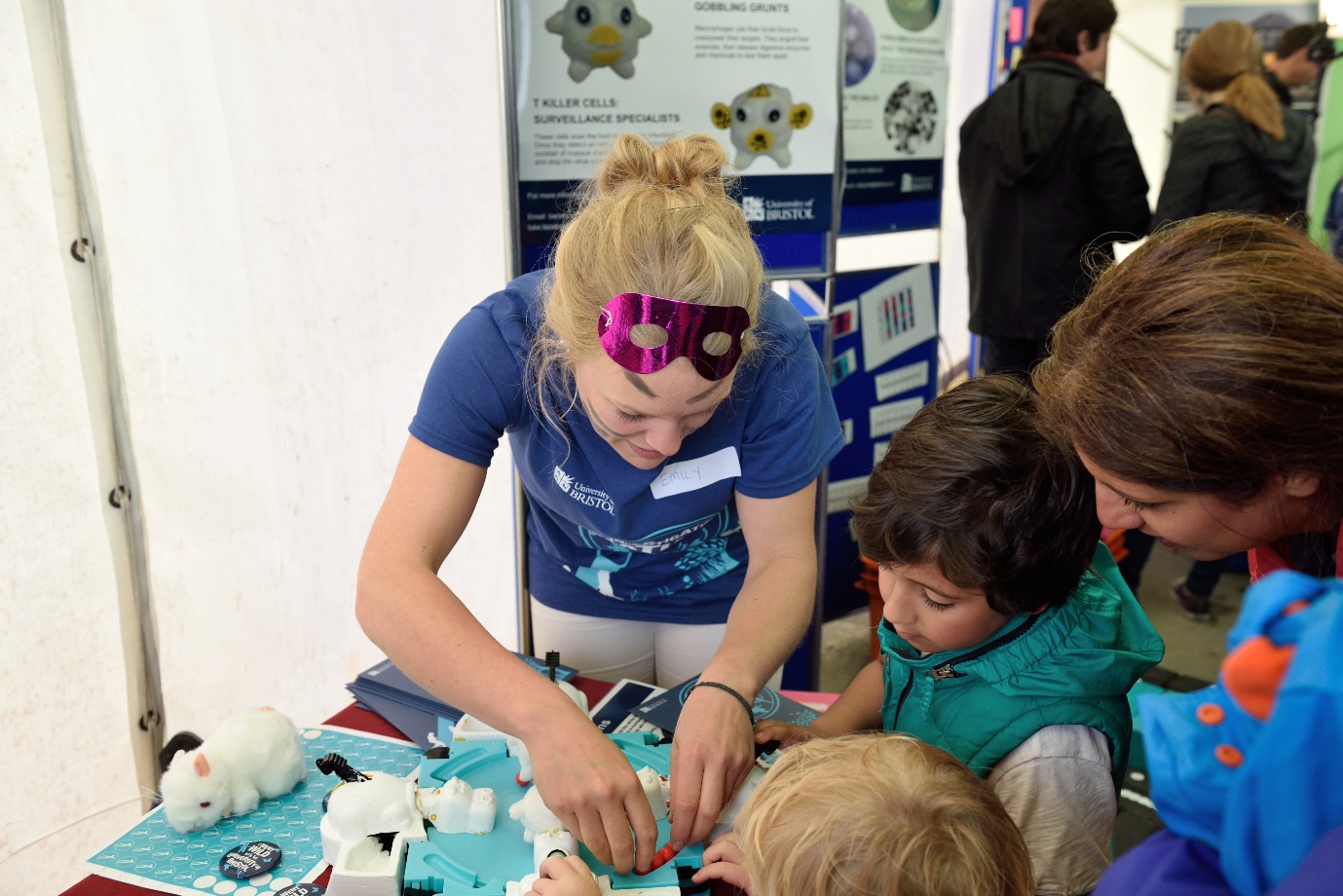
What do you get if you add foam yoga blocks, Hungry Hippos, scientists and kids together? A mixture of mayhem, learning and wonder.

Over the past few months I’ve been getting involved in the Bristol Festival of Nature, an event that celebrates all things science and nature.  Despite initially volunteering to help out more generally, I soon found myself agreeing to design and run an activity with a couple of PhD students, Luke Lazarou and Barney Wharam. We spent many hours discussing the best way to make virus epitopes and white blood cell receptors using foam bricks and genetic codes, and how we could modify Hungry Hippo games to become Hungry Macrophages games.

We were developing our activity for the Bristol University tent, which showcases the university’s research to a broad audience over three days, including one day when the Festival is open only to visiting schools. IIt was my first experience of developing an activity, and I wanted to share what I learned so that others looking to do some festival work can learn too.

Audience. It is crucial that you consider your audience. Visitors to the festival ranged from pre-primary school age children to grandparents, including science teachers and university staff, so our activity used varying difficulties of genetic sequences, from assembling simple colour sequences to interpreting amino acid tables, to cater for everyone. Never underestimate the amount of knowledge that can be picked up from everyday life; when children were asked if they knew what a virus was, answers varied from ‘like in a computer?’ to ‘a verruca’, and the term ’DNA’ was recognised from the TV series. Continue reading

Science communication: A new generation of communicators

Part three of Emily Porter’s journey into science communication shows that the field is gaining momentum.

Contributor Emily Porter

British-Science-Association-SciCommConf15

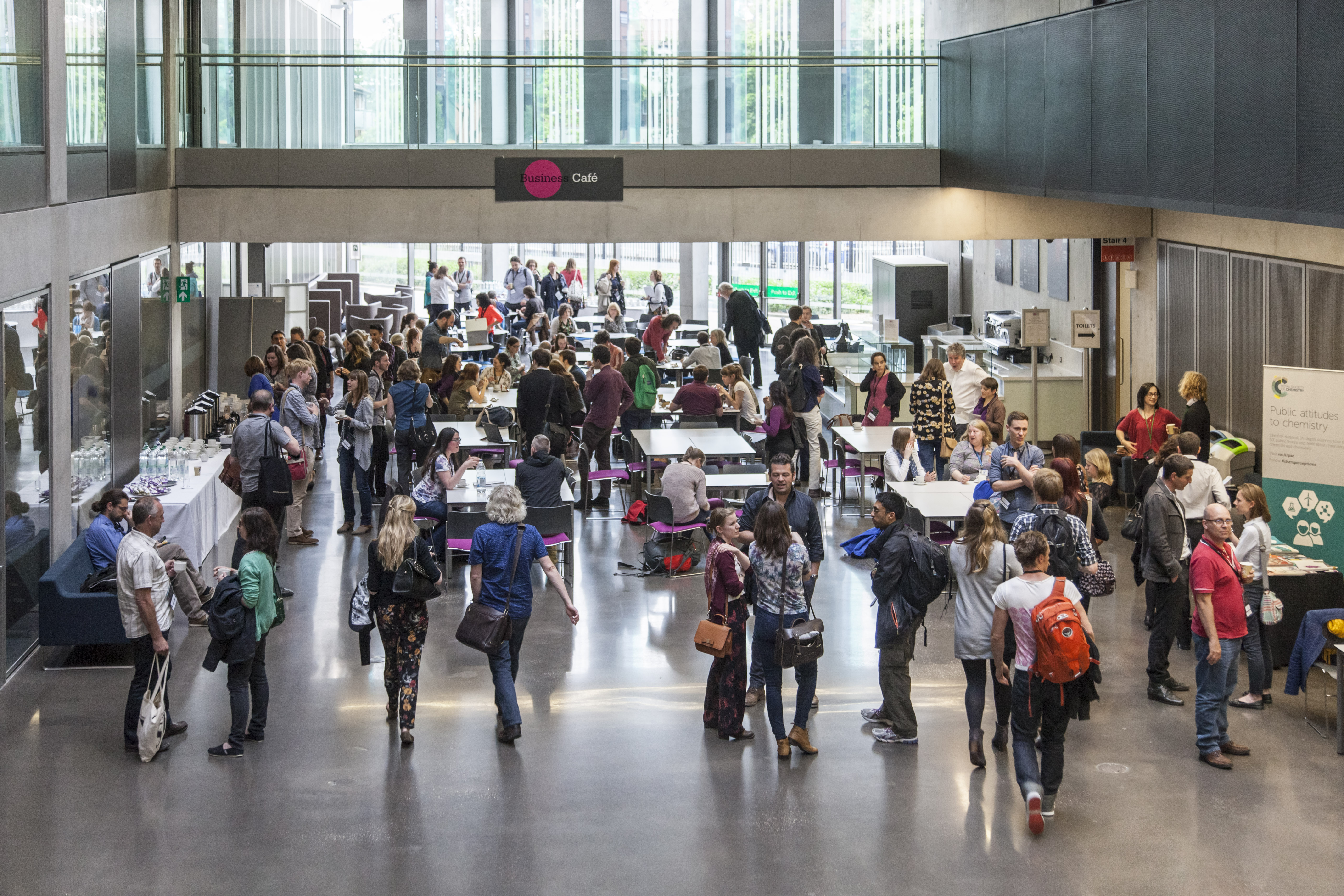
The British Science Association’s Science Communication conference is a great place to do some networking and meet like-minded people{credit}Image credit: British Science Association{/credit}

As part of the effort to be exposed to as much science communication as possible, I signed up to attend the British Science Association’s science communication conference in Manchester. All I can say is – WOW! It was initially slightly overwhelming to be thrown in at the deep end with so many people who had seemingly been doing ‘SciComm’ in one form or another for years. However, I quickly learnt that there was a hugely varied audience there, some with as little experience as me, with jobs ranging from university press or public engagement officers, radio broadcasters, scientists or entrepreneurs to name but a few.

A few common themes seemed to keep cropping up throughout the conference giving me plenty to think about, some more controversial than others. For example, there were arguments around whether we should create formal definitions of ‘science communication’ and ‘public engagement’. Continue reading

Science communication: Science in the media

Emily Porter shares the top five lessons she learned from a media training workshop with the BBSRC.

Contributor Emily Porter

newspaper-pile-naturejobs-blog-2

{credit}Image credit: Getty Images/Mateusz Zagorski{/credit}

Engaging with the media is important and is an effective way of communicating messages to millions of people worldwide. It provides the opportunity to enthuse and inform the public about your research, as well as the potential to create new collaborations, increase funding and add to debates.

These days, to get your research noticed, you need to be proactive. Part of this is getting your science out there using traditional media, such as TV, radio and newspaper but also social media, such as Twitter, YouTube, Tumblr and so on.

But where to start? I signed up for a media training day run by the BBSRC, which included practical sessions focussing on writing for the media and dealing with radio interviews, as well as theoretical sessions around social and digital media and working with your press office. Here’s what I found out:

Prepare. Think before you speak. Science journalists often have a reputation (albeit unfair) for reporting science inaccurately. However, a study by Sumner and colleagues, focussing on health related science news and portrayal by the press, found that much of the exaggeration in the media was already present in the press release complied by the research institute itself, based upon information provided by the scientists. Sign up for media training at your university or institute if they offer it. If not, check with your funding body as they may also offer courses to researchers. Continue reading

Work/life balance: Take a break

Take breaks to maintain manageable stress levels

Contributor Emily Porter

Is there a defined time and a place for science? Does science only happen at work and then you switch off when you leave the lab for the day? I don’t believe that for a second, and the majority of you will agree with me. There isn’t a distinct work/life balance for an academic researcher; science is a part of our lives, our passion for it defines who we are and we believe that we are honoured to have a career that allows us to feed our inquisitive nature and the need to solve problems.

There is no defined line between work and life for a scientist. Instead it is a series of intensities. Ranging from a 14 hour day working non-stop in the lab, to meeting with other academics and talking science, to chatting to someone at a party who asks what you do for a job, to discussing your day with your significant other, to total preoccupation with something else entirely.

The most important thing I learnt from my PhD is that it is ok to take a break. How can you expect to perform to your greatest potential if you are tired and stressed. In fact, my PI insisted that his students took time off. For me, this was sometimes as simple as finishing early on a Friday afternoon or taking an extended lunch break in the sun, or it could be a three week holiday planned for the summer. Continue reading