Career decisions: Too complex for the rational brain?

Combining our rational thought process and gut instinct may give us the best of both worlds, says Julia Yates at the 2015 Naturejobs Career Expo in London.

Guest contributor Catherine Seed
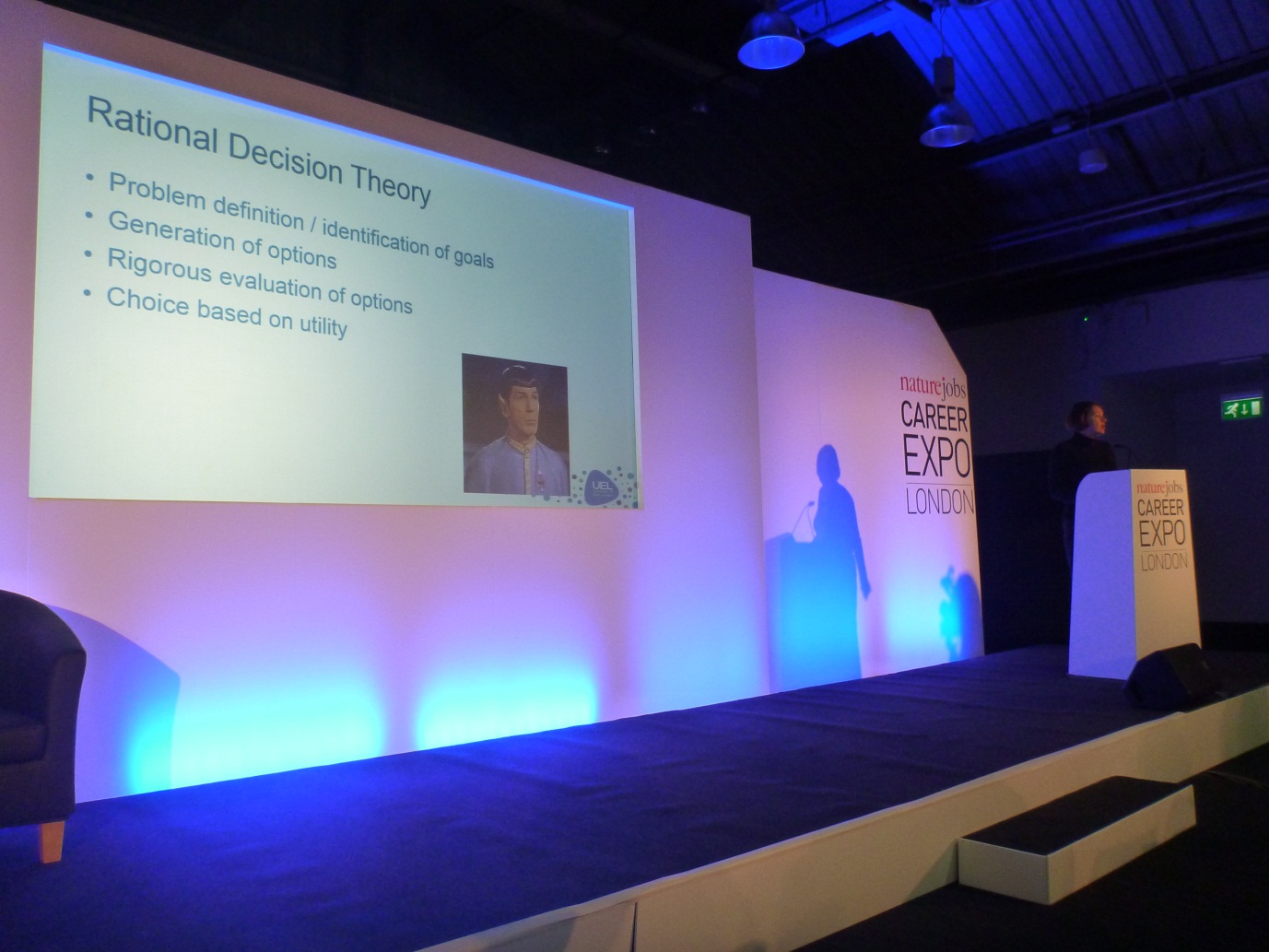
Yates-NJCE15-naturejobs-blog

{credit}Image credit: Catherine Seed{/credit}

Deciding on our next career move is a struggle over which many of us have lost sleep. Whether we stay within academia or decide to start looking beyond the ivory tower, there are many paths to choose from. Conventional wisdom stresses the importance of logically thinking through the decision and weighing the available options before we decide. After all, career decisions are life changing: it is important to take time and care in making them, isn’t it? Well, maybe not. This rational approach may leave us unhappier in the long term, argues Julia Yates, a psychologist and career coach at the University of East London, UK.

While the idea of keeping career options open has traction, the reality is that there are more options than we can properly evaluate. “Actually, our brains can cope with about six,” Yates said. She noted that the UK Office of National Statistics recently catalogued some 37,000 available job titles, far more than can be rationally assimilated at once. Continue reading

Science communication: Sculpting your role

The field of science communication is highly varied, so don’t be afraid to find what works for you, says the panel of experts in science communication at the 2015 Naturejobs Career Expo in London.

Guest contributor Catherine Seed

science-communication-NJCE15-panel-naturejobs-blog

Left to right: Robert Dawson, Catherine Ball, Anke Sparmann and Belinda Quick{credit}Image credit: Catherine Seed{/credit}

Science communication is rapidly becoming a core requirement for scientists, and has long been a highly sought-after career in its own right.

There is a huge breadth and diversity in the field of science communication, agreed the panel members, yet the use of ‘science communication’ as an umbrella term often obscures this variety.  Panellists agreed that the key to developing a successful science communication career is in finding how you prefer to communicate, and determining which avenues of communication match your style. With options ranging from news reporting to working for academic institutions or societies, or in simply starting your own blog, the options are countless. The process, they said, requires much experimentation; test different forms of communication to discover what works best for you.

The objectives of organisations shape the form of communication that they use, said Robert Dawson, head of news at the BBSRC. He stressed the importance of familiarising yourself with different media outlets, universities, research institutions, and companies and their communication style.  In his own role, he communicates to scientists, journalists and other members of the media. “Science PR is about balancing the need to encourage the public to be enthusiastic about your organisation and about science, with the need to produce accurate and balanced coverage,” he said. Continue reading

Science communication: Lessons from improvisation

Improvisation techniques can help scientists hone their key messages when addressing peers at conferences, says Catherine Seed.

Guest contributor Catherine Seed

audience-naturejobs-career-expo-Boston-15

Robert Langer presenting at the 2015 Boston Naturejobs Career Expo{credit}Naturejobs{/credit}

You’ve spent weeks in the lab collecting, processing and analysing your data, and you’ve filed for publication. All this work took a lot of effort, time, organisation and collaboration (and coffee). Finally, you are now free to show the data to the world at the next conference (or most probably to your research group).

This step might seem like the easiest part. Once you know the results, you can share them. Talk about them until the cows come home. After all, you’ve just spent years working on them. You know them better than anyone else.  Yet it seems impossible to cram all you know – the intricacies of your study, the broader context, the unexpected results, the side-projects, how the variables link together – into a 15 minute talk at a conference! Which points should you make, and with what detail? And how? How is a presentation structured again? Continue reading