
How to bring your hard-earned data from the lab to the world.
Contributor Anthea Lacchia
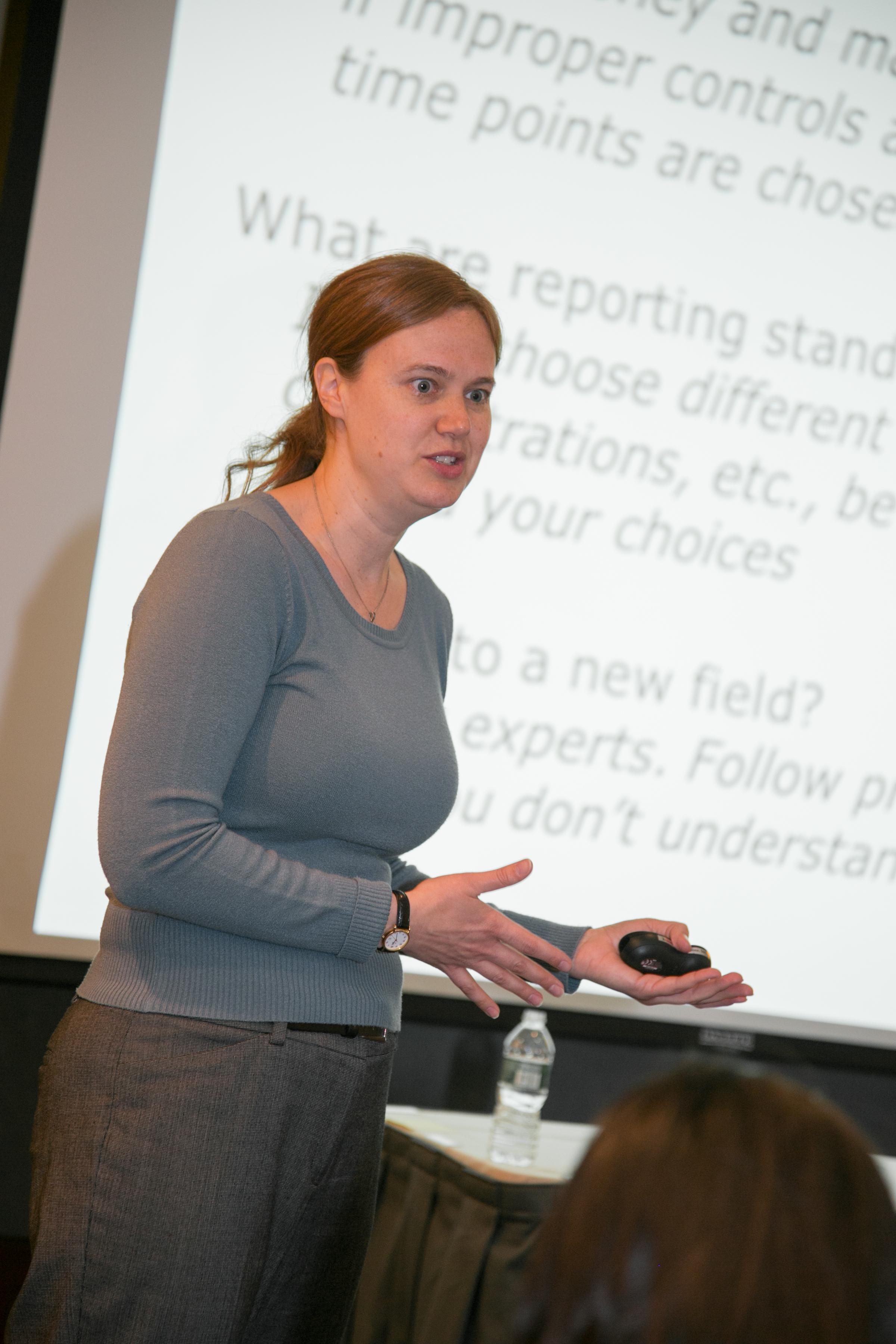
Catherine Goodman
Amongst the scientific community, there is increasing awareness of the value of data transparency and reproducibility. But how can we achieve transparency in practical terms? Catherine Goodman, Senior Editor at Nature Chemical Biology, delivered a workshop on handling scientific data during the Boston NatureJobs Career Expo 2015.
“Careful experimental design is the foundation of data transparency and will also avoid wasting time with referees later on,” said Goodman. Different scientific fields have different requirements as to how much data are needed to make meaningful interpretations and how they should be collected, so it is important to be aware of your community’s standards.
Keeping good records can help clarify why a given experiment didn’t work. “If you are collecting data in a field new to you, it is useful to consult the experts in the field, follow protocols and collect all the data you can,” Goodman said.
Proper training in the lab and good communication among team members is fundamental to achieving high standards of data collection and interpretation. In fact, many of the papers that end up on Retraction Watch, a blog that reports on retraction of scientific papers, are born out of a disconnect between PI and postdoc or trainee. “Getting the killer paper is not as important as doing science properly and rigorously, because you want to contribute positively to the scientific community, not find yourself on Retraction Watch,” Goodman said. Continue reading