
Cross-posted with permission of OUPblog.
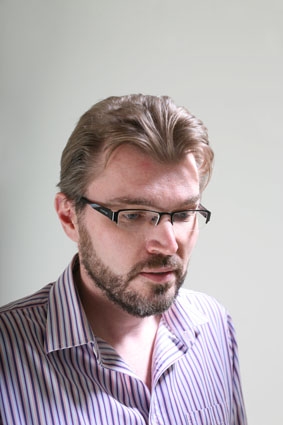 Vlatko Vedral is at the University of Oxford and the Centre for Quantum Technologies, National University of Singapore. His popular book “Decoding Reality: The Universe as Quantum Information” (recently reprinted in paperback by Oxford University Press) discusses many aspects of the relationship between information, thermodynamics and physics.
Every time physicists face experiments that cannot be explained with the existing theories they have to decide which aspects of these theories to keep and which to throw away. Planck, when faced with the inability of classical physics to explain black body radiation, decided to keep the laws of thermodynamics, but threw away the assumption that energy is continuous (which is an integral part of Newtonian mechanics). Similarly, Einstein, when trying to explain the inability of the Michelson and Morley experiments to detect Earth’s motion through the ether, kept the Newtonian assumption that the laws of physics should be the same in all reference frames, but he also introduced the invariance of the speed of light in different reference frames (a fact that is naturally encoded into Maxwell’s theory of electro-magnetism, but not Newtonian physics). Continue reading