
What you always wanted to know about histones

Nature Methods and Nature Biotechnology will host a live discussion on why histone modifications matter in health and disease.

Some call it a code, some call it a language. The fact is that core histone proteins that make up the nucloeosme can be modified by a range of post translational modifications (current tally is 16) and that these PTMs, individually or collectively, send a message to the transcription machinery, either attracting or repelling it.

If you have wondered about the nature of the histone code, if you have questions about the importance of its writers, readers and erasers, or wonder how these are changed in some diseases and what can be done about it, an upcoming webcast will give a chance to raise these questions.

On February 26 we will discuss the importance of histone modifications from two aspects. First:  What is the biology behind it? Which enzymes write the code and how important is crosstalk between different modifications?  Second: How can one efficiently target these enzymes to fight disease?

Ali Shilatifard and James Bradner

Our speakers, Ali Shilatifard and James Bradner, will present their views and then they will engage in a live discussion fueled by questions from the audience.

Sign up for the webcast, and post your questions here before February 26, or during the webcast on the event website.  Either way, we will try our best to get them answered.

Note: The live webcast has now concluded. Anyone who wants to see it may still register at the link above and view a recording of the webcast at their leisure.
Fluorescent Proteins and Sensors Webinar – Questions & Answers

Our very first webinar is now live. The topic is “Fluorescent protein and sensors: A practical discussion” and you can register to view it at www.nature.com/webcasts/fluorescent_proteins. Update: Registration link inactivated. Please go here to listen to the archived discussion in .mp3 format.

Nature Methods was joined by Robert Campbell, David Piston and Thomas Knopfel who have been developing and using fluorescent proteins and sensors for years. We had a nice discussion that provided good practical information for users of these tools. If you haven’t watched it, I encourage you to do so. If you watch the webcast within the first month it is live you have the opportunity to submit questions for our participants. Please use the form on the webcast viewing page to submit questions. There will be a delay in providing answers here on our blog while we consult with the participants.

Participants in fluorescent proteins and sensors webinar

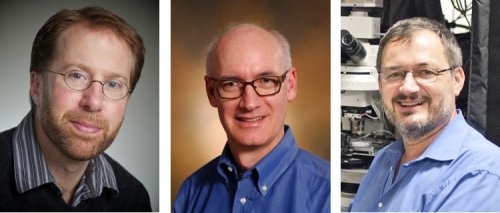
Our participants: Robert Campbell, David Piston and Thomas Knopfel

Here we will be posting the questions we receive and answers from our participants. Readers may also comment directly on the blog below but we can not guarantee that any questions asked there will be answered. We do encourage anyone in the community to chime in with their response to any questions that are posed, even if they don’t agree with our participants.