False alarm of cosmic blast sends astronomers racing to telescopes

UPDATE: A message posted “on behalf of the Swift-XRT team” on NASA’s Gamma-ray Coordinates Network (GCN) system at 8:57 a.m. BST on 28 May says that the astronomers now “do not believe this source to be in outburst”.  Swift team member Kim Page, a nova and γ-ray-burst astronomer at the University of Leicester, UK, told Nature that the source had been initially mistaken for a new outburst, and that its intensity had been overestimated owing to measurement error. Instead, she says, it was a relatively common, persistent X-ray source — possibly a globular cluster — that had previously been catalogued. (See this post from Page’s Leicester colleague Phil Evans.)

NASA’s Swift satellite has detected a burst of high-energy γ-rays coming from the Andromeda galaxy, the closest large galaxy to the Milky Way. The rare cosmic explosion is likely to deliver a flood of data to astronomers, who are swivelling their telescopes to capture its aftermath.
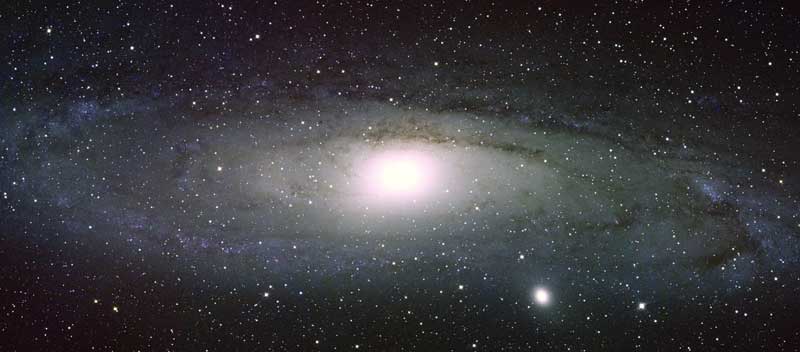
The Andromeda galaxy. Credit Bill Schoening, Vanessa Harvey/REU program/NOAO/AURA/NSF.

The Andromeda galaxy. Credit Bill Schoening, Vanessa Harvey/REU program/NOAO/AURA/NSF.

Swift watches for γ-ray bursts and, if it detects one, the satellite automatically redirects to try to capture the source. The trigger went off at 9:21 p.m. Universal Time on 27 May; three minutes later, the X-ray telescope aboard Swift was already observing a bright X-ray glow where none had existed before.

News of the event rippled across the astronomical community. Within minutes the Swift data servers had crashed, leaving the official news mirrored in unofficial locations.

The closeness of the blast — just 766,500 parsecs (2.5 million light-years) away, a neighbour in cosmic terms — had astronomers speculating whether neutrino observatories, such as the IceCube detector in Antarctica, might pick up the event.

The burst may have originated when two ultra-dense neutron stars collided. If so, it probably would have generated gravitational waves — ripples in the fabric of space time, predicted by Einstein — zooming across the cosmos. Unfortunately, the machines best suited to detect such gravitational waves are currently offline. The US Laser Interferometer Gravitational-wave Observatory (LIGO) is in the midst of a multi-year, US$200-million upgrade to a more sensitive system. Two weeks ago, astrophysicist Gabriela Gonzalez of Louisiana State University in Baton Rouge speculated on the possibility that a nearby supernova — an exploding star, sometimes connected with γ-ray bursts — could go off during the LIGO upgrade. “My nightmare is that it happens before we turn on,” she said.

Another possibility, says astrophysicist Robert Rutledge of McGill University in Montreal, Canada, is that the blast is an ‘ultra-luminous’ X-ray source, a class of objects less bright than a galaxy heart but more bright than ordinary stars.  If so, then the X-rays are likely to be visible for days to come, rather than half a day as one might expect from a γ-ray burst.

Whatever caused it, the Andromeda blast occurred some 2.5 million years ago. Its energy has been travelling towards us ever since.

Moon dust probe crashes

LADEE

The LADEE mission has ended in a controlled crash.{credit}NASA{/credit}

A NASA spacecraft that studied lunar dust vaporized into its own cloud of dust when it hit the Moon, as planned, in a mission-ending impact on 17 April. Launched last September, the Lunar Atmosphere and Dust Environment Explorer (LADEE) finished its primary mission in March. In early April, on an extended mission, it made close passes as low as 2 kilometres above the surface, gathering data on more than 100 low-elevation orbits. Mission controllers deliberately crashed it to avoid the chance that, left alone, it might crash and contaminate historic locations such as the Apollo landing sites.

During its lifetime, LADEE made the best measurements yet of the dust generated when tiny meteorites bombard the surface. It is still hunting the mystery of a horizon glow seen by Apollo astronauts. It also carried a test for future laser communications between spacecraft and Earth.

In its final days the probe unexpectedly survived the cold and dark of a total lunar eclipse on 15 April. Just before the eclipse, NASA had the spacecraft perform a final engine burn that determined the crash trajectory. LADEE normally coped with just one hour of darkness every time it looped behind the Moon. The eclipse put it into darkness for some four hours, potentially jeopardizing the ability of its battery-powered heaters to keep the spacecraft from freezing to death. But the spacecraft survived.

NASA has been running a contest to predict the exact date and time of the LADEE impact, and this morning predicted there may be multiple winners. When it hit, the probe was travelling about three times as fast as a rifle bullet. In the coming months the Lunar Reconnaissance Orbiter will take pictures of the crash site, which engineers are still determining.

NASA lays out long-term vision for astrophysics

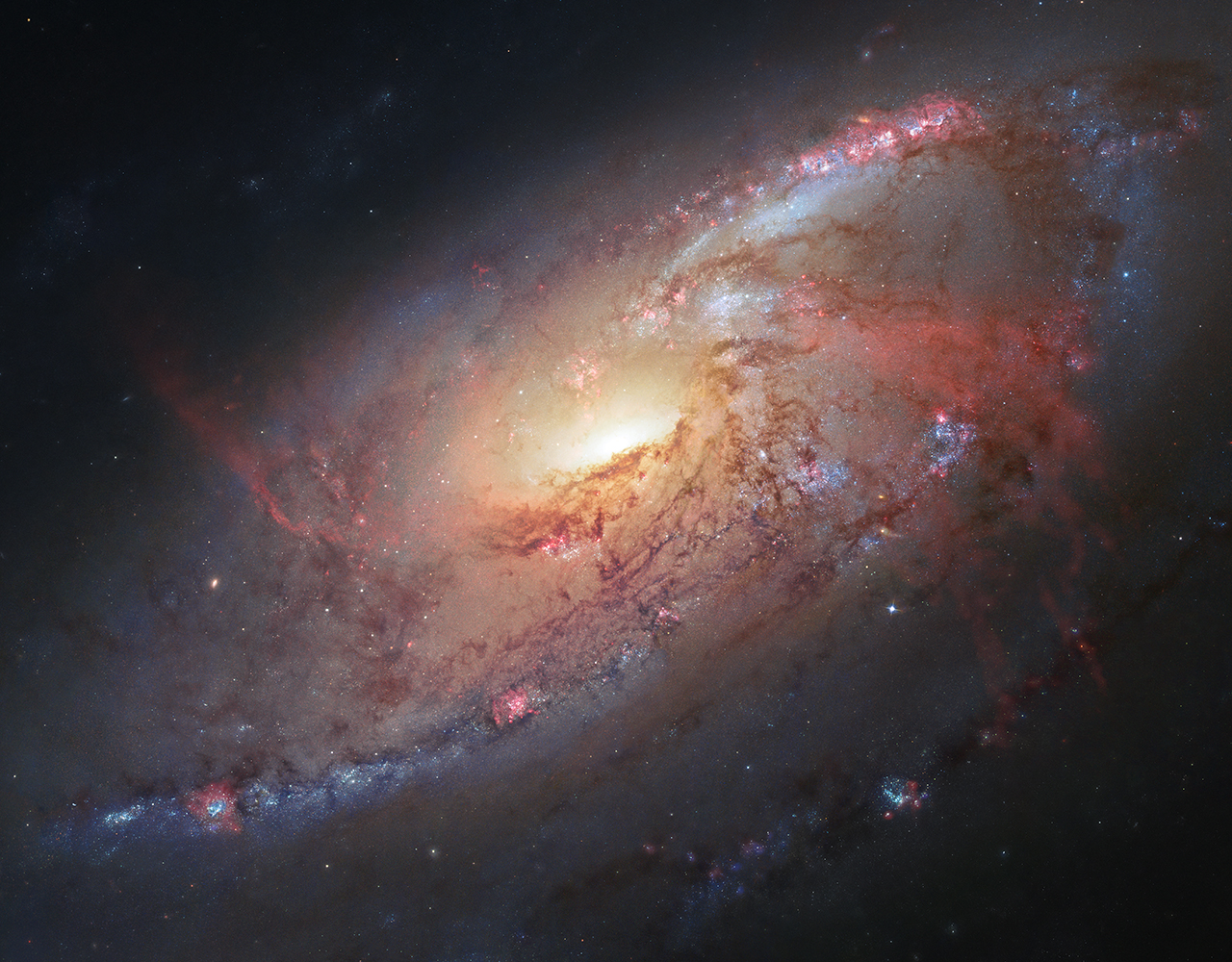
M106A new year is a good time to make long-term plans, and NASA has jumped into the deep end of planning. On 20 December the US space agency’s astrophysics division released a wish list of future space missions — looking three decades into the future, and even beyond.

The new ‘astrophysics road map’ is notable not because it restates broad and popular themes it thinks scientists should pursue, such as ‘Are we Alone?’, ‘How Did We Get Here?’ and ‘How Does Our Universe Work?’, but because the report, compiled by a team led by NASA’s Chryssa Kouveliotou, also lays out the technologies needed to help missions answer these broad-brush questions.

Breaking down the next three decades into 10-year increments, the road map notes that ‘near-term’ projects for the next decade are already slated, such the European Space Agency’s Gaia mission that launched this week and the James Webb Space Telescope, slated for a 2018 liftoff. For the decade that follows, the report lays out notional missions spanning the electromagnetic spectrum, from a microwave mission studying the polarization of the cosmic microwave background left over from the Big Bang, through infrared and optical light all the way to X-rays. Looking out 20–30 years from now, the road map aims even broader, at a series of ‘mapper’ missions targeting Earth-like planets, black holes, cosmic dawn and gravitational waves.

It won’t be easy. Today’s technologies simply aren’t suited to future mission needs. For the most part, the road map notes, “our methods of building space telescopes have not progressed much beyond building and testing a ground-based telescope and rocketing it into space”.  That’s bad because materials and optics behave very differently in an Earth-bound lab than they do in the zero-gravity environment of space. “The key to bigger and better space telescopes may rely, instead, on assembling and testing telescopes on-orbit,” the team writes.

One idea is to develop flexible membranes that could be used to collect light in place of monolithic mirror glass. Another is to use three-dimensional printing to manufacture components directly in orbit; such a printer is slated to fly to the International Space Station next year, in the first test in space for this technology.

Finally, future missions will probably rely heavily on interferometry, in which multiple telescope inputs are combined to create much sharper images than any individual telescope could produce. To pull this off in space, engineers will need to develop precise ways to fly spacecraft in tandem and to improve laser measurements to combine the inputs from the different craft and produce the final image. Pulling off any of the missions in the 20- to 30-year time frame will require massive advances in this area, the road map notes.

Now it’s up to NASA to see if it can fulfill such dreams. With ongoing funding difficulties, that’s far from a sure bet.

China mission on its way to the Moon

China’s lunar rover is on its way to the Moon. The Chang’e-3 spacecraft lifted off successfully in the wee hours of 2 December from the Xichang launch centre in Sichuan.

China's lunar probe as seen against the limb of the Earth.

China’s lunar probe as seen against the limb of the Earth.{credit}CCTV{/credit}

A Long March 3B rocket lofted the probe into Earth orbit and then on a trajectory directly towards the Moon. As the rocket separated, a camera on board captured spectacular images of Chang’e-3 on its way (pictured).

Barring disaster, the probe is expected to reach lunar orbit in about four days. A date for the rover’s landing on the surface has not been officially announced, but it is expected to take place around 14 December. The landing site is thought to be the Sinus Iridum region on the lunar near side.

Chang’e-3 represents the first rover to visit the Moon since the Soviet Lunokhod-2 mission in 1973, and the first soft landing of any kind since the Soviet Luna-24 mission in 1976.

Chang’e-3 follows two earlier Chinese lunar orbiters. It carries a six-wheeled rover named Yutu, the ‘jade rabbit’ companion of the Moon goddess Chang’e. Its scientific instruments include cameras, an ultraviolet telescope and an X-ray spectrometer mounted on a robotic arm.

In other space developments, the Indian Space Research Organization conducted a rocket burn aboard its Mars Orbiter Mission — India’s first Mars probe — on 1 December. That probe had been circling Earth since its launch last month. It is now headed for Mars, with an expected arrival in September 2014.

US ocean drilling ship gets a new lease on life

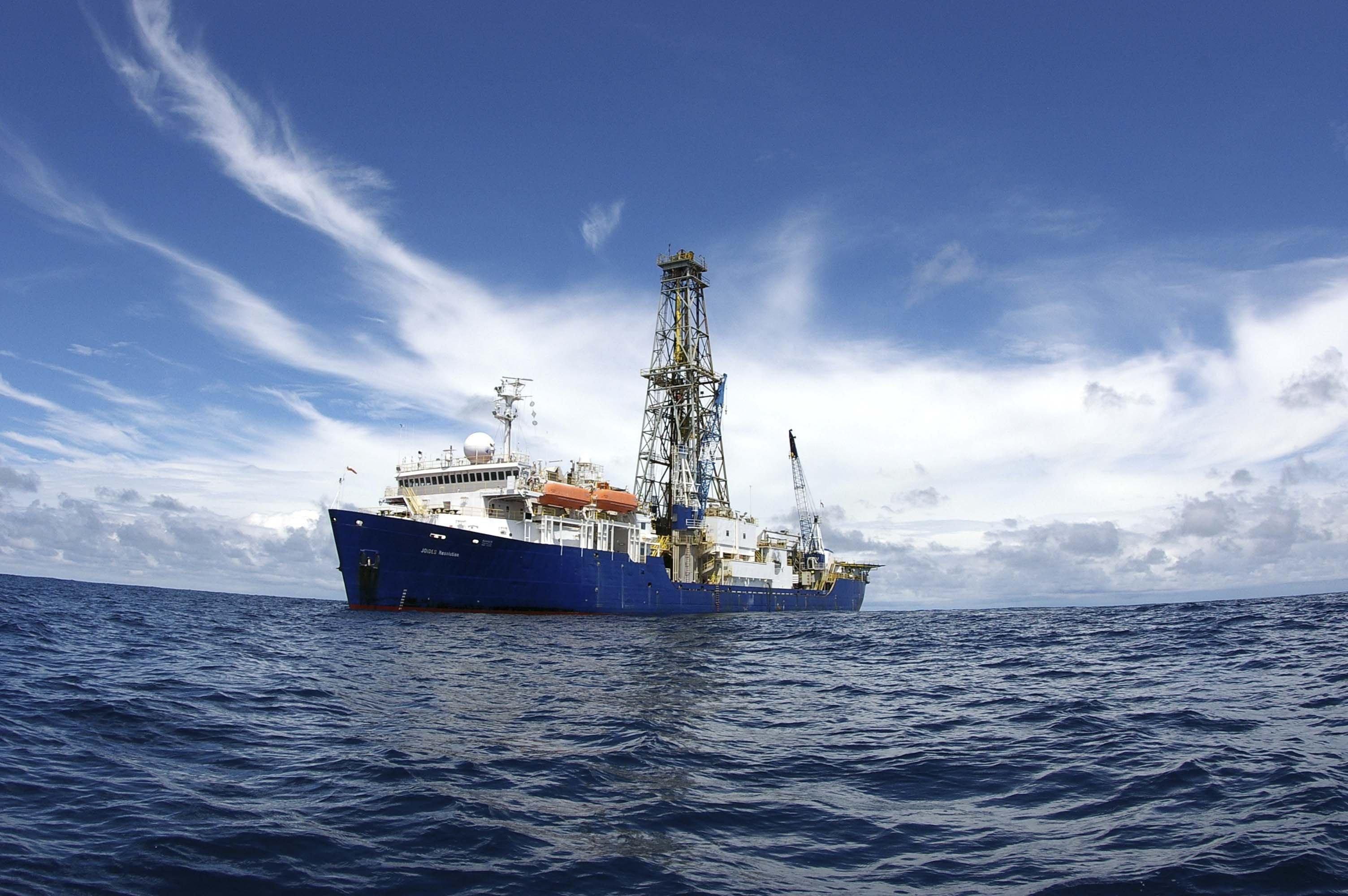
The JOIDES Resolution.

The JOIDES Resolution has drilled in all of the world’s ocean basins.{credit}Arito Sakaguchi{/credit}

The US National Science Board has approved funding for the next five years for the JOIDES Resolution, the research vessel that is a cornerstone of international scientific ocean drilling.

The Resolution’s future had been in doubt given that its funder, the ocean sciences division of the National Science Foundation (NSF), is facing excruciatingly tight budgets.

As Nature reported in September, the NSF had considered slashing money for the vessel, which could have left it doing science for fewer than the current seven to eight months a year.

In a vote today, the board authorized the NSF to spend as much as US$250 million over the next five years to operate the Resolution. That amount will be supplemented with $87.5 million from other countries. Together the funds could allow the Resolution to conduct four two-month expeditions per year for the next five years.

“This is a great outcome given the budgetary realities,” says Keir Becker, a marine geologist at the University of Miami and chair of the International Ocean Discovery Program (IODP) forum, a coordinating body for the drilling effort.

The IODP is the overarching collaboration framework for scientific ocean drilling. It relies on a combination of the Resolution, the Japanese drillship Chikyu, and vessels hired by a European research consortium to collect deep-sea drill cores. The IODP and its predecessor programmes have gathered invaluable information on paleoclimate, natural hazards, and other geological insights that otherwise would be hidden beneath ocean waters.

David Conover, head of the NSF ocean sciences division, notes that the board decision is an authorization, subject to how much money Congress actually grants the NSF in future years. “We are under a great deal of constraints, but we are trying to get as much drilling in as we can,” he says. “We are trying to get as much bang for the buck for all of our programmes.” A decadal review of US ocean sciences priorities is slated for completion in April 2015; it would likely guide future decisions involving the Resolution and other US oceanographic facilities.

Under the new approval, the Resolution will continue to be operated by Texas A&M University in College Station.

The ship is currently in dry dock in the Philippines, undergoing routine maintenance checks. It was unharmed by the recent Cyclone Haiyan, and will pick up its science schedule again in January, with an expedition to study the tectonics of the South China Sea.


Research fleet stays partly afloat

The docks in the coastal town of Newport, Oregon, are usually bustling. Fishermen take their boats out to harvest from the bountiful Pacific Ocean, and research vessels zip back and forth beneath the arched Yaquina Bay Bridge. But these days, Newport’s harbour is pretty quiet, says Clare Reimers, an oceanographer at Oregon State University in Corvallis.

photo

NOAA research vessels in Newport, Oregon, in July. {credit}Alexandra Witze{/credit}

The US National Oceanic and Atmospheric Administration (NOAA), whose Pacific fleet is based at Newport, is now shut down, along with the rest of the US government. NOAA vessels, including the agency’s Atlantic fleet in Norfolk, Virginia, are mostly stuck at their home bases.

When the shutdown began on 1 October, some active ships were recalled to the closest port available — which was in Kodiak, Alaska, in the case of the Oscar Dyson, which lost its opportunity to pick up oceanographic research buoys in the Gulf of Alaska. NOAA’s best known research vessel, the 84-metre Ronald H. Brown, is trapped in Natal, Brazil, which it reached after completing a hydrography cruise from Iceland to Brazil.

Other research vessels are in better shape. The bulk of US academic oceanographic research is done aboard 19 ships coordinated by the University-National Oceanographic Laboratory System (UNOLS), which oversees ship scheduling among various federal agencies and university partners. UNOLS is funded through the end of December, says its executive secretary, Jon Alberts, and no scheduled cruises have been cancelled.

That includes a training cruise for early career scientists that Reimers is leading next week aboard the Endeavor, a vessel owned by the US National Science Foundation (NSF) and operated by the University of Rhode Island in Providence. Similarly, the Atlantis and Knorr run by the Woods Hole Oceanographic Institution in Massachusetts are working as planned, says ship scheduler Eric Benway. The Atlantis is off the coast of California conducting sea trials for the newly renovated Alvin manned submersible.

Still, even the UNOLS fleet has run into shutdown-related problems. The Marcus Langseth, run by the Lamont-Doherty Earth Observatory outside New York City, has a small leak in one of its shaft seals. Repairs, which must be approved by the NSF, have been delayed, so a Gulf of Mexico cruise scheduled for later this month is now on hold.

Beyond NOAA and UNOLS, the picture for the US research fleet remains mixed. The JOIDES Resolution, an NSF-funded drill ship that is facing unrelated budgetary problems of its own, happens to be between expeditions, which will not resume until 26 January 2014.  But the US Antarctic Program, which is in the process of mothballing research for the upcoming field season, faces challenges with its two icebreakers.

Eugene Domack, a cryosphere specialist at Hamilton College in Clinton, New York, has planned for the past five years for a cruise aboard the icebreaker Laurence M. Gould. Last Thursday he was informed via e-mail that the cruise had been suspended. The Gould is involved in relocating staff at Palmer Station on the Antarctic Peninsula; when the government reopens, programme managers will have to decide whether to use the ship to help staff the station back up send it out for previously scheduled science.

Domack does have a second cruise lined up, aboard the Nathaniel B. Palmer in March — and that, fortunately, leaves from Hobart, Tasmania. Even so, the equipment he needs may be stuck in US logistical limbo.

US astronomy organization plans closure of Arizona scopes

The National Optical Astronomy Observatory (NOAO), an organization based in Tucson, Arizona, that runs a number of major ground-based telescopes, is preparing to furlough its employees in Arizona if the US government shutdown continues past 18 October — but it will keep workers on in Chile.

Telescopes atop Kitt Peak, in Arizona, include the NOAO's 4-metre Mayall telescope (foreground).

Telescopes atop Kitt Peak, in Arizona, include the NOAO’s 4-metre Mayall telescope (foreground).{credit}NOAO/AURA/NSF{/credit}

Chilean labour laws forbid putting employees on involuntary unpaid leave, says David Silva, director of the NOAO. “We are making a triage decision that says we will continue Chilean operations.”

The majority of the NOAO’s budget — US$25.5 million out of $38.2 million for the fiscal year that ended on 30 September — comes from the US National Science Foundation. It is managed through an agreement with the Association of Universities for Research in Astronomy, which posted a 9 October update on its website laying out the operational plans for its facilities. The NOAO is the first on the list to be affected by the federal shutdown — a consequence, Silva says, of how the various operating agreements work. The Hubble Space Telescope and the Gemini telescopes, for instance, are listed as good through at least 31 October. “Somebody had to be first,” Silva says.

About two-thirds of the NOAO’s payroll is spent in Arizona, and one-third is spent in Chile. If Arizona employees are furloughed later this month, Silva says that the organization can limp along until the end of November maintaining its contractual obligations in Chile. After that, all bets are off.

In Chile, the NOAO runs the Cerro Tololo Inter-American Observatory, which includes the 4-metre Blanco telescope where a dark-energy survey is now under way.

If the NOAO’s Arizona facilities close, a minimal staff will maintain security and keep the properties physically safe, Silva says. This would include telescopes atop the famed Kitt Peak southwest of Tucson, such as the 4-metre Mayall telescope. Other telescopes at Kitt Peak that are not managed by the NOAO would remain open as their operators deem fit. “We will maintain access to the mountain for tenant observatories,” says Silva. Such facilities would include the McMath-Pierce solar telescope that belongs to the National Solar Observatory, which itself may run out of operating funds on 31 October.

Student projects interrupted by US shutdown

It was to have been an exciting three-month research visit. Siddharth Hegde, a PhD student at the Max Planck Institute for Astronomy in Heidelberg, Germany, had lined up a trip to NASA’s Ames Research Center near San Francisco, California. Hegde is an astronomer who models atmospheres on extrasolar planets, and he was planning to study the optical properties of extremophiles — organisms that thrive in extreme environments — during his sojourn.

But then the US government shutdown hit. Hegde, who had carefully nurtured and grown his extremophiles, had to pack up his things and walk out of the Ames lab. Without someone there to oversee the cells and feed them regularly, the extremophile cultures are now dying. (The seed cultures, gathered from hostile environments such as the Atacama and Mojave deserts, remain safe in deep freeze.)

“To go from seed culture to see them grow takes some time,” says Hegde. “Some of these organisms were taking a long time to grow, and if all of these die then I have to start again and wait another month.”

Time is precious because Hegde, an Indian citizen, has a three-month US visa. When that expires at the end of November, he will have to go back to Germany and re-apply if he wants to return — even as other work there requires his attention. “It’s not a question of money right now,” he says. “It’s time. There is no substitute for time.”

For now Hegde is hunkered down at his uncle’s house in northern California, logging into his German research projects and trying to get some work done remotely on those. But he cannot help but think about the organisms languishing in the lab nearby. “The whole field of astrobiology is so hot right now,” he says. “If I don’t finish my work, then that work is lost. Someone else will do it and someone else will get the credit for it.”

Even so, Hegde knows it could be worse. Some of his friends, who are also visiting students at Ames, got kicked out of their NASA dormitory-style housing and struggled to find places to stay, in an unfamiliar city and on short notice, when the dorms closed down. And Hegde’s adviser at Ames, astrobiologist Lynn Rothschild, has found herself at loose ends trying to advise a student team she had mentored for months before the shutdown. Those students, from Stanford and Brown universities, work at the Ames centre in the summer developing a synthetic biology project.

The team competed last weekend in the International Genetically Engineered Machine (iGEM) contest in Toronto, Canada, but Rothschild was technically barred from communicating with them. They did, however, advance to the next round of the iGEM competition.

US radio telescopes to close

The National Radio Astronomy Observatory (NRAO) is shuttering all of its North American facilities as of 7 PM Eastern time on 4 October, thanks to the government shutdown.

VLAsnowHenryNewton_large

{credit}Henry Newton; NRAO{/credit}

Telescopes to be closed include the Karl G. Jansky Very Large Array and the Very Long Baseline Array outside Socorro, New Mexico, plus the Robert C. Byrd Green Bank Telescope in West Virginia. All are iconic radio telescopes with active observing programmes.

After the government closed on 1 October, the NRAO had about a week’s worth of operating funds that carried it until today, says Anthony Beasley, director of the NRAO, which is based in Charlottesville, Virginia. The observatory is funded by the National Science Foundation.

A skeleton staff will maintain physical security around the antennas, but most of the NRAO’s 475 employees are going on unpaid furlough, Beasley says. Staff will maintain minimal power to the equipment, including cryogenically cooled receivers that will be kept cold rather than allowed to warm up and then cooled down, expensively, if and when operations resume.

Beasley estimates that NRAO facilities can be up and running within 2–3 days after a government restart. In the meantime, a secondary telescope at Green Bank will continue to work to provide a downlink for a Russian radio astronomy experiment, and two antennas of the Very Long Baseline Array will remain live to help the US Naval Observatory, which relies on them for mission operations.

The Atacama Large Millimeter/submillimeter Array (ALMA) radio telescope array in Chile, which NRAO is a partner in, will remain open for now. Beasley says that the NRAO has about a month’s worth of funding left for its ALMA contributions.

Deadly Pakistan quake may have unleashed a mud volcano

Orange marks the highest intensity shaking, and the star the epicentre, of the 2013 Pakistan earthquake.

Orange marks the highest intensity shaking, and the star the epicentre, of the 2013 Pakistan earthquake.{credit}US Geological Survey{/credit}

A magnitude 7.7 earthquake that struck Pakistan today has likely killed hundreds of people, and perhaps many more. It also may have triggered the eruption of a mud volcano hundreds of kilometres away off Pakistan’s coast, generating media reports of a new island that had not existed before.

Pakistan lies in a geologically vulnerable spot between two tectonic collisions. Toward the west, the Arabian plate of Earth’s crust dives beneath Eurasia. Toward the east, the Indian plate does the same. Most of the movement is accommodated by north-south movement along Pakistan’s Chaman Fault, which may be responsible for today’s quake.

The epicentre lies 270 kilometres north of the city of Karachi in a relatively remote and mountainous region. Given the poor to nonexistent building codes, many buildings have apparently collapsed. The US Geological Survey estimates that 44,000 people were exposed to severe shaking and thousands may have perished. In 2005, a magnitude-7.6 earthquake in Kashmir killed at least 86,000 people.

The new island was reported in the Arabian Sea, about 600 metres off the Gwadar coastline and hundreds of kilometres from the epicentre. This region is known for its mud volcanoes, which form when mud or fluid is squeezed out of underlying sediment and spreads a brown mush over everything. The description of the island, and its distance from the quake’s epicentre, is consistent with a mud volcano, says Michael Manga, a geoscientist at the University of California, Berkeley, who coauthored a 2009 review paper on the subject.

In 2001, a magnitude-7.7 earthquake in Pakistan initiated a mud eruption 482 kilometres away, Manga says. And mud volcano islands have appeared along this part of the coast before. Typical mud volcanoes measure tens of metres high, he adds — enough to break through the water’s surface and form new land.

The world’s most famous mud volcano, Indonesia’s Lusi, has been burbling muck since 2006.