Over the coming months, Nature’s Head of Press, Alice Henchley, will be reading and reviewing the books shortlisted for the 2013 Royal Society Winton Prize for Science Books, at a rate of one every week. The winner will be announced at a public event at the Royal Society on the 25th November 2013 during which shortlisted authors will discuss their books with host Dara O Briain. Prior to the announcement, we’re running a competition on Of Schemes and Memes to win a set of the shortlisted books – all you have to do is predict the winning book and enter our prize draw.
Memory, and its idiosyncrasies, is something we all have in common. With this as a basis, it’s easy for Fernyhough to draw us into Pieces of Light. Try to remember your earliest childhood memory. How old were you? How well does the memory tally with those of your parents, your siblings? It’s these kinds of scenarios that set you as an active character in the book and are at its heart, prompting us to question what memory truly is and how it functions.
In the case of early memories, it seems that few individuals remember events from when they were less than two and a half. Fernyhough explains that this is likely because we have not yet developed the ability to describe experiences in words and we need this ability to use language in order to code and store them. He turns to many other elements of memory, including our memories of late teens and early adulthood, why smells and sounds can evoke such strong recollections and how we create imagined memories. Using endless case studies and anecdotes from his own life, with neurological asides, he explains autobiographical memory. Continue reading →
Over the coming months, Nature’s Head of Press, Alice Henchley, will be reading and reviewing the books shortlisted for the 2013 Royal Society Winton Prize for Science Books, at a rate of one every week. The winner will be announced at a public event at the Royal Society on the 25th November 2013 during which shortlisted authors will discuss their books with host Dara O Briain. Prior to the announcement, we’re running a competition on Of Schemes and Memes to win a set of the shortlisted books – all you have to do is predict the winning book and enter our prize draw.
The Book of Barely Imagined Beings by Caspar Henderson
When you first open the beautifully illustrated tome The Book of Barely Imagined Beings, you might think that it is a simple A to Z of the weird and wonderful creatures. But this would be a gross misrepresentation of the ambition of the author Caspar Henderson and the wealth of disciplines covered therein. Whilst the book does catalogue some extraordinary beasts (just as the bestiaries of the Middle Ages did), it’s also a vehicle to engage the reader in physiology, evolutionary biology, behaviour and psychology, history of science and palaeontology, all written with a graceful literary style. Continue reading →
Nature Video presents four debates from the 2013 Nobel Laureate Meeting in Lindau
At this summer’s Lindau Meeting we focused on pressing world problems and how chemistry can help us to solve them. In four films, laureates and students clash over the future of energy production, grapple with drug development, discuss dwindling supplies of metal catalysts and debate science’s role in the developing world. Get a taster in this trailer.
In our final film, the focus is drug discovery. Three researchers challenge the structural approach and propose alternative ways to find drugs; some cutting edge, such as computation, and some ancient, such as searching for chemicals deep in the rain forest. What is the best way forward? Or is a combination of techniques the most promising approach?
Nature Video presents four debates from the 2013 Nobel Laureate Meeting in Lindau
At this summer’s Lindau Meeting we focused on pressing world problems and how chemistry can help us to solve them. In four films, laureates and students clash over the future of energy production, grapple with drug development, discuss dwindling supplies of metal catalysts and debate science’s role in the developing world. Get a taster in this trailer.
The eager researchers come to the debates with big ideas and high hopes, while the laureates bring a healthy dose of experience. You can find out more in our first film, Fuelling controversy and in our second film Science in the developing world.
In our third film, Nobel laureates Robert Grubbs and Gerhard Ertl discuss how dwindling supplies of rare metals could affect industry, energy production and society with young scientists. Continue reading →
Over the coming months, Nature’s Head of Press, Alice Henchley, will be reading and reviewing the books shortlisted for the 2013 Royal Society Winton Prize for Science Books, at a rate of one every two weeks. The winner will be announced at a public event at the Royal Society on the 25th November 2013 during which shortlisted authors will discuss their books with host Dara O Briain. Prior to the announcement, we’re running a competition on Of Schemes and Memes to win a set of the shortlisted books – all you have to do is predict the winning book and enter our prize draw.
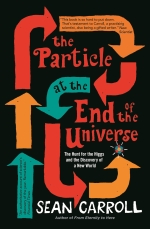
The Particle at the End of the Universe by Sean Carroll
Carroll is nothing if not ambitious as he commences on his quest to take us to the forefront of physics research. Fermions, bosons, fields and symmetries have all been explained by chapter two and atoms and particles dispatched by chapter three. This whistle-stop tour of the basics leaves you approaching the next chapter with a certain nervous trepidation, but it’s here that Carroll really hits his stride. The rest of the book captures the excitement and energy of the internationally renowned, but often misunderstood, events at CERN and your early lessons come in useful as the concepts become more complex.
The Particle at the End of the Universe doesn’t just explain what the Higgs boson is, it explains the history of its conception and the much broader world of particle physics. A section on probabilities and the significance of experimental results provides an excellent guide to understanding the scientific method more generally and, towards the end of the book, Carroll hints at some of the next frontiers for cosmological research. Continue reading →
Dr. Stephen Freedland is a Urologist within the Duke Prostate Center at Duke University. He is an Associate Professor of Surgery (Urology) and Pathology. He also holds an appointment as a staff physician at the Durham VA Hospital. He is Editor-in-Chief of Prostate Cancer and Prostatic Diseases, the North American Editor for European Urology, and sits on the editorial board of several other international urology journals.
It is agreat honor to be the Editor-in-Chief of one of the only research journals in the world dedicated to prostate diseases, Prostate Cancer and Prostatic Diseases. My journey with this journal began several years ago when I joined the faculty at Duke University where my boss at the time, Dr. Judd Moul, was the co-Editor-in-Chief. I watched him manage the journal for 5 years, learning the ropes, before taking over the reins myself in the summer of 2010. Over the past 3 years, the journal has grown tremendously and this year we are on track for a 50% increase in submissions vs. just 3 years ago. We have been able to do all of this while decreasing the time it takes to review a paper to 4 weeks or less (from when an author submits to hearing a decision).
Brain training games claim to boost your mental skills. But while practicing a game might make you better at it, research in young people has shown it doesn’t improve how well you perform other cognitive tasks in everyday life. Now a new study suggests the case may be different for adults above the age of 60.
Researchers at the University of California have designed a driving game called NeuroRacer. In this Nature Video, we see how the game can improve an older player’s short-term memory and attention, skills which decline with age.
In the latest Soapbox Science guest post, Buddhini Samarasinghe outlines her thoughts on the importance of science outreach and the two things that stand in the way of public access to science; the paywall and the jargon-wall:
Two things stand in the way of public access to science. The first is obviously the paywall: the second is something that I describe as the ‘jargon-wall’. The language of science is precise and meticulous; it has to be. Somewhere along the way, it has also become esoteric, foreign and inaccessible to the public by existing only within the confines of the ivory tower of academia. This has contributed to the chasm of scientific ignorance we see today, and it has created a deep divide that could impede human progress.
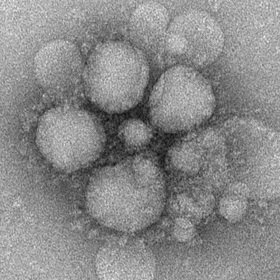
MERS-CoV particles as seen by negative stain electron microscopy. CYNTHIA GOLDSMITH/MAUREEN METCALFE/AZAIBI TAMIN/CDC
As the Middle East Respiratory Syndrome coronavirus (MERS-CoV) continues to spread, scientists have been searching for the intermediate host that might carry this virus and transmit it to humans. Mohammed Yahia elaborates in the House of Wisdom Blog:
The MERS virus belongs to a family that is usually found in bats. Some scientists argue that there might not be an intermediate host, and that it probably makes its way to humans from food contaminated by bat dropping or saliva. However, a group of researchers have tested blood samples from several animals, including cattle, sheep, goats and race camels, and suggest the camels – which come from Oman – may be the elusive intermediate host.
Kerri Smith explains in the Of Schemes and Memes blog that sometimes revolutions do happen in science. Historian Lara Marks thinks the story of monoclonal antibodies is one of them, and the latest episode of the Nature PastCast recounts that story:
These immune molecules form the basis of six out of ten of the world’s best-selling drugs, and they’re found in home-testing kits for pregnancy and menopause, and hospital tests for MRSA and HIV. They can be made to recognise specific molecules, tagging them for destruction by the body’s own immune system.
“As a historian you’re meant to be cynical, but it was revolutionary. It did transform things,”
she says in the latest episode of the Nature PastCast, which recounts the story.
The measure gained attention in May after an Oregon researcher, Shoukhrat Mitalipov, published a paper showing that he could derive stem cell lines from cloned human embryos. Mitalipov paid the women who donated the eggs US$3,000–7,000 apiece, removing a significant bottleneck in the cloning process: the availability of human eggs, which must be harvested in a time-consuming and uncomfortable procedure.
In his veto message on 13 August, Brown cited ethical concerns: “Not everything in life is for sale nor should it be,” Brown wrote. The American Society for Reproductive Medicine in Birmingham, Alabama, co-sponsored the proposed law. A coalition of conservative and watchdog groups opposed it and lauded the veto.
Aerosols contributing to climate change in India, China
Subhra Priyadarshini explains in the Indigenus Blog, researchers have found that aerosols (for example, black carbon particles in diesel exhaust and sulfate particles produced by coal burning) in India and China may indirectly contribute to climate change:
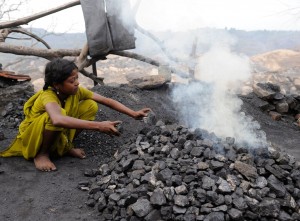
Coal burning is one of the key contributors to aerosol emissions. JOERG BOETHLING / ALAMY
Higher black carbon levels in the atmosphere lead to warming, whereas increased sulfate levels cause cooling.
To find out the situation in India and China, the researchers examined emissions from the most important aerosol sources in the two neighbouring countries and estimated the net radiative forcing from each source, both locally and globally. In this analysis, they used models developed by the NASA Goddard Institute for Space Studies.
This week’s Soapbox Science guest post is by Scott Wagers. He looks at ways we can learn by blogging about science:
Here is how you can make certain you learn the most from blogging:
A 12 step process
Determine a strategy: What do you want to learn about? What is important for you to learn about? The most popular blog posts are those that teach something, or ‘How to posts’. Even something you might think is mundane, such as the technique for cell culture, is probably interesting to lots of people. If you want to learn how to do that something, there is no better way than to write about it.
The post includes some excellent advice and top-tips from Scott Wagers, feel free to share your own too.
Flogging a dying rat and riding the wave
The wave of death is a well studied phenomenon that runs under various more sober names.
A new study suggests exactly that, namely heightened consciousness in rats after cardiac arrest. First of all, whatever the brain’s briefly lasting (~30s) high frequency oscillations mean, they are not new.
The paper—though an elegant study with some new results from what I can see on the first glimpse—seems to completely ignore the literature on so called spreading depression/depolarization and anoxic depolarization, see for example the review paper in “Nature Medicine” by Jens Dreier. A similar study was published in 2011 talking wonderfully unagitated about “latency to unconsciousness” only to conclude that the observed oscillations are the ‘wave of death’. There was a theoretical study by the group of van Putten, which shed some light on the exact physiological mechanisms on a single cell level.
Indian court halts projects in wake of calamitous monsoon
On Tuesday, India’s Supreme Court put a moratorium on the construction of new hydroelectric dams in the Himalayan state of Uttarakhand. Sanjay Kumar reveals more in the News Blog:
The region witnessed unusually heavy rain and catastrophic floods and landslides in mid-June that left more than 5,000 people dead or missing. Some ecologists and geologists suggested that a proliferation of dams and hydroelectric projects was in part to blame for exacerbating the effects of the monsoon.
The court’s findings reflected those concerns, describing the “mushrooming of a large number of hydroelectric projects in Uttarakhand” and their impact on the basins of the Alaknanda and Bhagirathi rivers, the two major tributaries that merge to form the Ganges River.
The court ordered the environment ministry and the Uttarakhand government ”not to grant any further environmental or forest clearance for any hydro-electric power project in the state until further orders”. It also mandated fresh scrutiny of the environmental impact of 24 proposed hydropower projects.
They concluded that HFCS contributed more to obesity than sucrose or food, a mix of molecules. 1 2 Fat is stored in sacs, and it is very interesting that the abdominal sac, beer gut, grew the most in the fructose fed rats. Accumulation of abdominal fat is actually worse than accumulation of other kinds of fat. Stanhope found similar evidence but he compared glucose to fructose. In this case fructose contributed more to visceral fat. From these two studies one could conclude that high fructose diets would generate a larger beer gut than diets high in other sugars. . . right? Unfortunately, it is not that simple.
Individuals who grew up in the digital era, while very technically savvy, may be outdone by the up and coming “second digital generation.” Shannon Bohle continues this discussion in her latest blog post on SciLogs:
Meet British-Australian, Nicholas D’Aloisio-Montilla (born 1995), a high school student who lives in London and has been dubbed the “world’s youngest VC-funded entrepreneur.” In March of this year, at age 17, he earned $30 million USD when Yahoo! bought his smart phone news aggregator application. D’Aloisio-Montilla had started programming just four years earlier, at age 12.By 15, he produced his first app which raised $300,000 USD in venture capital (VC), and by 16, his projects had amassed $1 million USD in VC funding. Investors in his company included big names like Ashton Kutcher, Yoko Ono, and Stephen Fry. The funding side might have come a little easier for D’Aloisio-Montilla because he probably had a bit of help from his father, Lou Montilla, who is Vice President at Morgan Stanley in London, but the programming was all his. Today, Nick has been hired by Yahoo!
Hear more on this, as well as some interesting statistics in Shannon’s post.
Sometimes, revolutions do happen in science. Historian Lara Marks thinks the story of monoclonal antibodies is one of them. These immune molecules form the basis of six out of ten of the world’s best-selling drugs, and they’re found in home-testing kits for pregnancy and menopause, and hospital tests for MRSA and HIV. They can be made to recognise specific molecules, tagging them for destruction by the body’s own immune system.
“As a historian you’re meant to be cynical, but it was revolutionary. It did transform things,”
she says in the latest episode of the Nature PastCast, which recounts the story.
Monoclonal antibodies had a quiet debut in a pretty technicalNature paper. Only one line at the end hinted at their potential clinical relevance. No patent was filed on the original technique. Decades later, they are worth billions to the biotechnology industry. In 2012, the monoclonal antibody market was estimated to be worth $60 billion. Continue reading →

 Memory, and its idiosyncrasies, is something we all have in common. With this as a basis, it’s easy for Fernyhough to draw us into Pieces of Light. Try to remember your earliest childhood memory. How old were you? How well does the memory tally with those of your parents, your siblings? It’s these kinds of scenarios that set you as an active character in the book and are at its heart, prompting us to question what memory truly is and how it functions.