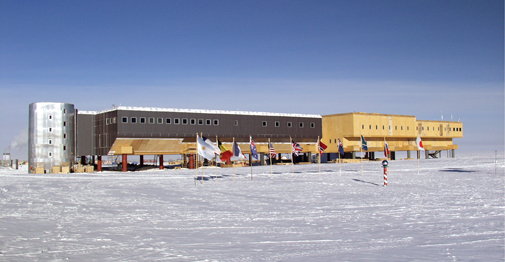
The Amundsen-Scott South Pole Station.{credit}NSF/USAP photo{/credit}
Posted on behalf of Susan Moran.
Like an iceberg, US-funded science in Antarctica is bottom-heavy, and research is suffering as a result. According to a new report for the National Science Foundation, the US Antarctic Program (USAP) devotes nine times more person-days in Antarctica to logistics efforts than it does to actual scientific research. That must change in order for the United States to maintain a leadership role on the continent, but science will have to take another hit first.
The 224-page report, ‘More and better science in antarctica through increased logistical effectiveness’, was published yesterday and argues that US research facilities in Antarctica desperately need an upgrade and an overhaul. The panel recommends three ways to ensure those improvements over the next four years: cut contract labour by 20%, increase the USAP’s annual budget by 6% and divert 6% of the planned spending on science to upgrade the science-support system. The report stresses that any up-front cuts to science will pay off within a few years by actually expanding the amount of scientific activity that can be undertaken while making research facilities safer.
“This can be done, but not without pain,” said Norman Augustine, chairman of the 12-member panel, during a press conference. “It’s not a happy solution, but being pragmatists and wanting to see something done, I think we’re all convinced if we don’t do something fairly soon, the science will just disappear.” Continue reading