Fundamental overhaul of China’s competitive funding

On 20 October, the Chinese government announced the passage of a reform plan that will fundamentally reshape research in the country.

By 2017, the main competitive government funding initiatives will be eliminated. This includes the ‘863’ and ‘973’ programmes, two channels for large grants that have been at the heart of modern China’s development of science and technology infrastructure since being established in 1986 and 1997, respectively.

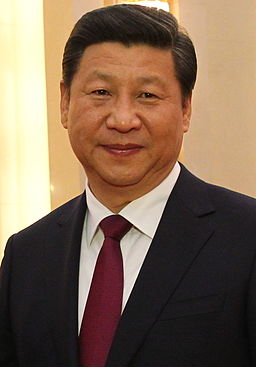
Xi Jinping, General Secretary of the Communist Party of China, is behind reforms to overhaul research in the country.

Xi Jinping, General Secretary of the Communist Party of China, is behind reforms to overhaul research in the country.{credit}By Antilong (Own work) [CC-BY-SA-3.0], via Wikimedia Commons{/credit}

The government announcement noted that wastefulness and fragmented management has led to overlaps and inefficient use of funds for science and technology, and the need for a unified platform for distributing grants. As new funding programmes have been added over the years, competitive funding has become divided among some 100 competitive schemes overseen by about 30 different governmental departments.

Although efforts to reorganize science in China are already underway,  the latest reform will be comprehensive. Science and technology spending by the central government was 77.4 billion yuan renminbi (US$12.6 billion) in 2006 but jumped to 236 billion yuan renminbi in 2013, 11.6% of the central government’s direct public expenditure. Some 60% of this is competitive funding, and subject to change under under the new reforms. To maintain stability, the overhaul will not affect the remaining 40%, which covers operation costs for research institutes and key state laboratories.

The new plan, jointly drafted by the ministries of science and technology and the ministry of finance, will reorganize competitive funding into five new channels: the National Natural Science Foundation (which currently distributes many of the small-scale competitive grants); national science and technology major projects; key national research and development programmes; a special fund to guide technological innovation; and special projects for developing human resources and infrastructure. These five will be managed under a new science and technology agency that will unify planning and assessment of scientific projects.


Doctor bets against traditional Chinese medicine

Beijing

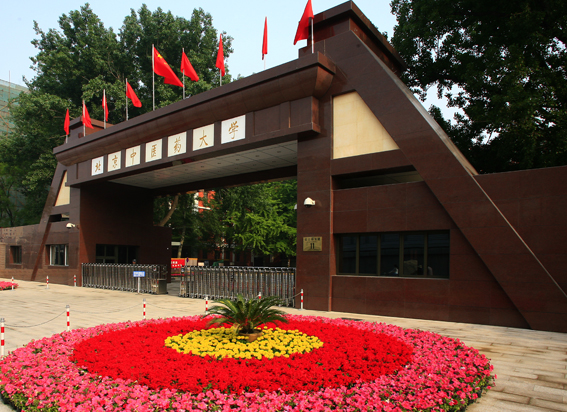
The Beijing University of Chinese Medicine is one institution where the government promotes the practice.
{credit}BUCM{/credit}

A sceptic of traditional Chinese medicine is challenging practitioners of the age-old craft to prove themselves by putting his own money on the line. One has accepted the challenge. At stake is the claim that practitioners can discern whether a woman is pregnant by her pulse.

Traditional Chinese medicine (TCM) is a point of contention in China. Although the government is keen to promote its use in the clinic and, in modernized form, as part of drug discovery, some feel that much of it is unproven and that the government is throwing its money away. There have also been high-profile cases of fraud linked to such research, and the practice is criticized for its dependence on endangered species such as the Saiga antelope (Saiga tatarica).

Ah Bao, the online nickname of a burn-care doctor at Beijing Jishuitan hospital, has been an adamant critic of TCM on Chinese social media, often referring to it as “fake”. He issued the challenge on 13 September, and Zhen Yang, a practitioner at the Beijing University of Traditional Medicine, took him up on it.

Ah Bao put up 50,000 yuan (more than US$8,000), and at his urging others have donated more than 50,000 yuan, making the prize worth more than 100,000 yuan total. Ah Bao turned down Nature‘s request to be interviewed, saying that he has been overwhelmed by media attention.

Yang will have to assess with 80% accuracy whether women are pregnant. The two are reportedly working out the terms of the contest, with a tentative set-up reportedly involving 32 women who would be separated by a screen from Yang.

Tragedy strikes Taiwanese research ship

TAIWAN-ACCIDENT

The sinking of the Ocean Research V in an image from a video released by Taiwan’s Coast Guard.
{credit}Taiwan Coast Guard/AFP via Getty{/credit}

Two scientists died on 11 October after the research vessel they were on, Taiwan’s Ocean Research V, capsized in the Taiwan Strait. Another 25 scientists and 18 crew members were rescued. 

The 73-metre, 2,700-tonne vessel, which had been operating only since February 2013, cost 1.5 billion new Taiwan dollars (US$50 million). It had three laboratories, sonar for seafloor mapping, multiple plankton samplers and other devices for comprehensive ocean exploration. It was built to carry out scientific and as well as resource surveys, including sampling sea-bed gas hydrates and offshore wind turbine sites.

The Ocean Research V was also equipped with a dynamic positioning system to enable it “to conduct highly precise action on sea even under strong winds in the situation of typhoon or strong monsoon“, according to the Taiwan Ocean Research Institute, which operated it. But on the night of 10 October, one day after setting sail, the ship capsized near Penghu island, some 50 kilometres off of Taiwan’s western coast. Some speculate that it hit a reef after being blown off course by strong winds related to a typhoon. 

Hsu Shih-chieh, a researcher at the Academia Sinica in Taipei, reportedly died after making efforts to save his fellow researchers. Lin Yi-chun, a scientist at the Taiwan Ocean Research Institute, also died.

The Ministry of Science and Technology is now investigating the cause of the accident.

STAP co-author offers yet another recipe for stem cells

A senior co-author on controversial, and now retracted, stem-cell papers has quietly posted new tips on how the research can be replicated.

Two papers claiming that stressing the body’s cell could produce embryonic-like stem cells, a process called stimulus-triggered acquisition of pluripotency (STAP), were heralded when published in Nature in January but thrashed soon after when problematic images and figures were soon found.

That might not have been so worrisome if the experiments, which the authors called easy to do, were replicated, but various external groups tried and failed to do so. Co-authors in Japan responded with a tip sheet. Soon after that, the lead author on the paper laying out the fundamental STAP technology, Charles Vacanti of the Brigham and Women’s Hospital in Boston, Massachusetts, released his own, quite different, list of tips for reproducing STAP. Still no one succeeded in replicating the findings.

Since April, Hitoshi Niwa, a well-respected mouse-stem-cell specialist at the RIKEN Center for Developmental Biology (CDB) in Kobe and a co-author on the papers, has been giving a focused, last-ditch effort to replicate the experiment; on 27 August, he reported no luck so far and suggested that light emission from dying cells, known as autofluorescence, might have been confused with fluorescent tags meant to signal conversion to the embryonic-like state.

During that period, the lead author on both papers, the CDB’s Haruko Obokata, was found guilty of misconduct and both papers were retracted. Obokata’s supervisor at the CDB, Yoshiki Sasai, committed suicide, and Vacanti stepped down as chairman of Brigham and Women’s department of anaesthesiology, perioperative and pain medicine. The CDB itself has halved in size.

One might have thought that STAP was finished. But Vacanti is not one to give up so easily.

Even when he finally agreed to retract the papers, he maintained, in a post on his department’s website, that “there has been no information that cast doubt on the existence of the stimulus-triggered acquisition of pluripotency (STAP) cell phenomenon itself.” Vacanti said that he was confident that Niwa would “replicate the core STAP cell concept that my brother Martin and I originally hypothesized, and trust that it will be verified by the RIKEN as well as independently by others.”

Now, in a note posted without fanfare on Vacanti’s department’s website and dated 3 September — one week after Niwa announced failure to replicate the findings — Vacanti has offered his second revision to the STAP protocol.

In comparison with his first revised protocol in March (‘Refined protocol for generating STAP cells from mature somatic cells’), the new one (‘REVISED STAP CELL PROTOCOL. 09.03.14’) highlights the use of ATP in the solution, in combination with two stresses — exposure to acid and physical pressure on the cell membranes — that he used in the previous recipe. “In recent months, our lab decided to re-explore the utility of a low pH solution containing ATP in generating STAP cells,” Vacanti writes in the revised protocol. “We found that while pH alone resulted in the generation of STAP cells, the use of a low pH solution containing ATP, dramatically increased the efficacy of this conversion.  When this acidic ATP solution was used in combination with mechanical trituration of mature cells, the results were even more profound” (emphasis original).

“We made a significant mistake in our original declaration that the protocol was ‘easy’ to repeat,” the protocol continues. “This was our belief at the time, but it turned out to be incorrect. Many of the steps described appear to be a function of the technique of the individual investigator. Consequently, the revised protocol below should increase the likelihood of success.”

Researcher’s death shocks Japan

Yoshiki Sasai was a top stem cell researcher

Yoshiki Sasai was a top stem-cell researcher{credit}Hans Sautter{/credit}

Yoshiki Sasai, one of Japan’s top stem-cell researchers, died this morning (5 August) in an apparent suicide. He was 52.

Sasai, who worked at the RIKEN Center for Developmental Biology (CDB) in Kobe, Japan, was famous for his ability to coax embryonic stem cells to differentiate into other cell types. In 2011, he stunned the world by mimicking an early stage in the development of the eye — a three-dimensional structure called an optical cupin vitro, using embryonic stem cells.

But lately he had been immersed in controversy over two papers, published in Nature in January, that claimed a simple method of creating embryonic-like cells, called stimulus-triggered acquisition of pluripotency (STAP). Various problems in the papers led to a judgement of scientific misconduct for their lead author, Haruko Obokata, also of the CDB. The papers were retracted on 2 July.

Sasai, who was a co-author of both papers, was cleared of any direct involvement in the misconduct. But he has been harshly criticized for failure of oversight in helping to draft the paper. Some critics, often on the basis of unsupported conjecture, alleged deeper involvement of  the CDB. An independent committee recommended on 12 June that the CDB, where Sasai was a vice-director, be dismantled. Sasai had been instrumental in launching the CDB and helped it to develop into one of the world’s premier research centres.

Just after 9 a.m., Sasai was found hanging in a stairwell of the Institute of Biomedical Research and Innovation, next to the CDB, where he also had a laboratory. He was pronounced dead just after 11 a.m., according to reports by Japanese media.  A bag found at the scene contained three letters: one addressed to CDB management, one to his laboratory members and one to Obokata.

In a brief statement released this morning, RIKEN president Ryoji Noyori mourned the death of the pioneering researcher. “The world scientific community has lost an irreplaceable scientist,” he said.


Genetic tests suggest STAP stem cells ‘never existed’

Reports of a new kind of stem cell, produced by simply stressing mature mouse cells, kicked up a storm of controversy soon after their publication in Nature on 30 January. Duplicated and manipulated images as well as plagiarism were found in the two papers, which led to a verdict of misconduct for the lead author, Haruko Obokata of the RIKEN Center for Developmental Biology in Kobe, Japan. There have also been calls for a retraction (which, for at least one of the papers, looks increasingly likely). But the controversy has left open a key question: does the phenomenon, known as stimulus-triggered acquisition of pluripotency, or STAP, exist?

The answer, according to Japanese media reports today on the results of genetic tests on the cells used in the STAP experiments, is no.

STAP cells were claimed to be made by exposing bodily cells to acid or subjecting them to physical pressure. These cells take on characteristics of embryonic stem cells. If further manipulated, they will also form self-renewing stem cell lines, called STAP stem cells, which share most properties of the embryonic stem cell lines. The Nature papers reported the creation of eight STAP stem cell lines. (Note: Nature’s news and comment team is editorially independent of its research editorial team.)

In March, one of the co-authors of the STAP papers, Teruhiko Wakayama of Yamanashi University, did a simple genetic analysis and found that some of the supposed STAP stem cell lines he had produced outside of the experiments described in the papers did not match the strain of mouse from which they were supposed to have been derived. This would mean that the cells came from a different mouse to that claimed, suggesting contamination. But he did not find a problem with the STAP stem cell lines that were reported in the Nature papers. To verify his results, Wakayama sent some 20 stem cell lines, including samples of the eight reported in the papers, to an independent, but unnamed, genetic analysis team for more precise tests.

According to Japanese media reports quoting “multiple sources”, the results of those tests have now been sent to RIKEN, Obokata’s employer and the institution that found her guilty of misconduct. They conclude that none of the STAP stem cell lines match the original mouse strains from which they were supposedly taken, calling into question whether the STAP phenomenon has ever been demonstrated. Wakayama says he will release detailed results at a press conference soon.

It was also reported that RIKEN will likely enlist Obokata in its ongoing efforts to try to reproduce the STAP results.

Lead author agrees to retract controversial stem-cell paper

Reports in Japan suggest Haruko Obokata, of the RIKEN Center for Developmental Biology in Kobe, has agreed to retract one of two controversial papers in which she claimed to have created a new type of stem cell, known as stimulus-triggered activation of pluripotency (STAP) cells. The development means that the path may now be clear for the full retraction of one of the biggest science papers of the year.

The studies, published in Nature in January, promised a surprisingly straightforward path to creating pluripotent stem cells, which can turn into any cell in the body, by stressing bodily cells with acid or physical pressure. Such an easy process for creating pluripotent stem cells would be a huge boon for biomedical research and potentially useful for clinical transplants. (Note: Nature’s news and comment team is editorially independent of its research editorial team.)

But Obokata’s papers quickly came under fire after various manipulated and duplicated images were found in them. After an investigation into the allegations, RIKEN found Obokata guilty of misconduct on 1 April. Earlier this month, it rejected her appeal of the judgment, and asked her to retract both papers. In the meantime, at least a dozen other research groups reported that they were unable to replicate her findings.

Several of Obokata’s co-authors have stated their desire to retract the papers. But Obokata has adamantly stood by her research, insisting that the STAP phenomenon is real and defying RIKEN’s request to retract.

Today, however, all of Japan’s major newspapers reported that Obokata had finally agreed to retract the second of the two papers. The Asahi Shimbun quotes Obokata’s lawyer as saying Obokata contacted Yoshiki Sasai, a co-author and colleague at the Center for Developmental Biology who has expressed his willingness to retract, and said, “I will not oppose the retraction.” The Mainichi Shimbun quotes lawyer Hideo Miki as calling it a “passive agreement“.

Ironically, the paper that Obokata has agreed to retract was not the one found by RIKEN to contain  manipulation. Obokata still stands by that paper, which establishes the basic technology for creating STAP cells.

In the paper that Obokata has agreed to retract, she and her team claimed that STAP cells cannot only form pluripotent stem cells but can also form placental cell lines – something other forms of pluripotent stem cells, like induced pluripotent stem cells and embryonic stem cells, cannot do.

“To  Obokata, the paper that made clear the existence of STAP is the important one. The other [which she has agreed to retract] is nothing more than an extension,” says Miki.

Customarily, all authors of a paper must agree to a request for its retraction, although retractions without the assent of all authors are possible. A source at RIKEN told Nature‘s news team that a retraction request was sent on 26 May, and that all the co-authors either stated that they agreed to it or did not oppose it. The other senior co-author who has steadfastly refused to retract the papers, Charles Vacanti of Brigham and Women’s Hospital in Boston, Massachusetts, would not comment on the reports of a retraction request. “There is no updated statement from Dr Vacanti,” a media relations officer wrote in an e-mail.

A spokesperson for Nature could not verify the status of the request. “Nature does not comment on corrections or retractions that may or may not be under consideration, nor does it comment on correspondence with authors, which is confidential,” she said. “We are currently conducting our own evaluation and we hope that we are close to reaching a conclusion and taking action. We take all issues related to any Nature paper very seriously and look into them in detail. We cannot comment further at this time.”

US and UK scientists dominate the ‘Hong Kong Nobels’

200px-Shaw_Prize_Medal

The Shaw Prize medal.

The Hong Kong-based Shaw Prize Foundation announced the winners of the annual Shaw Prize today. Three prizes, in astronomy, life science and medicine, and mathematical sciences, each carry US$1 million. This is the eleventh year in which the prizes have been awarded.

The astronomy prize celebrated pioneering measurements of key cosmological features, such as waves originating in the early Universe called baryonic acoustic oscillations, that have furthered our understanding of how galaxies clumped together and how dark energy is distributedDaniel Eisenstein of Harvard University in Cambridge, Massachusetts, took half the prize, and Shaun Cole of Durham University, UK, split the remainder with John Peacock of the University of Edinburgh, UK.

Kazutoshi Mori of Kyoto University in Japan and Peter Walter, a German-born Howard Hughes Medical Institute researcher at the University of California in San Francisco, shared the life-science and medicine prize for discovering a response mechanism that cells use when stressed by an excess of misshapen proteins, known as the unfolded-protein response. Although vital as a quality-control process in maintaining healthy cells, when used for a prolonged period, the mechanism is suspected of having a role in some degenerative diseases, such as Parkinson’s disease, and cancer.

Romanian-born George Lusztig of the Massachusetts Institute of Technology in Cambridge captured the entire mathematical-sciences prize for weaving together mathematical ideas, including representation theory, “to solve old problems and reveal beautiful new connections”.

Run Run Shaw, a media mogul famous for popularizing martial-arts actions who passed away at age 106 this January, established the prize to honour scientists who have recently achieved “significant breakthroughs in academic and scientific research or applications and whose work has resulted in a positive and profound impact on mankind”.

The prizes will be awarded at a ceremony in Hong Kong on 24 September.

Investigator of controversial stem-cell study resigns

The head of a Japanese committee investigating claims that stem cells could be made using mechanical stress or acid resigned from the committee today over anonymous allegations that at least one of his own papers contained problematic data. He says he resigned out of concern that the incident could complicate the current investigation.

Shunsuke Ishii, a molecular biologist at the RIKEN Advanced Science Institute in Tsukuba, was leading a team looking into two papers that reported a new kind of pluripotent stem cells — called STAP cells — in Nature on 30 January. The papers, whose first author was Haruko Obokata of the RIKEN Center for Developmental Biology in Kobe, were found to contain problems, including gel lanes that had been spliced together such that different lanes looked as though they were part of the same experimental procedure.

In a report released on 1 April, the committee deemed that two of the problems — the spliced gel lanes and the use of an image that had appeared in Obokata’s dissertation to represent a different experimental finding — constituted misconduct. Obokata appealed the judgment, and she has delivered supplementary materials in response to a request by the committee. Now the committee is deciding whether to reopen the case.

On 24 April, an eight-page document alleging problems in two papers Ishii co-authored in 2004 and 2008 was posted anonymously and widely circulated. The alleged problems included gel lanes that were spliced and set next to each other, without clear indication that splicing had taken place.

Ishii responded on the same day with a post on his laboratory’s homepage. The first paper in question is a 2008 study of a tumour suppressor and published in Oncogene (Oncogene is published by the Nature Publishing Group, which hosts this website; Nature’s news and comment team is editorially independent of Nature Publishing Group journals’ research editorial teams.) Ishii confirmed that the order of the gel lanes was changed to align with the explanation in the text and that errors were made when making that alignment. But he insists that the data were all part of the same experiment. In his post he includes copies from the notebooks showing the original data for the experiments. He also includes a correction that, he says, the editor of the journal has already accepted. “These changes do not affect any of the results or conclusions of our study,” reads the correction.

Today, Ishii supplemented the post with explanatory materials to address the problems raised about the second paper, a 2004 article in Journal of Biological Chemistry. He says that different gel lanes in that paper were juxtaposed for “space saving”, and he provides clearly marked original data. He says this presentation was “not a problem, according to the rules ten years ago”.  He acknowledges, however, that “stricter rules now” require a clear line indicating when gel lanes are not in their original setting. He is not seeking a correction for this paper.

Some researchers have criticized Ishii, saying that if splicing of gel lanes counted as misconduct for Obokata, it should also count as misconduct in his case. Obokata’s lawyer cites the Ishii case to argue for a reinvestigation of her own.

One difference in Obokata’s case, however, is that the gel lanes were not only spliced, they were also stretched and rotated, showing a greater degree of manipulation. Also, according to the committee, Obokata’s laboratory notes lacked a clear indication of the path from original data to published data.

RIKEN says that it is now gathering information to decide whether to launch an investigation into Ishii’s research. This preliminary investigation should take about a week, according to a RIKEN spokesperson.

Today Ishii announced his resignation from the committee investigating Obokata’s papers. In a written statement, he says the “copies of laboratory notes and original experimental data [posted on the laboratory homepage] clearly show that no misconduct was involved” in the two papers.

Biologist claims controversial stem-cell method might work

A developmental biologist in Hong Kong says that he has succeeded in reproducing a method of reprogramming cells to an embryonic-like state by applying mechanical stress. The development, which the author describes as a “megatwist”, took place on 1 April, the same day that the Japanese researcher who invented the method was found guilty of scientific misconduct. The new claim, however, has been greeted with scepticism.

The technology, known as stimulus-triggered acquisition of pluripotency (STAP), has been under attack after two papers published on 30 January in Nature claimed that it worked in mouse cells. Numerous attempts to replicate the results have failed, forcing the authors to back away from their initial characterization of their method as one that is simple to implement. Multiple flaws were also found in the papers, and on 1 April an investigation committee found the lead author, Haruko Obokata of the RIKEN Center for Developmental Biology in Kobe, Japan, guilty of scientific misconduct.

When others were giving up after repeated failures to reproduce the results by using a number of approaches, Kenneth Lee of the Chinese University of Hong Kong tried to precisely follow Obokata’s protocol, which stressed cells with an acidic solution to trigger the reprogramming. It didn’t work. When she released a modified protocol, he tried again, in vain.

Then Obokata’s former mentor and a co-author on the STAP papers, Charles Vacanti of Harvard Medical School in Boston, released his own protocol. It depended more on physically stressing the cell membranes — by passing them through narrow glass pipettes — than on acid.

Lee set up a team of four and made 150- and 75-micrometre pipettes. After three days of regular pipetting, the cells looked unhealthy and “yucky”, says Lee. “They looked dead.”

But when he carried out a genetic analysis on the cells, he found that three genes normally expressed in pluripotent cells were elevated, leading him to believe that pluripotency had been achieved. “I couldn’t believe it.” He posted his findings as a single bar graph on ResearchGate, a social-networking site for researchers (see ‘The new dilemma of online peer review: too many places to post?‘).

However one US-based stem-cell researcher, who did not want to be mentioned by name, worries that the results may be over-interpreted, noting that “in real pluripotent cells the markers are expressed at levels 1,000-fold higher than controls”. The expression in Lee’s cells was only ten-fold higher. 

Andrés M Bratt-Leal, a research associate at the Scripps Research Institute in La Jolla, California, commented on Lee’s post that the numbers didn’t necessarily add up to “significant gene expression” and recommended that Lee make a better-controlled comparison.

Lee himself recognizes the possibility that “the expression of these pluripotent markers could be the by-product of unregulated gene expression by the dying or stressed cells”. Lee did the experiment only once, although he ran the genetic tests four times to assure himself of the result. He plans to repeat the experiment. In response to the sceptics, he asks other laboratories to give it a try.

He then adds: “I am not claiming that ‘STAP’ cells exist, only presenting the results of our research as it is — which is open to interpretation.”