Nature India Photo Contest 2020: Finalist #2

Announcing the second finalist in the Nature India Photo Contest 2020:

 Amitava Chandra, Kolkata, West Bengal

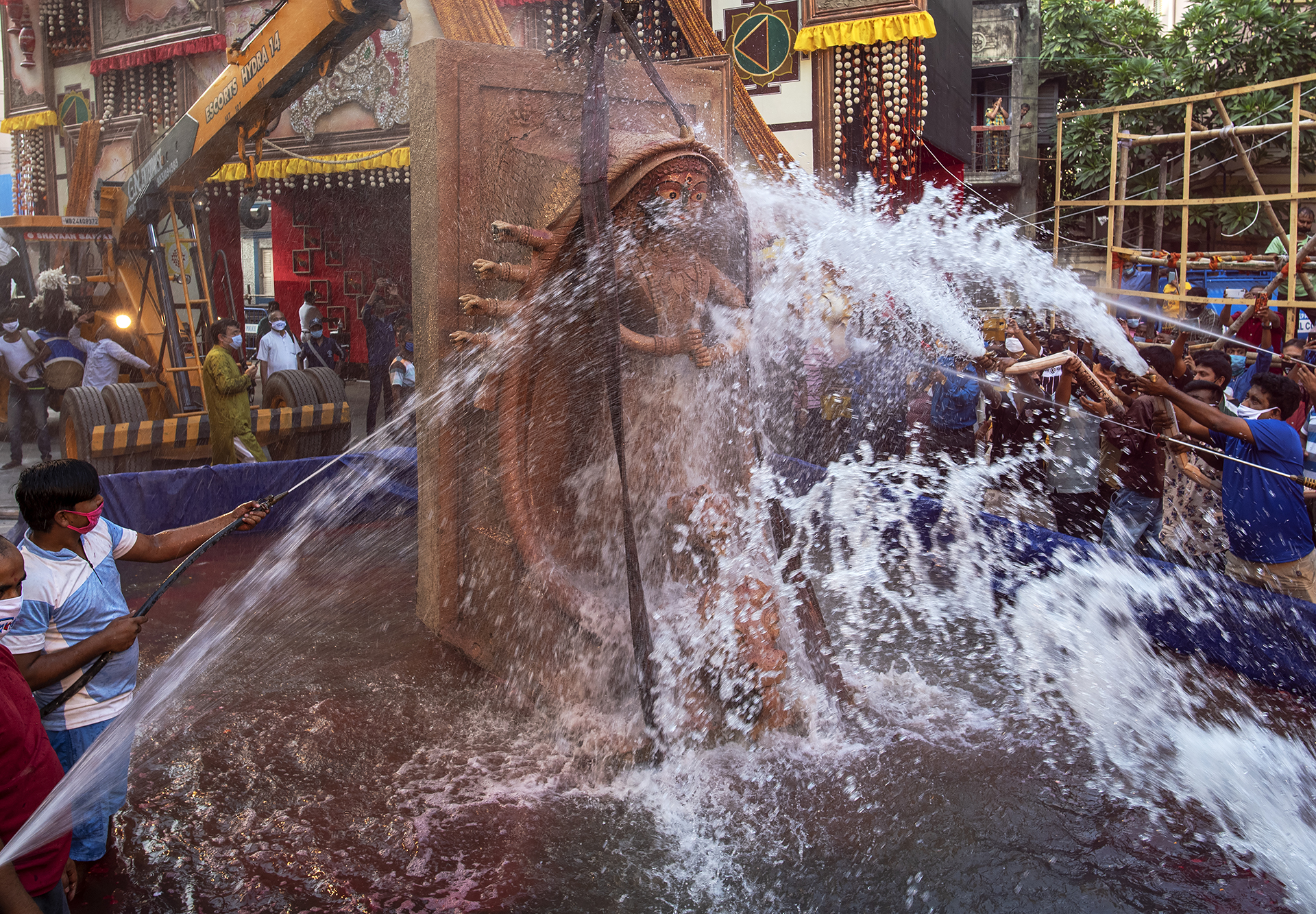
Photo caption: Immersive innovation

“The annual Durga Puja festivities end with the immersion of the gods’ idols in river Hooghly, a tributary of the Ganges. Every year thousands of people take part in the idol immersion processions. Following COVID-19 restrictions, the festival organising committees created temporary water bodies to ‘immerse’ the clay-made idols by dissolving them with high power water jets, like in this picture taken at the Tridhara Sanmilani Puja Pandal, Kolkata on 26 October 2020. The benefits were two-fold – no processions, and no pollution of the Ganges’ waters.” — Amitava Chandra

Congratulations Amitava for making it to top 10!

The Nature India editorial and design teams have chosen ten stunning finalists, that will be rolled out (in no particular order of merit) over the next few days. These entries have been judged for novelty, creativity, quality and print worthiness. Nature India’s final decision to chose the winner will be partly influenced by the engagement and reception these pictures receive here at the Indigenus blog, on Twitter and on Facebook. To give all finalists a fair chance, we will consider the social media engagement each picture gets only during the first seven days of its announcement. The final results will be announced sometime in early February 2021.

Watch this space as we announce the other finalists in the coming days. Like, share and comment on your favourite photos on Twitter and on Facebook with the hashtag #NatureIndphoto to make them win.

The winning pictures will get cash prizes worth $350, $250 and $200 respectively. The top 10 finalists will be featured here, on Nature India’s blog Indigenus and in our subsequent annual issue.

The winner and runners-up will also receive a copy of the Nature India Annual Volume 2020 and a bag of Nature Research goodies. Winning entries stand a chance of being featured on the cover of one of our forthcoming print publications.

Nature India Photo Contest 2020: Finalist #1

It’s time to roll out the shortlist of the Nature India Photo Contest 2020.

The 7th edition of our photo contest themed “pandemic” opened in December 2020 and has received some remarkable entries from around the world.

We invited entries that capture not just the hardships of the COVID-19 pandemic but also the hope of an infection-free future.

Nature India is covering various aspects of the pandemic since the first case of COVID-19 was detected in India. Our stories have taken a cross-cutting approach — going beyond hard core science into the socio-economic, cultural and psychological fall outs of the pandemic. As an extension of that coverage, it was only natural to consider “pandemic” as the theme for the annual photo contest.

Like always, entries came from a mix of amateur and professional photographers, scientists and non-scientists, mobile cameras and high-end DSLRs.

The Nature India editorial and design teams have chosen ten stunning finalists, that will be rolled out (in no particular order of merit) over the next few days. Nature India’s final decision to chose the winner will be partly influenced by the engagement and reception these pictures receive here at the Indigenus blog, on Twitter and on Facebook. To give all finalists a fair chance, we will consider the social media engagement each picture gets only during the first seven days of its announcement. The final results will be announced sometime in early February 2021.

So here’s finalist number one in the Nature India photo contest 2020:

Deepak Kumbhar, Kolhapur, Maharashtra, India.

Photo caption: Home-bound

“COVID-19 affected the mental health of millions of people worldwide. Children in India suffered loneliness due to long lockdowns. At an age when the outdoors and physical activity are necessary for their mental and physical growth, children stuck at home were glued to digital devices for learning and entertainment. This photo was taken in April 2020 during the lockdown in the small city of Kolhapur in western India. A boy is seen with a non-digital plaything – a carrom board – on the terrace of his home, but there’s no one to play with him.” — Deepak Kumbhar.

Congratulations Deepak for making it to top 10!

Watch this space as we announce the other finalists in the coming days. Like, share and comment on your favourite photos on Twitter and on Facebook with the hashtag #NatureIndphoto to make them win.

The winning pictures will get cash prizes worth $350, $250 and $200 respectively. The top 10 finalists will be featured here, on Nature India’s blog Indigenus and in our subsequent annual issue.

These entries have been judged for novelty, creativity, quality and print worthiness. The winner and runners-up will also receive a copy of the Nature India Annual Volume 2020 and a bag of Nature Research goodies. Winning entries stand a chance of being featured on the cover of one of our forthcoming print publications.

Nature India Photo Contest 2019: Finalist #10

And here’s presenting the last finalist in the Nature India Photo Contest 2019:

Sudip Maiti, Kolkata, West Bengal, India.
Photo caption: Annapurna

{credit}Sudip Maiti{/credit}

“A farm woman works in her field of cabbage in rural West Bengal. Annapurna is the goddess of food in Indian mythology. This woman represents the millions of farm women who silently work in India’s farmlands to grow fresh produce. They work doubly hard – in the fields and at home tending to their families. Their hard work should teach us never to take the food on our plates for granted.” — Sudip Maiti

Congratulations Sudip for getting your second picture into the top 10 shortlist!

That brings us to the final picture in the 2019 Nature India Photo Contest shortlist. Watch this space for the announcement of the winners in the coming week.

The winning pictures will get cash prizes worth $350, $250 and $200 respectively. The top 10 finalists will be featured here, on Nature India’s blog Indigenus and in our subsequent annual issue.

These entries have been judged for novelty, creativity, quality and print worthiness. The winner and two runners-up will also receive a copy of the Nature India Annual Volume 2019 and a bag of Nature Research goodies (including Collector’s first issues of Nature and Scientific American and some other keepsakes). Winning entries stand a chance of being featured on the cover of one of our forthcoming print publications.

Nature India Photo Contest 2019: Finalist #5

And here’s finalist number five in the Nature India Photo Contest 2019:

Avijit Ghosh, Kolkata, West Bengal, India.
Photo caption: Empowering meal

{credit}Avijit Ghosh{/credit}

“In many parts of rural India, school students are given mid-day meals. These free lunches for children in primary and upper primary classes are an innovative scheme to help children get nutrition while also incentivising their school attendance. This scheme exemplifies how food can be used as a means of empowering communities – both through nutrition and education.” — Avijit Ghosh

Welcome to the top 10 shortlist, Avijit!

Watch this space as we announce the other finalists in the coming days.

The winning pictures will get cash prizes worth $350, $250 and $200 respectively. The top 10 finalists will be featured here, on Nature India’s blog Indigenus and in our subsequent annual issue. 

These entries have been judged for novelty, creativity, quality and print worthiness. The winner and two runners-up will also receive a copy of the Nature India Annual Volume 2019 and a bag of Nature Research goodies (including Collector’s first issues of Nature and Scientific American and some other keepsakes). Winning entries stand a chance of being featured on the cover of one of our forthcoming print publications.

Nature India Photo Contest 2019: Finalist #2

Announcing the second finalist in the Nature India Photo Contest 2019:

Mikhail Kapychka, Keiv, Ukraine.
Photo caption: Granny’s recipes

{credit}Mikhail Kapychka {/credit}

“My old grandmother cooks a delicious Ukrainian beetroot soup – borscht. Our traditional foods, packed with nutrition and made from local ingredients, need to come back to our kitchens to ensure food security and to support local farming communities. I shot this picture in my granny’s home in the Kiev region of Ukraine.” — Mikhail Kapychka.

Congratulations Mikhail for making it to top 10!

Watch this space as we announce the other finalists in the coming days.

The winning pictures will get cash prizes worth $350, $250 and $200 respectively. The top 10 finalists will be featured here, on Nature India’s blog Indigenus and in our subsequent annual issue. 

These entries have been judged for novelty, creativity, quality and print worthiness. The winner and two runners-up will also receive a copy of the Nature India Annual Volume 2019 and a bag of Nature Research goodies (including Collector’s first issues of Nature and Scientific American and some other keepsakes). Winning entries stand a chance of being featured on the cover of one of our forthcoming print publications.

Nature India Photo Contest 2019: Finalist #1

It’s time to roll out the shortlist of the Nature India Photo Contest 2019.

The 6th edition of our photo contest themed “food” opened in November 2019 and has received some remarkable entries from around the world.

We invited pictures that show food beyond just an instagram-worthy plateful — pictures that demonstrate the link between food and evironment, food and health/nutrition, food security, the processes and techniques of growing food, packaging, cooking or even the politics behind food storage and supply.

Like always, entries came from a mix of amateur and professional photographers, scientists and non-scientists, mobile cameras and high-end DSLRs.

The Nature India editorial and design teams chose ten stunning finalists, that will be rolled out (in no particular order of merit) over the next few days. Nature India’s final decision to chose the winner will be partly influenced by the engagement and reception these pictures receive here at the Indigenus blog, on Twitter and on Facebook. To give all finalists a fair chance, we will consider the social media engagement each picture gets only during the first seven days of its announcement. The final results will be announced sometime in early February 2020.

So here’s finalist number one in the Nature India photo contest 2019:

Sudip Maiti, Kolkata, West Bengal, India.

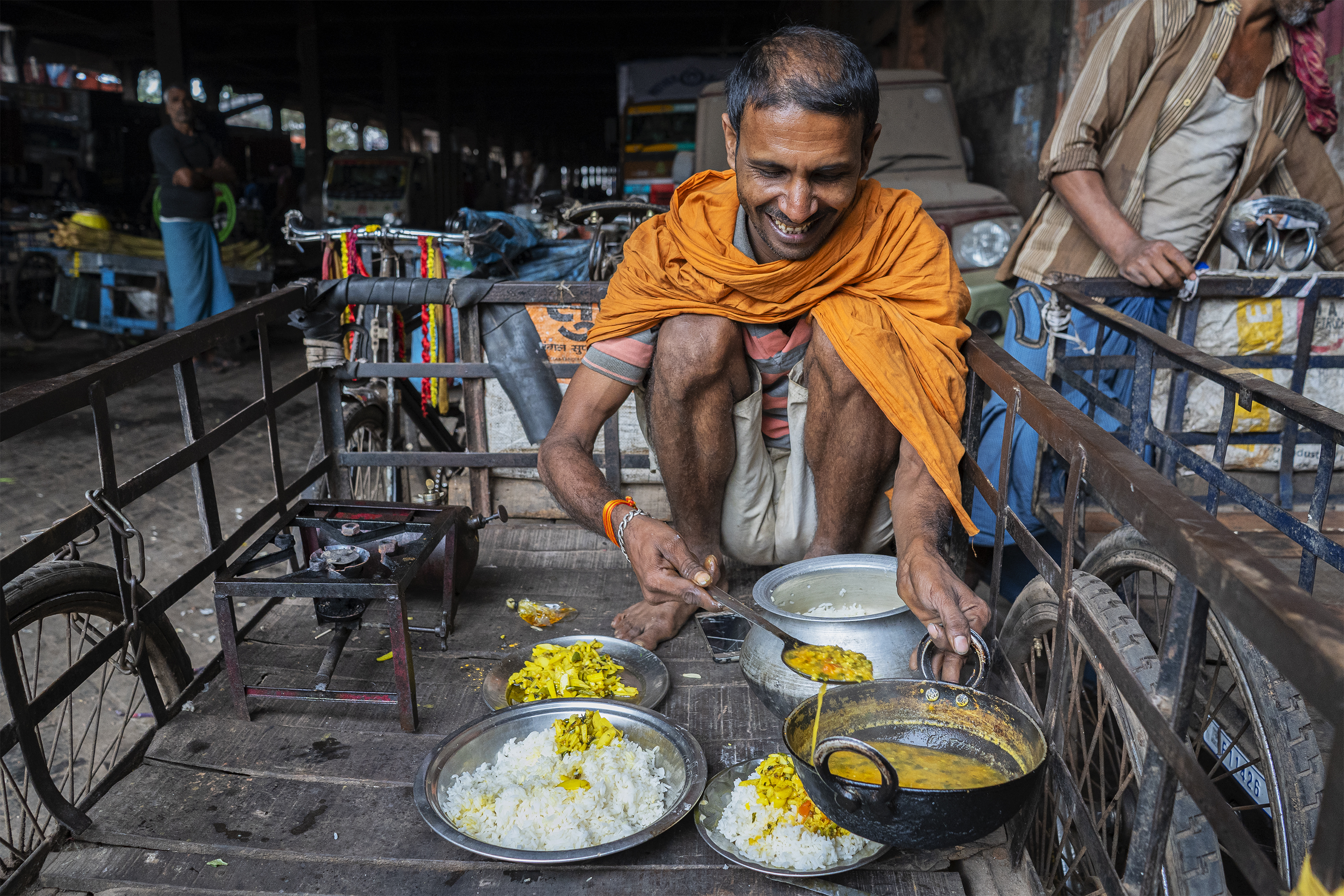
Photo caption: Open air restaurant

{credit}Sudip Maiti{/credit}

“A daily-wage worker cooks lunch for himself and his fellow workers in a hand-pulled cart below the famous Howrah Bridge in Kolkata, India. I was drawn to this scene because cooking is a private matter, mostly done indoors. In this man’s life, this important activity of the day happens in a busy, public space. The photo conveys the hardships such people face for their daily food, with a smile on their faces.” — Sudip Maiti.

Congratulations Sudip for making it to top 10!

Watch this space as we announce the other finalists in the coming days.

The winning pictures will get cash prizes worth $350, $250 and $200 respectively. The top 10 finalists will be featured here, on Nature India’s blog Indigenus and in our subsequent annual issue. 

These entries have been judged for novelty, creativity, quality and print worthiness. The winner and two runners-up will also receive a copy of the Nature India Annual Volume 2019 and a bag of Nature Research goodies (including Collector’s first issues of Nature and Scientific American and some other keepsakes). Winning entries stand a chance of being featured on the cover of one of our forthcoming print publications.

Nature India Essay Competition 2020 now open

{credit}SpiffyJ/Getty{/credit}

[This competition has now closed. We hope to announce the results in early April 2020 here at the Indigenus blog.]

Nature India in partnership with the Council of Scientific and Industrial Research (CSIR) is launching an essay competition to provide young and experienced scientists, researchers and authors in India, a platform to share ideas on how socially-impactful science can advance and strengthen the country.

The Nature India essay competition is now open for scientists, researchers, writers or authors aged 25 to 50. The essayists will have an opportunity to draft a compelling narrative with personal anecdotes, emotion and a science-backed story that may become potentially historic in helping shape the roadmap for India’s scientific future.

We invite thoughts on the societal impact of science in India in not more than 1000 words. We are looking for essays with an aspirational tone, emotions and story-telling without too much sentimentality.  The essays should be reasoned, well-researched, forward-looking and supported by existing science. They should ideally be informative and entertaining in equal measure. Adding a personal perspective to the narration is desirable. We are not looking for academic papers, an academic writing style or science fiction.

Submitted essays will be judged by a panel of editors, scientists and science communicators.

The deadline for completed essays is midnight, India time, on 9 March 2020. The winners will have their essays published in the Nature India annual volume as well as the Nature India blog Indigenus. The top three essays will win cash prizes (Rs 40,000, Rs 30, 000 and Rs 20,000 or equivalent), a three-year subscription to Nature, trophies and certificates. We will also feature the essayists and their ideas in a Nature India podcast.

Please send your submissions to natureindia@nature.com with the subject line “Nature India Essay Competition 2020”. Please include your name, affiliation and contact details in the email. We look forward to reading your imaginative and thought-provoking essays.

For inspiration, you may want to read these essays adjudged winner and runners-up (1, 2) of the Nature essay competition 2019.

[TERMS AND CONDITIONS

Please read these terms and conditions carefully. By entering into this Nature India Essay Competition (“Promotion”), you agree that you have read these terms and that you agree to them. Failure to comply with these terms and conditions may result in your disqualification from the Promotion.

  1. Information about how to enter and prize details form part of these Terms and Conditions. Entry into this Promotion is deemed to be an acceptance of these Terms and Conditions.
  2. This Promotion is run by Nature Research, a division of Springer Nature Limited, a company registered in England with registered number 00785998 and registered office at The Campus, 4 Crinan Street, London N1 9XW (“Promoter”).
  3. To enter this Promotion you must be: (a) resident of India; and (b) aged between 25 years old and 50 years old on or before 9th January 2020. This Promotion is void in Cuba, Iran, Myanmar, North Korea, Russia, Ukraine, Sudan, and Syria or where otherwise prohibited or restricted by law. Any government officials that enter the Promotion are responsible for ensuring that they may enter and/or receive a prize if they win and that the prize does not exceed the relevant limit for their role and jurisdiction. If a winner is not able to accept the prize then a charity donation can be made instead to a Springer Nature approved charity.
  4. This Promotion is not open to directors or employees (or members of their immediate families) of Promoter or any affiliate of Promoter. Promoter reserves the right to verify the eligibility of entrants.
  5. The Promotion is open for entries between 00:00 Indian Standard Time on 9th January 2020 and 00:00 on 9th March 2020 IST.
  6. No purchase is necessary to enter this prize Promotion and will not increase your chances of winning.
  7. You can enter this Promotion in the following way: write and submit an essay on the societal impact of science in India in a text file, along with your email address by submitting your text file to Nature India at the email address natureindia@nature.com. Entries should be in a text file (.doc, .docx), written in good and understandable English, with a word limit of 1000 words or less not including references.
  8. This Promotion is in no way sponsored, endorsed or administered by, or associated with Instagram, Twitter or Facebook. By participating you hereby release and hold harmless Instagram, Twitter and Facebook from any and all liability associated with this Promotion.
  9. Only one entry per eligible person. Multiple entries will be deemed to be invalid and may lead to disqualification.
  10. Promoter accepts no responsibility for any entries that are incomplete, illegible, corrupted or fail to reach Promoter by the closing date for any reason. Proof of posting or sending is not proof of receipt. Entries via agents or third parties are invalid. No other form of entry is permitted. Please keep a copy of your entry as we will be unable to return entries or provide copies.
  11. The prize for the Promotion consists of the following: (a) three cash prizes (of Rs 40,000, Rs 30,000, Rs 20,000 respectively); (b) 3 year’s personal subscription to Nature; and (c) publication in Nature India’s annual volume and Indigenus blog. The cash prize can only be paid into the bank account of the winner.
  12. The editors reserve full editorial discretion in choosing winner(s), and may decide to award none of the entries. All essays submitted by entrants to the Promotion shall be subject to the Publisher’s editorial acceptance processes. Publication of any essay is at the sole and absolute discretion of the Publisher, and any failure by the Publisher to publish, or non-publication, of such essays, for any reason whatsoever, shall not be a breach by it of this Terms and Conditions.
  13. The prizes shall be awarded as follows: essays will be judged by a panel of Nature editorial staff and by an external judging panel. Judges will consider the editorial impact and general quality of the essay, as well as its adherence to existing science and reason. Full names of the judging panel will be available on request. Any decision will be final and binding and no further communication will be entered into in relation to it.
  14. Ownership of entries: for consideration into this competition, you must be willing to sign a license to publish form granting a license of the intellectual property rights in your essay to the Promoter. Such license will be supplied by the Promoter to selected entries and will include the right to use the entry in promotional or marketing material in print and online. You confirm that your entry is your own original work, is not defamatory and does not infringe any laws, including privacy laws, whether of the UK or elsewhere, or any rights of any third party, that no other person was involved in the creation of your entry, that you have the right to give Promoter and its respective licensees permission to use it for the purposes specified herein, it is lawful for you to enter and that you agree not to transfer files which contain viruses or any other harmful programs.  Please note that it is the responsibility of the entrants/author(s) to obtain permission from the copyright holder to reproduce third party intellectual property (including without limitation figures or tables that have previously been published elsewhere).
  15. The winner(s) of the Promotion shall be notified as follows: informed by email. If the winner enters the Promotion via social media, the Promoter will use reasonable endeavours to contact the winner, but reserves the right to reject any such entry the winner cannot be contacted.
  16. The winner(s) will be required to confirm acceptance of the prize within five working days and may be required to complete and return an eligibility form stating their age and residency details, among other details. Promoter will endeavour to ensure that winner(s) receive their prizes within 30 days of the date they confirm acceptance of the prize and have fulfilled any post-promotion requirements. If a winner does not accept the prize within five working days of being notified, they will forfeit their prize and Promoter reserves the right to choose another winner(s). Promoter’s decision is final and Promoter reserves the right not to correspond on any matter.
  17. The name, region of residence and likeness of the winners may be used by Promoter for reasonable post-event publicity in any form including on Promoters website and social media pages at no cost.
  18. You can find out who has won a prize by sending an e-mail to natureindia@nature.com or checking nature.com/natureindia. Winners will be announced on Nature India’s blog Indigenus.
  19. Promoter reserves the right to cancel or amend these Terms and Conditions or change the Prize (to one of equal or greater value) as required by the circumstances. No cash equivalent to the Prize is available.
  20. All personal data submitted by entrants is subject to and will be treated in a manner consistent with Promoter’s Privacy Policy accessible at https://www.nature.com/info/privacy.html. By participating in this Promotion, entrants hereby agree that Promoter may collect and use their personal information and acknowledge that they have read and accepted the Promoter Privacy Policy.
  21. Promoter may at its sole discretion disqualify any entrant found to be tampering or interfering with the entry process or operation of the website, or to be acting in any manner deemed to be disruptive of or prejudicial to the operation or administration of the Promotion. Entries not submitted in accordance with these Terms and Conditions or entries that are incomplete or illegible (as determined in our sole discretion) will not be eligible.
  22. Other than for death or personal injury arising from negligence of the Promoter, so far as is permitted by law, the Promoter hereby excludes all liability for any loss, damage, cost and expense, whether direct or indirect, howsoever caused in connection with the Promotion or any aspect of the Prize. All activities are undertaken at the entrants own risk. Your legal rights as a consumer are not affected.
  23. The Promotion may be sponsored by a third party engaged by the Promoter.
  24. These terms and conditions shall be governed by and construed in accordance with Indian law. Disputes arising in connection with this Agreement shall be subject to the non-exclusive jurisdiction of the Indian courts.]

Nature India Photo Contest 2019 now open

We are back with the annual Nature India photo contest.

This year’s theme is ‘Food’.

Say ‘food’ and everyone has a story to share. These stories could be as diverse as ‘I love pasta’ to ‘the cyclone ruined our paddy yield this year’ to ‘half my country is malnourished and the other half obese’.

These stories point to our deep-seated and lifelong relationship with food. For some food is nutrition, for some others it’s an emotion – a memory, perhaps associated with a smell, taste, place or person?

For a farmer, food may mean a farm, the seeds, the equipment, the land, the market, floods or famine or a harvest festival. For a school going child, food is the lunch box or a piping hot mid-day meal served in the classroom. For many communities, food is a social binder, intrinsically linked to the culture of their land.

For scientists, food is the metabolic, biochemical or physiological process that underlines how an organism uses its source of nutrition. For global policy makers, food is the challenge of securing nourishment for close to 10 billion people by 2050. Food is health, food is environment and many times the connection between the two.

So which face of food would you want to capture in a photograph? Which of these nuanced stories do you want to tell? For the Nature India photo competition this year, we urge you to think deeper about food, beyond just an Instagram-worthy plateful.

Think of pictures that demonstrate how food fundamentally influences or interacts with health, how food security defines the health and happiness of people or how the lack of food may result in a plethora of unwanted consequences. We would also be happy to receive entries that talk to us about the link between the food we eat and our environment, or ones that depict how balanced nutrition makes for healthy people and healthy communities.

You may also draw inspiration from scenes that portray the process and techniques of growing food, cooking it in many interesting and unique ways, of infant nutrition or the politics behind food storage and supply, or even the merits or demerits of packaging food.

The canvas is wide open.

So get set, click and send your entries by 21 December 2019!

Prizes

The top three pictures will get cash prizes worth $350, $250, $200. The top 10 finalists will be featured on Nature India’s blog Indigenus

Entries will be judged for novelty, creativity, quality and print worthiness. Winners will be chosen by a panel of Nature Research editors and photographers. The winner and two runners-up will receive a copy of the Nature India Annual Volume 2019 and a bag of Nature Research goodies (including Collector’s first issues of Nature and Scientific American and some other keepsakes). Winning entries also stand a chance of being featured on the cover of one of our forthcoming print publications.

Eligibility

The contest is open to all – any nationality, any occupation, any profession. You may use whatever camera you wish – even your cell phone – as long as the photograph you send us is unedited, original, in digital format and of printable quality. Just make sure you are not violating any copyrights. Also, no obscene, provocative, defamatory, sexually explicit, or other inappropriate content please (refer to the contest terms and conditions below).

Please send your entries in jpeg format to npgindia@nature.com with your name and contact details. Please mention “Nature India Photo Contest 2019” in the subject line of your email. The photograph must be accompanied by a brief caption (please see some photo captions here for reference) explaining the subject of the picture along with the date, time and place it was taken.

We will accept a maximum of two entries per person. The last date for submissions is midnight of December 21, 2019 Indian Standard Time. On social media, please use the hashtag #NatureIndphoto to talk about the contest or to check out our latest updates.

The theme for our inaugural photo competition in 2014 was “Science & technology in India”. Our themes have then covered “Patterns”, “Nature”, “Grand Challenges” and “Vector-borne Diseases”. We have received some breathtaking entries from across the world all these years. You might want to take a look at the winning entries of the Nature India Photo Contest 201420152016, 2017 and 2018 for some inspiration and to get an idea of what we look for while selecting winners.

[TERMS AND CONDITIONS

Please read these terms and conditions carefully. By entering into this Nature India Annual photo contest (“Promotion”), you agree that you have read these terms and that you agree to them. Failure to comply with these terms and conditions may result in your disqualification from the Promotion.

  1. This Promotion is run by Nature Research, a division of Springer Nature Limited a company registered in England with registered number 00785998 and registered office at The Campus, 4 Crinan Street, London N1 9XW (“Promoter”).
  2. To enter this Promotion you must be: (a) resident in a country where it is lawful for you to enter; and (b) aged 18 years old or over (or the applicable age of majority in your country if higher) at the time of entry. This Promotion is void in Cuba, Iran, North Korea, Sudan, and Syria and where prohibited or restricted by law.
  3. This Promotion is not open to directors or employees (or members of their immediate families) of Promoter or any subsidiary of Promoter. Promoter reserves the right to verify the eligibility of entrants.
  4. The Promotion is open for entries between 00:00 on 21/11/2019 and 00:00 on 21/12/2019 IST.
  5. No purchase is necessary to enter this prize Promotion and will not increase your chances of winning.
  6. You can enter this Promotion by emailing npgindia@nature.com
  7. Only two entries per eligible person. More than two entries will be deemed to be invalid and may lead to disqualification.
  8. Promoter accepts no responsibility for any entries that are incomplete, illegible, corrupted or fail to reach Promoter by the closing date for any reason. Proof of posting or sending is not proof of receipt. Entries via agents or third parties are invalid. No other form of entry is permitted. Please keep a copy of your entry as we will be unable to return entries or provide copies.
  9. The prize for the Promotion consists of the following: Three cash awards worth $350, $250 and $200 for the top three entries respectively, a copy of the Nature India Special Annual Volume 2019 and a bag of goodies (which includes Collector’s first issues of Nature, November 1869 and Scientific American, August 1845; and some other keepsakes) from Nature Research.
  10. The prizes shall be awarded as follows: The prize will be decided in the week following the close of the Promotion. The winners will be notified via email. Winners will be selected by a four person panel of Nature staff, at least one of which will be independent from the Promotion, based on photographic merit, creativity, photo quality, and impact. Full names of the judging panel will be available on request. Any decision will be final and binding and no further communication will be entered into in relation to it.
  11. Ownership of entries: for consideration into this Promotion, you must sign a license to publish form granting the intellectual property rights to Nature Research for your image. This may be used in promotional or marketing material in print and online. You confirm that your entry is your own original work, is not defamatory and does not infringe any laws, including privacy laws, whether of the UK or elsewhere, or any rights of any third party, that no other person was involved in the creation of your entry, that you have the right to give Promoter and its respective licensees permission to use it for the purposes specified herein, that you have the consent of anyone who is identifiable in your contribution or the consent of their parent, guardian or carer if they are under 18 (or the applicable age of majority), it is lawful for you to enter and that you agree not to transfer files which contain viruses or any other harmful programs.
  12. The winner(s) of the Promotion shall be notified by email no more than two weeks after the Promotion closes.
  13. The winner(s) will be required to confirm acceptance of the prize within ten working days and may be required to complete and return an eligibility form stating their age and residency details, among other details. Promoter will endeavour to ensure that winner(s) receive their prizes within 30 days of the date they confirm acceptance of the prize. If a winner does not accept the prize within ten days of being notified, they will forfeit their prize and Promoter reserves the right to choose another winner(s). Promoter’s decision is final and Promoter reserves the right not to correspond on any matter.
  14. The name, region of residence and likeness of the winners may be used by Promoter for reasonable post-event publicity in any form including on Promoter’s website and social media pages at no cost.
  15. You can find out who has won a prize by sending an e-mail to npgindia@nature.com or checking the Nature India blog website Indigenus (https://blogs.nature.com/indigenus).
  16. Promoter reserves the right to cancel or amend these Terms and Conditions or change the Prize (to one of equal or greater value) as required by the circumstances. No cash equivalent to the Prize is available.
  17. All personal data submitted by entrants is subject to and will be treated in a manner consistent with Promoter’s Privacy Policy accessible at https://www.nature.com/info/privacy.html. By participating in this Promotion, entrants hereby agree that Promoter may collect and use their personal information and acknowledge that they have read and accepted the Promoter Privacy Policy.
  18. Promoter may at its sole discretion disqualify any entrant found to be tampering or interfering with the entry process or operation of the website, or to be acting in any manner deemed to be disruptive of or prejudicial to the operation or administration of the Promotion.
  19. Other than for death or personal injury arising from negligence of the Promoter, so far as is permitted by law, the Promoter hereby excludes all liability for any loss, damage, cost and expense, whether direct or indirect, howsoever caused in connection with the Promotion or any aspect of the Prize. All activities are undertaken at the entrants own risk. Your legal rights as a consumer are not affected.]

Announcing the India Science Media Fellows 2019

Nature India and the Wellcome Trust/DBT India Alliance (India Alliance) have chosen the first batch of India Science Media Fellows (2019), who will receive a fellowship of INR one lakh each over the next six months to publish or broadcast media stories on life sciences, biomedicine, application-based or basic biological research, and health.

Here is the first batch of ISMF Fellows, chosen through a highly competitive process that invited applications from across India:


Aditya Bidwai

Aditya Bidwai

Aditya Bidwai, Chief Sub Editor and Web presenter at Aajtak.in with the India Today Group in New Delhi. Aditya has been covering global environment issues, politics, medicine, and government policies for over seven years now.

Archana Jyoti


Archana Jyoti, Special Correspondent, The Pioneer newspaper, New Delhi. Archana has been covering the health, science, environment, and social welfare beats for media houses such as Press Trust of India, Asian Age and The Pioneer for more than 15 years.

Muhammad Sulhaf K


Muhammed Sulhaf K is a Sub Editor with Madhyamam Daily in Calicut, Kerala. He has over a decade of experience in communicating science in the regional Malayalam language media houses.

Paramananda Barman

Paramananda Barman

Paramananda Barman, Resident Editor, Research Matters, Gubbi Labs, New Delhi. Paramananda also manages their Assamese language section. He writes on life sciences and covers diverse areas such as health, medicine, ecology and environment and applied biology.

Rabia Noor

Rabia Noor

Rabia Noor, freelance journalist at Greater Kashmir and Assistant Professor of Journalism and Mass Communication at the Islamic University of Science and Technology, Kashmir. Rabia has also worked with the Zee News Srinagar Bureau, Kashmir Speaks and Kashmir Affairs.

Congratulations to the ISMF 2019 fellows!

The India Science Media Fellowships (ISMF) were launched on the eve of India’s National Science Day 2019. The fellowships aim to boost the coverage of science in the Indian media, and consequently enrich the public understanding of and engagement with science and related policy issues. The fellowship is designed to support Indian journalists to build a body of science-based journalistic work.

The fellowship will also provide a platform for the Fellows to connect with science and communication experts, to receive mentorship on the nuances of science journalism and the dynamics of impactful science reportage.

A professional doctorate for a career beyond academics

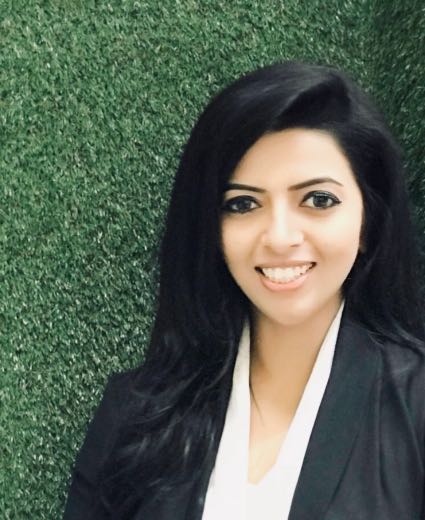
In today’s guest post, Anushika Bose, an alumna of the University of Delhi, shares her journey as a researcher in the area of renewable energy, and her unusual choice of  a ‘professional doctorate’.

Anushika did a PhD from the Helmholtz Centre for Environmental Research (UFZ) in Leipzig, Germany, while being associated as a visiting scholar at the Humboldt University of Berlin. What prompted her choice, what does such an association mean and how is it different from a doctorate in an academic University? Read on.
Anushika Bose

Science was not my first love

Frankly, I wasn’t interested in science or medicine to begin with. I wanted to study law and work as a corporate lawyer. But for my Bengali parents, the definition of education was simply “science”. They steered me into science but left me to get as creative as I could with the subject. I prepared to sit in the medical entrance examinations in India but got through dental sciences only. As I was aware of my pathetic practical hand, clubbed with the fear of not performing well (and keeping in mind the general well-being of humanity), I chose not to go ahead with it.

Despite the decision, the fascination of having the initial “Dr.” prefixed to my name lurked at the back of my mind.

I enrolled for a bachelor’s degree in science from the University of Delhi, where studying about the environment and its ordeals fascinated me. After a master’s in environment management, I got a scholarship from the German Academic Exchange Service (DAAD) to do a PhD in Germany. I was 23. I knew it was too early, but I could not miss the chance. I felt a bit awkward amidst my fellow scholarship awardees, all of whom had previous research experience and publications in international journals.

Studying smart, eco-friendly energy

As a research scholar at Humboldt University in Berlin, I worked on environmentally smart and safe deployment of wind energy infrastructure across landscapes, specifically minimising the direct collision of birds with turbines, thereby keeping green energy as green as possible.

Well aware of the urgent utility of my research, I applied for recognition from the United Nations for a visiting PhD and simultaneously worked as a scientist at the Helmholtz Centre for Environmental Research (UFZ) in Leipzig, Germany.

It worked for me because of an existing system of cooperation between universities and research organisations in Germany. Scholars who join a research organisation for a PhD get associated to a professor (with a similar research background or interest) in a University. In such cases we serve the organisation and its projects. The scientific publication generated from these projects (authored by the scholars), published mostly in international peer-reviewed journals, is also compiled later to form a thesis. The scholar then defends his/her research by means of this thesis in the University and gets a doctoral degree from the University. The best part of such an association is that the years you spend doing research are counted as both work experience and academic record.

I came back to India to head the geospatial analytics wing of a renewable energy research and analytics firm based in Gurgaon, Haryana. We address the various technical, strategic and commercial challenges that the renewables industry faces, with a particular emphasis on risks and uncertainties at each stage of the value chain. We envision helping economies integrate renewable energy into their energy mix using our analytical platforms for a cleaner, sustainable and better tomorrow.

The German experience

At UFZ, I focused on environmentally safe and smart spatial planning of renewable energy infrastructures across the German landscape. My objective was to see how both the environment and people could benefit from sustainable use of wind energy.

UFZ’s approach of working with a global focus suited my career portfolio. Their research was through integration and synthesis of results on-ground, which was helpful when I later tried replicating the strategies in India. UFZ  gives young environmental science researchers ample freedom and insight into integrative research, alongside preparing them for political and managerial careers.

I also liked the flexible, no-fuss, punctuality-driven work environment. I loved the ‘work hard, party harder’ culture, where weekend planning begins by 2 p. m. on Fridays. The segregation of private and work life – no calls, no emails on the weekends, no last minute hassles, nothing ad-hoc – is priceless.

The cultural learning was enriching too – from waiting at traffic lights patiently to sorting trash, from making grocery shopping lists to reading every line in an agreement document before signing. I was amazed at how much the Germans love Indian culture and traditions – they participate in Indian festivals held in major cities there, wearing the Indian attire, relishing our “spicy” food.

The language barrier was never an issue because DAAD made sure we were trained in Deutsch before pursuing research. As far as racism goes, I did hear cases against fellow Indians from time to time though personally I did not face any. Many people confused me as being from the Middle East. Middle Eastern women often came up to me to ask why I haven’t covered my head. There is a substantial Middle Eastern community in Berlin and Leipzig, which maybe the reason I never faced discrimination.

The one challenge I did face was being homesick — especially I lived with my parents all my life. I missed family, food and friends, strictly in that order, during my time outside the country.

Academic vs. professional doctorate

Another challenge was pursuing a professional doctorate from a research organisation instead of a university. In general, a doctorate prepares one for an academic career, while a professional doctorate is geared more towards a professional career. While professional doctorates may hold an adjunct or even regular faculty position at Universities, the reverse is not true. This was my primary motivation behind opting for professional doctorate. All doctoral programmes, however, require coursework and an individual research project. The one at the University requires comprehensive exams and may include residencies, which is mostly not the case at research organisations.

The primary difference between these two types of doctorates is the type of research. University doctorates have a guided set up with assistance from professors, postdocs and fellow PhDs. Professional doctorate students, on the other hand, are expected to expand and apply existing knowledge and research to existing problems in their professional fields, often not with much guidance. A professional doctorate is counted under both work experience and educational experience. It benefits both ways but comes with an enormous pressure to perform and publish just as fellow experienced scientist colleagues.

Ultimately, the decision to pursue any of these types of doctorates should be based on assessing one’s career goals and how one plans to use the degree to meet these goals.

A postdoc is an individual choice. My focus had always been more towards a professional career instead of purely academics. Though scholarships and positions for postdocs exist in Germany, they expect a brilliant publication record and an equally good PhD research experience. This is mostly possible if you have worked in the same lab or institution and under the same project, preferably under the same supervisor/professor. Therefore, it is a common practice to absorb a graduating PhD from a lab as a postdoc in the same lab.

I would suggest aspiring Indian students to look for collaborations with their institutes/organisations here and the desired organisations in Germany. India’s Department of Science and Technology and the German government promote such joint research initiatives, allowing institutes and collaborators to connect.

Back Home

Back home now, my research is majorly into renewable energy development projects, primarily to guide India towards a renewable energy transition. The easy availability of technicalities from countries like Germany could facilitate India’s rapid energy transition into a future CO2 neutral economy in India.

Joint research initiatives could allow German institutes and collaborators to connect and utilise their expertise gathered over decades, monitor the results on a different soil, and gain international experience through collaborations with India.

My pursuit remains to stay well connected and incorporated with my work in both the countries.

[Anushika Bose can be contacted at bose.anushka21@gmail.com]