The science behind India’s heatwaves

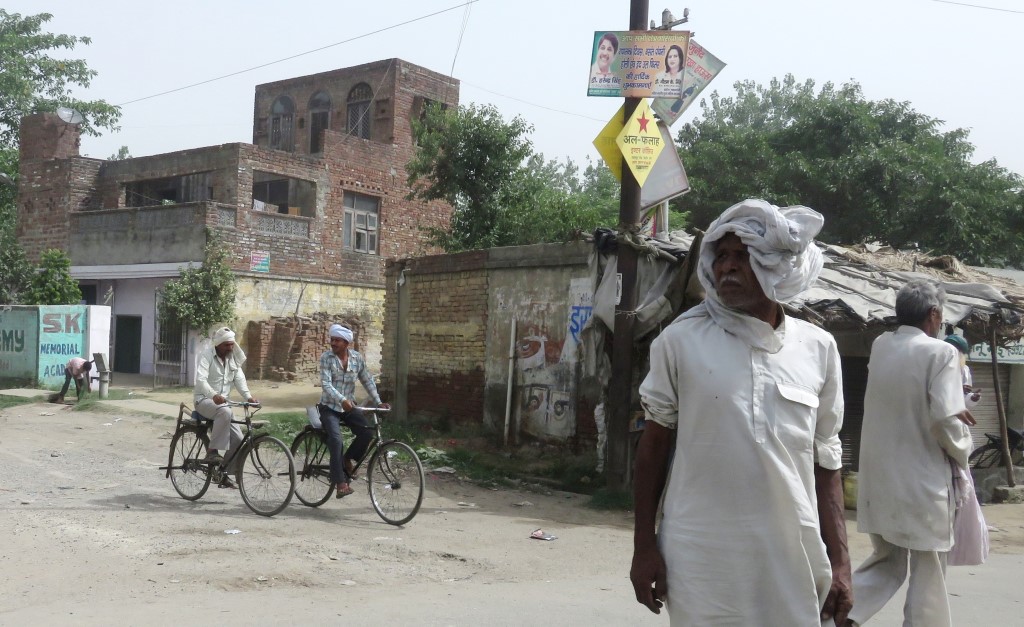
Its that time of the year when mobile phone screenshots increasingly lend themselves to Facebook posts grimly declaring regional temperatures from across the country — most on the wrong side of 40 and some hovering around 50 in degree celsius. It’s the time for the deadly heatwaves that kill thousands every year, close down schools and offices and, in general, make life miserable for millions.

The increasing intensity and number of these heatwaves between March and June every year have been a subject of concern for scientists for close to a decade now. In daily conversations, it is not unusual to encounter someone loosely blaming ‘global warming’ or ‘climate change’ for the phenomenon.

IMG_1443

{credit}S. Priyadarshini{/credit}

Scientists from the Japan Agency for Marine-Earth Science and Technology in Yokohama and India’s ministry of earth sciences have now come together to analyse the anatomy of these heatwaves in a paper1 published in Scientific Reports last week. They tried to understand what causes these severe spells of heat. They looked at observed patterns and statistical analyses of the maximum temperature variability and have identified two types of heatwaves in the country — the first over north-central India and the second over coastal eastern India.

They associate the first one over north-central India with ‘blocking’ over faraway North Atlantic, which results in a cyclonic anomaly west of North Africa at upper atmospheric levels. All of this triggers a chain of events that eventually affects the Indian subcontinent causing heatwave conditions over India. The heatwave in coastal eastern India, on the other hand, is due to anomalous cooling in the Pacific which generates ‘northwesterly anomalies’ over the landmass reducing the land-sea breeze and resulting in heatwaves.

As several studies, including IPCC estimates, suggest that the frequency of heatwaves would only increase in near future, understanding the science behind India’s heatwaves would help policy makers design better strategies to tackle these annual extreme events.

In another related study2 in Scientific Reports last week, a group of international scientists, primarily from China and USA, have questioned earlier estimates of groundwater depletion in the Northwest India aquifer based on data from NASA’s Gravity Recovery and Climate Experiment (GRACE) satellites. Research in the past showed that groundwater levels in northern India have been declining very rapidly — by as much as a meter every three years — between 2002 and 2008. And also that the calamity was almost entirely man-made. In the hotbed of this unprecedented deletion are Rajasthan, Punjab, and Haryana — states with staggering population growth, rapid economic development, and water-hungry farms — accounting for about 95 percent of groundwater use in the region.

Last week’s study, however, says accurate ground water depletion estimation is challenging because of ‘uncertainties in GRACE data processing’ and that earlier studies might have overestimated the depletion over this region. This study highlights uncertainties in the estimates and the importance of incorporating a priori information to refine spatial patterns of GRACE signals that could be more useful in groundwater resource management.

  1. Ratnam, J. V.  et al. Anatomy of Indian heatwaves. Sci. Rep. 6 (2016) doi: 10.1038/srep24395
  2. Long, D. et al. Have GRACE satellites overestimated groundwater depletion in the Northwest India Aquifer? Sci. Rep. 6 (2016) doi: 10.1038/srep24398 

India deadliest country for environment journalists: RSF

Doesn’t look like great times to be an environment journalist in India.

More than 3000 environment journalists from across the world have spent sleepless nights over the last 10 days to cover the Paris climate talks (or the 21st Conference of Parties — COP21) concluding today. However, excesses of a different kind threaten their peers elsewhere, according to a new report released by Paris-based body Reporters Sans Frontieres (RSF or Reporter Without Borders).

India has emerged as the deadliest country for environment journalists, according to a global investigation by RSF, with at least two inquisitive reporters in the Asian nation being murdered in 2015 and many others harassed, threatened and subjected to physical violence. Closely following is Cambodia, where one reporter was killed in 2014.

New Picture

Source: RSF

Jagendra Singh, a freelancer for Hindi-language papers for more than 15 years, died from burn injuries in Uttar Pradesh state after he posted an article on Facebook accusing a government minister of involvement in illegal mining and land seizures. Sandeep Kothari, another Hindi language reporter, was found dead in neighbouring Madhya Pradesh. Police said local organized crime members had pressured him to stop investigating illegal mining.

Ten environment reporters have been murdered since 2010, according to RSF’s tally. In the past five years, almost all (90 percent) of the murders of environmental journalists have been in South Asia (India) and Southeast Asia (Cambodia, Philippines and Indonesia.) The one exception is Russia. Mikhail Beketov, the editor of Khimkinskaya Pravda, a local paper based in the Moscow suburb of Khimki succumbed in April 2013 to the injuries he sustained in November 2008 while campaigning against the construction of a motorway through Khimki forest.

The RSF report points out that journalists who cover environmental issues live in a dangerous climate and are exposed to potentially devastating forces. “We are not talking about nature’s hurricanes, squalls, downpours or lightning,” says Christophe Deloire, RSF Secretary-General. At the intersection of political, economic, cultural and sometimes criminal interests, the environment is a highly sensitive subject, and those who shed light on pollution or any kind of planetary degradation often get into serious trouble, Deloire said in the report.

The situation of environmental reporters has worsened in many countries since 2009, when RSF conducted the first global study on the issue. Environment stories range from global warming to deforestation, the exploitation of natural resources, pollution – issues that often involve more than just protection of the environment, especially when they shed light on the illegal activities of industrial groups, local organized crime and even government officials. Environment reporters are often pitted against very strong lobbies and end up paying a high price for their journalistic pursuits. RSF says, like political and business reporters, many environmental reporters acknowledge being approached by companies trying to bribe them.

RSF notes that forming peer associations to protect themselves would be a better way of dealing with these atrocities instead of fighting lonely battles against mighty corporations, corrupt politicians and mafia groups.

Five books for the COP negotiator

city-cars-traffic-eiffel-tower 3George Orwell, author of dystopian classics Nineteen Eighty-Four and Animal Farm, was a political animal par excellence. He understood how the language of politics could give “an appearance of solidity to pure wind”, as he put it in his 1946 essay Politics and the English Language. Those words should blast right through the miasmas forming over Paris as COP21 enters its second week.

Happily, 65 years after Orwell’s death, there is no shortage of miasma-busters out there, and I’ve assembled five books to prove it. But first, a closer look at the fog itself.

After decades of COP-watching, I remain as astonished by the halting nature of progress as I am by the number of spanners in their works. National politics and regional-bloc agendas are only some of the impedimenta. There are now, increasingly, external pressures such as corporate lobbying and well-meaning but often disruptive parallel actions by billionaire philanthropists. The whole looks, and often is, a hopelessly unwieldy form of decision-by-committee.

More, the COPs have accreted a culture that, like many variants of the UN model, might leave an ethnographer bemused. There are, for instance, the agreement rollouts that are vague, stretch decades into the future, or both. Climate policy analyst Oliver Geden has called the tendency “kicking the can down the road” — the “modus operandi of UN climate policy”. That pattern also popped up in Indian prime minister Narendra Modi’s announcement last week of a solar alliance involving 120 countries, including France.  India’s big date is 2030, by which time it plans to draw 40% of its energy needs from renewables — even as it formulates equally ambitious plans for its coal. France, meanwhile, currently gets 75% of its energy from nuclear, and that is only due to be reduced by 2025. Ambitious transitions, or a prime example of Orwellian doublethink (and can-kicking)?

French climate-change ambassador Laurence Tubiana, however, dubbed the solar alliance “a true game-changer”. That brings me to another staple of COP culture: hyperbole, deployed to give a sense of dynamism to the often seemingly imperceptible advance of climate decision-making. Yet a clear critique of proposed solutions is as important as sticking to the science on climate change: the facts are alarming enough.

Despite all, solutions need to emerge from the psychological push and pull of the negotiating room. On to the books that in my view could move mountains, or indeed miasmas.

Guru Madhavan’s Applied Minds: How Engineers Think (W.W. Norton, 2015) is by and about the pragmatic tribe who craft the made world (reviewed here). If it seems whimsical to imagine an engineer’s experience might translate to the delicate calibrations and manoeuvrings of negotiation, read on. Their mindset, as Madhavan shows, is focused totally on solutions. Trained in ‘modular systems thinking’, engineers handle complexity by considering the components, the interdependencies and the totality of problems. Engineers are, moreover, deft operators under constraints such as time, finance, physics and human behaviour. Finally, they have a nuanced grasp of tradeoffs and can weed out weak from strong goals. To me, pragmatic, time-sensitive grappling with multidimensional problems doesn’t seem alien in the context of the COPs, which are, after all, attempts to construct a framework. And in a broader sense, systems-thinking seems key to achieving sustainability in an inherited cascade of environmental problems.

History, by deepening our understanding of how today’s looming issues have evolved, can give some insight into solutions. Janet Biehl’s Ecology or Catastrophe: The Life of Murray Bookchin (Oxford University Press, 2015), reviewed here, reminds how 50 years ago, important thinking on climate change was already very much out there. Bookchin, an independent radical ecologist, revealed a rare grasp of the global scale of environmental problems in books such as the 1965 Crisis in Our Cities, in which he wrote: “Theoretically, after several centuries of fossil-fuel combustion, the increased heat of the atmosphere could even melt the polar ice caps”. Bookchin’s solutions to the crisis were as prescient, not least in integrating social with environmental elements. Working from a vision of urban ecotopias, he inspired and championed community-centred, solar-powered, closed-loop food production as early as the 1970s.

David Rieff’s The Reproach of Hunger (Simon and Schuster, 2015), reviewed here, is about the global food crisis, a challenge intimately linked with climate change and like it, human-driven. Rieff, a veteran writer on aid and development issues, spent six years researching this study, and it shows. It is perhaps most acute, and balanced, on why the current melee of international policy bodies, the private sector, “philanthrocapitalists” and technophiles is failing to find viable solutions to hunger. Rieff points to the greater context: a globalised, neoliberal economic system which — as others such as economist Joseph Stiglitz have pointed out — drives the inequities behind global problems, not least the wealth of a tiny minority. I commend this book to my hypothetical negotiator as a salient reminder of the politics infusing global challenges.

In Climate Shock: The Economic Consequences of a Hotter Planet (Princeton University Press, 2015), reviewed here, economists Gernot Wagner and Martin Weitzman deliver a stinging slap to the reluctant or somnolent negotiator. They creatively reframe climate change as a risk management issue — asking why, if there is a 10% chance that climate change will lead to catastrophe, we are not girding ourselves through ‘insurance’, such as pushing industry and policymakers to get on with the transition. They marshall excellent evidence to show that the longer the world waits to act, the likelier it will be that extreme events will happen. A welcome reminder that we must avoid becoming lobsters dawdling at the bottom of a slowly boiling pot.

And finally, a primer on what is at the bottom of all the horror and hoopla — fossil fuels. Two years ago I extolled The Burning Question by Mike Berners-Lee and Duncan Clark (Profile Books, 2013). It is even more relevant now. They lay out the maths, showing that we have “five times as much oil and coal and gas on the books as climate scientists think it is safe to burn”. Yet we are planning to burn it, because fossil-fuel companies treat underground reserves as an existing asset. If the stuff stayed in the ground, they note, it would be goodbye to trillions — but a real commitment to carbon curbing. At a COP partly sponsored by oil interests, my putative negotiator might want to mull over the real costs of a carbon economy.

We refer to the COPs as ‘talks’, and the negotiations themselves do proceed in a soup of arcane UN-speak. Outside those established constraints, the players in this global endeavour need to think deeply about language. It is a shaper of reality. As Orwell noted, the use of a hackneyed phrase “anaesthetizes a portion of one’s brain”. By contrast, lucid and original language and the independent thinking it fosters — as seen in these five exemplary books — are a “necessary first step towards political regeneration” and some dispelling of the murk.


For Nature’s full coverage of science in culture, visit www.nature.com/news/booksandarts.

Tyler Prize for Indian environment policy maker

Madhav Gadgil

Madhav Gadgil

Madhav Gadgil, Professor of Interdisciplinary Studies at Goa University and Chair of India’s expert panel on Western Ghats ecology, shares this year’s prestigious Tyler Prize for Environmental Achievement with Jane Lubchenco of Oregon State University, USA. The 2015 Tyler Prize, announced today, recognises their leadership and engagement in the development of conservation and sustainability policies in India, the United States and internationally.

Gadgil’s landmark report on the biodiversity of Western Ghats known as the “Gadgil Committee” report offered guidelines on the protection and development of India’s Western Ghats, a UNESCO World Heritage site and one of the eight most biological diverse areas on earth. His body of work has helped India draft the National Biological Diversity Act. Lubchenco, the former administrator of the federal agency National Oceanic and Atmospheric Administration (NOAA) has for long advocated the importance of the ocean and the need to protect it. The U.S. Department of State named her the first-ever science envoy for the Ocean, to promote this focus on ocean science, marine ecology, climate change and smart policy to a global audience.

“Drs. Lubchenco and Gadgil represent the very best in bringing high-quality science to policy making to protect our environment and ensure the sustainability of natural resources in their respective countries and around the world,” said Tyler Prize Executive Committee Chair Owen T. Lind, Professor of Biology at Baylor University announcing the prize winners. Lubchenco and Gadgil will share the $200,000 cash prize and each receive a gold medallion. The Prize, awarded by the international Tyler Prize Executive Committee with the administrative support of the University of Southern California, honours exceptional foresight and dedication in the environmental sciences and policy.

Gadgil’s career has been dedicated to marrying environmental science with policy making in India and promoting environmental science nationally. Through his public speaking and writing, Gadgil has advanced the field of environmental science and put it on the national radar. “From an early age, my father’s work inspired me to work with people and think about the impact of our collective activities,” Gadgil said in a release. “This first came about in my work in 1975 when traditional basket weavers who depended on bamboo in the Western Ghats approached the government and said the overexploitation of bamboo for paper mills was hurting their livelihood.”

Gadgil’s work began examining the tension between economic development, traditional use of resources among local communities and environmental conservation. This cross-sector approach drove the publication of his first book, This Fissured Land, which is used in environmental education across India, as well as a resource for policy makers.

According to Gadgil, the Western Ghats are central to India’s water supply, genetic diversity, economy and quality of life. “The Indian constitution is about empowering people and our resource management is too top down. Local communities do a better job of balancing economic development and conservation. We must have policies that empower local people to make these choices.”

Working with local forest communities in the central Indian forest belt, Gadgil has seen that that management in the hands of locals is most effective ensuring economic opportunity and sustainable use of natural resources while preserving sacred groves and local cultures. “We must engage local people who are most directly affected by policies if we want to develop policies that promote sustainability and balance the economics, culture and conservation,” Gadgil said in the release. “Empowering people is the key.”

Gadgil is a recipient of India’s highest civilian honours the Padma Shri in 1981 and the Padma Bhushan in 2006. He also received the Shanti Swarun Bhatnagar Award for biological sciences in 1986.

Climate change policy: What’s new for Asia?

CDKN-IPCC-Whats-in-it-for-South-Asia-AR5_Page_01At a workshop discussing what the take homes for  Asian countries might be from the latest assessment report of the Intergovernmental Panel on Climate Change (IPCC) — AR5 — it was pointed out that there wasn’t enough science coming out of developing countries to feed the database on emissions or warming in the larger climate change debate. Local scientists need to conduct more climate change related experiments, write more scientific papers and bolster regional science  in order to make a case for these developing countries in the international discourse on climate change.

“We also need more authors from the developing world to participate in writing the chapters for the IPCC reports,” says Jonathan Lynn, Head of Communication at the IPCC. Lynn says though there is substantial science emanating from India now, some other small Asian countries such as Indonesia lag far behind. The IPCC collates scientific data from across the world to make predictions for future scenarios with the help of scientists, economists, policy makers and government representatives. Most of the work done by scientists in this process is voluntary and not paid for. Developing country scientists, who also do consultancy work for a living, would expect such work to pay off for their time — this could be one of the reasons why not many developing country scientists are interested in the job, Lynn says.

The IPCC assessment reports try to turn all available scientific evidence into something that would make sense to policy makers and businesses — therefore, the authors have explained the science at hand this time in terms of “risk management” parameters. “And since there are questions of ethics and equity involved in this highly political debate, we now have philosophers in the IPCC team to make sure those aspects are taken care of,” Lynn says.

Joyashree Roy, an economist from the Jadavpur University in Kolkata is the lead author of the industry chapter in IPCC’s assessment report five. She says Asia needs to urgently decouple the high energy sector from emissions. “Almost 44 per cent of the global emissions are from the energy and industry sectors of China and India — there lies an opportunity for south Asia. Can we think of a low emission-high energy scenario?”

Roy says population and economic growth are responsible for the surge in energy demand as well as emissions in south Asia.

Another IPCC author Navroz Dubash from New Delhi-based thinktank Centre for Policy Research points to an inherent dichotomy in the report — the number of countries which have adopted mitigation strategies or have a national action plan for climate change has gone up many times, especially in Asia post-2005. Simultaneously, the emission rates of Asia have zoomed and the world as a whole is hurtling at great speed into a carbon-based future. How is that possible, you wonder. “Well, there have been a slew of national policies in the last few years but they will take around 3-4 years to bear fruit. The more optimistic outlook would be to review the scenario in a couple of years and see if these policies have led to significant action,” he says.

Dubash says India will also benefit from the new stand of IPCC where ‘co-benefits’ of climate-friendly policies are being seen in new light. Earlier, IPCC talked of climate change mitigation plans as the main goal with parameters such as development or health as co-benefits. “The idea now is that the concept of co-benefits could work both ways, meaning if a development project brings in climate change mitigation as a spin-off, it should be totally acceptable. This concept is at the core of India’s national plan and now IPCC has sanctified it — so there’s a huge opportunity.”

According to A R Paneerselvan, advisor to the executive director of Panos South Asia, an organisation informing public and policy debates on environment issues, there are talks of a south Asian intiative for climate related insurance. The insurance would cover farmers against any vulnerability stemming from climate change. The initiative is still at a nascent stage and there’s pressure from the cash crop sector in south Asian countries to make a case for climate-related insurance, he says.

As for IPCC’s fifth assessment report and what’s in it South Asia, London-based Climate and Development Network brought out a good primer that explains just this. The Intergovernmental Panel on Climate Change (IPCC) chairperson Rajendra Kumar Pachauri also spoke about what it means for India at an outreach programme in New Delhi today.

Nature India coverage gets South Asia Climate Change Media Excellence Award

Nature India is humbled to be the recipient of the South Asia Climate Change Media Excellence Award 2012-13 for its coverage of climate change issues, including that in the Sundarban delta of the Bay of Bengal. A series of articles and blog pieces from Nature India’s coverage of climate change were collectively chosen for the award by Panos South Asia, headquartered in Kathmandu, Nepal and part of Panos Institutes worldwide that encourage and facilitate public discourse and debate on a wide range of issues including environmental issues. Nature India‘s reportage will be honoured at the awards night of the CMS Vatavaran Film Festival on January 30, 2014 in New Delhi.

The recognition bolsters Nature India‘s spirit of bringing its readers the best coverage of Indian science.

Please register free on Nature India to read the full articles. Here is an excerpt of one of the award winning articles:

Will the climate ever change for Sundarbans?

Seven years after the first report on the ‘vanishing islands‘ of Sundarbans, Subhra Priyadarshini revisits the fragile delta in the Bay of Bengal to find that it is not just climate change that threatens the existence of this world heritage mangrove tiger-land spread across the Indo-Bangladesh border.

Sundarbans

{credit}Subhra Priyadarshini{/credit}

The seas are rising around the Sundarbans. That is old news.

Two islands in this 100-odd island conglomerate have vanished from the face of earth. Even that is old news, met with a stoic shake of the head by environment refugees who now inhabit Sagar, the biggest island in west Sundarbans. For them ‘climate change’ is just another phrase that NGOs and people from the media use to describe everything that is wrong with their lives.

Flooding is a way of life for people in the islands.

In their life full of challenges, the loudest alarm bells ring before every monsoon — of the fury that the sea is about to unleash between September and November. Severe cyclones — four of which have visited the Sundarbans between 2007 and 2009 — are gulping in more and more land every year. The world’s only mangrove tiger-land is now a constantly shrinking landmass, its existence threatened by severe cyclonic storms, unmanageable demographics, rising seas, coastal flooding and erosion.

Though just a bit of this fear is reflected in government figures, it is clearly evident in Shamila’s voice. “The fury of the sea now is like never before,” she says standing right where she stood seven years back outside her hut in one of the many refugee colonies dotting Sagar. Shamila has grown from a shy teenager into a confident mother of two and knows where to flee if the going gets tough. “We will go to Kolkata and do something there,” she says talking of her secret dream to settle in the burgeoning megapolis, capital of West Bengal, where “you get beautiful saris”.

Climate displacements

Shamila’s father Sheikh Abdullah did something similar in the late 1990s when he left the sinking island of Lohachara in the vicinity, along with 7000 other refugees from various islands, and sought shelter in Sagar. Lohachara does not exist on the map anymore along with another island Bedford, which never had any human habitation.

Scientists estimate that Sagar will be the worst hit in future with over 30,000 people displaced by 2020 even as neighbouring Namkhana produces 15,000 more refugees. The other islands, all in the western end of the estuarine delta, predicted to face similar fates are Ajmalmari (east and west), Dalhousie, Dakshin Surendra Nagar, Moushuni, Lothian, Ghoramara, Dulibhasani, Dhanchi, Bulchery, Bhangaduani and Jambudwip.

According to estimates, between 2001 and 2010, the net loss of land to the seas across the Indian Sundarbans stands at 63 square kilometre. About 1.35 million people are currently at high risk from sea level rise, storm surges and coastal flooding, with another 2.4 million people exposed to moderate risk.

Read the rest of the article here.

Good science & good journalism: what’s the link?

In journalism, the more you write about a particular issue, the more chances you have of being heard by people who matter and of impacting public policy — that’s an obvious thing.

In science, the more you publish, the more you influence your peers and, in effect, people who matter. Now, that too is pretty obvious.

In many ways — especially when the issues are of immediate importance to you and me (such as the environment or health) — journalism and scientific publishing have a lot in common. They help create the buzz, bring matters to the fore and, if done well, could influence national policies. In many cases, a glaring scientific observation lends seamlessly to a brilliant work of high-impact journalism and vice-versa.

The latest IPCC working group report (fifth assessment report or AR5), as always and with reason, got a lot of media attention when it was released last month. There have been studies and more studies showing how media coverage of climate change issues peaks during IPCC negotiations and before and after the release of such ARs. However, there’s also much disappointment among negotiators and climate change communicators that effective coverage does not happen where it matters most.

During a south Asian climate change communicators’ meet last year, the issue of journalism versus activism was discussed at length as a section of journalists seemed to be gleefully crossing the line, created by modern journalism, to “do their bit for the society”. Some debated that we live in times when journalism is no longer considered a vocation, it is a profession guided mostly by advertising revenue, circulation/viewership and space/time crunch. However, most agreed that environment journalism is still that niche area where these lines often blur effortlessly.

Award winning environmental journalist Mark Schapiro says science lends itself seamlessly to great investigative stories.

Award winning environmental journalist Mark Schapiro says science lends itself effortlessly to great investigative stories.

The sentiments were echoed this month when a meet of global investigative journalists discussed how environmental journalism could be made more scientific and high-impact. The session discussed at length the many layers of environmental coverage, the use of scientific methodology and new age tools (satellite images, scientific literature and geotagged maps) to make sense of it all.

Taking this discussion to the next level — that is to ask ‘how environment journalists can make a difference’ — David Dodman of London-based International Institute of Environment and Development recently outlined what journalists in their role as communicators can do towards “strengthening the resilience of vulnerable citizens and infrastructure.”  They could advocate wise use of funds to improve living conditions and build resilience.

Dodman says urban populations in Africa and Asia live in places exposed to hazards, such as floods and tropical storms, which will become more frequent and intense in the coming decades. Many towns and cities lack the necessary basic infrastructure and resources to reduce the risk that such hazards pose,” he wrote in his blog. Urban residents are not always aware of the range of funds that their cities could use. Journalists can inform vulnerable citizens about them, so that citizens can in turn make the right demands from their authorities at different scales, he says.

A couple of months ago, an article in Nature Reviews Climate Change made a direct connection between pollution in a particular country/region to the number of scientific papers published in that country/region. The article accompanied by a beautiful map  concluded that the more the number of scientific papers produced from a country, the lesser are its pollution levels. “Good scientific research is necessary to provide the basis for the implementation of policies that aim to control harmful environmental agents, helping society to decide a course of action,” write Lais Fajersztain and colleagues in the paper.

They also infer from their study that governments that spend more on health care have more stringent air quality standards, probably because of greater governmental awareness of the adverse health effects of air pollution and the consequent establishment of air pollution control measures to avoid increased health costs. The researchers found that scientific research on the impact of air pollution on health is concentrated mainly in North America and Europe, China, Australia, Brazil and Japan. Such research is practically nonexistent in Africa, India and other South American countries — developing countries were found to contribute only 5% of the total research.

The map depicted a comparative panel of the number of papers produced from 1983 to date on malaria, water quality and air pollution, using the Web of Science database. “There was a marked imbalance between levels of air pollution and local scientific production: a more balanced scenario emerges when waterborne diseases and malaria are considered,” the scientists wrote.

Now that is something to pick on. And it brings to fore another question: are countries traditionally doing well in science also producing the best journalistic works? The question, in turn, merits another scientific study.

Good science and good journalism will never cease to give-and-take.

Aerosols contributing to climate change in India, China

Our freelance writer Biplab Das dug out an interesting research paper from Geophysical Research Letters this week. Though the authors are from Argonne National Laboratory, Illinois; NASA Goddard Institute for Space Studies and Columbia Earth Institute, Columbia University, New York; they have been working on the contribution of aerosols  to climate change in India and China.

It is worth pointing out here that there has been very little study of the contribution of aerosol emissions from India and China to radiative forcing. Radiative forcing is the process through which about 30 per cent of sunlight reaching the Earth’s surface is reflected back into space as invisible infrared light.  Aerosols generated by human activities reflect infrared light generated by reflected sunlight, thereby trapping it in the atmosphere. This alters radiative forcing, resulting in climate change. Recent studies have identified aerosol emission, particularly black carbon emission from industrializing countries like India and China, as emission control targets for mitigating climate change.

Coal burning is one of the key contributors to aerosol emissions.

Coal burning is one of the key contributors to aerosol emissions.{credit}Joerg Boethling / Alamy{/credit}

So the researchers have found that these small airborne particles called aerosols (for example, black carbon particles in diesel exhaust and sulfate particles produced by coal burning) in India and China may indirectly contribute to climate change. Higher black carbon levels in the atmosphere lead to warming, whereas increased sulfate levels cause cooling.

To find out the situation in India and China, the researchers examined emissions from the most important aerosol sources in the two neighbouring countries and estimated the net radiative forcing from each source, both locally and globally. In this analysis, they used models developed by the NASA Goddard Institute for Space Studies.

Major emission sources of black carbon are diesel truck and bus exhaust and residential biofuel and fossil-fuel combustion. For organic carbon, residential biofuel and fossil-fuel combustion are important sources. The study found that fossil-fuel combustion in the power sector accounts for 52.3 per cent of sulphur dioxide emission in India.

The researchers reveal that residential biofuel combustion in both India and China gave rise to significant positive direct radiative forcing through black carbon emission. They say that aerosol emission from diesel trucks and buses also makes a positive contribution to radiative forcing in India.

References

1. Streets, D. G. et al. Radiative forcing due to major aerosol emitting sectors in China and India. Geophys. Res. Lett. (2013) doi: 10.1002/grl.50805

Heat warning system for India’s harsh summer

I found it quite interesting that an Indian city should have a proper ‘action plan’ to tackle the effects of changing climate patterns that have resulted in some severe summer temperatures in the last decade. Living in India, the action plans by city or state administrations we have mostly seen are: close schools and colleges,  close offices and at best issue a “do not venture out between 11 a.m. to 4 p.m” notice. There have been sporadic public interest advertisements in newspapers on how to beat the heat.

So, this week when the U.S. based environmental action group NRDC said it would be releasing South Asia’s first ‘heat action plan’ for the city of Ahmedabad in Gujarat, India, it struck as a novel, much-needed concept.

viewimage

Some key people behind the action plan: (clockwise) Kim Knowlton, Dileep Mavalankar, Gulrez Azhar and Anjali Jaiswal (inset).

The plan has been finalised in collaboration with the Indian Institute of Public Health (IIPH), Gandhinagar; Mount Sinai School of Medicine, Rollins School of Public Health at Emory University, Georgia, USA; and Ahmedabad Municipal Corporation (AMC). NRDC said in a release that with this plan to protect residents from extreme heat events, Ahmedabad will be able to ‘comprehensively address the threat of extreme heat caused by climate change.’ (NRDC’s Anjali Jaiswal and Kim Knowlton have elaborated on the action plan in their blogs earlier. Dileep Mavalankar and Gulrez Shah Azhar from IIPH, Gandhinagar were partners in the project. )

The action plan includes initiatives to educate communities on the health risks of extreme heat, implement an early warning system, and train medical officials to treat heat-related illnesses. The plan is being officially released on Arpil 16, 2013.  It includes plans on how to equip government agencies, healthcare providers and other stakeholders to respond to extreme heat events as India’s heat season progresses.

NRDC says the action plan is based on scientific studies conducted in the city over two years. The plan also suggests policy measures to address projected future health risks related to extreme heat. A key area of the plan that would be useful for the local administration are suggestions on creating emergency response and management; and involving health agencies as well as meteorological services in the bigger scheme of things.

The idea is to have an innovative set of strategies, including an early heat-health warning system, to protect the city’s seven million residents (especially the vulnerable ones) from extreme heat.

If the Ahmedabad project turns out to be successful, Gujarat apparently plans to implement it across the state.

Sounds like a good plan!

Himalayas get climate funds

Some respite for the people of the Hindu Kush-Himalayas (HKH) grappling with the effects of climate change.
A new grant of 11 million euros announced today will go into livelihood development and mitigation of climate change impacts for people in the region. The European Union (EU) and the International Centre for Integrated Mountain Development (ICIMOD) signed an agreement on this today.

{credit}photodisc/imagesource{/credit}

The programme will start in 2013 and envisages using natural resources in a more sustainable, efficient way to protect the environment. According to a release by the organisations, the programme will try to do this by enhancing the knowledge base on Himalayan ecosystems and ecosystem services, raising awareness on the effects of environmental degradation, climate change and adaptation; strengthening collaborative action research in the region. It will also build capacity in higher education and train institutions and civil society across the region to scale up best practice for improved resilience to climate change.

The HKH region spans over 8 countries: Afghanistan, Bangladesh, Bhutan, China, India, Myanmar, Pakistan, and Nepal with interconnected mountain ranges and plateaus, extending for more than 3,500 km.  Glaciers alone cover an area of 60,000 square km.  The region is called the world’s ‘roof’ and ‘water tower’.
According to ICIMOD, changing climate patterns have negatively impacted the lives of people in this region. Glaciers are receding, permafrost retreats, snow melt induces changed river flows, and ecosystems are altering.
There is an increased frequency and duration of extreme climatic events, causing more frequent and severe natural disasters.  These factors aggravate erosion, land degradation, decline in soil fertility and crop yields.  The capacity of mountain people to deal with these growing stresses is limited, and the incidence of poverty is growing.
The funds should see some reversals in the lives of the HKH people, who are in the direct line of fire of the climate change phenomenon.