Nature Arabic Edition celebrates six months

L-R: Steven Inchcoombe, Suweliem, Magdy Saed

L-R: Steven Inchcoombe, Mohammed Al-Suwaiyel, Magdy Saed.

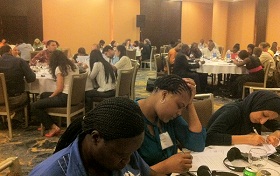
Nature Arabic Edition, the monthly Arabic translation of the leading science magazine Nature launched in October 2012, celebrated its sixth issue during the week long Saudi International Conference on Science Culture in Riyadh last week.

The official inauguration of the magazine, which is a monthly publication giving readers in the Arab world a chance to read about cutting-edge science in their native language, was followed by a talk by Philip Campbell, Nature‘s editor-in-chief, about how scientists can get published in high impact journals.

Saudi Arabia has been working to increase its science profile internationally, and offering science in Arabic and making it available to Arabs everywhere is one of the main endeavours of the King Abdulaziz City for Science and Technology (KACST), the sponsor of Nature Arabic Edition.

During the inauguration event, Mohammed Ibrahim Al-Suwaiyel, KACST president stressed the important role that science will play in the development of the Kingdom of Saudi Arabia. “Arabic speakers now have free access to the latest developments in science and technology, and in their native language, in hopes that the coming generations will have a deeper connection with and appreciation for science, technology and innovation.”

“Humanity has always been building up knowledge and science and experiences through exchange. While science today moves in all directions, the majority is produced in the West,” said Magdy Saed, the editor-in-chief of Nature Arabic Edition. “Translation is one of the most important tools in the exchange of knowledge and this is where Nature Arabic Edition comes in, helping bring science from the West to the Arab world. Making cutting-edge research available to scientists in the region will also promote a science culture throughout.”

The magazine currently reaches 10,000 people in its print format, while it is freely available for anyone to access online. The last month has seen over 14,000 visitors to the portal.

Developing world sessions axed from WCSJ2013

wcsj2013The programme of the World Conference of Science Journalists (WCSJ2013) has seen a sudden reshuffle last month, with six sessions that focused on the developing world countries removed. This may end up giving the conference, held in Helsinki, Finland, a rather “Western” taste instead of a more global one.

According to SciDev.Net, the producers are now invited to take part instead in a two-hour ‘around the world’ session. The conference organizers say this decision was made due to the lack of funding to bring the session speakers and producers to Helsinki.

Two of the sessions focused on issues facing science and science journalism in Latin America, an area often vastly underrepresented in previous WCSJ, and two focused on African and non-English speaking media. The final two cut sessions were on neglected diseases and tuberculosis, which often plague developing countries.

This is truly unfortunate because from previous experiences, there is much that both journalists from the developing and the developed world can learn from each other through interactions at these professional meetings.

Science journalism is still in its infancy in the developing world, but it is growing steadily and gaining respect and momentum. The challenges that science journalists there face are very real and we (since I’m included in this part of the world) can often use all the help we can get from our counterparts from the West. On the other hand, science journalists from Africa and other developing regions bring a side of the profession to the table that many scientists in Europe or the US may be unaware of.

I was on the organizing team for the last WCSJ, held in June 2011 in Doha, Qatar, and – while things may not have gone perfect due to an abrupt movement from Cairo to Doha following the events of the Arab Spring – the fact that nearly half of attendees were journalists from the developing world brought a much needed angle to the meeting and greatly enhanced it in my opinion. A session I produced on reporting science to non-English speaking audiences, for example, shed light on a challenge that most journalists in the developed world are unaware of and generated some incredible tips and techniques that established science journalists reporting in their native languages came up with over their careers.

According to the WCSJ2013 organizers, they are working to secure more funding in order to bring as many science journalists from the developing world as possible. They have already announced scholarships available that will support travel and accommodation and conference registration for developing world science journalists.

Commenting on SciDev.Net, Jean-Marc Fleury, the executive director of the World Federation of Science Journalists (WFSJ) which is co-hosting the conference, stressed that the federation is working hard with the conference organizers and other organizations to secure that a large number of science journalists from developing countries join the conference. Vesa Niinikangas, president of the WFSJ, also commented saying that the “developing world is not being purged from the WCSJ2013” and pointing out the various sessions that have speakers from the developing world and with a focus that can be important to these regions of the world.

Simplifying science in Arabic

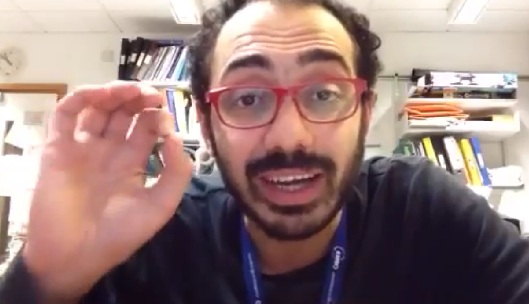
Mouhannad MalekMouhannad Malek, a young Syrian researcher studying in Cambridge University in the United Kingdom, is obsessed with spreading science among the public in the Arab world. He wants to start with complex issues of science from interesting research papers and distill them down to a format where someone with no prior science knowledge whatsoever would be able to understand.

He started the “Syrian Researchers” page last year on Facebook which was quite successful, which has over 13,000 likes now, where he explains science papers in a simple, easy to understand way. “When I write an article to publish it on this page, I try to read it to my parents, who don’t know anything about science. So if they understand it, I publish it. Simple, but it works,” says Malek.

More recently, Malek has launched a YouTube channel where he explains new science papers to a layperson audience in Arabic – probably a first of its kind. The topics are diverse – ranging from the effect of drinking diet soda to sleep deprivation and stem cell research. Malek contends he opted to use videos because Arabs mostly prefer to watch television rather than read. This way, he is able to offer them science knowledge in an exciting format with the click of a mouse.

While Malek has been posting a new movie every two weeks or so, he is increasing the frequency to twice a week on Mondays and Thursdays. While it is currently a one man show, several other scientists have contacted him showing interest in joining the project and generating similar videos. “I asked them to shoot something and to speak with a simple language, this is my red line. I am waiting for their trials.

While there are over 40 volunteers now helping across the website and Facebook page, Malek still handles the YouTube channel alone. “My problem is technical; I don’t have any professional software to help me so I am learning as I go. And on top of being a scientist from 9:00 to 6:00, when I get back home I start to become an actor, animator, editor and director.”

He does not want to stop at YouTube, however. Malek would one day like to expand his project into a full-fledged science channel on television. He hopes he can generate interest in science and compete with other mainstream channels by offering science in a simple, fun and engaging manner, making it a contender for the time people spend in from of the television. “I am not talking just biology; I am talking about everything – biology, geology, physics, economy, art, architecture, music, etc.”

The channel he envisions would be profitable to the investors, while part of its revenues would go to a charity that supports scholarships for students in the Arab world to study overseas “in order to create a new Middle Eastern scientists generation,” he explains.

“I hope that one day, this YouTube channel would reach every single connected house in the Middle East. I hope really that we increase the knowledge of our people. I hope that people would ask questions, not just reacting passively. I hope by doing what I do, I can make science and culture entertaining,” says Malek.


It’s a worthy endeavour, and one much needed in the region today. Meanwhile, you can watch the latest video that Malek had posted on his channel below:

https://youtu.be/zFjwAqsjMJA

Students launch popular science magazine

The VectorThe Arab world has a serious problem when it comes to science communication. To put it frankly, there’s hardly any of it – and what little there is is of such bad quality that the public is not interested in even coming close to it (that is if they even heard of it).

While science journalism is booming here (even though it is shrinking in many places in the West), public engagement to raise awareness of science and innovation remains minimal. There are a few really good initiatives to engage the public with science, such as FameLab or Stars of Science – but they are few and far between.

But some young students from the German University in Cairo (GUC) who are passionate about science decided to take their fascination a step further and launch the first student popular science magazine in Egypt. This could even be the first such student effort in the Arab world.

The magazine, which they are calling The Vector, will start by covering research on and off the GUC campus in a format accessible to anyone interested in science. It will also cover research happening internationally, with articles that span both physical and biological sciences.

“With a heritage of poor science curricula in terms of content, approach and presentation  simply speaking the world ‘science’ is sufficient to invoke a string of dull memories to the average Egyptian,” says Youssef George, the editor-in-chief of the new magazine. To counter this, he suggests the written word will not be enough. “In a community in which most individuals gather information from audio-visuals, it is inevitable to go for that at a later phase.”

The magazine will start as an online publication, launching its first issue next May. However, the students hope to have a monthly print edition by September 2013.

The magazine will stay a student project, so when the current students graduate they will be replaced by new students, always keeping fresh blood flowing. “The transient nature of university life makes it impossible for any one person to stay in their position for too long,” says Sara Khaled, the magazine’s managing editor. “The dynamic nature of the team would always ensure that the quality of the production is based on a coordinated team effort, rather than the individuals running it.”

High on the agenda of the launch team is to build a solid foundation that others can build on and grow in the future, once they have graduated and left university. They will not completely leave the project behind, however, but will continue offering advice and support to the subsequent teams taking the magazine forward, explains co-news editor at The Vector Reham Tarek, always keeping them motivated and passionate about what they are doing.

To start if off, the students are relying on freelance volunteers to supply the stories and articles. A long recruitment process on campus has yielded many interested people who were excited to take part in the effort – even several not majoring in sciences. “We want to give them the opportunity to learn and grow as part of The Vector team. This is the core part of our vision.”

It is this vision, which every member of the team completely believes in, that is driving force for the project. Their belief that they must help “gradually refine science-centred thinking, both locally and regionally, and to continuously help nurture it with the best of science news from all over the world,” as Alaa Madi, the chief biological sciences editor puts it.

“What keeps us motivated is that we are starting out at a time where there are many science communication initiatives that have paved the way, such as Nature Middle EastSciDev.Net and FameLab, that have collectively created a scientific awakening and encouraged us to continue from there,” adds George.

Why FameLab matters

The winners of the first FameLab Egypr 2013 heat in Cairo University.

The winners of the first FameLab Egypt 2013 heat in Cairo University.

I have often visited the prestigious Cairo University grand hall to attend lectures or talks by prominent researchers and politicians – including Barack Obama on his first trip to an Arab state after he became the US president. Early this week, I found myself sitting there in the front rows again, but instead of world-renowned figures, it was dozens of young undergraduates and postgraduates taking the stage for the first leg of the FameLab Egypt competition.

For those unfamiliar with the competition’s concept, it involves groups of young people passionate about science going on stage to explain a scientific concept of phenomenon in three minutes. They cannot use any powerpoint presentations or charts – just small props they can bring on stage. The trick is they must do this in an exciting, engaging way that is easy for a non-scientific audience to understand.

Over 45 young people competed, talking about topics ranging from the potential of biofuels to how neurotransmitters work and everything in between. Some were captivating, sending the audience into a frenzy of applause while others were less so, but not a bit less impressive. And that is why FameLab really matters.

The competition is one of the best science outreach efforts in Egypt – and probably in the Arab world. The audience was full of young people eager to listen to science. Additionally, many of the contestants had never been on stage before, let alone explained a complex scientific theory in a simple, approachable manner. They were building up and acquiring new skills that will, in the future, make them excellent science communicators – should they choose to pursue that career.

We have repeatedly argued here that we need more outreach efforts to generate interest in science among the public. By having the young people present science in this fun and simple manner, they manage to engage the audience much more effectively that the writings of many science journalists in Arabic news media outlets. They are effectively breaking down this barrier that the layperson has in their mind towards science.

A top notch panel of judges, ranging from a movie superstar to journalists and scientists, comments on each performance, judging the contestants on content, clarity and charisma – offering them advice on how they can improve their presentation and outreach skills. These are tips from professionals that the contestants might not normally have access to. This further hones the young people’s skills as science communicators.

At the end of the day, it is not about winning or losing. After all the heats and the finale conclude, only one contestant will represent Egypt in the international leg of the competition during the Cheltenham Science Festival in the UK. However, I hope that the competition can have a ripple effect far outside the grand hall in Cairo University.

I hope we can see more young and old people from those who were in the audience hungry to learn more about science. I hope that some of the amazing contestants who didn’t make it will have had a taste of how wonderful it is to communicate science and go back and work on their skills and join the competition again next year. I hope the winners of the heats manage to find sponsors who would be interested in science communication and continue on this career. I also hope the winner who represents Egypt in the UK wins the international award!

But ultimately, and above all, I hope that people realize how positive this initiative is in the dearth of science communication that spreads across the Arabic-speaking Middle East.

Unfortunately, the only Arab country taking part in FameLab this year is Egypt. This is indeed a pity, considering there are exceptional people across the whole region waiting to be discovered, and that not a single state in the region does not need more science outreach.

Science blogging in the Arab world (or the lack thereof)

This is a guest post from Rayna Stamboliyska

When I started browsing the web for science blogs from the Middle East and North Africa (MENA) region, I didn’t think it would be such an adventure. And for a quest, it was one.

I thus started entering keywords in the search engine. The outcome was disappointing: one or two blogs in English popped up. I thought it is because I was only searching in English, but French and Arabic searches did not harbour significantly more results. When I asked friends to point me out my wrongdoing, they just laughed and the comment invariably was: “Dear, spare your efforts, there is no such thing like science blogging in the region.”

The blogging culture in the Arab world thus seems to mainly touch opinionated people with a say in politics and economy. There is nothing wrong with this. I’ll spare you a lecture on the importance of social media for changing the society we live in, this has been thoroughly discussed elsewhere. Loads of bits and ink have also been spilled to demonstrate the importance of science blogging. Given the paucity of science blogs in the Arab World, I guess a reminder is more than useful.

Why write about science? Reason #1: scientists get to speak directly to the public. Reason #2: lay scientists or enthusiasts engage and keep up to date with developments in various scientific fields. Reason #3: open discussions on research topics are promoted among peers.

This sounds great, motivating and all that. There is, however, a recurrent feature pointing its nose from this shortlist: scientists should initiate and nurture this dynamics, ideally complemented by active science writers and journalists.

If you are reading this piece, it means you are aware that science is an emerging field in the Arab world. Funding is far from sufficient to secure comfortable or even basal equipment for research. Moreover, political influence in science making and communication is a fundamental characteristics in the region. Doctoral degrees are, however, greatly appreciated in all MENA countries. Additionally, journalism and mass communication are a frequently taught discipline. But science and journalism do not really mingle, after all.

If you browse the websites of major universities in the Arab countries, you realize that they are rarely updated. Even if they are so, press releases about endeavours and achievements seldom land on journalists’ desks. Very often, the few science-related articles one stumbles upon in a newspaper are just a translation from foreign sources. This clearly gives the bitter taste of “nothing happens in our part of the world.” Even such admirable initiatives as publishing 50,000 PhD theses online and using the platform as a networking hub finally fail: the dedicated website does not exist at all.

A different dynamics is operated in the Gulf states where Western universities have started to settle, and scarce reports about conferences see the day. Although progress is clear, science communication still has much room for improvement.

Continue reading

Mentoring programme graduates new batch of science journalists

{credit}© Mohammed Yahia{/credit}

After two years of ongoing mentoring, 58 science journalists from the developing world have graduated from the World Federation of Science Journalists’ (WFSJ) largest science journalism training programme.

SjCOOP, which is the WFSJ flagship activity, twins budding science journalists from Africa and the Arab world with established science journalists from leading science outlets, such as Nature and Science. This is the second round of the project.

“During the programme we worked with some 80 journalists but not all of them made it through to the graduation,” says Olfa Labassi, the programmer’s coordinator. Only 58 science journalists from the Arab world, English-speaking Africa and French-speaking Africa are graduating.

Through the programme, each mentor works directly with four or five science journalists, offering advice, criticism and evaluating their work. They exchange experiences and help them improve their work and find better opportunities. The project aims to create stronger science journalism in the developing world, teaching the journalists to be more critical and hopefully to boost the role of science in policy-making.

“It has been quite an interesting journey over the past two years,” says Deborah-Fay Ndhlovu, a mentee who works at Research Africa and, through the programme, went on to intern and freelance for Nature. “After two years on the course I have learned that learning on how to report science is an ongoing process and there’s still much to learn,” adds Bibi-Aisha Wadvalla, a freelancer from South Africa who writes for Nature Middle East.

{credit}© Mohammed Yahia{/credit}

In preparing for the next phase, SjCOOP 3, the organizers are now evaluating the successes and shortcomings of the programme. “Part of the idea behind the programme was to form closer collaborative connections between the mentees, so they can in the future work together and help each other. We have seen strong connections forming within each of the three different language groups. But this isn’t happening across the groups as much as we had hoped,” says Labassi.

The selection criteria of both mentees and mentors also needs to be tightened, adds Labassi. “We need really reach the people with high potential.”

For the next phase, which should start in 2013, the WFSJ wants to use the programme to strengthen local science journalists associations, making them a primary partner in the training course.

“This is a capacity building project for both science journalists and their associations,” explained Labassi. “One of our biggest achieve to has been joint projects and support we gave to five science journalists associations in Africa to expand and have their own activities.”

The WFSJ is also supporting the formation of Egyptian and Jordanian science journalists associations. “Through our partners, we would like to work more closely with Arab Spring countries” to strengthen science journalism there and give it a more prominent role in the future of their countries, says Labassi.

Top science news of 2011 in the Middle East

The year 2011 was an exciting and pivotal one for the Middle East, mainly for political reasons. However, science also saw some very interesting developments, with a substantial increase in papers from the region published in prestigious journals and a boost to collaborative research between universities in the Arab world and their counterparts in the West.

Following our list of the most read research highlights of 2011 two days ago, here is a list of the five most interesting science news pieces published in 2011 on Nature Middle East, based on how popular they were with you, our readers.

  1. The Arab Awakening Special: By far the biggest news in the Arab world has been the spread of the Arab Spring from Tunisia to Egypt, Libya, Syria, Yemen and Bahrain, with young people rising against long-time dictators and seeking greater freedoms and democracies. Scientists and university professors and students played an important role in the events, taking to the streets to protest limited academic freedoms, and discussing how science can reshape their countries. Eventually, a scientist became the first post-revolution prime minister of Egypt.
  2. Attention drawn to epidemic of HIV in the Arab world: A new paper published in PLoS in 2011 offered the first systematic review of the rate of HIV/AIDS within the men who have sex with men (MSM) community in the Middle East and North Africa (MENA) region. This group is often ignored since the subject is taboo in the region, which easily fuels HIV/AIDS spread. The report found concentrated epidemics are starting to show up in several countries among MSM.
  3. Report tracks standard of research in Middle East: How has the Middle East performed in terms of science research output over the past decade? According tho a Reuters Thompson report, research output in the region has more than doubled over that period of time, with Turkey and Iran taking the lead. Engineering  is the strongest sector in research, with neuroscience and the social sciences the weakest across the Arab world.
  4. KAUST study reveals climate change impact on the Red Sea: Analyzing data collected from the Red Sea since the mid-1980’s, researchers at KAUST have that the temperature of the sea has been increasing sharply since the 1990’s, faster than global averages. The increase may be related to climate change, but its abrupt nature may make it hard to predict future temperature increases in climate models.
  5. Genes reveal gender of date palms: Researchers at Weill Cornell Medical College in Qatar (WCMC-Q) were able to determine the date palm genes responsible for gender after assembling a draft of the tree’s genome. This could in the future allow farmers to increase their crop output by up to 100%, once a method is developed to extract DNA from the embryo without destroying the seed, thus determining the sex of the seed early on. They can select and only plant seeds of the fruit-bearing females.
What was your favorite science news article on Nature Middle East in 2011? Tell us what you think in the comments section below!

Science Lantern illuminates Ramadan in Egypt

Science lantern.jpgThe Science and Society Initiative at the American University in Cairo (AUC), which focuses on science outreach to the community, launched a new programme during Ramadan called “Science Lantern” to promote science literacy in Egypt.
Lanterns are synonymous with Ramadan in Egypt, when children buy thousands of them as a form of celebration.

“We are planning weekly science outreach activities during Ramadan as a reminder of the importance of science literacy and to counter the wave of drama and TV programs that invade our homes and minds,” said Alaa Ibrahim, astrophysicist at AUC and head of the initiative.

The events are held every Thursday at 9:00 pm local time during Ramadan at the AUC’s Tahrir campus. On its Facebook page, the initiative outlines each day’s programme and what visitors can expect on that day.

Attendance is free and there are activities suitable for adults as well as children as young as six. These include dialogues with leading Egyptian scientists, interactive shows, group discussions, science presentations and competitions. All the material used is then made available on the <a href=” https://www.facebook.com/groups/ScienceAndSociety”>Science and Society’s page on Facebook.

The campaign is planned and organized by a group of university students from various universities in metropolitan Cairo. “The advent of Ramadan during the summer holiday is an opportunity that ought to be invested in activities that benefit the community at large,” student lead organizer Ahmed Abdel-Ati said in a press release.

According to the initiative’s Facebook page, those who attend all four events and answer a short quiz at the end will receive a “science literacy” certificate from AUC.

Ismail was very happy with the turnout following the first event which saw 200 people participate.

Science Lantern is not the first science outreach programme that the Science and Society Initiative started in Egypt. They also prepared and held the first and second annual Cairo Science Festival, which takes place in May and involves the general community to interact with internationally-respected scientists and science material.

What NOT to do when discussing evolution

Pokemon.jpgA pelinary panel on the second day of the World Conference of Science Journalists 2011 (WCSJ2011) discussed one of my favourite controversial issues: How should science journalists cover evolution?

The panel included the renowned Eugenie Scott, from the National Center for Science Education who has been active for many long years in protecting the education of evolution in US schools. She was joined on the panel by Elsabe Brits from DieBurger in South Africa and Valeria Roman from Argentina. Rounding up the panel was Salman Hammed , one of the people who have done the most research on evolution education in Muslim-majority countries and author of the Irtiqa blog.

I thought I’d curate here some of the amazing advice they shared which will be useful to anyone writing about evolution or discussing it, especially in religious communities.

1) Watch your language! Eugene argues that the language chosen by reporters can make a large difference. As an example, she suggests using the word ‘evolution’ rather than ‘theory of evolution’. In a science community the phrase theory of evolution makes every sense, but in a lay audience this is often argued to mean it is just a theory that still needs to be proven because there aren’t enough evidence for it. She also advises not to use the word “Darwinism” – because -ism usually refers to ideologies and has a bad reflection in the mind (take for example fascism, sexism, racism, etc)

2) Do not go into the narrative that pits religion against science in the context of evolution. Disband an acceptance of evolution from a refusal of religions. You can even cite examples of scientists or religious scholars who have no problem with their religious beliefs and the scientific evidence. Ever emphasizing this unnecessary conflict is not the smartest thing to do in a predominantly religious society.

3)Treat evolution like any other science story. That narrative neither makes sense nor has any necessity and does more harm than good when covering evolution in a religious community.

4) Find stories of evolution with a local angle. This makes it easier for people to relate to evolution and see it as something that is actually happening in the backyard rather than half the world away. Hameed gives the example of Pakicetus, a 50-million-year old ancestor of modern whales, which was actually discovered in Pakistan but did not get much coverage there.

5) Don’t try to use the word “missing link” even though it is always sexy. This conveys a wrong impression that scientists are missing a certain fossil to actually prove evolution happened. The truth is, every newly-discovered fossil of a creature we didn’t know of before IS a missing link. There is no need to hype a story unnecessarily.

6) Understand your audience. The context of evolution coverage would be vastly different depending on who you are talking to. For example, Muslims have no problems with an Old Earth theory so there will be no need to discuss a Young Earth for any reason. This can be different depending on other religions

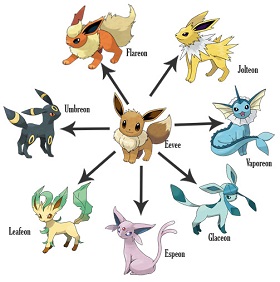
Finally, if you are curious about the picture, it comes from a funny story that Hameed shared at the beginning of his presentation. Apparently, there was a religious fatwa (or edict) in Saudi Arabia a few years ago against Pokemon because the show encourages evolution.

Do you have other tips not covered here? Share them in the comments section!