
Almost half the world’s population lives in areas where malaria infection is a risk, yet no licensed vaccines exist to prevent this red blood cell parasite from causing almost half a million deaths each year. However, in a study published online today in Science, researchers report on a new vaccine that provided remarkable protection against Plasmodium falciparum, considered the deadliest of the four malaria strains.
“With this intravenous vaccine, we are striving to reach the World Health Organization goal of a [malaria] vaccine with 80 percent efficacy by 2025,” Anthony Fauci, director of the US National Institute of Allergy and Infectious Diseases (NIAID), in Bethesda, Maryland, told Nature Medicine. The clinical study was led by Robert Seder, an immunologist at the NIAID Vaccine Research Center, and involved a vaccine developed by Stephen Hoffman and his colleagues at Sanaria, a biotechnology company based in Rockville, Maryland.
Scientists have spent decades trying to block Plasmodium infections at different stages of the parasite’s life cycle—from the sporozoite that migrates out of the mosquito salivary gland and into host liver cells, to the merozoites that invade red blood cells before further developing into reproducing gametocytes.
To date, only one experimental vaccine, called RTS,S or Mosquirix, developed by GlaxoSmithKline Biologicals and the PATH Malaria Vaccine Initiative, with funding from the Bill & Melinda Gates Foundation, has demonstrated a consistent protective effect. It is made with a combination of antigens from part of a sporozoite and a hepatitis B virus surface receptor. Early results suggested that three doses of the vaccine could cut the risk of infection among children aged 5 months to 17 months by half. But last year the results of a phase 3 clinical trial indicated that it offered only about 30–35% protection when given to infants between 6 weeks and 12 weeks of age.
Seder and his colleagues set their sights on developing a vaccine with at least 80% efficacy and also decided to focus on stopping malarial infections at the sporozoite stage—before the parasite ever gets into the red blood cells. The phase 1 clinical trial reported today included a total of 34 adults completing a series of intravenous vaccines at varying doses, with the most promising results at the highest dose levels. Six adults who received five vaccine injections at the highest dose all showed complete protection after they were subsequently infected deliberately with P. falciparum, while six of nine adults who received a series of four of the high-dose vaccines experienced similar protection following the immunization schedule.
The idea of priming the immune system to react against the sporozoite form, rather than waiting until the red blood cells are already infected, has a long history. Here are some of the highlights:
- Ruth Nussenzweig, a microbiologist at the New York University School of Medicine, showed in a 1967 Nature paper that mice gained immunity to malaria after injections of inactivated sporozoites.
- Human volunteers immunized with inactivated sporozoites of P. falciparum and P. vivax in the 1970s were protected from malaria for at least three months after subsequent bites from infected mosquitoes.
- Nussenzweig and her colleagues pinpointed the source of host immune system activation by sporozoites—the circumsporozoite protein (CSP) antigen—in 1982. Other scientists then used sequences from the gene encoding CSP to synthesize a malarial vaccine, called SPf66, which entered clinical trials in 1987, but didn’t show consistent efficacy.
- Around the same time in the 1980s, development of the RTS,S vaccine began, combining the CSP protein with an immune-boosting hepatitis B surface receptor antigen.
- In 2002, an 11-person study showed that more than 1,000 bites with irradiated mosquitoes harboring infectious sporozoites of P. falciparum could protect people from a new malaria infection for up to 42 weeks.
- Three years later, scientists developed a vaccine using genetically modified sporozoites that could infect liver cells but didn’t progress to further stages of the parasite’s life cycle.
Building on that foundation, Seder’s team reasoned that intravenous delivery of whole sporozoites weakened by irradiation might generate even greater immunity than previous approaches. Although injecting vaccines directly into veins isn’t the most practical way to protect a lot of people against malaria—the majority of vaccines, including RTS,S, are injected into muscle or under skin—earlier work showed the intravenous route created a more vigorous response in the immune system of non-human primates than that produced by vaccine injections under the skin.
“The intravenous vaccine gives proof that we can get to high levels of prevention,” says Fauci. More trials are planned to determine the best vaccine dose and injection intervals, and then researchers will look for a better way to deliver it, he says. That feasibility issue is important, notes Adrian Hill, director of the Jenner Institute at the University of Oxford, UK, and part of the research team working on the RTS,S vaccine. “There’s no precedent for anything like an intravenous vaccine being used or manufactured,” he says.
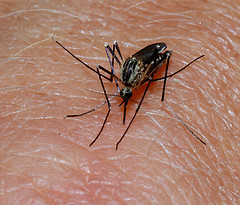
Image by dr_relling via Flikr.com