{credit}Macmillan South Africa{/credit}
Mainz University was given the go-ahead to start a long-term project to study ancient Egyptian cursive scripts – and make all the data accessible and searchable in digital format.
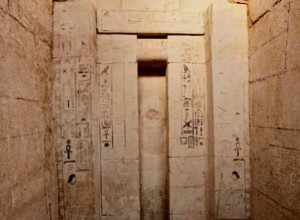
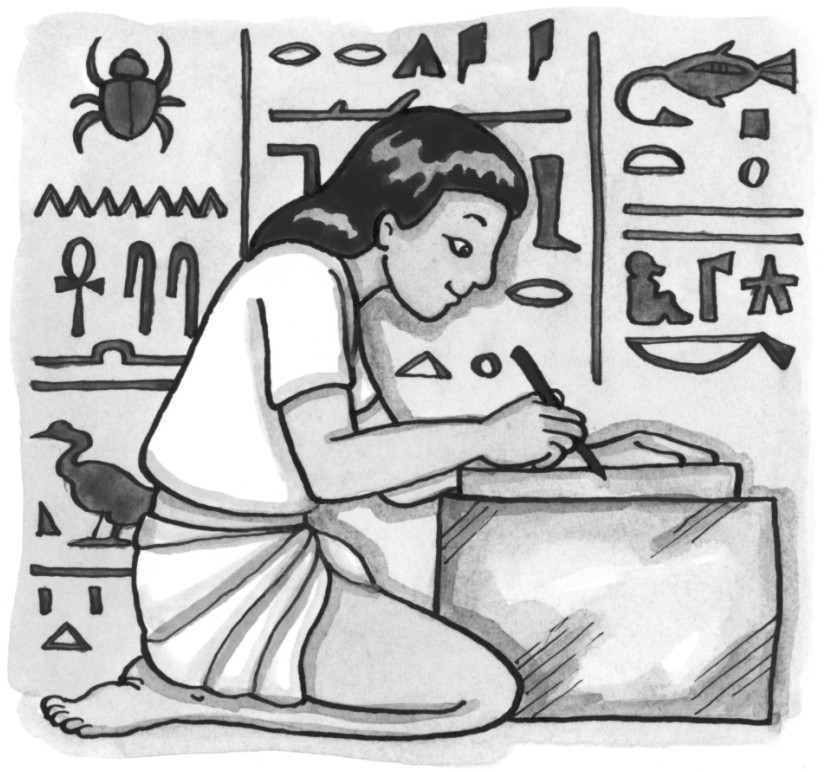
Cursive scripts were used in day-to-day interactions in ancient Egypt – written using rush stems and black or red ink on materials such as papyrus, linen, leather, wood, ceramics, plaster, and even stone, explains the press release by Mainz University. The style of writing was a modification of the detailed hieroglyphs – often seen carved on temple walls and ancient artifacts – and by studying it, the evolution and adaptation of handwriting to suit daily needs can perhaps be traced.
There are two types of scripts: hieratic and cursive. “Hieratic script was used for every stage of the ancient Egyptian language during 3,000 years and was only displaced in some contexts by demotic cursive script in the middle of the first millennium BC,” says the release.
The researchers will continue previous decades-long analysis of both scripts and their relation to hieroglyphs and to demotic script, but for the first time, they’re attempting to “compile a systematic and digital inventory of hieratic and cursive hieroglyphic characters from selected and significant sources, whereby different eras, regions, textual genres, and writing mediums for the documentation period from around 2700 BC to 300 AD will be taken into account.”
The analysis will also focus on the scripts’ emergence and development, the context of their use in additions to aspects such as the economy, the layout of manuscripts and the identification of individual scribes’ hands.
The project is expected to create a “digital paleography database,” a repertoire of characters, that will be available online, could be searched and inspected by international experts. Extensive metadata on all relevant sources will be provided, the project promises. Partial or special paleographies will be downloadable.
The project, titled “Ancient Egyptian Cursive Scripts: Digital Paleography and Systematic Analysis of Hieratic and Cursive Hieroglyphs,” is partly funded by the German government. It will be supervised by Egyptology Professor Ursula Verhoeven-van Elsbergen of the Department of Ancient Studies of Johannes Gutenberg University Mainz, and will be spread over 23 years, receiving an annual grant of a little over $325,500.
Although the project is centered on the study of ancient Egypt, the actual work will take place in the Egyptology section at Mainz University and in the Computer Philology section at the Technical University of Darmstadt.