Expanding our generalist data repository options

Since our launch in 2014, we have published descriptions of datasets archived at more than 45 different repositories. This diversity is a key part of the Scientific Data philosophy; we aim to support as wide a range of data repositories as possible, within the constraints of our strong policies on data preservation and openness (learn more). So our authors find the right repository for their data, we maintain and regularly update a list of recommended open data repositories, which is also used more widely by the Nature Research journals and our publisher Springer Nature. Last year we also improved our support for institutional repositories. Read more

An open approach to Huntington’s disease research

Guest post by Rachel Harding, postdoctoral fellow at the Structural Genomics Consortium, University of Toronto, Canada

Rachel Harding

Rachel Harding

Huntington’s disease (HD) is a fatal neurodegenerative disorder caused by a mutation in the huntingtin gene1. The progressive break down of brain neuronal cells in HD patients leads to deteriorating mental and physical abilities over a 10-20 year period prior to death, the symptoms often described as having Parkinson’s disease, Alzheimer’s disease and amyotrophic lateral sclerosis (ALS) simultaneously2. At the start of the huntingtin gene there is a CAG trinucleotide repeat region that encodes a stretch of poly-glutamine residues in the amino-terminus of the encoded protein. This repeat tract is expanded in HD patients. The repeat length of this region correlates with the age of symptom onset3. Affecting approximately 1 in 10,000 of the population4, rare juvenile forms of the disease exist in patients with the longest CAG expansions, although adult-onset HD patients typically have between 40-50 CAG repeats with symptom onset beginning between the ages of 35-50. Read more

Data Matters: Interview with Ben Lehner

Ben Lehner

Ben Lehner

Ben Lehner is a group leader at the EMBL/CRG Systems Biology Research Unit, in Barcelona, Spain.

Could you briefly introduce your own research?

My lab works on genetics, essentially. It’s a mixture of producing our own data, and using other people’s data. We’re a combined wet and dry lab, and we work with organisms and data from bacteria, through yeast, worms, all the way up to human clinical genetic data.

Broadly, how open do you think the human genomics community has been to sharing data?

I think there is a cultural history here that’s important. You can divide the human genomics community into two groups. Read more

Author’s corner: A testbed for reproducible and standardized human MRI connectomics

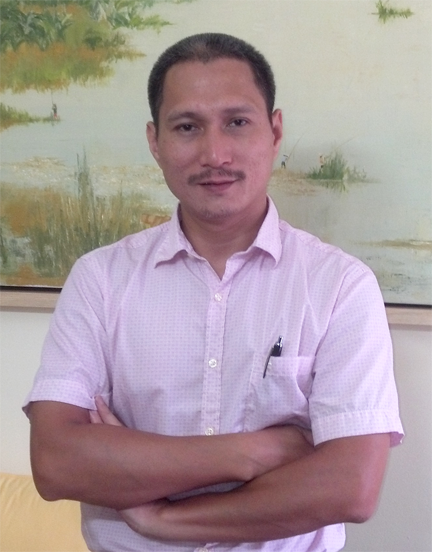
Guest post by Xi-Nian Zuo, Project Coordinator and Co-Founder of Consortium for Reliability and Reproducibility (CoRR), Professor of Psychology and Director of the Magnetic Resonance Imaging Research Center in the Institute of Psychology at Chinese Academy of Sciences, China.

XI-NIAN ZUO

Xi-Nian Zuo

About a decade ago (2006), as a PhD student graduating from the School of Mathematics at Beijing Normal University, I stepped into the field of neuroimaging of the human brain by way of a short job interview offered by Dr. Yu-Feng Zang, my postdoc mentor in China. The most important thing that I learned and developed during my post doc training was how to question a study, an indication likely of my somewhat different background (mathematics versus brain sciences). Probability and statistics became my major tools in bridging new learning experiences with my existing knowledge, pushing me to further pursue research training offered by Dr. Michael Peter Milham at New York University. Ongoing work in his laboratory really interested me, particularly test-retest reliability of resting-state functional connectivity1, the first study of test-retest reliability in the nascent field of functional connectivity. However, an obvious limitation existed to that study, and a series of test-retest reliability studies I carried out subsequently2; the small sample size. This directly motivated me to seek and build up a truly big data set for test-retest reliability in connectomics. Read more

The 10 principles of open research data

This blog was written by Iain Hrynaszkiewicz, Head of Data Publishing.

With the publication of the Concordat on Open Research Data last week, the UK further cemented its leadership position in promoting access to tax payer-funded research data.

The Concordat sets out 10 principles that promote access to and reuse of research data as an enabler of high quality research, while recognising the costs that can be involved. Amongst other principles, the concordat promotes: Read more

Progress on pragmatic sharing of clinical data

This blog was written by Iain Hrynaszkiewicz, Head of Data Publishing.

Guidelines on clinical data sharing developed by the Scientific Data team have been published in Research Integrity and Peer Review, and several published Data Descriptors at Scientific Data demonstrate the guidelines in practice. Our aim is to implement the best features of journals, data repositories and secure data request services to enable effective sharing of experimental clinical research data. Read more

Announcing the #scidata16 draft programme and call for lightning talks

We have a galaxy of open research stars giving talks at this year’s edition of Publishing Better Science through Better Data (#scidata16). And if you have a great example of research data sharing or reuse, you could be joining them.

Tickets for the last two events, in 2014 and 2015, went within 24 hours of their announcement and gained wide attention online. This year Springer Nature have partnered with the Wellcome Trust to provide a bigger and better event exploring issues in research data, focused on the needs of early career researchers. The day will include advice on publishing and advancing careers, as well as good practice for data management and presentation. It will also feature tools and resources available to researchers to help them, and society, derive maximum benefit from research data. Prior knowledge of open science, open data and open access are not needed to attend – the event is for anyone interested in carrying out and publishing better research. Read more