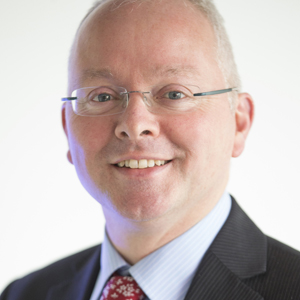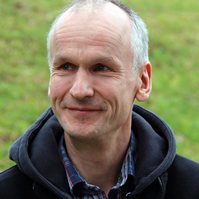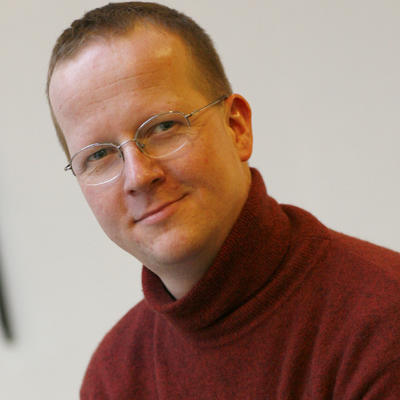
Data Matters presents a series of interviews with three scientists who are amongst the most experienced in data sharing: Albert Heck, Head of the Netherlands Proteomics Center, Ioannis Xenorios, Director of Swiss-Prot and Brenton Greveley, Associate Director of the UConn Institute for Systems Genomics. Read on to see what they have to say about current practice and future of sharing data…
Monthly Archives: July 2014
Data Matters: Interview with Albert Heck
Albert Heck is a Professor of Biomolecular Mass Spectrometry and Proteomics, at Utrecht University, the Netherlands and head of the Netherlands Proteomics Centre.
What are the current data practices in your field?
In the field of proteomics we generate large data sets, it’s almost impossible to completely interpret these data sets yourself, and so, there’s a huge effort to share these data sets. It’s actually the journals that have been important in that, together they have enforced that people start to use these public repositories. There are different levels of repository. There are repositories where we put our raw data which is mandatory, and repositories that contain a small proportion of the end result. Continue reading
Data Matters: Interview with Ioannis Xenarios
Ioannis Xenarios is Director of Swiss-Prot and Vital-IT at the SIB Swiss Institute of Bioinformatics and Professor in computational biology and bioinformatics at the Center for Integrative Genomics, University of Lausanne.
How open to the sharing of data is your field?
My field is bioinformatics, biocuration, and models. People recognize they have to be good citizens, and providing all the data and the tools is the best way forward, but we are not looking at the Higgs Boson or some stars in the sky that will have little direct effect on our present livelihood or economical wealth (not to say that it is not extremely interesting science). There is a tendency to think that all government funded activities have to be open access and reusable, but at the same time you also have a lot of the universities that have created technology transfer organisations as a means to valorize their data and intellectual properties. There is a closed system on top of an open access system. Continue reading
Data Matters: Interview with Brenton Graveley
Brenton Graveley is the John and Donna Krenicki Professor in Genomics and Personalized Healthcare, Associate Director of the UConn Institute for Systems Genomics, Department of Genetics and Developmental Biology at UConn Health, Farmington, CT, USA.
How open is your field to the sharing of data?
My main field is genomics, and it’s probably one of the fields that shares data the best. Genomics has a fairly open culture; not everyone in the entire field is open, but in general it’s open. There’s a very large amount of shared data, both from groups that wait until the day the paper’s published to share it and groups that release data prior to publications. I’m involved in the ENCODE project and we are depositing all of the data generated, as soon as we generate the data and it meets a certain quality. Continue reading
Data Matters: credit and quality of data (part I)
Data Matters presents a series of interviews related to data sharing and data standards. We interviewed biogeographer Jens Kattge, team leader at the European Institute for Bioinformatics Henning Hermjakob and Keylene Simpson, head of a screening facility in Australia. Working in different fields of life science, they all have responsibilities assuring credit and quality of their institutes data. Here they give an insight into how their respective field shares data at the moment and what the future challenges will be.
Data Matters : Interview with Jens Kattge
Jens Kattge is group leader of the research group Functional Biogeography at the Max Planck Institute for Biogeochemistry, Germany
What are the current data sharing practices in your field?
I am working in ecology, often with data for characteristics of plants (‘plant traits’). In this context I see awareness of the relevance of data, the importance of reusing data and willingness to share data. However, sharing data may not be directly making data publicly available without restriction, but with some degree of control. While data are young, people tend to share under the condition of eventually being involved in publications. As the data become older, or have been reused, people tend to become less reluctant to make their data publicly available without restrictions.
Continue reading
Data Matters: Interview with Henning Hermjakob
Henning Hermjakob is Team Leader for Proteomics Services at the European Bioinformatics Institute, UK
What are the current data sharing practices in your field?
Proteomics and interactomics are marked by a significant difference to genomics and transcriptomics in that there is no tradition of a requirement to deposit data in public databases. More and more in all of these areas there is the realisation that depositing data is necessary, but it’s not like genomics where it has been mandatory for many years. One of the key points I have been working on is to establish frameworks that make data sharing possible, and as easy as possible, and to motivate the community to encourage more and more data sharing. Continue reading
Data Matters: Interview with Kaylene Simpson
Kaylene Simpson is the head of the Victorian Centre for Functional Genomics, an RNAi screening facility at the Peter MacCallum Cancer Centre, Australia.
What is your experience of data practices in your field?
I’ve been performing RNAi screens since the early days, and when we published our screen in 2008, we set up a repository where you could look at the analysed data, images and time-lapse information: it was very custom and specific to us. I’ve always been passionate about the idea that there’s no point doing the screens when you can’t publish the screen data. We need to be able to understand how people got their data. These screens are extremely important, and need to be exposed to everybody so that data can be analysed in different ways and reinterpreted in light of new information. Also so you can see from the technical side of it exactly how a screen gets done. Continue reading