Financing early stage biotech

I read Bruce Booth’s blog, Life Sci VC, when I get the chance, and he’s often lent his skills to Nature Biotechnology. We had him into our offices as part of our Meet the Author series, for example, where he discussed his article on biotech IPOs.

We’ve been cross-posting relevant material from his blog on Trade Secrets, rebuilding the posts from scratch. The truth is, they never look quite as good rebuilt as the do in the original, so I’m providing the link this time. He’s written an interesting piece on funding for early stage biotech. Read it here.

Brady Huggett

New Bioentrepreneur article

shapes.jpg

We’ve posted a new article, Shape Shifting, to the Bioentrepreneur site. The piece examines how to mold a company’s pipeline and opportunities, making it most attractive for partnering or buyout. It was written Bob Baltera, CEO of Amira (at the time), and the title refers to the necessity of changing the shape of a company as it progresses.

But shape shifting could also refer to the article itself. The process began early this year, after a meeting with Bob at the JP Morgan healthcare conference. The article went through several drafts and took months to put together — long enough for Amira to be snapped up by Bristol-Myers Squibb for $325 million, with another $150 million hooked to milestones.

Which meant we had to go back and reshape the article before publication to reflect this new outcome for Amira. Even without milestone payments, the buyout is a big win for Amira investors, who had put $28 million into the firm. It is outcomes like this that keep VCs interested in biotech.

You can read the HTML version of the article here, and the PDF version here.

Brady Huggett

Key strategic choices – ‘when’ to plug into the value chain

Companies must make many strategic decisions in developing a business model. My last post looked at key strategic choices about ‘what’ a company could develop, and it considered trade-offs and implications of decisions that greatly impact the risks, costs and rewards of drug development. This post looks at another important element of the business model – ‘when’ a company should plan to plug into the value chain and earn a return for its investors.

Typical mechanisms for plugging in include licensing, sale of the product, sale of the company, or sale of part of the company via an initial public offering (IPO), whereby investors receive a return. In theory, this can happen anywhere along the product development value chain, from idea/discovery to marketing a physical product to consumers – as long as a willing partner or buyer can be found. But actually, there are certain factors around a drug development opportunity that can enable or constrain the feasibility of investors receiving a return at various stages in the drug development process.

Take a look at Figure 1. The central column lists certain attributes (factors) of a drug development opportunity that, if enabling, will leave open a wide range of commercially viable options for when a company can plug into the value chain and take value off the table for investors. However, certain factors, if they are constraining, will point a firm to plug into the value chain at a specific point in the drug’s development path. Some constraining factors – such as high cost, high risk, and lack of internal skills or assets – will drive a company to plug in earlier on the development path.

Fig. 1

When_constraining_enabling3


A RIPCO (royalty income pharmaceutical company) business model would then be typical. But other constraining factors, such as weak intellectual property protection, a high degree of in-house knowledge not easily transferred to a partner, or the need for specialised manufacturing assets, may drive a company toward plugging in at the other end of the value chain (selling a physical product). A FIPCO (fully integrated pharmaceutical company) business model might then be appropriate. In an earlier post I provided a diagram showing the parts of the value chain covered by commonly employed business models in the drug development industry.

Access to capital has to be one of the most common constraints in the sector. Without a doubt, capital constraint will drive a company toward plugging in earlier. However, I purposely left finance out of Figure 1, as I did not want firms to perceive this constraint as large enough to keep them from thinking about what their ideal business model would be if they did have adequate access to capital.

Firms may have more options than they think they have. As you progress down the development path, building value and reducing uncertainty, financing opportunities may emerge that were not available to you before. I’m a big fan of keeping options open, but in order to do that, you need to recognise those options exist in the first place. Real Options Reasoning (ROR) is an approach to strategy that involves identifying and nurturing options, and it fits very well with the biotech sector since the development of a drug occurs in a series of reasonably discreet steps that favour option-like investments. I might talk about ROR in a future post, but over the next couple of months we’ve still got ‘how’, ‘where’, ‘who and ’for whom’ to discuss…. a biotech start-up has a lot of strategic decisions to face!

Janette Dixon

The Israel-US Connection

flag2.jpg

The Israeli and American biotechnology industries are quite closely intertwined, with collaborations ubiquitous in academia, the clinic and in the financial community.

What seems to makes the interplay successful is that there is no fixed pattern- players on both sides change roles according to various needs and opportunities. For instance, the U.S. seems to be a bigger draw for academic studies in this relationship, but when it comes to clinical or industrial work or finance, companies will simply go where the best deal is.

A good example is Prolor Biotech, a developer of therapeutic proteins that owes its origins to the almost de rigueur custom of Israeli life science Ph.D.’s doing post-docs at American institutions. Dr. Fuad Fares did so in the late ’90s when he joined a research team investigating fertility hormones at Washington University in St. Louis. The team developed a technology – a short, naturally occurring amino acid sequence known as CTP – that could increase the life span of hormonal injections used to promote pregnancy. Merck & Co. eventually licensed CTP in order to develop Elonva, a hormonal injection that requires a once-a-week dosage compared to the once-a-day dosage of the non-CTP version.

Dr. Fares returned to Israel in 2001 and established a start-up in a business incubator, looking for additional therapeutic protein applications for CTP. In 2005 he was joined by Dr. Avri Havron and Shai Novik, veterans of both the US and Israeli biotech industries. They accelerated development by raising funds in the US, first from investment angels and then later through an IPO on the over the counter (OTC) exchange in New York because, “At the time (2007) the Tel Aviv capital markets lacked experience in the life sciences and we didn’t think we could get funding in Israel,” says Novik.

But by 2010 things had changed. The Tel Aviv Stock Exchange (TASE) had become more interested in the life sciences, and more than 50 biomeds were traded locally. Prolor did a dual listing on the TASE, joining Teva Pharmaceuticals, Protalix, and other biopharma companies with public shareholders on both sides of the ocean.

The trans-Atlantic give-and-take is also evident in the way that the company does its R&D and clinical development. Prolor now has four CTP-enhanced proteins in its pipeline, including a growth hormone product that is about to enter Phase 3. Yet the company was able to do all this with a very small in-house staff of about 25 employees.

That’s because the company does “early stage R&D in-house here in Israel, and then sub-contracts the preclinical and clinical work to outside providers all around the world,” says Novik, noting that the company does its protein manufacturing in Massachusetts and toxicology studies in Michigan.

Novik sums it up this way: “We run our company the American way, but by being located in Israel we have lower cost structures than comparable companies in the U.S., and we are able to draw from a great pool of local talent. Also, we are able to get state support, apply to binational funds and thereby maximize our assets.”

Bernard Dichek

Four Types of “Premature Scaling” in Biotech

Earlier this week the Startup Genome project released a report on the DNA of internet startups. Essentially what attributes lead to success or failure. One of the things they found was that 74% of startups failed because of “premature scaling”. Sounds like an unfortunate medical condition. Its when internet startups build their companies too fast and spend too much money before they really know what they have – their product, customer, market, etc…

While reading it, and my Tech partner Fred Destin’s blog on it, I couldn’t help but think about the issue of premature scaling in life science startups. *Spending too much, growing too fast – not an uncommon characteristic in Biotech. It almost always leads to shareholder pain and a loss of invested capital.

Here are four types of premature scaling (or inappropriate scaling) I can think of in biotech, and we try to avoid them all:

1. Building a Big Science story too fast. This is the “Go big or go bust” strategy with a group of Nobel laureates: raise enormous amounts of capital to fund a novel discovery or research platform without enough evidence of target validation in a disease setting, confidence in chemical (or biological) tractability, progress on a lead program, etc… This generates big teams, big footprints, big stories – and massive burns. If the substance, and in particular the rapid progress on product development, doesn’t get in line quickly, a big gap in valuation emerges that can crush these investments. I can think of a few that are active right now but will leave names out to protect the innocent. The right way to build a Big Science story today involves scaling consistent with a science-led, capital efficient approach: build a sound platform with 15-20 FTEs on modest equity raises, find partners to help offset the growth and validation of that platform, and then grow into the Big Science story as R&D evolves. The wrong way to build these is through rapid scaling around a hype-led fundraising machine. More often than not, investors get burnt with these. Synta is a good rapid scaling example. They have raised and spent $350M, had at one time a team of 150+ FTEs or more, and built a big broad portfolio, but their investors have suffered considerably. Story is far from over, but at the 10-year point its looking tough for the early investors. Sometimes this model works, at least for investors. If the company can achieve escape velocity with enough hype and buzz in the market, they can get public or acquired early. Sirtris is a good example of a high escape velocity ‘big science’ deal that made it pubic and was acquired; its fair to say that many spectators wonder if GSK is regretting its $720M acquisition, but at the time the story had a ton of public relations momentum.

2. Building a big company when it’s really a project. Lots of venture money is wasted building “companies” when they are really just product development vehicles. I covered this theme under a prior blog around new liquidity theses. By stapling multiple programs together, building a big team especially on G&A, and running multiple studies at once, investors often think they’ve diversified their risk. Most of the time they’ve just raised the capital intensity of their deal such that one product bump and the whole thing gets revalued enormously. Big Pharma buys these plays for single programs typically and so if a company is lucky enough to have two winners, say a Phase 2 and preclinical program, they leave real value on the table. If you’ve got an interesting asset, then develop it. But there’s little reason to put the expensive trappings of a bigger company around it. Leverage a part-time group where possible; you probably don’t need a CFO or god forbid an HR person. Focus on lean product development. Stromedix and Zafgen are great examples in our portfolio.

3. Building too fast on back of a partnership. Biotechs often get seduced in premature scaling by the siren song of partnering: they do a big deal on their platform, and then expand their organization and footprint, and try to work on more projects – all increasing their net burn. In short, its often an illusion that the partnership actually brought non-dilutive runway extension to the company. Sadly, when the sugar daddy partner terminates the deal, the biotech is left way out of balance and has to RIF its staff. In the public markets, this has recently happened to Alnylam with Novartis and Targecept with AZ. Its much more painful for private companies with weaker cash positions. This strategy – of aggressively funding internal burn rather than buying runway – can work if the company is lucky enough to develop some interesting assets with the free cash from their partner. But there’s alot of luck involved (true of all of biotech, I guess). The alternative is to truly scale your organization to the partnership. Vitae has managed this reasonably well. It last raised equity in 2004, and has used its pair of deals with Boeringher to extend its runway while selectively advancing internal projects. Plexxikon was similarly successful; hadn’t raised equity for years before it was bought for >$800M by Daiichi.

4. Building out before a big outcome. Drug approval, for instance. In Big Pharma, having product to sell into the channel the day after approval is the goal for most blockbusters; in the event of a CRL rejection, they can eat the costs. But in cash-strapped biotech, this tends not to work. Small companies that build out aggressively before an approval more often than not get crushed. Vicuron a few years back. Adolor. ARCA. All hired sales reps prior to a pending approval, failed to get approval, and had to RIF large numbers of their employees. This is not only tragic for those sales folks, but it also exacts a huge tax on the capital intensity of these businesses (especially the small ones). Hubris and excessive optimism are the typical causes of this one, but sadly Boards still let this happen. Horizon Pharma *recently did it right – kept the company under 20 FTEs through approval of its new drug Duexa in April 2011. Its now public and working on the sales & marketing organization.

The counterpoint to premature scaling is what we at Atlas coined P/B/S. Its not Phosphate Buffered Saline. It’s Prove/Build/Scale. Thinking through small bets to prove a hypothesis, slightly more to test the programs, when to spend to grow a company, etc… Most of our seed investing is done to Prove concepts. Building requires partners (which is where we often exit). And scaling requires functioning capital markets so rarely happens today.

Premature scaling can kill companies and investments. Worth keeping that in mind for the next budget cycle.

Reposted with permission from the LifeSciVC blog.

Bruce Booth

Fast start, not short course

Social networking website LinkedIn went public in May and the share price more than doubled on the first day of trading. By all accounts, it was a very successful IPO: LinkedIn raised over $350M in an offering that valued the company around $3B, and the existing and IPO investors could book a substantial, immediate return. In contrast to the hope of a mere resuscitation of IPOs in biotech sector, murmurs of another tech bubble ensued after the LinkedIn offering. Other tech IPOs in 2011, namely Zillow and Qihoo 360 Technology, also enjoyed extraordinary first trading days, appreciating 79% and 134%, respectively.

The extraordinary first day pop in LinkedIn’s share price elicited some criticism of the IPO underwriters. Did they deliberately under price the offering to reward preferred clients and, by doing so, essentially cheat LinkedIn out of millions of dollars? I doubt it, but based on historical data from RenaissanceCapital.com, a doubling of share price on the first day of trading is truly exceptional and harks back to the bubble years of 1999 and 2000. On average, IPOs appreciate around 10% on their first day of trading.

Fig 1(2)

Because IPO pricing is as much art as science, one might guess that IPOs for pre-revenue biotech companies, for which valuations are arguably more challenging than for revenue-generating IT companies, would be prone to such dramatic first day pops (or drops). Indeed, when I looked back at the 34 life sciences IPOs during the bubble years of 1998-2000, I found that the average first day pop was 45%, and that 8 of the 34 showed first day pops of 75% or more. The top of the pops during that period were:

Fig 2.jpg

Of course, one must not confuse a fast start with a short course. Remarkably, each of the life sciences companies with explosive historical IPOs listed above are still independent companies (note that Antigenics is now called Agenus) and all except Illumina are trading lower on a per share basis than the IPO offer price. I often remember this point when I read the impressive press releases announcing large, syndicated Series A rounds for private biotech companies.

Here again, the fast start does not mean a short course for private companies. Using the MedTRACK database, I ranked by size the 774 Series A financings in the US from July 2006 to July 2011 and looked at how the top 10% have fared. Not surprisingly, nearly two-thirds (46/74) of largest Series A round occurred before 2009, which shows how the economic downturn has impacted life sciences venture capital. More than two years have elapsed for those 46 companies and yet I counted only a handful of exits: 3 IPOs (Pacira, Sagent, and Zogenix) and two M&A exits (Calistoga and Rule-Based Medicines). Now, there have been other exits for companies of that vintage (e.g., Alnara, Trius, etc.) but their Series A rounds didn’t give them the “fast starts” I am referring to.

Do first day pops in the public markets or supersized Series A venture rounds tell us anything? Not much. They are little more than snapshots of investor expectations taken against a backdrop of macroeconomic conditions.

Considering the dramatic change in market sentiment over the last month, from a comparatively bullish first half of 2011 to a string of dramatic down days in August, it is clear that fortunes can change quickly. This is the challenge of the long course to building a successful business.

Adam Bristol

Can a Hollywood horror movie influence drug development?

movie-poster.jpg

Warner Brothers has begun a publicity campaign for a new calamity film, called Contagion, scheduled to be released in the U.S. on Sept. 9. Directed by Steven Soderbergh, and made with cooperation from the Center for Disease Control and Prevention, the film is about a deadly flu pandemic in which millions die.

With an all-star cast that includes Matt Damon, Kate Winslet, Gwyneth Paltrow and Elliot Gould, movie industry analysts are expecting Contagion to draw big crowds and earn Warner Bothers a profit on the $60 million it invested in the film.

But is it possible that this scary movie could also have a financial impact on the dozen or so biotech companies that are currently scrambling to develop a universal flu vaccine? Could the increased public awareness actually help cash-strapped researchers raise the funds they need to accelerate R&D programs?

The answer could be yes, if the stock-market experience of BiondVax Pharmaceuticals is an indication of investor interest.

BiondVax is one of the leading contenders in the race to find a universal flu vaccine, with its platform technology recently completing a successful Phase II trial. The company’s stock price has fluctuated dramatically over the years, often in an apparent response to the perceived public threat of a catastrophic global flu outbreak.

The company’s share price on the Tel Aviv Stock Exchange spiked most sharply in 2009 at the time of the swine flu outbreak, going overnight from about 2 shekels a share to 7.

BiondVax’s universal flu vaccine candidate attempts to overcome the limitation of current flu vaccines, which are strain specific and target proteins (hemagglutinin) on the surface of the influenza virus. As the hemagglutinin protein changes when the virus mutates, flu vaccines have to be constantly reformulated.

BiondVax’s platform technology breaks new ground because it targets conserved areas of the influenza virus, which are common to all strains. The technology has been shown in laboratory tests to provide protection against all known strains of flu, including swine flu and avian flu.

The company is planning another Phase II trial for its vaccine enhancer product to begin by the end of this year with results expected in early 2012. Following that, a third Phase II trial is planned for late 2012, with the Phase III trial expected in 2013. Launch of the flu vaccine enhancer product could potentially be as early as 2014.

The company had expected to wait for the completion of its vaccine enhancer product, which is based on the same technology as its universal flu vaccine product, before attempting to raise the funds needed for the more extensive trials required for the universal product.

But that was before Contagion was produced.

Bernard Dichek

Non-dilutive financing to power your leverage startup – part 1

power3.jpg

In this post, we will discuss the use of non-dilutive financing to incubate early-stage technologies with commercial potential prior to company formation. This strategy is designed to advance technologies originating from, or based in, an academic environment. In a later post, we will explain how the non-dilutive financing strategy can evolve when the startup company is founded.

Non-dilutive finance and the Leverage Startup

Non-dilutive financing is a central tenet of the Leverage Startup Model. This model is a capital-efficient vehicle to advance research-intensive technology, through its earliest and riskiest stage, toward commercialization. The Leverage Startup is designed to leverage established resources available to the biotech community: non-dilutive financing, R&D facilities, technical expertise and commercialization resources, and could be used to advance technology in several distinct environments, from an idea incubating in an academic laboratory to an emerging technology in an established company.

Non-dilutive financing can create value prior to company incorporation

The savvy entrepreneur will consider a non-dilutive financing strategy as a vehicle to develop the technology prior to licensing intellectual property (IP) and creating a company. Innovation emerging from an academic institution can be significantly de-risked and/or expanded in scope using pre-company non-dilutive funding. Used strategically, these funds can positively impact the short- and long-term success of a future company, and are frequently necessary to advance a technology sufficiently to attract future investment. This category of non-dilutive financing can be sourced from research grants, translational grants and translational centres, which are discussed below. Before embarking on this strategy, the entrepreneur should ensure that the academic institution’s technology transfer office agrees in principal to license the technology to the proposed start-up company; otherwise, a third party may benefit from these pre-company dollars.

Non-dilutive financing is not necessarily “free”

Prior to engaging a non-dilutive financing strategy, it is essential to recognize that this money is not necessarily “free” and potential company founders should carefully assess the costs, and other pros and cons of each potential funding source. We will highlight the potential “cost” of research dollars using examples from North America, which reflect our experience as founders of a biotech start-up based in Vancouver, Canada. Please add any additional sources and insights from North America and other regions to the comments below.

Research grants

Basic research grants provide the greatest diversity of opportunities, and cumulatively the largest source of funds to support research in an academic laboratory. These grants range from small-scale seed grants for risky research (no preliminary data) to large-scale, multi-year grants to support multi-faceted programs (preliminary data required). These grants offer not only much needed dollars, but also an opportunity for the entrepreneur to build, and test drive the start-up team, prior to incorporation (we will discuss this further in a later post). The “cost” associated with academic grants is generally minimal. For example, the Canadian Institute for Health Research (CIHR) the primary government funder for the life sciences in Canada claims no rights to any IP generated, or to future revenues enabled, by the funded research. The National Institutes of Health (NIH) has a more stringent IP policy, which includes a formal grant of a limited use license to the subject invention to the United States government. There are additional stipulations for foreign grantees.

Translational grants

Translational grants are designed to accelerate academic research with commercial potential. Generally, the technology focus of the grant is the subject of a patent application (US Provisional, or PCT), or has significant basis for an application in the future. These grants are usually short-term (1 year duration) and are often submitted in conjunction with the academic institution’s technology transfer office. Applications are evaluated on the basis of both the technology development plan, and the business development plan (a good opportunity for the future “founding team” to have an independent critique of their preliminary business plan). An example available through the CIHR is the Proof-of-Principle: Phase 1 competition. The objective of this grant is to develop academic innovations toward commercialization. The “cost” associated with Proof-of-Principle: Phase 1 funding is as described above for CIHR research grants.

Translational centres

Translational centres are increasingly evident in the academic life sciences community. Their mission is to fully capitalize on the R&D emerging from (usually affiliated) large academic institutions/hubs. These centres come in many flavours from fully equipped and staffed organizations designed to mimic a biotech company (an example is the Centre for Drug Research and Development (CDRD), based in Vancouver, Canada, to virtual centres with experienced ex-industry staff (such as MaRS Innovation, Toronto, Canada). Common to all is a source of independent funds that can be used to de-risk technology. However, the origin (e.g. Big Pharma partner) and “cost” of these dollars varies and must be carefully considered. For example, in return for financial support, the translational centre (or its funding partner) may acquire certain IP rights, such as a first-right-of-refusal; alternatively, the centre may seek an equity stake in any resultant company, or rights to any future revenues generated by the supported technology.

Non-dilutive financing can be used to “test-drive” the technology, team and business plan

This post provides an overview of potential non-dilutive funding sources that can create value by de-risking technology, building a founding team, and incubating a business plan prior to company incorporation. This is a strategy that we have used successfully and we would love to hear of other examples of creating value before establishing a company. In a following post, we will discuss how these concepts can be extended once the resultant company has been formed and the technology licensed from the associated research institution.

James Taylor and Euan Ramsey

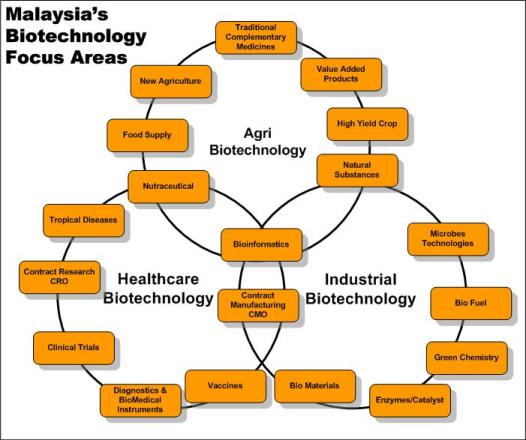
Malaysian BIONEXUS incentives

malaysia.jpeg

As we started our work in Japan in 2000 on nano-scaffolds for corneal limbal stem cells (jointly with a group of polymer scientists headed by Yuichi Mori), the very first strategic move was to start collaborating in India, for two reasons. One was we needed a solution for treatable corneal epithelial damage-related blindness, and the other was the availability of qualified and skilled corneal surgeons.

The next move was to have a technology transfer tie with Malaysia, simply because the local investors there were willing to invest their hard-earned money in a biotech venture focused on a personalized immune-cell-based cancer treatment protocol that has been a medical treatment procedure in Japan since the late ’90s.

I was wondering what makes these investors come forward to invest in such ventures, and a brief exploration lead me to the incentives the Malaysian Biotech Corporation uses to attract investors and technocrats from near and far.

Imagine a government body that offers:

• An exemption from tax on 100% statutory income for 10 years from the day your company starts earning statutory income.

• A concessionary tax rate of 20% for another five years.

• Exemption of import duty and sales tax on raw materials, machinery, equipment and their components.

• Double deduction on expenditure incurred for R&D and that for the promotion of exports.

• 100% ownership and freedom to bring in knowledge workers from overseas.

• Exemption of stamp duty and real property gain tax within a period of five years until 31 December 2011, when undertaking a merger or acquisition with a biotech company.

• Tax deduction equivalent to the total investment made in seed capital or early stage financing when a company or individual invests in your company.

• Industrial Building Allowance to be claimed over 10 years with effect from 2 September 2006, on buildings used solely for the purpose of biotech-qualifying activities

• Tax exemption on dividends distributed to your company.

All this is part of what is called “Bionexus” status, as described by the Malaysian Biotech Corp. What’s been the impact?

• As of 6th May 2011, 188 biotech companies have been awarded the Bionexus status.

• Total investment has been 1.96 Billion RM (about US$600 million).

• Among the 188, close to 50% companies have started making profits.

• Five companies are now listed on international and local stock exchanges with market capitalization totaling close to RM1 billion (US$300 million)

One of the major difficulties companies with bionexus status face is the initial seed money for start ups, which the government is trying to address by various means.

Those who have biotech products and services for the South and Southeast Asian market (for which Malaysia can be good hub) with a technical team ready to move to Malaysia in place, should consider applying for the “Bionexus” incentives.

(The author is one of the directors of VisionTec Sdn Bhd, Malaysia. References for this post can be found here and here.)

Samuel JK Abraham

Demystifying China: Funding sources for startups

two_pennies

During lunch the other day, Walter Lau and I tackled a question raised by a Trade Secrets reader: “How can a small biotech raise funding in China, after having biological proof of concept?” Walter is a managing partner of Cenova Ventures, one of the few healthcare-focused VC funds in China.

The question really needs to be answered in two parts: one for the Chinese biotech companies, the other for international biotech companies hoping to get funding in China.

For typical Chinese biotech companies, the first and main source is most often the government. The funding comes from national as well as local levels, and goes not only for research, but also to commercialize the research from the labs. The national funding comes through a variety of ministries via different programs. Two of the biggest biotech funding sources are the Ministry of Science and Technology and the Natural Science Foundation. Some of the highest profile programs, such as the 863 program, the 973 program and the Torch Initiative, are under the Ministry of Science and Technology.

Local governments usually offer support through industry parks. Science and technology parks in large cities give incentives to scientists to start companies in their city, and offer lab space, startup funds, tax rebates, and administrative support in return. It is said that local government spending on biotech R&D is about 65% that of central government funding.

For international biotech startups hoping to get funding in China, the options, unfortunately, are limited. Government programs mostly do not fund foreign companies. Local industry parks do offer incentives, but hardly in meaningful startup funds. The typical VC funding path familiar to the US biotech startup is almost nonexistent here, despite the fact that there are many VCs and a lot of money in China.

“Few of the VC funds in China are focused on life science and healthcare,” Walter noted. “And the ones that are in life sciences tend to invest in areas of faster return, such as healthcare services, medical devices and diagnostics, and in companies in the growth and pre-IPO stages (For more on this topic, click here).

While “early ” in the US may mean biological proof of concept straight from the lab, “early” in China means just beginning to have revenue. A company with revenue of tens of millions of renminbi and a profit of several millions of renminbi can still be considered an early stage company. “So ‘early’ in China translates to early growth-stage in America,” Walter pointed out.

Another possible funding option is domestic angel investors. “Coal boss and real estate” as people like to refer to them collectively, are individual investors who made their wealth in more traditional ventures, and look for new investment frontiers. Biotechnology has at times been deemed a trendy investment, but when it becomes clear that it does not have a six-month investment time frame, enthusiasm wanes.

So I pointed out that startups outside China don’t qualify for government funding, are considered too early for VC money, and that private money is quite elusive. I asked, “Have we concluded that there is not a lot of hope?”

“There are certainly viable business models for drug development startups,’’ Walter replied, “There are money and resources in China, but one has to be creative.”

We talked about Lead Therapeutics as an example. It was a preclinical-stage drug development company. The company’s business model was to generate improved leads on clinically validated targets, and take them through to pre-IND candidates for partnership, licensing or acquisition. To enable this model, all the discovery and preclinical studies were conducted in their China lab for the cost advantage. Lead Therapeutics was started April 2007 with initial US and China VC funding, discovered a promising PARP-inhibitor November 2009, and was acquired by BioMarin February 2010.

So another way of financing is by way of saving. It is said that one can do three preclinical programs in China for the cost of one in the US. That figure is roughly 2:1 on the clinical side – this is the same as raising two to three times as much money.

As the Chinese put it: when money is tight, spend a penny twice.

Chloe Liu