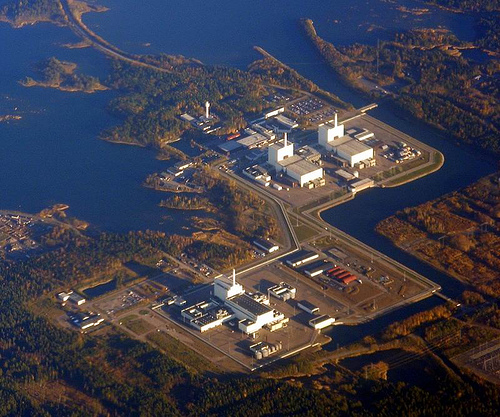
Nuclear commission eyes new path on waste as legal battle resumes over Yucca Mountain

Yucca_Mountain.wikipedia.jpgThe White House’s Blue Ribbon Commission on America’s Nuclear Future released its interim report on Friday, calling for the establishment of a new public process – as well as a new independent organization with access to truly dedicated funding – to identify a long-term solution for nuclear waste disposal (Washington Post).

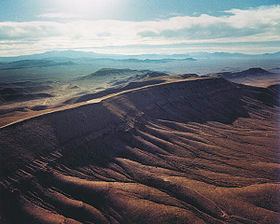
The administration of Barack Obama created the commission after announcing its plans to shut down the long-troubled repository beneath Yucca Mountain, Nevada (pictured at right). Members plan to issue a final report in January, which the administration would presumably consult as it develops a legislative proposal for Congress, but the path forward is far from clear.

Hours after the commission released its draft, the states of Washington and South Carolina filed their second lawsuit challenging the Energy Department’s authority to close down Yucca Mountain – authority that an internal board at the Nuclear Regulatory Commission shot down in a ruling last year. For more on all of this, see our earlier coverage here and here.

More on that in the weeks and months to come. In the meantime, following is a list of the Blue Ribbon Commission’s seven core recommendations, in the commission’s own words:

Continue reading

NRC task force proposes new safety guidelines for nukes

nuclear-reactor-babcock-wilcox_1.jpgFour months after the Fukushima crisis garnered its first headlines in the wake of an earthquake and tsunami, nuclear authorities are still trying to define an appropriate response that will reassure politicians and the public without creating an unnecessary burden on industry.

This week a task force appointed by the Nuclear Regulatory Commission issued its first analysis of the safety requirements in place at 104 nuclear reactors in the United States, and not surprisingly the task force found the current regulatory framework wanting (Washington Post). The NRC’s Japan Task Force concluded that a cascade of events like that which led to multiple explosions and meltdowns at Fukushima is “unlikely” to occur in the United States, but then again it was an unlikely scenario in Japan as well. In the end, it is exactly that kind of low-probability high-risk event that that the NRC is charged with addressing in its regulations.

In its analysis, the task force found a complex framework of redundant safeguards that has been modified again and again in order to respond to various problems and concerns over the decades. The predictable result is a “patchwork of regulatory requirements and other safety initiatives” that might or might not be applied in a consistent manner at any given plant, according to the report (available in pdf form here). By looking at the system as a system, the task force concluded that a more balanced approach “would provide an enhanced regulatory framework that is logical, systematic, coherent, and better understood.”

The task force is proposing a range of improvements targeting everything from power outages, flooding and earthquakes to issues of emergency preparedness and spent fuel storage pools. In particular, the report recommends updating power plant risk assessments every 10 years, bolstering requirements for back-up power and enhancing requirements for monitoring and maintaining pools of spent nuclear fuel during an emergency. The commission must now decide how, whether and when to implement the recommendations. The normal regulatory process could take time, but in some instances the NRC could also issue rules that would take effect immediately.

One issue the task force did not address in its recommendations is whether to fundamentally overhaul the way companies handle spent fuel once it comes out of the reactors – a question that has implications from Fukushima to Yucca Mountain, Nevada.

Continue reading

Radioactive water about to overflow at Fukushima

Radioactive water being used to cool the shattered Fukushima nuclear reactors is rising worryingly quickly, according to an analysis of the latest data from the Tokyo Electric Power Company (TEPCO), the plant’s operator.

tank.jpg

Bloomberg reports that the water could overflow from basements and service trenches as soon as Monday 6 June, pouring isotopes into the sea.

“Solving the problem of contaminated water is critical,” Tetsuo Ito, the head of the Atomic Energy Research Institute at Kinki University, told Bloomberg.

The reactors’ cooling systems were damaged after the 11 March tsunami triggered the disaster at the plant. TEPCO has been forced to pump more than 100,000 tonnes of water directly into the reactors to prevent them from overheating (for more details, see previous posts on the water problem)

Meanwhile, TEPCO has released pictures of the storage tanks and purification system (see right) that it hopes will soon allow them to deal with the radioactive water.

For full coverage of the Fukushima disaster, go to Nature’s news special.

For a selection of our coverage in Japanese, see Nature Asia Pacific.

Europe’s ‘stress tests’ of nuclear power plants will exclude terrorism

1775684849_03b24dda85.jpgThe European Commission and the European Nuclear Safety Regulators’ Group (ENSREG) – made up of 27 independent national nuclear safety authorities – announced yesterday that they had agreed on the criteria for safety reviews of the 143 nuclear power reactors in the European Union and on how these will be conducted. The reviews, which the EU called for 25 March to draw lessons from the Fukushima disaster, are due to begin on 1 June. The EU wants reactors that fail the stress tests to be upgraded or shutdown permanently.

Agreement had been stalled by opposition from regulators in some countries, including France and the UK, to including terrorist attacks on plants, using explosives or aircraft as missiles. The European Commission conceded by agreeing to leave out discussion of security-related aspects of preparedness and countermeasures for terrorists attacks, but says that the tests should nonetheless study the effect of an accidental aircraft impact or explosion, and so equivalent ground will be covered.

The tests will include three phases, with reactor operators replying to a questionnaire, and submitting supporting documentation to national regulators, who will produce national reports. These will then be peer reviewed by seven-person multinational EU teams, each including one European Commission expert. The teams will also have powers to carry out plant inspections. The commission will present a preliminary report to the EU’s heads of state in December, and a final report in June 2012.

Continue reading

Japan to shut down ‘dangerous’ Hamaoka nuclear reactors

Japan is to shut down a nuclear power station branded the world’s most dangerous, despite fears that the closure could affect local industry.

The Hamaoka plant in Omaezaki, south-west of Tokyo, sits near a major fault line and concern about the plant has spiked in the wake of the Fukushima disaster. Japan’s prime minister Naoto Kan last week said there was an 87% chance of an 8.0 quake in the area in the next 30 years, and requested that owners Chubu Electric shut down reactors at the site.

Today the company said it would stop the operation of reactors 4 and 5 at Hamaoka. Reactor 3 was already closed and operation will not be resumed, it added. Reactors 1 and 2 were already shut down.

Restarting the reactors will wait at least until the company has built additional defences against natural disaster, including a sea wall.

Continue reading

Fukushima update: TEPCO delays plans to submerge reactor vessels

The Tokyo Electric Power Company (TEPCO) today postponed plans to add extra cooling to reactor number 1 – thought to be the most damaged reactor – by flooding the containment vessel that surrounds the reactor vessel with almost 8,000 tonnes of water.

The unprecedented flooding plan is seen as a potential solution to the fact that leaks are hampering cooling of the reactor vessel, and possibly leaving fuel rods exposed. The same procedure is being considered for the plant’s two other stricken reactors.

But engineers are holding back from executing the plan following tests yesterday, Nikkei.com reports, because of concerns that adding water to the containment vessel might create a negative pressure inside it that would draw in air and so perhaps trigger a hydrogen explosion. The weight of the water could also stress the containment vessel and lead to structural damage if an aftershock hit the reactor. Any leaks in the containment vessel could also worsen local contamination; attempts to remove highly contaminated water from the reactor basements continue to stall with more water leaking back into them than is being pumped out.

Nikkei.com also reported that concerns about a possible leak in the fuel pond at reactor 4 have resurfaced.

US supercomputer centres are offering Japanese colleagues compute time in a show of solidarity. The NSF’s Teragrid reports on how its centres are trying to help with the emergency response in Japan by offering supercomputing resources.

Keith Baverstock, a radiobiologist at the University of Eastern Finland’s Kuopio Campus, has an editorial in the BMJ calling for the health lessons from nuclear accidents to be more thoroughly explored. He doesn’t seem impressed with the international response to the Fukushima accident here.

India has decided to delay approval of four new reactors, the Wall Street Journal reported today, signalling perhaps a tougher regulatory line.

Storms in US cause loss of external power at three nuclear reactors.

All three reactors at the Browns Ferry nuclear power plant in Alabama are in automatic shutdown after external power was cut to the plant. The powerful storms and tornadoes that swept the region yesterday, killing more than 250 people, downed much of the local transmission network, causing large blackouts. The Tennessee Valley Authority, which operates the plant, said in a statement today that: “Wednesday will go down in history as one of the worst outbreaks of tornadoes in a single day in American history.”

<img alt=“BrownsFerry” src="https://upload.wikimedia.org/wikipedia/commons/thumb/a/ab/Browns_ferry_NPP.jpg/754px-Browns_ferry_NPP.jpg " width=“300” " />

The Browns Ferry plant

(Credit: Wikipedia/NRC)

According to an incident report submitted to the US Nuclear Regulatory Commission last night, an emergency was declared at the plant following a loss of external power at 16:35 CDT. Backup diesel generators kicked into action to keep the reactors’ cooling systems operational, and although some power has been restored to the plant since, the backup generators will continue to operate until full power is restored, according to updates on the TVA website. The reactors at Browns Ferry are of a similar design to those at Fukushima-Daichii.

Nuclear power plants have multiple incoming power lines, so that if one or more should fail external power remains available. A total loss of external power at a nuclear power plant, as seems to have happened at the Browns Ferry nuclear power plant, is “not very common”, says George Felgate, managing director of the World Association of Nuclear Operators (WANO)

Although the backup systems appear to have worked well on this occasion, the incident, coming on the heels of the Fukushima disaster, again highlights the threat to nuclear power plants from extreme natural hazards – one has to ask how the Browns Ferry plant might have otherwise fared had it taken a direct hit from a tornado like the one which hit nearby Tuscaloosa yesterday – see on the BBC’s website for one of the several stupefying videos of that mile-wide tornado.

Relatively few people live in the immediate vicinity of the Browns Ferry plant, according to the map I published last week in Nature estimating the sizes of populations around nuclear power plants – 170,000 people within 30 kms (red circle in screenshot below), and 950,000 within 75kms (green circle). Some 16 million live within 300 kms, which includes the cities of Atlanta, Nashville and Memphis. The Sequoyah and Watts Bar nuclear power plants, located just to the North East — see screenshot — have not reported major problems following the storms.

<img alt=“BrownsFerry.jpg” src=“https://blogs.nature.com/news/thegreatbeyond/BrownsFerry.jpg” width=“550” " />

Update 19:00 CEST

TVA has just reported that:

"Units 3 and 2 at TVA’s Browns Ferry Nuclear Plant achieved “cold shutdown” Thursday at 2:43 a.m. CDT and 5:45 a.m. CDT, respectively. “Cold shutdown” is achieved when the reactor coolant system temperature is cooled to 212 degrees Fahrenheit or less. Unit 1 is being cooled."

(They are probably there for reactor units 3 & 2, though the update may have it’s definition slightly off — according to the US NRC, cold shutdown, is “the term used to define a reactor coolant system at atmospheric pressure and at a temperature below 200 degrees Fahrenheit following a reactor cooldown.”)

For full coverage of the Fukushima disaster, go to Nature’s news special. For a selection of our coverage in Japanese, see Nature Asia Pacific.

25th anniversary of Chernobyl accident

Today marks the 25th anniversary of the world’s worst nuclear disaster, the explosion in 1986 of a reactor at the Chernobyl nuclear power plant in the Ukraine – a bitter irony given the ongoing Fukushima-Daichii nuclear disaster. Nature‘s news editor, Mark Peplow, was on his way to Chernobyl to research a feature article for the anniversary of the accident just as the crisis at Fukushima-Daichii began. Mark’s feature “”https://www.nature.com/news/2011/110328/pdf/471562a.pdf">Chernobyl’s legacy" is a must-read. See also his piece, “”https://www.nature.com/news/2011/110328/full/news.2011.181.html “>Life as a liquidator.”

As Mark noted:

“In some ways, the connection between the two accidents may yield the biggest benefits for Chernobyl. For a brief window of time, the world has again focused attention on the largely overlooked work there. The renewed interest may spur nations to chip in the cash needed to complete the clean-up of the site, and to carry out health studies that have languished for want of proper coordination and funding.”

International donors last week pledged extra cash to help build an enormous cover over the Chernobyl reactor to replace its crumbling concrete sarcophagus – see “” https://blogs.nature.com/news/thegreatbeyond/2011/04/cash_promised_to_help_clean_up.html">Cash promised to help clean up Chernobyl."

Also worth checking out are Nature’s 2006 20th anniversary Chernobyl special and indeed out of historical interest our reporting on the accident back in 1986, including this special report.

The Chernobyl accident 25 years ago had a chilling effect on the commissioning of new reactors

IAEA age of reactors

Source: IAEA PRIS database

For full coverage of the Fukushima disaster, go to Nature’s news special. For a selection of our coverage in Japanese, see Nature Asia Pacific.

A population density map to help provide context for the nuclear power plant proximity analysis

Following on from the population analysis which I published yesterday estimating quantitatively how many people live within certain distances of each of the world’s nuclear power plants, some people have asked me for more information on population distribution itself, and whether it might provide more spatial context for the results of the analysis – for example is the plant close to urban sprawl from a major city? Or why is it that nuclear power plants in France, for example – which with 58 nuclear reactors, is second only to the United States (which has 104) in terms of numbers of nuclear reactors – nonetheless tend to have fewer people living near to them, compared with, for example, those in much smaller nuclear power nations such as Germany – which have a comparable population? – answer; in centralized France most people live in the capital Paris, with much of the rest also being largely in a few big urban centres.

So to try to provide some more visual geographical context, today I’ve mashed together the results of the analysis I published yesterday in Nature — see here my 3D map of the results of that analysis — with a new very high-resolution global population density Google Earth map for 2010 created by the NASA Socioeconomic Data and Applications Center operated by Columbia University’s Center for International Earth Science Information Network (CIESIN). The underlying population data is the same as we used in our previous analysis to estimate the size of population in the proximity of nuclear plants.

Mashing the two maps together certainly does provide this sort of greater context, but the result of combining them is also a bit visually overwhelming, and may be confusing at first. — so beware.

Here’s a screenshot — you can find the full 3-D interactive mashup of the two maps below the fold

grump.jpg

Continue reading

A GIS analysis of the number of people living near each of the world’s nuclear power plants

I’ve published in Nature tonight a GIS analysis I did with the NASA Socioeconomic Data and Applications Center operated by Columbia University’s Center for International Earth Science Information Network (CIESIN), looking at how many people live within certain distances of each of the world’s nuclear power plants.

It shows, for example, that two-thirds of the world’s power plants have more people living within a 30-kilometre radius than the 172,000 people living within 30 kilometres of the Fukushima Daiichi plant. Some 21 plants have populations larger than 1 million within that radius, and six have populations larger than 3 million. One hundred and fifty-two nuclear power plants have more than 1 million people living within 75 kilometres. There’s lots more other insights in the detailed data.

I’ve published the full results in the form of a map which is best viewed using the desktop version of Google Earth — you can download my map file here. The map plots every one of the world’s nuclear plants with circle size indicating the number of people living within 75 km of each plant. Moving the mouse over any circle brings up a label, and the figure for the size of the population. Clicking on any of the plant symbols opens up an information panel showing data for population estimates at 30, 75, 150 and 300 km from the plant, as well as the total power output, and a photograph of the plant.

I did this map fairly quickly, and will add a scale etc soon. Feedback welcome. I can also be contacted at d.butler@nature.com.

I’ll try to publish soon the full raw dataset that we created.

UPDATE: 22 April. Scale now added, and map tweaked so that it works really well in the larger screen browser version — well worth giving this link a spin.

Here’s a screenshot of just one of the plants on the map: Indian Point, near New York.

indianpoint.jpg

How population sizes were estimated

To estimate the size of populations living near nuclear power plants, Nature first created a map, based on the Power Reactor Information System database, an up-to-date database of nuclear reactors that are operational or under construction, supplied by the International Atomic Energy Agency (IAEA). The IAEA does not provide latitudes and longitudes for the reactors, so we obtained many of these by doing a database merge with the older UNEPGRID reactor database, which contains data, including geographical coordinates, on reactors up to the year 2000. We manually geocoded remaining entries that lacked coordinate data.

To derive the population estimates, Nature teamed up with CIESIN, whose Global Rural-Urban Mapping Project (GRUMP) population database is one of the best available data sets of global population density. The team, and in particular CIESIN scientists Kytt MacManus and Liana Razafindrazay, overlaid the reactor map with GRUMP population maps for the years 2000 and 2010 in a geographic information system and computed population estimates for both years using concentric zones drawn at 30, 75, 150, 300, 600 and 1,200 kilometres from each nuclear power plant.

For full coverage of the Fukushima disaster, go to Nature’s news special. For a selection of our coverage in Japanese, see Nature Asia Pacific.