US bioethicists recommend more tests before child anthrax vaccine trials

Bioethicists proposed limits today on the types of clinical trials of anthrax vaccine and other drugs and vaccines aimed at bioterror agents that can be conducted in children.

The recommendation came in a report from the US President’s Commission for the Study of Bioethical Issues. US Secretary of Health and Human Services Kathleen Sebelius requested that the commission study the ethical dimensions of a possible anthrax vaccine trial in children after a federal biodefence science advisory board voted in favour of such trials.
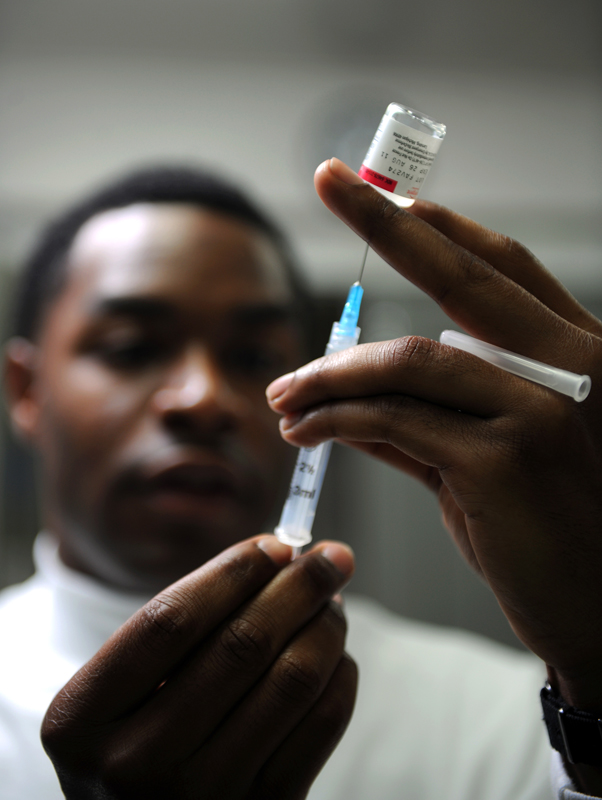
George H.W. Bush is deployed in support of maritime support operations and theater security cooperation efforts.

A US Navy corpsman prepares an anthrax vaccination shot aboard the aircraft carrier USS George H.W. Bush. Courtesy MILVAX, the US Military Vaccine Agency.

“The safety of our children is paramount, and we have to get this right,” said Amy Gutmann, chair of the commission. “The commission concluded many steps would have to be taken…before pediatric anthrax vaccine trials prior to an attack should be considered by the U.S. government.”

Interest in a vaccination campaign was spurred by a 2011 modelling exercise, ‘Dark Zephyr’, which found that a release of anthrax spores in a city the size of San Francisco, California, would compel officials to vaccinate 7.6 million people — including 1.7 million individuals under age 18.

But clinical trials are not normally conducted in children unless there is a chance that children can benefit from the trials. And the risk of a bioterror attack is uncertain, making such trials ethically complicated.

The President’s commission said that until a bioterror attack occurs, tests of anthrax vaccine or other anti-bioterrorism “countermeasures” should not pose risks greater than those that a child might encounter in daily life or during a routine pediatric checkup.

To prove that anthrax vaccine trials would pose such a small risk, more tests of the vaccine should be done in animals and in young adults, the commission said. Then, testing of the vaccine should be done in progressively younger and more vulnerable age groups, the commission said.

Officials should also plan for tests of the vaccine that could be done in the event of an actual bioterror attack, the commission said.

John Parker, chair of the National Biodefense Science Board, which made the initial recommendation to study the anthrax vaccine in children ahead of an attack, said that the defence department probably already has data on how the vaccine affects 16- and 17-year-olds — who are, technically, children — who have received the vaccine through military service. Studies on these and younger children would need to clarify whether their immunological response to the vaccine is similar to that seen in adults, and whether children should receive a different dose of vaccine than is given to adults, Parker said.

“To get that kind of knowledge, you don’t need huge studies, but they would take time,” he said.

Such studies might help parents in the event that a bioterror attack with anthrax does occur, and they are asked to allow their children to receive a dose of the anthrax vaccine, as called for by current emergency plans.

“In the chaos of an anthrax exposure, I just think a little knowledge up front my contribute to a decreased amount of parental concern and being put on the spot to consent to have a vaccine where there’s no data,” said Parker, who was speaking on behalf of himself and not for the biodefence science board, which has not met to consider the bioethics commission’s report.

The health and human services department, which must now decide whether to accept the commission’s recommendations, issued a statement thanking the commission for its work.

“We look forward to fully reviewing the report,” the statement said.
New guidelines announced for risky research

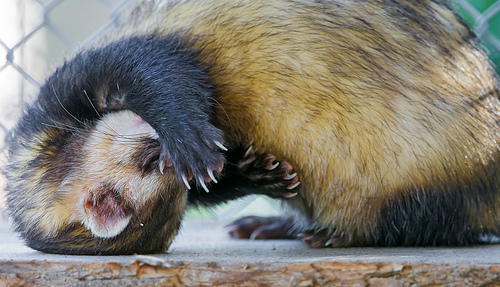
Twists and turns: researchers use ferrets to assess the transmissibility of H5N1 in mammals.{credit}Credit: Tambako the Jaguar via Flickr{/credit}

US government officials have passed two more checkpoints on the long, winding road towards a policy for dealing with risky research. That journey was forced into overdrive at the end of 2011, when a government body recommended against publishing two studies showing how a deadly form of avian influenza H5N1 could be made to pass between mammals.

Today, the US National Institutes of Health (NIH) announced a final framework for vetting specific types of experiments before funding them. The US Office of Science and Technology Policy (OSTP) also published a long-awaited draft policy for how scientists and institutions should monitor and report on a wide range of research that malevolent forces could manipulate to do harm. This type of research, called dual-use research of concern (DURC), is fundable if the potential benefits are deemed significant and the risks deemed manageable. Continue reading

Flu researchers bristle under federal policy

Adolfo Garcia-Sastre

It has been four months since the US government issued a hastily released policy for monitoring what is called dual-use research of concern (DURC), research that could pose significant risks to the public if misapplied. At a meeting in New York on Monday, representatives of leading institutions that perform such research discussed their experiences fitting the new policy into their current procedures for managing research projects. Some were frustrated at the lack of definition in the policy and some expressed concern about what would be contained in an expansion of the policy that is soon to be released for public comment.

“We are trying to comply with as rational an approach as possible,” said Adolfo Garcia-Sastre, who runs one of the Centers of Excellence for Influenza Research and Surveillance (CEIRS) at Mount Sinai School of Medicine in New York, which hosted the meeting for other CEIRS researchers.

On 29 March, as US government advisers were considering as whether or not to publish two controversial papers describing a lab-created, mammalian-transmissible avian H5N1 strains of influenza, the government released a new DURC policy. It required federally funded institutions to take stock of any projects engaging in such research and develop plans for mitigating potential consequences.  The policy was meant to shore up what some saw as a hole in the government’s approach to DURC, and government advisers said its existence was integral in persuading them to ultimately recommend publication of the two papers.

The researchers on the panel Monday morning included Yoshihiro Kawaoka of the University of Wisconsin–Madison and Ron Fouchier of Erasmus Medical Center in Rotterdam, the Netherlands, who finally published papers in May and June. Kawaoka described an approach to assessing the safety and appropriateness of laboratory protocols that is relatively unchanged since the adoption of the policy, except, he says, for the fact that it is put more specifically into the context of DURC. It means specific research protocols are assessed against a list of seven experimental approaches that should raise eyebrows.

Fouchier, with more than a bit of exasperation in his voice, described procedures for biosafety and security reviews that he says his group and institution have been in compliance with for years owing to existing laws. He urged fellow flu researchers to push back against what he feared would be further bureaucratic measures to come. Particularly worrying, he said, was that regulators are now taking issue with experiments — like the ones described in his recent paper — that result in a gain of function to existing pathogens. Fouchier said that these studies have to be done to fully understand how influenza works.

Continue reading

Senate Hearing on H5N1 papers exposes political divisions

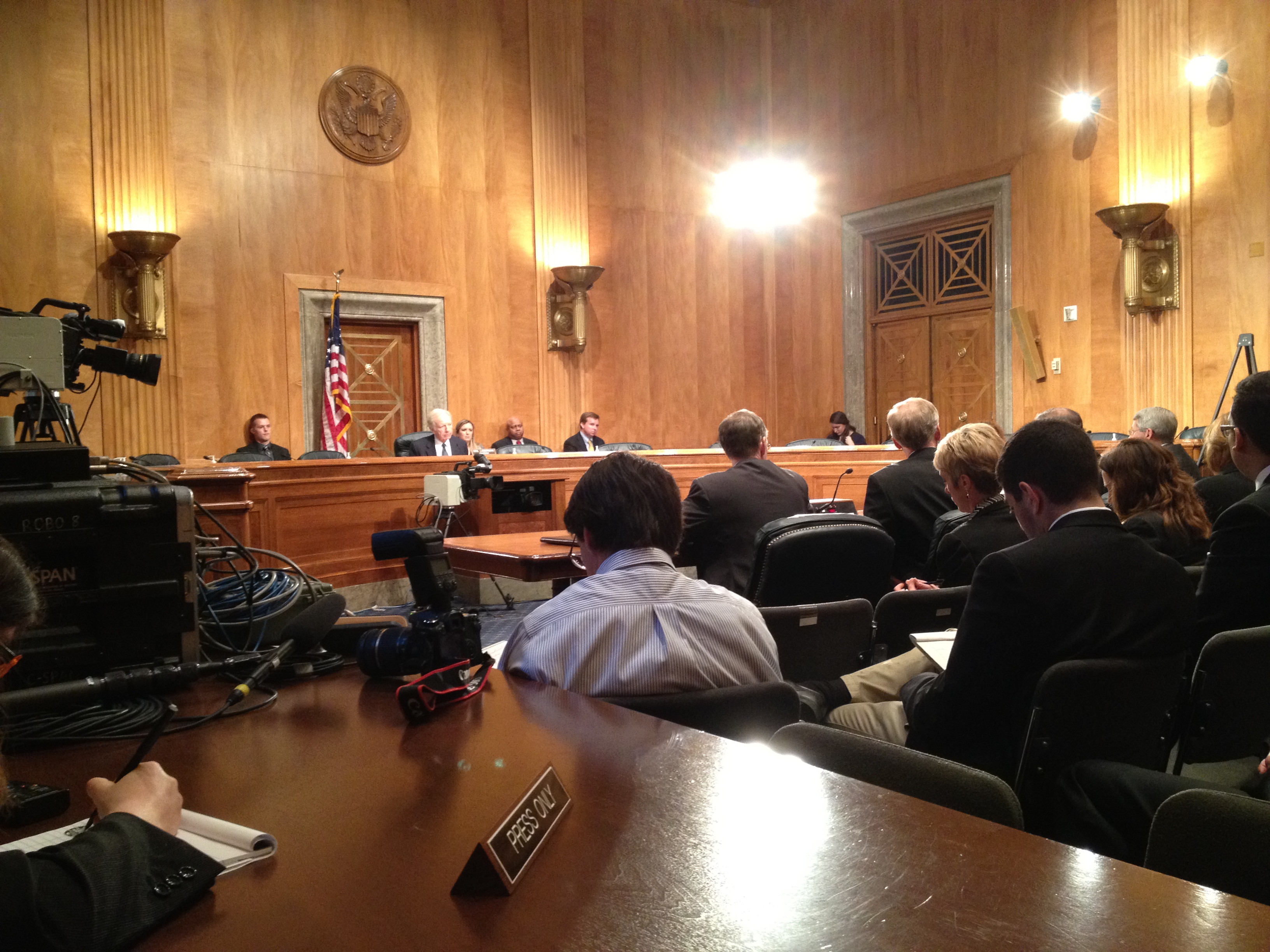
26 April in Washington DC, US Senator Joseph Lieberman of Connecticut revealed that his grandmother was killed by influenza during the 1918 pandemic. This was one reason he has been so interested in a pair of yet-to-be-published papers on laboratory-created H5N1 avian influenza strains that could conceivably prove many times more deadly than the 1918 flu. The other reason for his interest is that he chairs the committee on Homeland Security and Government Affairs, which had called a hearing to understand how decisions were made about the research’s potential use as an agent of bioterrorism. At the hearing, officials involved in making the decision to publish the research were queried about a letter that was leaked to the press two weeks ago. In the letter, Michael Osterholm, a member of the National Science Advisory Board for Biosecurity (NSABB), accused the U.S. government of stacking the decks in favour of full publication during a crucial closed door meeting in March at which the NSABB was asked to re-evaluate the papers.

Paul Keim, acting chair of the NSABB, who testified today, said “I view it as a very constructive type of communication. It was unfortunate that it was leaked to the public… that made it very hard to have a constructive conversation about it.” He went on to say that he agreed with Osterholm’s contention that there was a bias in the list of witnesses presenting evidence for and against full publication. The presenters included the two researchers whose teams had performed the research and one of their collaborators. “But the bias inherent in these witnesses was not very important,” Keim says, noting that the board members were able to ask them tough, probing questions. Continue reading

Mixed news for biodefence in President’s budget request

President Barack Obama’s budget request for 2013 contains mixed news for the US biodefence effort, which came under heavy criticism last year for failing to deliver treatments against biodefence threats despite spending some US$60 billion over the previous decade.

According to figures compiled by Crystal Franco of the Center for Biosecurity of UPMC in Baltimore, Maryland, winners include the Department of Homeland Security (DHS) and three agencies falling under the umbrella of the US Department of Health and Human Services: the Biomedical Advanced Research and Development Authority (BARDA), the Food and Drug Administration (FDA) and the National Institutes of Health (NIH). Losers include military biological-defence development efforts and public-health programmes at the US Centers for Disease Control and Prevention (CDC).

Under the president’s request, the DHS is slated to receive an $11-million boost for its controversial BioWatch programme, bringing the programme’s total 2013 spending to $125 million. BARDA’s budget would grow from $415 million to $547 million, including a $415-million ‘supplement’ from the BioShield Special Reserve Fund. The FDA would receive $346 million for biodefence — about equal to last year — plus $18 million to begin building a new Life Sciences–Biodefense Laboratory complex in White Oak, Maryland. And biodefence funding at the NIH — like the overall NIH budget — would stay flat at $1.3 billion.

“It’s good news that there is more money for BARDA, and no significant cuts to basic science at NIH or to regulatory science at FDA,” says Randall Larsen, founding director of the WMD Center, which last year issued a report card critical of the US biodefence effort to date. The centre and other analysts have long contended that BARDA is too underfunded to properly do its job of ushering promising ‘countermeasures’ through to FDA approval, and that the FDA has been a choke point in the biodefence effort owing to lack of clarity about how it will evaluate and approve biodefence treatments.

Larsen expressed concern that much of BARDA’s budget is slated to come out of the BioShield fund, which exists to lure companies into the biodefence effort in the absence of a significant private market in the field. However, Larsen said, “some could argue that there’s nothing in the queue right now to be purchased” with BioShield funds, “so let’s prime the pump by boosting BARDA.”

Losers in this budget would include the CDC, which is slated for cuts in state and local preparedness programmes and in the Strategic National Stockpile, which would take a $47-million dip to $486 million. The president’s request would also cut the Department of Defense’s medical biological-defence programme by $257 million, leaving its funding at $347.9 million, by eliminating money for basic and applied research and advanced development.

Critics had said that elements of the Pentagon’s biodefence research effort, such as the Transformational Medical Technologies programme, were ineffective; TMT’s early-stage research efforts have now been stopped or folded into new programmes focused on areas such as biosurveillance, diagnostics and advanced manufacturing capabilities.

But Philip Russell, a former director of the Walter Reed Army Institute of Research and adviser to the US Department of Health and Human Services, said that it was a mistake to cut military biodefence research money at the expense of other funding sources.

“Taking money out of the military research budget and leaving NIH funded at $1.3 billion even though it hasn’t produced a single countermeasure is pretty tragic,” Russell says.

The president also requested a boost for the DHS’s science and technology directorate, from $668 million to $831.5 million, but Franco notes that the directorate’s budget is “very opaque,” so it’s difficult to tell how that increase will affect biodefence programmes. The budget also commits no funding to construct the National Bio and Agro-Defense Facility in Manhattan, Kansas, which has not yet been built.

Follow Erika on Twitter at Erika_Check.

Video: Debating H5N1 and dual-use research

On 2 February, scientists and public health officials squared off in a panel discussion at the New York Academy of Sciences. Debate raged around the fate of two papers that describe a mutant strain of the avian influenza virus H5N1. The virus is capable of mammal-to-mammal transmission, which has raised concern that it might be transferable to humans. Several panelists sat down with Nature News to discuss their positions.

See also our web special on the H5N1 controversy.

*Update 08/02/12: New York Academy of Sciences has posted full video of the 2 hour debate.