Patients should learn about secondary genetic risk factors, say recommendations

Imagine getting a chest X-ray to identify the cause of a serious cough. The radiologist finds a shadow that wasn’t causing the cough but could be a tumour. In many cases, it is obvious what to do upon uncovering these sorts of secondary or incidental findings — most doctors would follow up on the search for a possible lung tumour, for example.

But genomic information presents a special case: genes are predictive, but not perfectly so, making some results murky. And many genetic diseases and predispositions to disease don’t have clear and obvious paths for clinical management, potentially making them a lifelong psychological burden.

Today, the American College of Medical Genetics and Genomics (AMCG) released recommendations for how genome-sequencing laboratories should report incidental findings after a doctor orders a full or partial genome sequence. It defines a minimum list of about 60 genes and 30 conditions that should be reported to the doctor as part of a patient’s care, whether the patient wants to know them or not. But the guidelines stop far short of recommending that all risk factors be passed on to doctors and patients.

Continue reading

New guidelines announced for risky research

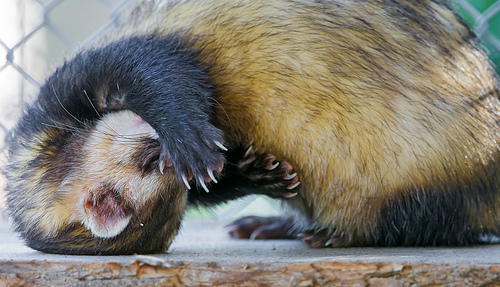
Twists and turns: researchers use ferrets to assess the transmissibility of H5N1 in mammals.{credit}Credit: Tambako the Jaguar via Flickr{/credit}

US government officials have passed two more checkpoints on the long, winding road towards a policy for dealing with risky research. That journey was forced into overdrive at the end of 2011, when a government body recommended against publishing two studies showing how a deadly form of avian influenza H5N1 could be made to pass between mammals.

Today, the US National Institutes of Health (NIH) announced a final framework for vetting specific types of experiments before funding them. The US Office of Science and Technology Policy (OSTP) also published a long-awaited draft policy for how scientists and institutions should monitor and report on a wide range of research that malevolent forces could manipulate to do harm. This type of research, called dual-use research of concern (DURC), is fundable if the potential benefits are deemed significant and the risks deemed manageable. Continue reading

Fighting about ENCODE and junk

A red junk at Tsim Sha Tsui{credit}Alfonso Jimenez and Flickr{/credit}

On Wednesday, a handful of journals, including this one, released more than 30 papers describing results from the second phase of ENCODE: a consortium-driven project tasked with building the ‘ENCyclopedia Of DNA Elements’, a manual of sorts that defines and describes all the functional bits of the genome.

Many reactions to the slew of papers, their web and iPad app presentations and the news coverage that accompanied the release were favourable. But several critics have challenged some of the most prominently reported claims in the papers, the way their publication was handled and the indelicate use of the word ‘junk’ on some material promoting the research.

First up was a scientific critique that the authors had engaged in hyperbole. In the main ENCODE summary paper, published in Nature, the authors prominently claim that the ENCODE project has thus far assigned “biochemical functions for 80% of the genome”. I had long and thorough discussions with Ewan Birney about this figure and what it actually meant, and it was clear that he was conflicted about reporting it in the paper’s abstract. Continue reading

ORI: Former Harvard postdoc guilty of misconduct

Flow cytometry data plots were re-used in two different papers by Shane Mayack.{credit}Mayack, S. R., Shadrach, J. L., Kim, F. S. & Wagers, A. J. Nature 463, 495–500 (2010); Mayack, S. R. & Wagers, A. J. Blood 112, 519–531 (2008).{/credit}

Shane Mayack, a former postdoctoral researcher at the Joslin Diabetes Center, an affiliate of Harvard Medical School in Boston, Massachusetts, engaged in research misconduct by duplicating figures in a pair of publications and poaching figures from other sources, according to the US Office of Research Integrity (ORI), which investigates fraud in federally funded research. The misconduct decision, noted yesterday in the Federal Register, concludes an investigation into the scientist’s work, which included two papers that were retracted during the past two years, one from this journal.

Mayack “neither admits nor denies ORI’s finding of research misconduct”, according to the note in the Federal Register. But she had previously argued in a post on the blog Retraction Watch that her publication in Nature was retracted hastily and without her consultation. Mayack has agreed to sanctions from the ORI that include close supervision for any work she might perform with federal funding in the next three years.

Continue reading

NIAID director urges continuation of H5N1 research moratorium

NIAID director Anthony Fauci{credit}Jim Wallace, Smithsonian Institution{/credit}

At a meeting of influenza researchers in Times Square New York Tuesday, Anthony Fauci, the director of the National Institute of Allergy and Infectious Disease (NIAID) recommended that researchers continue to honour a self-imposed moratorium on certain experiments with highly pathogenic avian influenza H5N1, saying that researchers needed to better justify the benefits of the research to the public.

“I strongly recommend that you continue this voluntary moratorium until you can have this open and transparent process addressing the fundamental principles,” he said.

During a lengthy question and answer session following his presentation, lines were drawn between researchers who agreed and those who disagreed with continuing the moratorium, which was on a narrow type of experiment that endow H5N1 with new properties, such as the ability to transmit between mammals. Although originally planned for 60 days, it has been in place since late in January.

Robert Webster, a flu researcher at St. Jude Children’s Hospital in Memphis, Tennessee, said that he supported continuing the moratorium and emphasized communicating with the public. “At my dinner table, my grandchildren are concerned. So, I have to convince them that it’s safe to continue these important works.” Daniel Perez at the University of Maryland urged that the work continue noting that the laboratory studies currently being stalled are probably far less dangerous than field research collecting avian influenza isolates around the world. People do the research because of the good that could come from it, he argued. As a society, he said, “we have made it far because we take risks.”

Continue reading

Flu researchers bristle under federal policy

Adolfo Garcia-Sastre

It has been four months since the US government issued a hastily released policy for monitoring what is called dual-use research of concern (DURC), research that could pose significant risks to the public if misapplied. At a meeting in New York on Monday, representatives of leading institutions that perform such research discussed their experiences fitting the new policy into their current procedures for managing research projects. Some were frustrated at the lack of definition in the policy and some expressed concern about what would be contained in an expansion of the policy that is soon to be released for public comment.

“We are trying to comply with as rational an approach as possible,” said Adolfo Garcia-Sastre, who runs one of the Centers of Excellence for Influenza Research and Surveillance (CEIRS) at Mount Sinai School of Medicine in New York, which hosted the meeting for other CEIRS researchers.

On 29 March, as US government advisers were considering as whether or not to publish two controversial papers describing a lab-created, mammalian-transmissible avian H5N1 strains of influenza, the government released a new DURC policy. It required federally funded institutions to take stock of any projects engaging in such research and develop plans for mitigating potential consequences.  The policy was meant to shore up what some saw as a hole in the government’s approach to DURC, and government advisers said its existence was integral in persuading them to ultimately recommend publication of the two papers.

The researchers on the panel Monday morning included Yoshihiro Kawaoka of the University of Wisconsin–Madison and Ron Fouchier of Erasmus Medical Center in Rotterdam, the Netherlands, who finally published papers in May and June. Kawaoka described an approach to assessing the safety and appropriateness of laboratory protocols that is relatively unchanged since the adoption of the policy, except, he says, for the fact that it is put more specifically into the context of DURC. It means specific research protocols are assessed against a list of seven experimental approaches that should raise eyebrows.

Fouchier, with more than a bit of exasperation in his voice, described procedures for biosafety and security reviews that he says his group and institution have been in compliance with for years owing to existing laws. He urged fellow flu researchers to push back against what he feared would be further bureaucratic measures to come. Particularly worrying, he said, was that regulators are now taking issue with experiments — like the ones described in his recent paper — that result in a gain of function to existing pathogens. Fouchier said that these studies have to be done to fully understand how influenza works.

Continue reading

Congressman criticizes US handling of H5N1 papers

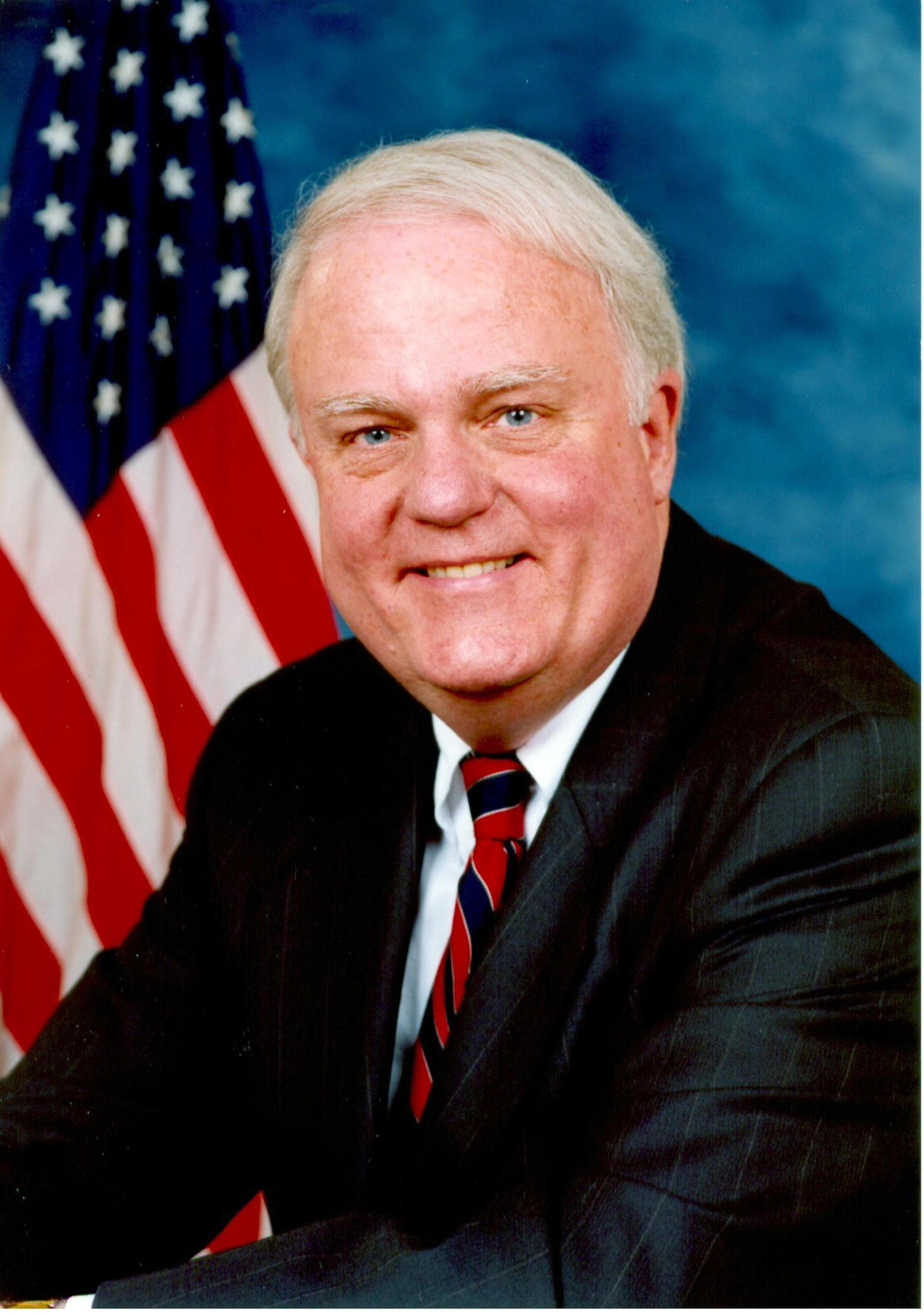
Congressman Jim Sensenbrenner of Wisconsin{credit}https://sensenbrenner.house.gov/{/credit}

An influential member of the US Congress remains dissatisfied with the government’s handling of two research papers on mutant forms of avian influenza, and is threatening legislation to control the controversial research.

Jim Sensenbrenner (Republican, Wisconsin) today said that the lack of a cohesive policy for handling risky research funded by the National Institutes of Health (NIH) and other federal agencies could necessitate new laws, a situation that researchers have been trying to avoid. “I prefer not to pursue legislation on this issue, with the hopes the scientific community can create its own approach. But failing a consequential … policy, Congressional action could be required,” Sensenbrenner told Nature in a statement.

The second of the controversial papers showing that H5N1, or ‘bird flu’, can spread through the air between mammals was published last week, providing some closure to the months-long debate about the work and whether its publication would result in the proliferation of dangerous viruses and increased risk of an accidental or intentional release. Sensenbrenner says not enough work has been done to ensure that such controversies don’t arise again.

On 21 June, NIH director Francis Collins responded to some pointed questions issued by Sensenbrenner’s office after a 29–30 March meeting when the National Science Advisory Board for Biosecurity (NSABB) reversed its initial opposition to the publication of the papers, in light of some manuscript revisions and the addition of data. Sensenbrenner, who is the vice-chairman of the Congressional committee on science and technology and sits on a subcommittee on terrorism and homeland security, had requested details on the provenance of a new government policy on reporting and overseeing ‘dual-use research of concern’ (DURC), research that could conceivably be put to nefarious ends.

Continue reading

Missing biologist surfaces, reunites with family

Margaret “Margie” Profet has returned. In Psychology Today this month, journalist Mike Martin tells the haunting tale of a promising young evolutionary biologist who vanished without a trace. Profet won a coveted MacArthur Foundation ‘genius grant’ in 1993 on the basis of her compelling but controversial ideas about the adaptive value of allergies, menstruation and morning sickness.

She subsequently absorbed an eclectic curricula, taking classes in physics, math, evolution and toxicology on both coasts of the United States at the University of California, Berkeley. She then moved to Harvard University in Cambridge, Massachusetts, for graduate studies, then West, then East, never finishing a PhD but penning several influential papers and books. After several years in the spotlight, she receded, not just from public view, but completely. She vanished. Martin had taken a physics class with Profet at the University of Washington in the 1990s. He came across some of her work in 2009 and Googled her. He was surprised to see a bare-bones Wikipedia entry with no recent updates and some debate in the discussion notes as to her whereabouts. He spent the next three years trying to track her down. Continue reading

Fishy research at the Biology of Genomes 2012

Strange things are afoot at the Biology of Genomes meeting at Cold Spring Harbor Laboratory in New York this week. When Jeramiah Smith, a geneticist at the University of Kentucky in Lexington delivered his talk this evening, he started by apologizing that what he was about to present was “kinda weird.”

Smith studies lampreys, ghastly looking jawless fish that hold a special place in the hearts of evolutionary biologists. Our common ancestor with these beasties resides somewhere deep within the Precambrian boughs of vertebrate ancestry.

Smith says he faced a puzzling problem with the lamprey genome, though. Some DNA sequence he had produced from lamprey sperm cells simply wasn’t lining up with the lamprey genome assembled by Sanger. Some bits aligned partially, and then veered off into unmatched DNA.  Other bits were completely without a match. “That turned out to be a red herring in a sense,” he says. The sequence wasn’t lining up because up to about half a billion basepairs of DNA found in the reproductive cells of lampreys is deleted from all other adult cells.

Much of Smith’s work has since been trying to figure out both why and how the lamprey seems to make about 20% of its genome disappear during the development of all but its gametes.

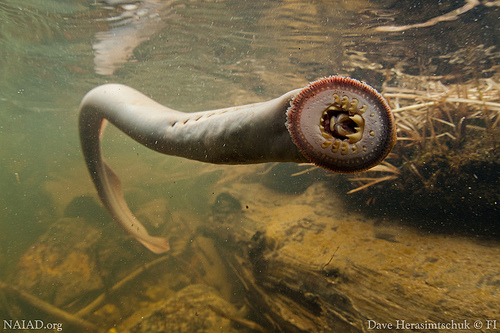
A pacific lamprey {credit}Dave Herasimtschuk, Fresh Waters Illustrated{/credit}

Through sequencing DNA and RNA and comparing what he’s found with sequence from other animals, he’s identified a handful of genes that disappear at some point between fertilized egg and full grown fish. Among them, APOBEC1, some genes for zinc finger proteins and WNT7A/B. Several, said Smith, have qualities of “stem celly-ness”.

This makes sense. A fertilized egg would make good use of stem-cell-related genes as it divides and differentiates into all the cells of an adult organism. It also might make sense why the genes would be deleted. Genes that favour a stem-cell state also have a tendency to be oncogenic. Humans and other vertebrates have ways of tightly controlling the expression of such genes in adult cells to prevent cancers from occurring.  But, asks Smith, “What better way to get rid of them,” than completely throwing them out?

A few other organisms also seem to delete genes in this way, including the only other known jawless vertebrate, the hagfish. And although the genetics of these species are definitely weird, Smith hopes that further study might make it clearer what’s going on and possibly help explain why other vertebrates, including humans, tend to do things differently. “I think it has something to tell us about the way our genes are regulated,” said Smith.

 Region

NIH responds to criticism over handling of flu papers

The US National Institutes of Health (NIH) today released a response to a sharply worded internal criticism about the handling of two controversial H5N1 avian influenza papers, one of which was published in Nature yesterday.

The criticism came from Michael Osterholm, a public-health researcher and member of the National Science Advisory Board for Biosecurity (NSABB), which had been asked to advise the government on the potential biosecurity risks of publishing the papers in full. After an initial unanimous recommendation to redact the papers, the 22 voting members of NSABB were called back to the NIH campus to re-evaluate the decision in light of additional information and revisions to the papers. This time it voted in favour of publication, but six members of the NSABB, including Osterholm, dissented on the publication of one of the manuscripts.

Osterholm’s letter, which was leaked to Science and Nature, called the proceedings of this meeting, held 29–30 March, biased and incomplete, presenting an argument with the express purpose of getting the papers published.

In a six-page response — released today, but dated 25 April — Amy Patterson, an NIH official who manages the NSABB, responded to Osterholm’s critiques point by point. She writes that the views and perspectives that Osterholm claims were lacking at the meeting were in fact presented, by Osterholm himself. She says that he did not provide recommendations for experts to speak at the meeting. (In his letter, Osterholm said, “I personally tried to have their voices represented at the meeting. They were not invited.”) And she notes that although she respects his opinions and perspectives, “I do believe that some of them were based in part on a misunderstanding of the facts.”

Interestingly, Patterson notes that the US government is now looking into ways to allow “controlled access to sensitive scientific information for those with a legitimate need to know, in cases where certain details are redacted from a manuscript.” This is a mechanism that many members in the NSABB have been calling for, but one that obviously wasn’t ready for the H5N1 papers. Many in the scientific community worry that this redaction process is tantamount to censorship and that it has delicate political implications internationally. Without involvement from the rest of the world, it could seem that the United States or a handful of developed countries are attempting to unilaterally control the release of potentially dangerous information.