White House suspends enhanced pathogen research

Past research made the H5N1 virus transmissible in ferrets.

Past research has made the H5N1 virus transmissible in ferrets.{credit}Sara Reardon{/credit}

As the US public frets about the recent transmission of Ebola to two Texas health-care workers, the US government has turned an eye on dangerous viruses that could become much more widespread if they were to escape from the lab. On 17 October, the White House Office of Science and Technology Policy (OSTP) announced a mandatory moratorium on research aimed at making pathogens more deadly, known as gain-of-function research.

Under the moratorium, government agencies will not fund research that attempts to make natural pathogens more transmissible through the air or more deadly in the body. Researchers who have already been funded to do such projects are asked to voluntarily pause work while two non-regulatory bodies, the National Science Advisory Board for Biosecurity (NSABB) and the National Research Council, assess its risks. The ban specifically mentions research that would enhance influenza, severe acute respiratory syndrome (SARS) and Middle East respiratory syndrome (MERS). Other types of research on naturally occurring strains of these viruses would still be funded.

This is the second time that gain-of-function research has been suspended. In 2012, 39 scientists working on influenza agreed to a voluntary moratorium after the publication of two papers demonstrating that an enhanced H5N1 influenza virus could be transmitted between mammals through respiratory droplets. The publications drew a storm of controversy centred around the danger that they might give terrorists the ability to create highly effective bioweapons, or that the viruses might accidentally escape the lab. Research resumed after regulatory agencies and entities such as the World Health Organization laid out guidelines for ensuring the safety and security of flu research.

The OSTP’s moratorium, by contrast, is mandatory and affects a much broader array of viruses. “I think it’s really excellent news,” says Marc Lipsitch of Harvard University in Cambridge, Massachusetts, who has long called for more oversight of risky research. “I think it’s common sense to deliberate before you act.”

Virologist Yoshihiro Kawaoka of the University of Wisconsin–Madison, who conducted one of the controversial H5N1 gain-of-function studies in an effort to determine how the flu virus could evolve to become more transmissible in mammals, says that he plans to “comply with the government’s directives” on those experiments that are considered to be gain-of-function under OSTP’s order. “I hope that the issues can be discussed openly and constructively so that important research will not be delayed indefinitely,” he says.

The NSABB, which has not met since 2012, was called back into action in July, apparently in response to a set of lab accidents at the US Centers for Disease Control and Prevention in which lab workers were exposed to anthrax and inadvertently shipped H5N1 virus without proper safety precautions. The NSABB will spend most of its next meeting on 22 October discussing gain-of-function research, and the National Research Council plans to hold a workshop on a date that has not yet been set. Lipsitch, who will speak at the NSABB meeting, says that he plans to advocate for the use of an objective risk-assessment tool to weigh the potential benefits of each research project against the probability of a lab accident and the pathogen’s contagiousness, and to consider whether the knowledge gained by studying a risky pathogen could be gained in a safer way.

Correction: This post has been changed to specify that Yoshihiro Kawaoka’s 2012 gain-of-function research increased the transmissibility of H5N1.
New guidelines announced for risky research

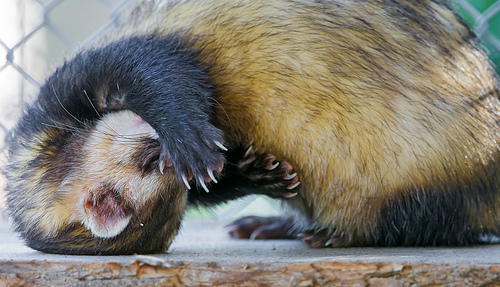
Twists and turns: researchers use ferrets to assess the transmissibility of H5N1 in mammals.{credit}Credit: Tambako the Jaguar via Flickr{/credit}

US government officials have passed two more checkpoints on the long, winding road towards a policy for dealing with risky research. That journey was forced into overdrive at the end of 2011, when a government body recommended against publishing two studies showing how a deadly form of avian influenza H5N1 could be made to pass between mammals.

Today, the US National Institutes of Health (NIH) announced a final framework for vetting specific types of experiments before funding them. The US Office of Science and Technology Policy (OSTP) also published a long-awaited draft policy for how scientists and institutions should monitor and report on a wide range of research that malevolent forces could manipulate to do harm. This type of research, called dual-use research of concern (DURC), is fundable if the potential benefits are deemed significant and the risks deemed manageable. Continue reading

EDITORIAL: A long pause

A version of this editorial appears in the February 2013 issue of Nature Medicine.

Last January, scientists voluntarily imposed a pause on research that could lead to the generation of highly pathogenic avian influenza viruses with increased transmissibility to mammals. Now, new restrictions currently under debate further risk stalling progress in avian flu research.

****

In late 2011, a firestorm erupted around two papers under peer review on highly pathogenic avian influenza (HPAI) H5N1 viruses. Both identified mutations that would permit airborne transmission of the viruses to ferrets. Although the viruses were not highly pathogenic in the ferrets, the papers sparked concerns that the mutant H5N1 viruses might have pandemic potential.

The concerns are not unwarranted given the history of H5N1 infections. The case fatality rate due to H5N1 in humans exceeds 50%, yet only 610 infections have been recorded since 2003, in part because of its low capacity for human-to-human transmission. However, there is fear that avian influenza could acquire the mutations necessary to rapidly transmit among humans, similar to seasonal influenza. Therefore, a better understanding of the mutations necessary to facilitate transmission of H5N1 in mammals and their effects on the fitness of the virus is considered by many to be crucial in developing countermeasures in the event of an avian flu pandemic.

Continue reading

Flu researchers bristle under federal policy

Adolfo Garcia-Sastre

It has been four months since the US government issued a hastily released policy for monitoring what is called dual-use research of concern (DURC), research that could pose significant risks to the public if misapplied. At a meeting in New York on Monday, representatives of leading institutions that perform such research discussed their experiences fitting the new policy into their current procedures for managing research projects. Some were frustrated at the lack of definition in the policy and some expressed concern about what would be contained in an expansion of the policy that is soon to be released for public comment.

“We are trying to comply with as rational an approach as possible,” said Adolfo Garcia-Sastre, who runs one of the Centers of Excellence for Influenza Research and Surveillance (CEIRS) at Mount Sinai School of Medicine in New York, which hosted the meeting for other CEIRS researchers.

On 29 March, as US government advisers were considering as whether or not to publish two controversial papers describing a lab-created, mammalian-transmissible avian H5N1 strains of influenza, the government released a new DURC policy. It required federally funded institutions to take stock of any projects engaging in such research and develop plans for mitigating potential consequences.  The policy was meant to shore up what some saw as a hole in the government’s approach to DURC, and government advisers said its existence was integral in persuading them to ultimately recommend publication of the two papers.

The researchers on the panel Monday morning included Yoshihiro Kawaoka of the University of Wisconsin–Madison and Ron Fouchier of Erasmus Medical Center in Rotterdam, the Netherlands, who finally published papers in May and June. Kawaoka described an approach to assessing the safety and appropriateness of laboratory protocols that is relatively unchanged since the adoption of the policy, except, he says, for the fact that it is put more specifically into the context of DURC. It means specific research protocols are assessed against a list of seven experimental approaches that should raise eyebrows.

Fouchier, with more than a bit of exasperation in his voice, described procedures for biosafety and security reviews that he says his group and institution have been in compliance with for years owing to existing laws. He urged fellow flu researchers to push back against what he feared would be further bureaucratic measures to come. Particularly worrying, he said, was that regulators are now taking issue with experiments — like the ones described in his recent paper — that result in a gain of function to existing pathogens. Fouchier said that these studies have to be done to fully understand how influenza works.

Continue reading

Congressman criticizes US handling of H5N1 papers

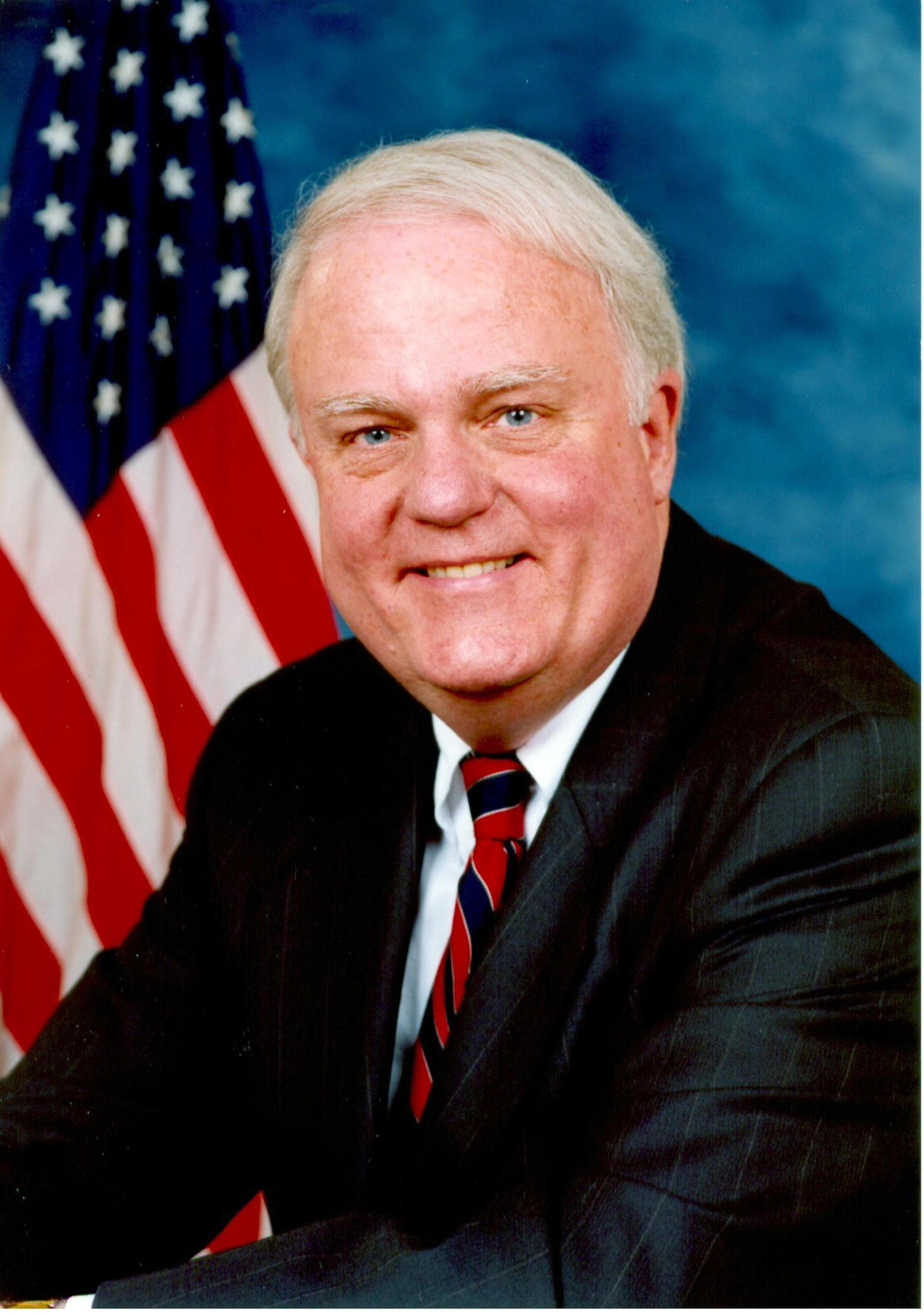
Congressman Jim Sensenbrenner of Wisconsin{credit}https://sensenbrenner.house.gov/{/credit}

An influential member of the US Congress remains dissatisfied with the government’s handling of two research papers on mutant forms of avian influenza, and is threatening legislation to control the controversial research.

Jim Sensenbrenner (Republican, Wisconsin) today said that the lack of a cohesive policy for handling risky research funded by the National Institutes of Health (NIH) and other federal agencies could necessitate new laws, a situation that researchers have been trying to avoid. “I prefer not to pursue legislation on this issue, with the hopes the scientific community can create its own approach. But failing a consequential … policy, Congressional action could be required,” Sensenbrenner told Nature in a statement.

The second of the controversial papers showing that H5N1, or ‘bird flu’, can spread through the air between mammals was published last week, providing some closure to the months-long debate about the work and whether its publication would result in the proliferation of dangerous viruses and increased risk of an accidental or intentional release. Sensenbrenner says not enough work has been done to ensure that such controversies don’t arise again.

On 21 June, NIH director Francis Collins responded to some pointed questions issued by Sensenbrenner’s office after a 29–30 March meeting when the National Science Advisory Board for Biosecurity (NSABB) reversed its initial opposition to the publication of the papers, in light of some manuscript revisions and the addition of data. Sensenbrenner, who is the vice-chairman of the Congressional committee on science and technology and sits on a subcommittee on terrorism and homeland security, had requested details on the provenance of a new government policy on reporting and overseeing ‘dual-use research of concern’ (DURC), research that could conceivably be put to nefarious ends.

Continue reading

NIH responds to criticism over handling of flu papers

The US National Institutes of Health (NIH) today released a response to a sharply worded internal criticism about the handling of two controversial H5N1 avian influenza papers, one of which was published in Nature yesterday.

The criticism came from Michael Osterholm, a public-health researcher and member of the National Science Advisory Board for Biosecurity (NSABB), which had been asked to advise the government on the potential biosecurity risks of publishing the papers in full. After an initial unanimous recommendation to redact the papers, the 22 voting members of NSABB were called back to the NIH campus to re-evaluate the decision in light of additional information and revisions to the papers. This time it voted in favour of publication, but six members of the NSABB, including Osterholm, dissented on the publication of one of the manuscripts.

Osterholm’s letter, which was leaked to Science and Nature, called the proceedings of this meeting, held 29–30 March, biased and incomplete, presenting an argument with the express purpose of getting the papers published.

In a six-page response — released today, but dated 25 April — Amy Patterson, an NIH official who manages the NSABB, responded to Osterholm’s critiques point by point. She writes that the views and perspectives that Osterholm claims were lacking at the meeting were in fact presented, by Osterholm himself. She says that he did not provide recommendations for experts to speak at the meeting. (In his letter, Osterholm said, “I personally tried to have their voices represented at the meeting. They were not invited.”) And she notes that although she respects his opinions and perspectives, “I do believe that some of them were based in part on a misunderstanding of the facts.”

Interestingly, Patterson notes that the US government is now looking into ways to allow “controlled access to sensitive scientific information for those with a legitimate need to know, in cases where certain details are redacted from a manuscript.” This is a mechanism that many members in the NSABB have been calling for, but one that obviously wasn’t ready for the H5N1 papers. Many in the scientific community worry that this redaction process is tantamount to censorship and that it has delicate political implications internationally. Without involvement from the rest of the world, it could seem that the United States or a handful of developed countries are attempting to unilaterally control the release of potentially dangerous information.

Senate Hearing on H5N1 papers exposes political divisions

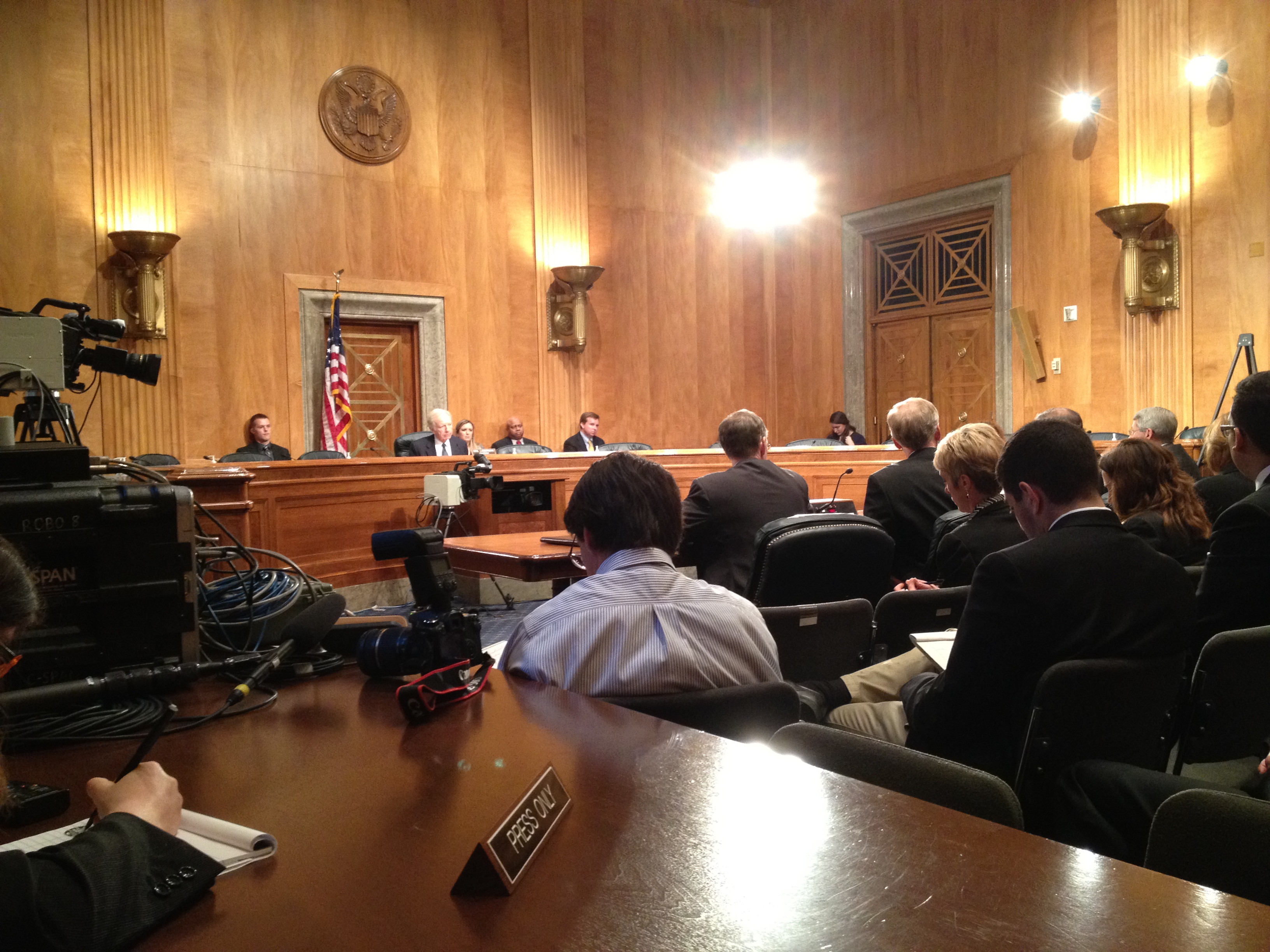
26 April in Washington DC, US Senator Joseph Lieberman of Connecticut revealed that his grandmother was killed by influenza during the 1918 pandemic. This was one reason he has been so interested in a pair of yet-to-be-published papers on laboratory-created H5N1 avian influenza strains that could conceivably prove many times more deadly than the 1918 flu. The other reason for his interest is that he chairs the committee on Homeland Security and Government Affairs, which had called a hearing to understand how decisions were made about the research’s potential use as an agent of bioterrorism. At the hearing, officials involved in making the decision to publish the research were queried about a letter that was leaked to the press two weeks ago. In the letter, Michael Osterholm, a member of the National Science Advisory Board for Biosecurity (NSABB), accused the U.S. government of stacking the decks in favour of full publication during a crucial closed door meeting in March at which the NSABB was asked to re-evaluate the papers.

Paul Keim, acting chair of the NSABB, who testified today, said “I view it as a very constructive type of communication. It was unfortunate that it was leaked to the public… that made it very hard to have a constructive conversation about it.” He went on to say that he agreed with Osterholm’s contention that there was a bias in the list of witnesses presenting evidence for and against full publication. The presenters included the two researchers whose teams had performed the research and one of their collaborators. “But the bias inherent in these witnesses was not very important,” Keim says, noting that the board members were able to ask them tough, probing questions. Continue reading

Mutations behind flu spread revealed

MEDICAL RF.COM/SPL

Posted on behalf of Ed Yong.

Two scientists recently hit the headlines when they created mutant strains of H5N1 influenza, which can spread between mammals (see ‘Fears grow over lab-bred flu‘). But although Ron Fouchier of Erasmus Medical Center in Rotterdam, the Netherlands, spoke publicly to explain and defend the work, Yoshihiro Kawaoka, of the School of Veterinary Medicine at the University of Wisconsin–Madison, has been far quieter, deliberately saying nothing to the press.

That has now changed. At a Royal Society meeting in London about H5N1 research yesterday, the thus-far silent scientist spoke openly about his results after the National Science Advisory Board for Biosecurity (NSABB), an independent advisory group to the US government, unanimously voted last week that Kawaoka’s paper should be published in full. Nature intends to “proceed with publication as soon as possible”.

His experiments began when he tweaked the H5N1 virus to reproduce in a ferret’s airways. He introduced random alterations into its haemagglutinin (HA) protein, which it uses to stick to host cells. From the resulting library of mutants, he isolated viruses with two mutations in HA — N224K and Q226L — that could stick to receptors in human tracheal cells. That is something H5N1 viruses cannot usually do. Continue reading

Video: Debating H5N1 and dual-use research

On 2 February, scientists and public health officials squared off in a panel discussion at the New York Academy of Sciences. Debate raged around the fate of two papers that describe a mutant strain of the avian influenza virus H5N1. The virus is capable of mammal-to-mammal transmission, which has raised concern that it might be transferable to humans. Several panelists sat down with Nature News to discuss their positions.

See also our web special on the H5N1 controversy.

*Update 08/02/12: New York Academy of Sciences has posted full video of the 2 hour debate.

Emotion runs high at H5N1 debate

Last night, researchers and public health officials gathered high above New York City’s ‘Ground Zero’ in hopes of narrowing the divide within the scientific community over the fate of two papers currently in the press at Nature and Science demonstrating mammalian transmission of avian influenza H5N1. Dozens of commentaries and news stories have born out the debate as to whether or not the research should be published in full, allowing others to replicate it. Michael Osterholm, who was part of the National Science Advisory Board for Biosecurity (NSABB) which unanimously recommended redaction of the papers, referred to them as, “the two most famous unpublished manuscripts in the history of life science.”

At the panel, hosted by The New York Academy of Science, moderator W. Ian Lipkin of Columbia University said that “the emotional debate is something we’re going to try to keep to a low roar tonight.” Emotions nevertheless ran high as panelists accused each other of misrepresenting facts and rushing too quickly to either publish or censor scientific data. Continue reading